Octane Files
Browse CarsHolden Torana 2nd Gen

Holden Torana 2nd Gen

Overview

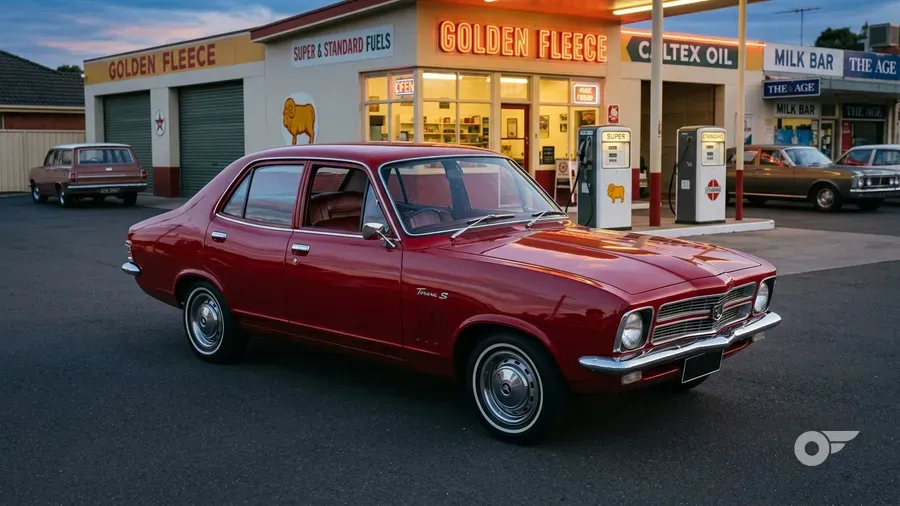
Holden's small car in 1969 was a rebadged Vauxhall with four cylinders, and Australians wanted six. The fix was to stretch the HB Torana ahead of the windscreen, fit the same red six the full-size Holdens used, and call it the LC. Four-cylinder cars kept the old front sheet metal and the short wheelbase. Six-cylinder cars got new panels from nose to tail and a slice of the market nobody else was serving, at least until Ford dropped Falcon sixes into the Cortina in 1972 to copy it. Wheels named it Car of the Year for 1969.

That was the commercial half. The other half began in August 1970, when the Holden Dealer Team needed a replacement for the V8 Monaro at Bathurst and GM-H's chief engineer refused to build a road car meant to out-GT-HO the GT-HO. Harry Firth's answer was the GTR XU-1: a triple-carburettor 186 six in a body weighing a little over a tonne. Two years later Peter Brock drove one solo through 500 miles of rain and beat the 5.8-litre Falcons.

Around 168,000 LC, LJ and TA Toranas were built across six years. Most were shopping cars. The 3,300 or so that were not changed Australian motor racing.

Distinctions

The defining attributes and collector status that make this car garage-worthy.

Poster Car
The car on the bedroom wall, the one people dreamed about before they could drive.
Octane Files Select
Renowned for its history, engineering, or cultural weight.

Collectibility scorecard

Rated 1 to 10 on the traits that matter for owning, driving, and holding on to a car like this.

Desirability
7/10
Rarity
4/10
Driving thrill
6/10
Investment trajectory
6/10
Usability
6/10
Ease of restoration
7/10
Cultural impact
7/10
Electronic dependence
Fully analogHeavily electronic

Nothing on this car computes anything. Fuel arrives through carburettors fed by a mechanical pump, a single one on most cars and three side-draught Strombergs on the XU-1, all of them balanced by hand and set by ear. Ignition is points and condenser, timed with a strobe light. The throttle is a cable, the steering unassisted on most cars, the brakes drums at the rear and often at the front too, and the optional Tri-Matic automatic shifts on hydraulic pressure rather than instruction. Electricity runs the starter, the charging system, the lights and the wipers, and that is the whole list. A cracked distributor cap will stop the car, and a laptop will not help you restart it.

Market data

Demand tier, price trend, and typical values by condition, based on recent sales data.

Demand tier
EntrySolidHighBlue-chip

Strong, sustained collector demand. Good examples never wait long for a buyer.

Value trajectory
AppreciatingStableCooling

Values are holding steady. What you pay today is what it's worth tomorrow.

Price by condition
Driver
$15k
Excellent
$28k
Concours
$45k

The band above describes the volume car, a six-cylinder S or SL sedan, converted from Australian money at roughly 0.70 USD to the dollar in August 2026 and rounded. Tidy drivers start around A$30,000, and a 1971 LC 2250 made about US$20,000 through Collecting Cars in 2023. GTRs sit above that. XU-1s are a separate market: the road-car record is A$295,000 at Burns and Co in 2023, against A$183,000 for the previous best in 2019, with good ones offered between roughly A$150,000 and A$195,000. The trajectory is called stable rather than appreciating because two comparable Collecting Cars XU-1 results, December 2023 and July 2026, landed within about ten percent of each other rather than climbing. An ex-Brock championship-winning racer made A$500,000 in 2006 and belongs to a different market again. Tributes trade at roughly half the price of a genuine car and should never be valued against this band.

Values as of August 2026.

Buyer's guide

What anyone seriously considering this car should know first.

Why it's worth it
The small six that beat Ford's V8s at Bathurst and made Peter Brock a household name
Callout
In 1972 Peter Brock drove a 3.3-litre Torana solo through 500 miles of Bathurst rain and beat Ford's 5.8-litre Falcons
What to watch for
Start with the body, because a Torana shell is a rust trap and everything else on the car is cheap by comparison. The places that decide the price are structural: the firewall, the floors, and the subframe and suspension mounting points. Then work outward to both screen surrounds, the sills, door bottoms, wheel-arch lips, boot floor and boot lid. A vinyl roof hides rot rather than preventing it. Get the car on a hoist before you get emotional about it. The second job is proving what the car is. Australia is full of well-built XU-1 tributes, and the honest ones are advertised around A$75,000 to A$100,000 against A$180,000 and up for genuine cars. The registers will tell you that the model number on the body identification plate has never been proof on its own, that the body number suffix identifies which of the two plants built the car, Adelaide or Brisbane, and that Brisbane cars and some Adelaide ones carry XU1 stamped on the plate where the engine code goes. None of that replaces having a known Torana person look at it. Mechanically there is little to fear. The red six is durable and cheap, so a tired engine is a negotiating point rather than a reason to walk.

The Story

Driving character

An XU-1 weighs a little over a tonne and carries a pushrod six of three litres, 3.3 in the LJ, and that arithmetic is the whole experience. It is not fast by modern numbers: the LJ ran the standing quarter in 15.6 seconds and reached 100km/h in 8.2. What it does is respond. The triple Strombergs give it a hard mechanical intake noise off idle and a top end that keeps pulling well past where a red six ought to give up, and the close-ratio M20 four-speed puts the ratios exactly where the noise is. Steering is unassisted and slow by the standards of the sports cars the car beat, so you place it with the throttle and your shoulders rather than with small inputs. On the 3.36 diff it feels urgent everywhere. On the taller 3.08 it will sit at highway speed without shouting. The brakes are the limit, as they were then. An ordinary six-cylinder SL is a different animal, softer and quieter, and much better than its reputation for exactly the same reasons: not much weight, a torquey engine, and very little to go wrong.

Design

The engineering decision drove the design. To fit a six, Holden stretched the HB Torana ahead of the windscreen, which is why the four-cylinder cars measure 4120mm long and the sixes 4387mm on the same doors, roof and glass. The six-cylinder cars got new panels front and rear to cover the difference while the fours kept the old nose, so two versions of the same car sat side by side in the showroom. Once you know where the joint is you cannot unsee it. Leo Pruneau is the name attached to the second generation, with Peter Nankervis running the Torana studio and John Schinella as assistant design director, all under GM-H design director Joe Schemansky. Their work is restrained: a plain three-box shape, a slight kick to the rear quarter, almost no ornament. The XU-1 supplied the theatre instead. Blacked-out grille and tail panel, bold stripes and decals, Globe Sprintmaster wheels, a boot-lid spoiler on the LJ, a long-range tank behind the rear seat. Holden's first indigenous model name meant 'to fly', and by 1972 the badge had earned it.

Motorsport pedigree

The Holden Dealer Team existed because General Motors banned factory racing worldwide, so Holden funded a dealer-run operation instead and hired Harry Firth, the man who had run Ford's works team, to lead it. From 1970 the team's car was the Torana. Colin Bond won on the XU-1's competition debut at Warwick Farm in September 1970, beating a Monaro 350 and settling an internal argument about which car Holden should be racing. Don Holland took an LC XU-1 to third at Bathurst that year, a lap behind the works Falcons. The result that defined the car came on 1 October 1972, when Peter Brock won the Hardie-Ferodo 500 outright, alone, in the wet, a lap clear of John French's GT-HO Phase III. It was the last running over 500 miles and the last time a driver could go the distance without relief. In 1973 XU-1s finished second and third behind Moffat's Falcon. Brock then took the 1974 Australian Touring Car Championship, winning at Symmons Plains, Calder and Amaroo in the XU-1 before switching to the new V8 Torana. The XU-1 also won the Australian Rally Championship in 1971, 1972 and 1973, taking every round of the 1973 series.

In culture

In Australia the XU-1 is not really a car, it is a piece of the Holden versus Ford argument that families conducted at kitchen tables for thirty years. The 1972 Bathurst win came early in Peter Brock's career and made him; he left the mountain as the beginning of Peter Perfect, and the Torana went up on bedroom walls all over the country as the little car that had beaten the big Fords with half the engine. Nothing about that has faded. Both major Australian model makers still tool 1:18 versions of the 1972 winner in Holden Dealer Team colours, complete with anniversary liveries, which is a strange fate for a small four-seat sedan. Tribute XU-1s outnumber genuine ones at shows, built by people who wanted the poster car and could not have the poster car. The Torana never travelled. Almost nobody outside Australia and New Zealand has heard of it, and Holden itself has since disappeared from showrooms. Inside those two countries the badge still does more emotional work than most supercars manage.

Rivals

Cars from other manufacturers that competed for the same buyers when new.
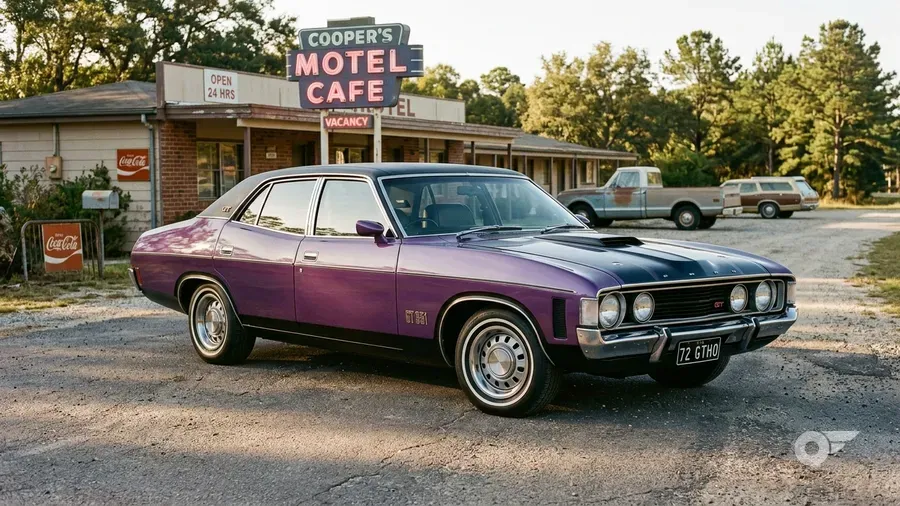
Ford Falcon GT XA

Ford Falcon GT XA

USA·Muscle·1972–1973
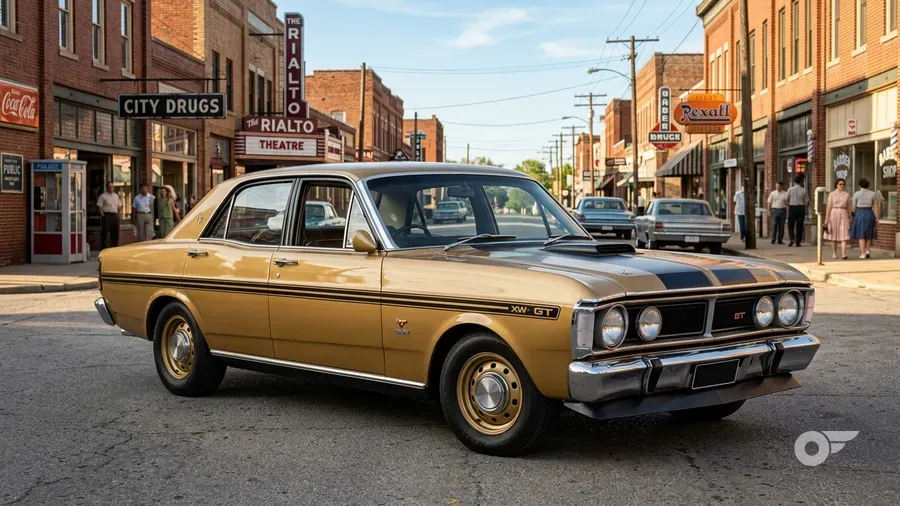
Ford Falcon GT XW

Ford Falcon GT XW

USA·Muscle·1969–1970
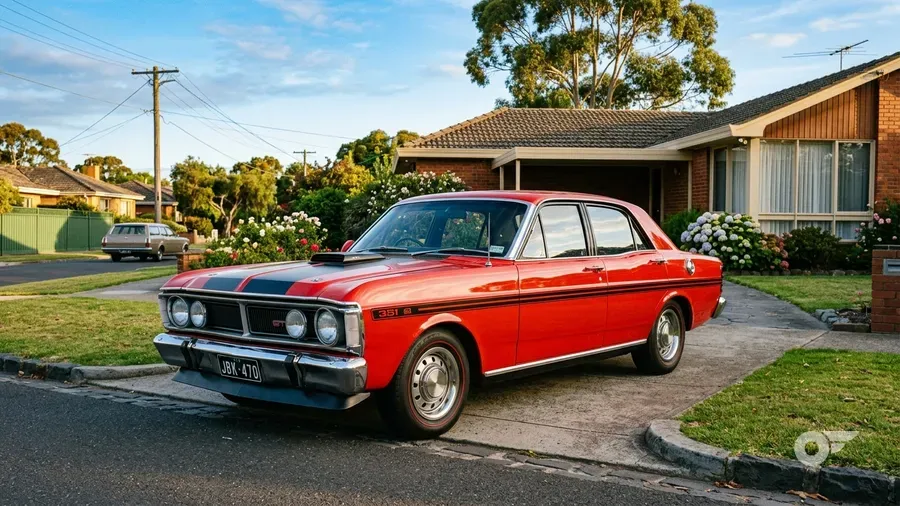
Ford Falcon GT XY

Ford Falcon GT XY

USA·Muscle·1970–1972

Chrysler Valiant Charger VH

We haven’t profiled this car yet. Request to add

Chrysler Valiant Charger VJ

We haven’t profiled this car yet. Request to add

Owning One

Why collectors want it

The hierarchy inside this generation is unusually steep, and all of it points at one car. A documented LJ GTR XU-1 set the road-car record at A$295,000 through Burns and Co in 2023, and good ones have been trading between roughly A$150,000 and A$195,000 since. A GTR without the triple carburettors buys the same shape for a fraction of that. A six-cylinder S or SL sedan costs less again, and it is one of the cheapest ways into a car with genuine Bathurst lineage.

Three things hold the XU-1 up. It won the race that decides reputations in Australia, driven by the man whose name still sells Holdens. Only around 3,300 were built, and a large share were raced, rallied or crashed, because that is what buyers bought them for. And the model number on the body plate does not settle whether a car is one, so documented provenance is worth real money on top of paint and panel.

The ordinary cars matter for a less obvious reason. Every tribute XU-1 in the country started life as one, which puts a floor under good original sedans and keeps pulling them out of sheds.

Which one to look for

The one to have is an LJ GTR XU-1, and specifically a documented one. It carries the 202 six with the larger triple carburettors and a close-ratio M20 four-speed, rated at 190bhp against the LC XU-1's 160, and it is the car Brock won Bathurst in. Inside that group the connoisseur's pick is one of the early-1972 cars built to satisfy the 200-unit minimum CAMS required to homologate the updated model, or the later Bathurst-specification run with the hotter HX camshaft, tubular extractors and triple 175 CD-2 Strombergs. How many of those were built is still argued in the registers, so buy the paperwork rather than the story. The LC XU-1 is the purer historical object, the car that arrived in August 1970 and finished third at Bathurst on debut. Its optional Bathurst engine specification lifted the 186 to 180bhp. Below the XU-1s, the GTR is genuinely good value: same body, front discs, sports interior, none of the tuning anxiety. The S and SL sixes are honest cars. The four-cylinder LC, LJ and TA models are the ones nobody saved, which is starting to make a straight one interesting in its own right.

Four-cylinder (1200/1300/1600/1760) · 1969–1975

The short-wheelbase car that kept the HB's front sheet metal and doors. Engines ran from the 1159cc pushrod four at 56 or 69bhp up to the 1760cc overhead-cam unit, with the 1599cc OHC four added in July 1971. Cheap, light and forgotten, and the reason most Torana bodies were built at all.

GTR · 1969–1974

Holden's sporting six without the racing hardware: a hotter 2600S at launch, front disc brakes, sports instruments and a four-speed. The LJ moved to the 202. Same silhouette and much the same road manners as an XU-1 for a fraction of the money, which is why it is the value pick of the generation.

GTR XU-1 (LC) · 1970–1972

Harry Firth's answer to the GT-HO, launched August 1970. A 3048cc 186 six with three Zenith-Stromberg carburettors, 160bhp at 5200rpm, Opel M20 four-speed, 3.36 or 3.08 diff, discs and a kerb weight around 1,030kg. An optional Bathurst engine specification lifted it to 180bhp.

GTR XU-1 (LJ) · 1972–1974

The definitive version, on sale from early 1972 with the 3310cc 202 six, larger CD-175 carburettors, 190bhp at 5600rpm and a close-ratio M20. Boot-lid spoiler, Globe Sprintmaster wheels, long-range tank. Brock won Bathurst in one in October 1972. A later Bathurst-specification run added an HX camshaft, tubular extractors and triple 175 CD-2 carburettors.

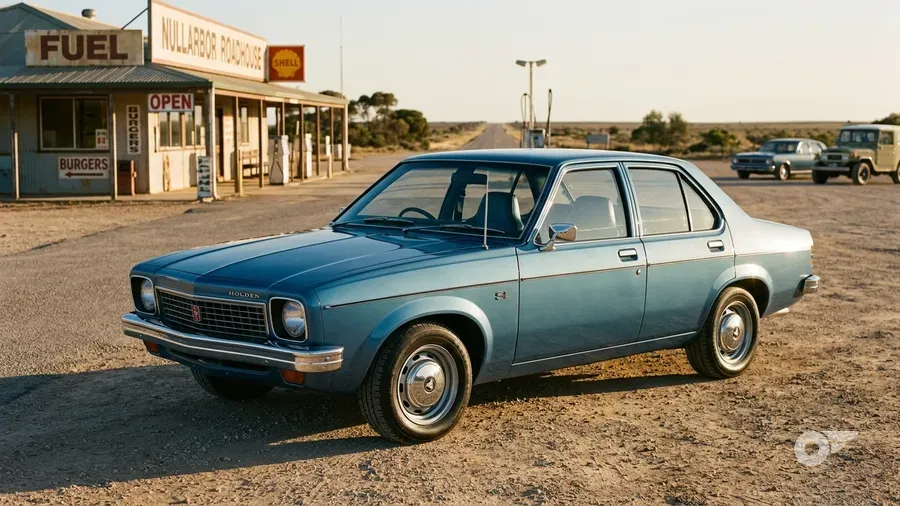
S / SL six · 1969–1974

The long-nose six-cylinder cars, stretched ahead of the windscreen to take the red six. Engines were the 2250cc and 2600cc units at launch, later the 2850cc, and in the LJ the 3310cc 202. Column-shift three-speed, floor four-speed or Tri-Matic automatic. The volume collector car today and the cheapest way into the shape.

TA · 1974–1975

Not a new car so much as a holding pattern. When the LH took over the six-cylinder job in March 1974, the four-cylinder short-wheelbase Torana was facelifted as the TA and sold on until the Gemini arrived. The last of the original small Torana body.
What owning one is like

Owning one is mostly about managing steel. These bodies rust in the floors, the firewall, the sills and the panel lips, and around both screens, and they do it whether the car is used or parked. Most survivors have had some of that repaired, and the quality of the work is what separates a good car from a project wearing good paint. The mechanical side is undemanding. The red six is a long-lived engine and the only genuinely expensive failure is a cracked or badly scored block, which is rare enough to be a talking point rather than a worry. Triple-carburettor XU-1s want their Strombergs balanced properly and their linkages free, and they run rough and drink hard when they are not, which is why so many ended up with a single carburettor and a story about where the originals went. Everything else is period-normal: drum brakes that want a firm foot, no power steering on most cars, a heater and not much else. Nothing about the car resists being driven, and Australian club registration schemes are built for exactly this kind of ownership.

Upkeep & parts

Parts are the good news. Holden's red six went out of production more than forty years ago and its internals are still cheap and everywhere, because half of Australian club motorsport ran on them. Reproduction sheet metal is well supplied too: floor pans under A$200 a side, a radiator support panel around A$500, plus guards, sills and a useful amount of chrome and stainless.

What costs money is XU-1 specific, and it is mostly trim. Correct triple-carburettor hardware, the right wheels, decals and interior pieces are what people hoard, and originality is worth enough on a genuine car to justify hunting them down rather than substituting.

The club structure is unusually strong for a car this ordinary. Dedicated Torana clubs run in most states, and their technical pages carry the model codes, engine number prefixes and compliance-plate breakdowns you need to check a car or a claim before you hand money over. Membership is also the practical route to state historic registration, which is how most of these are used: cheap to license, cheap to insure, out on Sundays.

Country of origin
Australia
Class
Muscle
Production years
1969–1975
Units built
~167,744
Marque
Model
Torana
Nickname
No nickname ("Torrie" is community shorthand for every Torana, and "Giant Killer" names the GTR XU-1 specifically, not this generation)
Body
Sedan
Layout
Front-engine, RWD
Engine
1159cc OHV I4 (56 and 69bhp), 1256cc OHV I4, 1599cc OHC I4 (80bhp), 1760cc OHC I4, 2250cc (138ci) I6, 2600cc (161ci) I6, 2850cc (173ci) I6, 3048cc (186ci) I6 (GTR XU-1, 160bhp), 3310cc (202ci) I6 (LJ GTR XU-1, 190bhp)
Transmission
3-speed manual, 4-speed manual (Opel M20), close-ratio 4-speed manual (GTR XU-1), 3-speed Tri-Matic automatic
Designer
Leo Pruneau (styling), Peter Nankervis (Torana studio), under design director Joe Schemansky