Octane Files
Browse CarsHolden Torana 3rd Gen

Holden Torana 3rd Gen

Overview

The third-generation Torana is three cars in six years, and reading it as one is how people get it wrong. The LH arrived in March 1974 as a four-door only, and it was a rare thing for the period: a compact laid out from the start to take a four, a six or a V8. Holden dropped the 5.0 litre in, called it SL/R 5000, and handed Australia a small car with a big engine at the exact moment the 1972 supercar scare had killed everybody else's homologation projects.

February 1976 brought the LX, and with it a hatchback, the first off an Australian production line if you set aside the stillborn Leyland Force 7. That November the four-cylinder cars left the range to become Sunbirds. In August 1977 came the A9X, an option package of rear disc brakes and a heavier axle that turned a competitive race car into a dominant one.

Then March 1978 and the UC, which dropped the V8, sold perfectly well, and is remembered by almost nobody. The last Sunbird was built in September 1980, by which point the Commodore had the job. About 191,000 cars across the three series, and the argument is only ever about a few hundred of them.

Distinctions

The defining attributes and collector status that make this car garage-worthy.

Poster Car
The car on the bedroom wall, the one people dreamed about before they could drive.
Octane Files Select
Renowned for its history, engineering, or cultural weight.

Collectibility scorecard

Rated 1 to 10 on the traits that matter for owning, driving, and holding on to a car like this.

Desirability
8/10
Rarity
5/10
Driving thrill
7/10
Investment trajectory
8/10
Usability
6/10
Ease of restoration
6/10
Cultural impact
8/10
Electronic dependence
Fully analogHeavily electronic

Nothing on this car thinks. Every engine offered, from the 1.9 four to the 5.0 V8, runs a carburettor, a mechanical fuel pump and a points distributor; the throttle is a cable and the brakes are hydraulic with a vacuum booster. The ADR27A emissions rules that took effect on 1 July 1976 added plumbing rather than electronics, meaning leaner calibration, crankcase ventilation and a charcoal canister. The only electrical system worth a second look is the thermo fan on V8 cars. Electronic ignition is the usual modern conversion, and it changes nothing else about how the car works.

Market data

Demand tier, price trend, and typical values by condition, based on recent sales data.

Demand tier
EntrySolidHighBlue-chip

Strong, sustained collector demand. Good examples never wait long for a buyer.

Value trajectory
AppreciatingStableCooling

Values are climbing. The market wants more of these than exist.

Price by condition
Driver
$45k
Excellent
$90k
Concours
$140k

The band describes the volume collector car, an LH or LX Torana with a Holden V8, and deliberately excludes the L34 and the A9X, which trade in a market of their own. Figures are converted at roughly 0.70 AUD to the US dollar, the rate through early August 2026. Australian Muscle Car Sales has verified 328 sales in this family since 2003, from A$33,000 to A$595,000, and a published guide value for an LX SS 5.0 manual has moved from A$48,500 in 2014 to A$130,000 in 2019 and A$185,000 in 2024. Above the band sit the halo cars: A$235,500 for an A9X sedan in February 2023, and more than A$800,000 for a delivery-mileage GMP&A hatchback in June 2021. The ceiling is the buyer pool, which is almost entirely domestic.

Values as of August 2026.

Buyer's guide

What anyone seriously considering this car should know first.

Why it's worth it
The Bathurst weapon of the late 1970s, and Australia's first locally built hatchback
Callout
Peter Brock won the 1979 Bathurst 1000 in an A9X hatchback by six laps, still the biggest winning margin in the race's history
What to watch for
Two questions decide a Torana purchase, and neither is about the paint. The first is rust. Look at the turret and the window surrounds, the plenum ahead of the windscreen, the firewall, floors, inner sills, front pillars and wheel arches, then look along the chassis rails for welds that were not there when the car was built. Doors that droop are either tired hinges or rot behind the hinge mounts, and it is usually the second. On a hatchback, check the tailgate and its glass hard, because neither is reproduced and the used supply has been picked over for years. The second question is what the car actually is. Six-cylinder SL hatchbacks have been given V8s and SS badges for decades, and now that good cars trade in six figures the fakes have improved. Check the engine code, check the body plate, and when the money is serious have it verified by someone who does this for a living. After that it is detail. The brakes were marginal when new. Thermo fans should cut in and out properly. Seat frames twist and crack. Hatch seals let in water and exhaust fumes if they have hardened.

The Story

Driving character

The appeal is simple arithmetic. Holden's 5.0 litre V8 was designed for a full-size car and the Torana is not one, so an SL/R 5000 feels quicker than its figures suggest. In LH form the engine was quoted at 179kW and 427Nm through a Rochester Quadrajet, and the only gearbox offered behind it was the M21 close-ratio four-speed, floor shift, with no automatic option at all. It sounds like a Holden V8 because it is one: flat, hard-edged, less cultured than the Cleveland in a Falcon and more urgent for it. Then the ruler changed. From 1 July 1976 ADR27A leaned the engines out, and Australia moved from gross to net ratings at the same moment, so the LX's 161kW reads as a collapse against the LH's number when it is really two changes at once. The car did not become slow. An SS hatchback with the 5.0 and the manual still ran the standing 400 metres in 15.6 seconds. Stopping is what lets it down. The brakes were the weak point until the A9X put discs on the rear, which is precisely why the A9X existed. The sixes, by contrast, are light, willing and completely unbothered.

Design

The LH was drawn in Holden's own Torana studio under Phillip Zmood, with work starting in January 1970 and the car released in March 1974. Its most interesting constraint is one you can still feel from the back seat: the team wanted a 105 inch wheelbase, Detroit refused, and the car went out on 101.9 inches with the rear passengers paying for the decision. What that bought was engine bay. This is one of very few cars anywhere laid out from the beginning for a four, a six and a V8, which is why the 5.0 litre fits without drama and why the racing story exists at all. The 1976 hatchback is the part people remember. It reads as an Australian answer to the Chevrolet Monza, with a fastback tail Holden's own designers traced back to the Fiat 850 coupe, and it has almost no usable luggage space behind the seats. Joe Schemansky retired in 1975 and Leo Pruneau took over the studio, so the LX facelift and the hatchback belong to his watch rather than Schemansky's. The A9X's one visual signature is the rear-facing bonnet scoop, and it remains the quickest way to separate a real one from a story.

Motorsport pedigree

This is why the car is famous, and it happened fast. The SL/R 5000 ran demonstration laps at Amaroo Park on 14 April 1974 and was racing by May, with the L34 package following for that year's Bathurst. It won the Hardie-Ferodo 1000 in 1975 for Peter Brock and Brian Sampson, Toranas sweeping the podium, and again in 1976 for Bob Morris and John Fitzpatrick, with L34s filling the top seven places. Then the A9X. Brock put it on pole for the 1977 Bathurst at 2:24.1 on its first attempt, though Moffat and Ickx won that race in a Falcon. After that it simply took over. Brock and Jim Richards won in 1978 from pole, 163 laps in 6h 45m 53.9s, and in 1979 they led every lap and won by six laps, still the largest winning margin in the history of the race, Brock setting a 2:21.1 lap record on the final tour with Toranas first, second and third. The championships came too. Brock took the 1978 Australian Touring Car Championship, and in 1979 Bob Morris won it in his own privately entered A9X, beating the works teams running the same car.

In culture

In Australia this car needs no caption. The number 05, the Marlboro red and white, the hatchback silhouette: that combination is Peter Brock, and Brock is the closest thing Australian motorsport has to a patron saint. The 1979 Bathurst win is the result every later one gets measured against, which is why Australia Post put a 1979 LX Torana on a stamp in 2022 as part of a five-car Brock issue. The road cars had a second life the factory never planned. Cheap, light and easy to modify, LH and LX Toranas became the raw material of Australian street machine culture through the 1980s and 1990s. That is both why so few standard cars survive and why the ones that do are worth what they are. Outside Australia it is close to invisible, and the gap is the interesting part. Holden barely exported the car, so its fame stops at the coastline. What has crossed over is mostly digital: the A9X reached Forza Motorsport and introduced a generation of players to a car they had never heard of, and Brock's own A9X ran the hill at Goodwood in 2007.

Rivals

Cars from other manufacturers that competed for the same buyers when new.
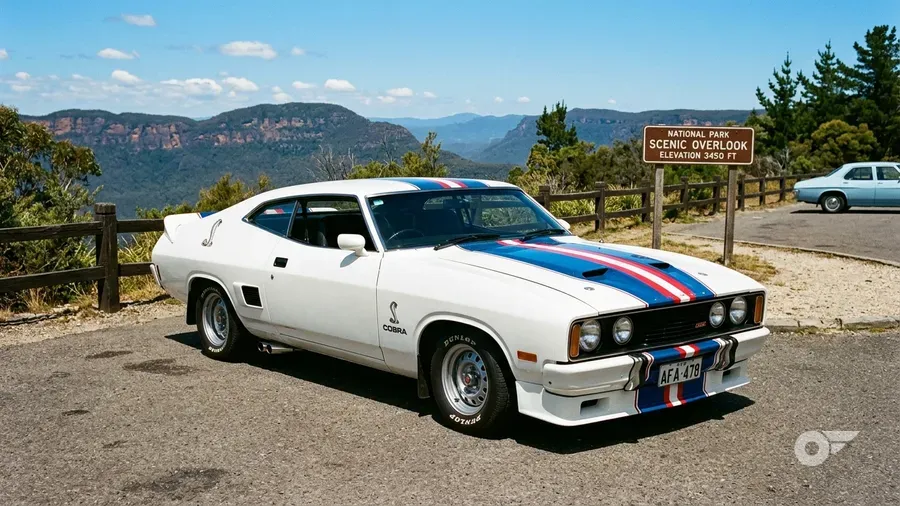
Ford Falcon Cobra

Ford Falcon Cobra

USA·Muscle·1978–1978
Ford Falcon GT XB

Ford Falcon GT XB

USA·Muscle·1973–1976

Chrysler Valiant Charger VJ

We haven’t profiled this car yet. Request to add

Chrysler Valiant Charger VK

We haven’t profiled this car yet. Request to add

Chrysler Valiant Charger CL

We haven’t profiled this car yet. Request to add

Owning One

Why collectors want it

Australia decides what a Torana is worth, and Australia has decided. Australian Muscle Car Sales has verified 328 sales of LH and LX SL/R 5000, L34, A9X and SS cars since 2003, ranging from A$33,000 to A$595,000, and that spread is the whole story: one model line covering a weekend car and a house deposit.

The hierarchy inside it is unusually clean. At the top sit the A9X hatchbacks, 100 of them, along with the competition shells that never carried a VIN. Below those, the 305 A9X sedans, then the 263 L34s, then ordinary SL/R 5000 sedans and SS hatchbacks, then the six-cylinder cars that were worth nothing for thirty years and are now worth chasing. A 1977 SL/R 5000 A9X made A$235,500 in February 2023, and a delivery-mileage GMP&A hatchback passed A$800,000 at auction in June 2021.

What holds the ceiling down is geography. Almost none of these cars left the country, so the buyers are Australian and the money is Australian, which is why a Torana with this racing record still trades below European cars with far thinner ones.

Which one to look for

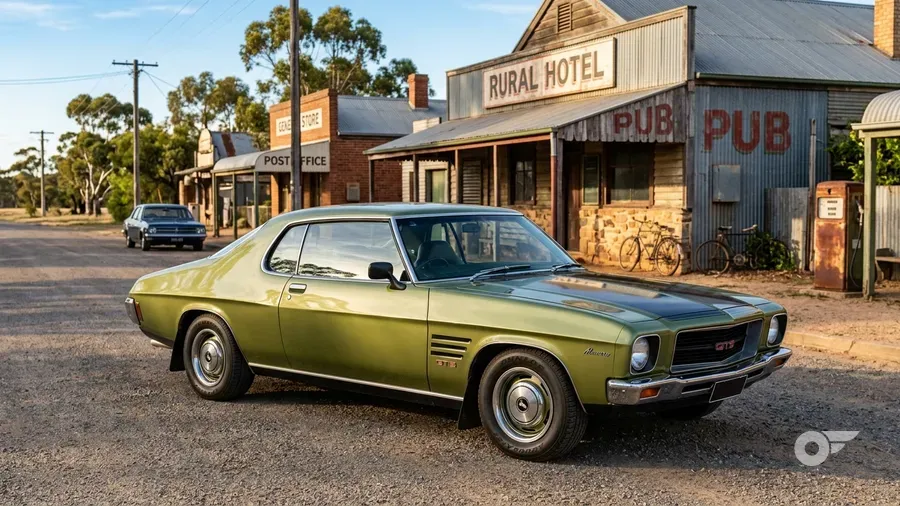
The A9X is the whole market, so start with what it actually was: an option package, not a model, offered from August 1977 on the SL/R 5000 sedan and the SS hatchback. It brought rear disc brakes, a heavy-duty ten-bolt Salisbury axle, a UC-type rear floorpan to clear it, revised suspension geometry and a rear-facing bonnet scoop. 405 went to the public, 305 sedans and 100 hatchbacks, and the A9X Club of Australia counts a further 52 competition bodyshells supplied through GM's parts division, 41 of them hatchbacks and none carrying a VIN. The hatchback is what everybody wants, because it is what Brock won Bathurst in. Below it, the 263 L34 cars of 1974 and 1975 are the connoisseur's pick. That was a genuine engine package, with forged rods, bigger valves and heavier-duty internals, sold before emissions law took the edge off the 308. The car most people should buy is a straight SL/R 5000 sedan or an SS hatchback with the 5.0 and the M21 four-speed. The Sunbird and the six-cylinder UC are cheap, honest and usable, and nobody has ever made money on one, which is part of their charm.

A9X · 1977–1978

An option package rather than a model, available on the SL/R 5000 sedan and the SS hatchback: rear disc brakes, a heavy-duty ten-bolt Salisbury axle, a UC-type rear floorpan, revised geometry and a rear-facing bonnet scoop. Brock won Bathurst in 1978 and 1979 with it.

SL · 1974–1980

The volume car and the one most people meet: four, six or, on LH and LX, a V8, sedan or hatchback, with cloth trim and a bit of brightwork. Cheap for thirty years, no longer.

SL/E · 1978–1980

The UC range's luxury trim, arriving in the series that dropped the V8 altogether. A well-equipped six-cylinder family car with no performance pretensions at all.

SL/R · 1974–1978

The sports trim below the V8 cars, usually with the 3300 six. Spoilers front and rear, extra instruments, and the same body a 5000 uses, which is why so many have been converted.

SL/R 5000 · 1974–1978

The 5.0 litre V8 in the sedan, M21 close-ratio four-speed only, no automatic offered. In LH form the engine was quoted at 179kW and 427Nm before ADR27A and the switch to net ratings.

SL/R 5000 L34 · 1974–1975

The homologation engine package: forged rods, bigger valves and heavier-duty internals, plus brake and suspension work, sold so Holden could race it. Won Bathurst in 1975 and 1976.

SL/T Turbo

A turbocharged UC sold as a dealer-level option, and the only forced-induction Torana Holden ever put a badge on. Curiosity value rather than performance credibility.

SS · 1976–1978

The V8 hatchback. Same running gear as the SL/R 5000 in the body that made the car famous, and the reason the hatch outsells the sedan in the collector market today.

Sunbird · 1976–1980

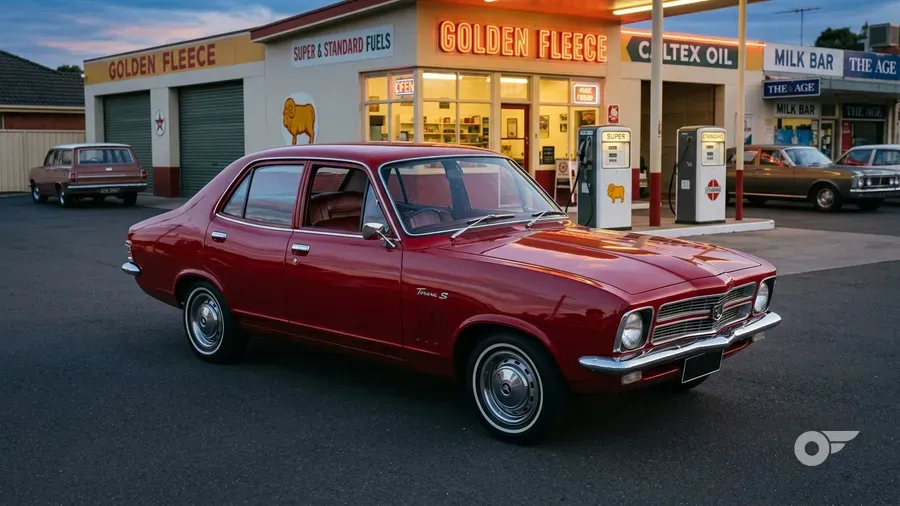
From November 1976 the four-cylinder Torana was rebadged Sunbird, first with the Opel 1.9 and from 1979 with Holden's own Starfire four. Honest, light and completely overlooked.
What owning one is like

Owning one is largely a conversation about steel. These cars rusted from new, and where they rust is structural rather than cosmetic: window surrounds, the plenum under the windscreen, floors, inner sills, front pillars. Panel work is normal here. The question is never whether a car has had some, it is whether it was done properly and what is hiding behind it. Everything mechanical is the easy part. The red and blue sixes and the 253 and 308 V8s are simple, tough and shared with hundreds of thousands of other Holdens, so a rebuild is a known job at a known price. The M21 four-speed is the one component that resents a hard life, since it was considered marginal behind the V8's torque even in period. The things that catch people out are small and specific. Hatchback tailgates and their glass are effectively unobtainable new. Seat frames crack. The brakes want upgrading if you intend to drive the car rather than display it. And a V8 Torana in a public car park now draws a level of attention that changes how you use it, which is a far nicer problem than the one owners had in 1988.

Upkeep & parts

Parts fall into two piles. Anything mechanical is cheap and everywhere, because Holden's sixes and V8s went into an enormous number of cars, and Rare Spares and the wider Australian aftermarket reproduce panels, rubbers and rust repair sections for the LH and LX. Nothing underneath the car will hold up a restoration.

The second pile is what does. Hatchback glass, tailgates, interior trim and the mouldings around the window surrounds are scarce and priced accordingly, so the sensible order of operations is to buy the most complete car you can afford and repair its steel, rather than buy a cheap shell and go hunting for the pieces.

Documentation is worth real money here. Holden Historical Services supplies production reports drawn from the factory build records, which settles arguments about V8s and SS badges before they start, and the A9X Club of Australia is the authority on those cars specifically.

For everything else the clubs hold the knowledge: the Torana Club in the ACT, the Torana Car Club of WA, and the GMH-Torana forums, which is where most owners find someone who has already fixed whatever they are looking at.

Country of origin
Australia
Class
Muscle
Production years
1974–1980
Units built
~191,000
Marque
Model
Torana
Nickname
No nickname ("Torrie" is community shorthand for every Torana, not this generation)
Body
Sedan, Hatchback
Layout
Front-engine, RWD
Engine
1.9L Opel inline-four (LH and LX), 1.9L Starfire inline-four (UC, from 1979), 2850cc (173ci) inline-six, 3300cc (202ci) inline-six, 4.2L (253ci) Holden V8 (LH and LX only), 5.0L (308ci) Holden V8 (LH and LX only, L34 and L31 versions)
Transmission
3-speed column-shift manual, M20 4-speed floor-shift manual, M21 close-ratio 4-speed manual (5.0L V8 only), M40 Tri-Matic 3-speed automatic
Designer
Phillip Zmood (chief designer, Torana studio), under GM-H design directors Joe Schemansky and Leo Pruneau