Octane Files
Browse CarsHolden Torana 1st Gen

Holden Torana 1st Gen

Overview

The first Torana was not designed in Australia, and in any strict sense it was not a Holden either. It was a Vauxhall Viva HB, the British GM small car of 1966, given round headlights in place of the British rectangular units and a badge nobody had seen before. Torana was a word Holden took from an Aboriginal language and translated as to fly, and it was the first model name of its kind the company had used. It went on sale in May 1967 as a two-door sedan in three levels, plain Torana, S and SL, from $1,795, with an 1159cc pushrod four making 56bhp. From October 1967 came the Brabham package: twin Stromberg carburettors, 79bhp, a shorter final drive, wider wheels, black paint-outs and gold badges carrying the name of Australia's Formula 1 world champion. A higher-compression Series 70 engine followed in 1968 with 69bhp and power front discs. The Series II of September 1968 brought locally pressed panels, four-door bodies and a collapsible steering column. Holden built 16,318 of the first series and 20,243 of the second before the LC replaced it in October 1969, by stretching the same shell around a six.

Distinctions

The defining attributes and collector status that make this car garage-worthy.

Octane Files Select
Renowned for its history, engineering, or cultural weight.

Collectibility scorecard

Rated 1 to 10 on the traits that matter for owning, driving, and holding on to a car like this.

Desirability
4/10
Rarity
7/10
Driving thrill
4/10
Investment trajectory
4/10
Usability
5/10
Ease of restoration
6/10
Cultural impact
5/10
Electronic dependence
Fully analogHeavily electronic

There is nothing electronic here to depend on. The 1159cc pushrod four breathes through a single Stromberg carburettor, or two on the Brabham, fed by a mechanical pump and lit by a points-and-condenser distributor. The throttle is a cable, the steering is unassisted rack and pinion, and the brakes are drums at both ends unless the car carries the Series 70 or Brabham front discs, which brought the only vacuum servo in the range. The loom runs lights, wipers, a heater and a fuel gauge. Everything else is linkage.

Market data

Demand tier, price trend, and typical values by condition, based on recent sales data.

Demand tier
EntrySolidHighBlue-chip

The accessible way in. Prices still forgive mistakes, and the upside is real.

Value trajectory
AppreciatingStableCooling

Values are holding steady. What you pay today is what it's worth tomorrow.

Price by condition
Driver
$6k
Excellent
$13k
Concours
$21k

Entry tier, and the numbers stay small. Real Australian sales run from roughly AUD 9,000 for an honest driver to the high twenties for the best cars, with a sold unrestored SL two-door survivor at AUD 14,800 as the useful reference point; the band above is converted at about 0.70 to the US dollar. It describes an S or SL sedan rather than a Brabham, which asks a clear premium. Movement here is in condition and originality rather than in the model itself: unmodified cars are getting genuinely hard to find, while the HB is not a car auction houses treat as a class of its own.

Values as of August 2026.

Buyer's guide

What anyone seriously considering this car should know first.

Why it's worth it
Holden's first small car, and the first Holden to wear a name from an Aboriginal language
Callout
Holden put a Formula 1 world champion's name and gold badges on a 79bhp shopping car
What to watch for
Start underneath and at the edges. Toranas rust in the floors and sills, and the HB adds the lower front guards and the rear quarters, exactly where a survivor advertisement will talk about honest patina. Look at the firewall, the front subframe and the suspension mounting points before you look at the paint, because those are the repairs that decide whether a car is worth doing. Panel supply is the sting. Reproduction Torana steel exists mainly because XU-1 restorers created the demand, so it is aimed at the later six-cylinder cars, and HB-specific panels are a hunting job. Series I cars used imported Vauxhall pressings and Series II cars local ones, which is worth establishing before you order anything. Then look at what is actually in the engine bay. A great many HBs now carry a Holden six or a small-block where the 1159cc four used to sit, and that is not a fault so long as the car is priced as what it is. Brabham was an option package rather than a separate model, so stripes and gold badges prove nothing on their own. Check for the twin Strombergs, the front discs and the shorter final drive.

The Story

Driving character

A shade under 800kg, twelve-inch wheels and 56bhp add up to a car that is slow in a way that is genuinely entertaining rather than tiring. The pushrod four is a willing little thing that makes its power at 5,400rpm and wants to be revved there, and the all-synchromesh four-speed on the floor was still close to a novelty in an Australian family car in 1967. Rack and pinion steering was a Holden first and it shows. The car turns in with a directness the six-cylinder Holdens of the day simply did not have, and so does the rear end, a live axle on coil springs located by four links rather than leaves. On crossplies the grip runs out early and predictably, and that is most of the fun. Drums at both ends are the limiting factor unless the car has the Series 70 or Brabham front discs, which are worth seeking out for that reason alone. The Brabham is the version worth the trouble. Period figures put it a shade under 90mph against 80 for a standard car, and the twin Strombergs give the top of the rev range a hardness the single-carb cars never find.

Design

The shape is a Chevrolet Camaro seen through the wrong end of a telescope, and that is not an accident. Leo Pruneau drew it in a GM studio in Detroit after Bill Mitchell asked for an alternative to Vauxhall's own proposals, produced it in a single sitting with the coke-bottle hip that was the American company language of the moment, and was then sent to Britain to see it built. Vauxhall's long-serving design director David Jones ran the department that finished it as the Viva HB. Holden's changes for Australia were small and deliberate: round headlights in place of the British rectangular units, its own grille and badging, with Joe Schemansky's studio, the company's first proper design department, handling the local work. It works because the proportions are right. Twelve-inch wheels ought to make a car look like a toy, and the long bonnet and kicked-up rear quarter stop it. The Brabham treatment is the period detail worth knowing: black paint-outs, wider wheels and gold Brabham badges, restraint by 1967 standards. The Series II added an HK-style steering wheel and a collapsible column.

Motorsport pedigree

Just one HB Torana appears in a Bathurst entry list. Car number 5, Chris Cronan and Steve Parkes, ran the 1967 Gallaher 500 four months after the model went on sale and finished 41st, 103 laps in, at the tail of Class A. That class was for cars retailing under $1,800, which is exactly where a $1,795 Torana sat, and it belonged to the Datsun 1000s and the Morris Cooper Ss. No Torana appears in the 1968 or 1969 entry lists at all. There is a reason, and it is not that Holden had gone cold on racing. The competition money in those years went to the other new car, the Monaro, which won Bathurst outright in 1968 with Bruce McPhee and again in 1969 with the newly formed Holden Dealer Team. An 1159cc four had nothing to offer a race organiser working to price classes. The Torana became a racing car the moment the LC put a six in the same body for 1970, and everything the name means at Mount Panorama starts there rather than here.

In culture

The HB's cultural work was done by its name and its badges. Torana was the first Holden model name drawn from an Aboriginal language, and it stuck hard enough that within a decade it meant something quite different from a 56bhp four-door: Bathurst, Brock, the A9X. The HB is where that word entered Australian English, which is why an unremarkable little sedan still gets a second look at a show. The Brabham badge did similar work in the other direction. Jack Brabham had nothing to do with the car beyond a commercial deal, and Vauxhall had already sold a Brabham-tuned Viva in Britain, but a world champion's name on a $2,000 shopping car in a Holden showroom is a very 1967 thing to find. Australians have been rude about it ever since, mostly through the old backronym that has Torana standing for Tons Of Rust And No Acceleration. Its real second life is in the street-machine scene, where a light, cheap HB shell has been carrying blown V8s to Summernats and turbocharged combinations down Drag Challenge for decades.

Rivals

Cars from other manufacturers that competed for the same buyers when new.
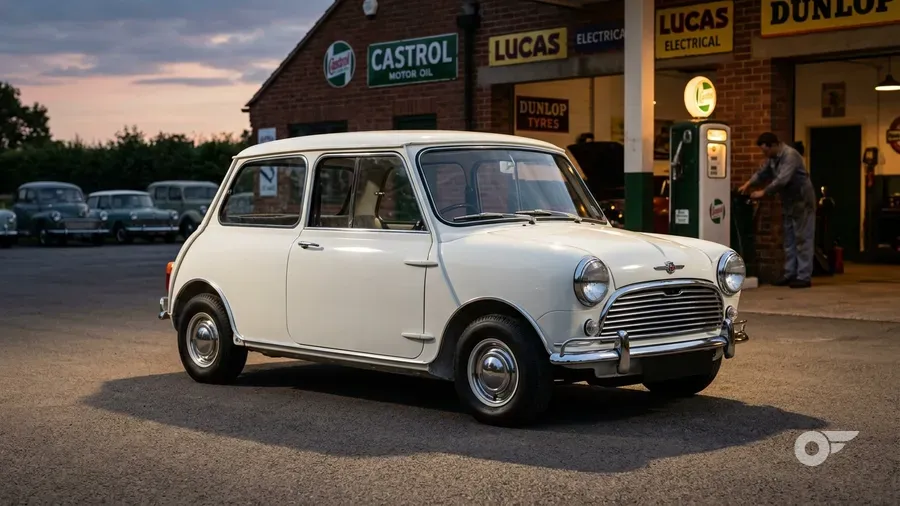
British Motor Corporation Mini Mark I

British Motor Corporation Mini Mark I

UK·Sports·1959–1967

Owning One

Why collectors want it

Nobody buys an HB Torana for the badge on the boot. They buy it because it is the start of a line that ends with Brock and the A9X, and because almost none are left in the state Holden built them. Thirty-six thousand were sold to people who wanted cheap transport, and cheap transport gets used up. The ones that survived largely did so by being cut about: an HB shell is light, small and cheap, which made it a favourite platform for Holden sixes and Chevrolet V8s long before anyone thought of it as a classic. An honest, unmodified, rust-free car is now the rare thing, and the market has worked that out. The hierarchy inside the generation is short and clear. A Brabham two-door with its twin Strombergs and front discs sits at the top, an SL two-door with the Series 70 engine behind it, and the four-door S cars are the cheap way in. None of it is expensive by Australian muscle-car standards, which is rather the point. This is a piece of Torana history a normal person can still buy and use.

Which one to look for

Four names, one body. The plain Torana was the price leader, the S added trim and instruments, and the SL brought the better seats and brightwork. All three started as two-door sedans, and the Series II of September 1968 added four doors to the S and SL. Those four-doors are the cheapest way into the generation today. The engine is where the real choice sits. Every car got the 1159cc four, but from 1968 the Series 70 option raised the compression ratio, fitted a higher-lift camshaft and lifted output from 56bhp to 69, and it brought power front discs with it, which matters more day to day than the thirteen extra horsepower. The one to look for is the Brabham. Released in October 1967 as an option package on S and SL cars rather than a model of its own, it ran twin Stromberg carburettors and a free-flow exhaust for 79bhp, plus a shorter final drive, wider wheels, front discs, black paint-outs and gold badging. Holden never published a separate Brabham production figure, so nobody knows how many there were. They are the ones people chase, which is exactly why the mechanical package matters more than the badges.

Brabham Torana · 1967–1969

An option package rather than a model of its own, released 23 October 1967 on S and SL two-doors and named for Jack Brabham under a commercial deal he had no engineering part in. Twin Stromberg carburettors and a free-flow exhaust for 79bhp, a shorter final drive, wider wheels, power front discs, black paint-outs and gold Brabham badging. Period figures put it a shade under 90mph.

Torana · 1967–1969

The price leader, and the reason the Torana landed in Bathurst's cheapest class. Two-door sedan, 1159cc four with a single Stromberg, 56bhp, four-speed floor shift, drums at both ends, twelve-inch steel wheels and very little trim. From $1,795 at launch.

Torana S · 1967–1969

The volume car. Same 1159cc four and four-speed as the base model with added instruments, trim and bucket seats. Two-door only until September 1968, when the Series II added a four-door body. The four-door S is the cheapest way into the generation today.

Torana SL · 1967–1969

Top of the standard range: better seats, more brightwork, fuller instrumentation. Two-door from launch, four-door from the Series II. From 1968 the Series 70 engine option raised compression and camshaft lift for 69bhp and brought power-assisted front discs, which is the specification to look for.

What owning one is like

Rust is the running story, and it is the same story as every Australian car of the period: floors, sills, lower front guards, rear quarters, and the mounting points you cannot see from the driveway. None of it is beyond a competent panel shop, but it sets the price of the car. The mechanical side is refreshingly undramatic. The 1159cc four is a simple pushrod engine with a small appetite and a long record of being worked hard, and it will keep doing that provided the cooling system is honest and the oil is fresh. Expect it to feel busy at highway speed, because it is. The Borg-Warner 35 automatic was optional and it takes a real bite out of 56bhp, so the four-speed is the one to have if you plan to keep up with traffic. Twelve-inch tyres are the one running annoyance, since the choice is narrow and you will be ordering rather than dropping in somewhere. Drums want setting up properly and then behave. Everything on the car is reachable, which is the compensation for all of it.

Upkeep & parts

Two parts networks keep an HB running, and they sit on opposite sides of the world. The mechanical hardware is Vauxhall Viva, so British specialists carrying HA, HB and HC stock, MEV Spares and Vauxhall Green Parts among them, will sell you engine, gearbox, clutch, brake and suspension items off the shelf. The Vauxhall Viva Owners Club runs a members' spares scheme and an ongoing programme of remanufacturing obsolete parts, which makes it the single most useful membership an HB owner can hold. Body and trim are the Australian half of the problem. Reproduction Torana panels exist in quantity, but the investment followed the restorations, meaning the later six-cylinder cars, so HB-specific steel and interior trim mean club noticeboards, swap meets and patience. That is where the Torana clubs earn their subscription. Budget for rust repair and for the search rather than for the parts themselves, because nothing on this car is individually expensive. It is small, simple and light, with no exotic materials anywhere in it, and it can be maintained in a home garage with ordinary tools.

Country of origin
Australia
Class
Sports
Production years
1967–1969
Units built
36,561
Marque
Model
Torana
Nickname
No nickname (Torrie is community shorthand for every Torana, not this generation)
Body
Sedan
Layout
Front-engine, RWD
Engine
1159cc OHV I4 (56bhp), 1159cc OHV I4 Series 70 (69bhp, 1968 on), 1159cc OHV I4 twin-carburettor Brabham (79bhp, October 1967 on)
Transmission
4-speed all-synchromesh manual, 3-speed Borg-Warner 35 automatic
Designer
Leo Pruneau (body styling, under Vauxhall design director David Jones), Joe Schemansky (Holden design direction)