Octane Files
Explore CarsGordon Murray Automotive T.50

Gordon Murray Automotive T.50

Overview

Gordon Murray spent three decades being told the McLaren F1 was perfect, and kept a private list of everything wrong with it. The chassis spine was 50mm too wide. The headlamps, in his words, were like glow worms in a jar. The air conditioning was hopeless, the clutch wanted adjusting every 5,000 miles, the fuel tank bag needed replacing every five years, and loading the luggage lockers was a nuisance. All of it stuck in his head.

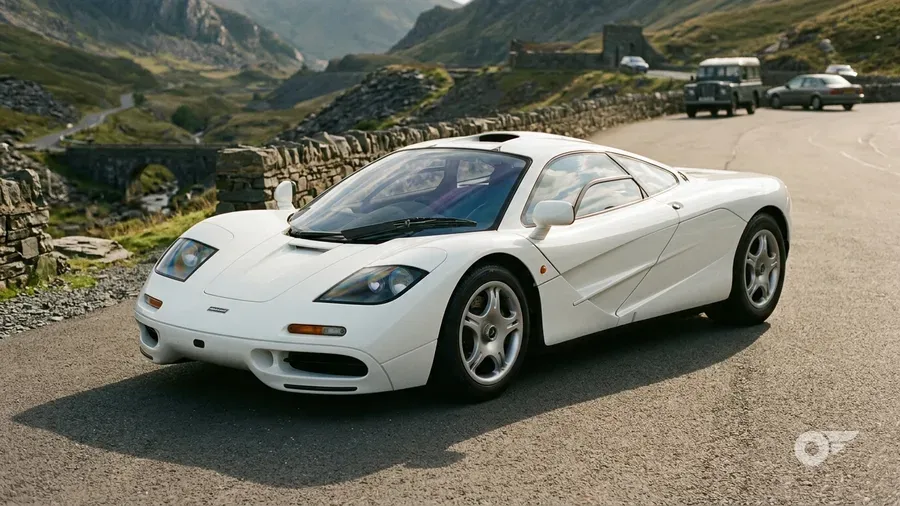
The T.50 is that list, answered. It is the fiftieth design of his career, which is where the name comes from, and it repeats the F1's central driving position, two flanking seats and upward-opening doors without repeating the compromises underneath them.

The engine is a 3,994cc naturally aspirated V12 built with Cosworth that runs to 12,100rpm. The gearbox is a six-speed Xtrac manual with an H-pattern gate. Dry weight is 997kg. At the back, behind a mesh grille, sits a 400mm fan working the underbody, a direct descendant of the Brabham BT46B that Murray built in 1978.

GMA announced 100 road cars in August 2020 at 2.36 million pounds before tax and sold every one inside forty-eight hours. Production began in Surrey in March 2023.

Distinctions

The defining attributes and collector status that make this car garage-worthy.

Poster Car
The car on the bedroom wall, the one people dreamed about before they could drive.
Octane Files Select
Renowned for its history, engineering, or cultural weight.

Collectibility scorecard

Rated 1 to 10 on the traits that matter for owning, driving, and holding on to a car like this.

Desirability
10/10
Rarity
10/10
Driving thrill
10/10
Investment trajectory
9/10
Usability
5/10
Ease of restoration
2/10
Cultural impact
7/10
Electronic dependence
Fully analogHeavily electronic

The T.50 is analogue wherever a driver touches it and electronic wherever the air does. The gearbox is a mechanical H-pattern manual worked through a titanium hand control, the handbrake is a fly-off lever, the brakes are vacuum assisted rather than electrically boosted, and the rack and pinion steering has power assistance only at low speed. A 120mm analogue rev counter sits dead centre in the binnacle. Everything else is computer managed. Engine control runs variable valve timing on both camshafts, traction control and stability control are fitted and switchable, ABS is standard, and a 48-volt integrated starter generator hangs off the front of the crankshaft. The whole aerodynamic case for the car, the active spoilers, the active diffuser and the 400mm fan itself, is electric and cannot be operated any other way.

Market data

Demand tier, price trend, and typical values by condition. Our own assessment, not a quoted valuation.

Demand tier
EntrySolidHighBlue-chip

The proven elite. Values are established, liquid, and defended at every auction.

Value trajectory
AppreciatingStableCooling

Values are climbing. The market wants more of these than exist.

Price by condition
Driver
Excellent
Concours

Two T.50s have sold publicly and that is the entire record. In December 2025 RM Sotheby's Abu Dhabi sold the 35th of the 100 production cars, a Harrier grey example delivered new to Denmark with 217km recorded, for 5,630,000 dollars. On 21 April 2026 Broad Arrow ran a single-lot sale during the California Mille at Paso Robles and sold chassis 009, in bespoke Reef paint with 27 miles showing, for 8,035,000 dollars on a 7,300,000 dollar hammer. List was 2.36 million pounds before local taxes. No price band is published here, for two reasons. Two results four months and 2.4 million dollars apart do not describe a curve, and both cars were effectively untouched, so there is no public evidence at all for what a driven T.50 is worth. That is the same call this catalogue makes on the Pagani Zonda and Utopia. The direction is not in doubt. Both results sit far above list and the second is 43 per cent above the first.

Buyer's guide

What anyone seriously considering this car should know first.

Why it's worth it
The McLaren F1 rebuilt by the man who designed it, thirty years on
Callout
12,100rpm, the highest-revving road car engine ever built
What to watch for
Buying a T.50 means buying a nearly new car from a maker that is still trading, which removes most of what makes hypercar shopping hard and replaces it with a different set of questions. Start with which car it is, because the two are not versions of each other. The road T.50 has four throttle bodies, variable valve timing, catalytic converters and a clutch pedal. The T.50s Niki Lauda has twelve throttle bodies, 15:1 compression, no variable timing, no catalysts, a sequential gearbox operated from a yoke, and no route to registration. It is a track car and always will be. Then mileage, and be careful what you wish for. Both public sales so far were delivery-mileage cars, 217km and 27 miles. A T.50 that has actually been driven is not a lesser car, but the only public benchmarks describe untouched ones, so a used example has nothing to be priced against. Specification matters more than usual because so little else varies: paint, carbon finish, the optional overdrive sixth gear, the fitted luggage set and tool chest. Finally, ask GMA. The factory holds a build file for every chassis and is a phone call away.

The Story

Driving character

Two things dominate, and neither is the top speed. The first is how fast the engine changes its mind. There is so little rotating mass in the V12 that the revs collapse almost instantly on a lift, and Top Gear's testers found them already back at idle by the time the lever had crossed the middle of its gate. You learn to leave a fraction of throttle on to smooth a shift, a skill nobody has needed regularly since the 1990s. The change itself is short and mechanical with no slack in it. The second is the noise, which is engineered rather than incidental. A ram induction airbox sits directly above and behind the driver's head, and GMA pipes its intake note into the cabin through ducting it calls Direct Path Induction Sound. Top Gear's verdict was that this is the best road car engine it has used. Underneath, nothing is trying to flatter anyone. Steering assistance drops away above walking pace, the brakes are vacuum boosted, and the whole car weighs less than a Mazda MX-5. The tractability is the surprise: fifth gear covers speed bumps to 186mph.

Design

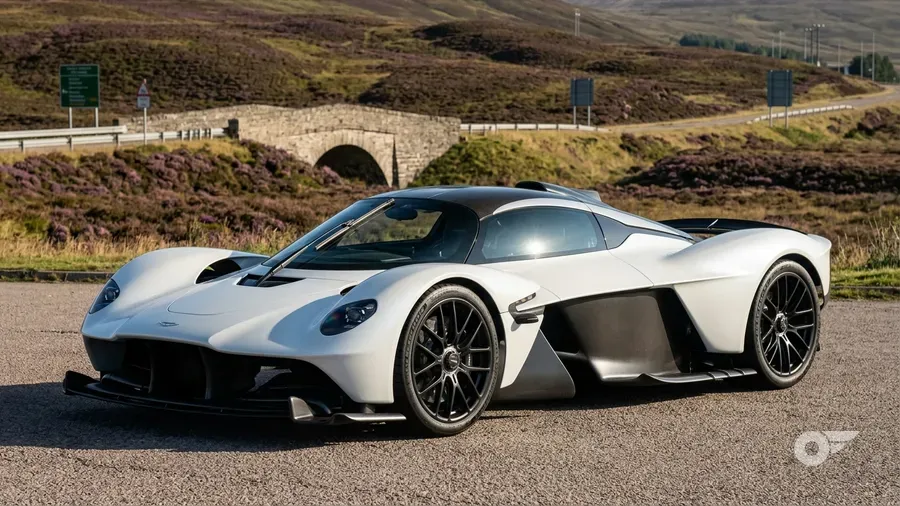
Murray's brief to himself was that nothing on the outside should exist for effect. No fixed wing, no skirts, no vents cut into the bodywork to look purposeful. The fan is what makes that possible, because it works the underbody directly instead of asking the shape to generate downforce, so the shape is free to be clean. What is left reads as a corrected F1. The central driving position with two outboard passenger seats, the upward-opening doors, the small hinged ticket window let into otherwise fixed side glass. The monocoque is bonded carbon fibre sandwich panels over an aluminium honeycomb core, 30kg lighter than the F1's, with monolithic and cored carbon panels over the top. Inside, the hierarchy is unmistakable. A 350mm carbon fibre steering wheel, a 120mm analogue rev counter directly ahead, screens pushed out to either side, an aluminium brake pedal, an aluminium clutch pedal and a titanium throttle. Forged aluminium wheels, 19 inches front and 20 rear on Michelin Pilot Sport 4S, held by Formula One style centre-lock nuts. At the back, the fan sits behind a mesh, entirely visible, and settles the argument about what the car is.

Motorsport pedigree

The T.50 races nothing, and that is deliberate rather than incidental. Murray conceived the McLaren F1 as a road car and was then pushed into turning it into a racer, an experience he has said plainly he did not want to repeat. So the T.50s Niki Lauda was drawn from the start as a separate car rather than developed out of the road one, and even it competes in no series. There is no GT class it fits, no homologation behind it, and no factory programme. The pedigree sits in the fan instead, and it is real. The 400mm unit at the back descends directly from the Brabham BT46B that Murray designed in 1978, where the fan was justified to the scrutineers as an engine cooling device because it also drew air through the radiator. Niki Lauda won the Swedish Grand Prix at Anderstorp with it on 17 June 1978, by 34.6 seconds from Riccardo Patrese, and Bernie Ecclestone withdrew the car afterwards. It never started another World Championship race. That is why the track car carries Lauda's name, and why each of its 25 chassis is named after one of Murray's own Grand Prix wins.

In culture

The T.50 landed in August 2020 into an argument enthusiasts had already been having for twenty years: whether the McLaren F1 could have a successor, and whether McLaren's own Speedtail counted as one. Murray's answer was to build his and let people compare, and the fact that all 100 sold in forty-eight hours without a public showing suggests the audience had decided in advance. Coverage has centred on the man as much as the car, which is unusual for a hypercar and entirely reasonable here. The name is a career count: the fiftieth design in a fifty-year run that includes the Brabham BT46B, the BT52 and the F1. Hagerty ran a piece built entirely around putting a T.50 next to an F1, which is the comparison every article eventually reaches. For most people the car exists on a screen. It was added to Forza Motorsport, and it turns up regularly at the Goodwood Festival of Speed, where the fan is audible from some distance away. What it has not done, and probably never will, is appear in traffic.

Rivals

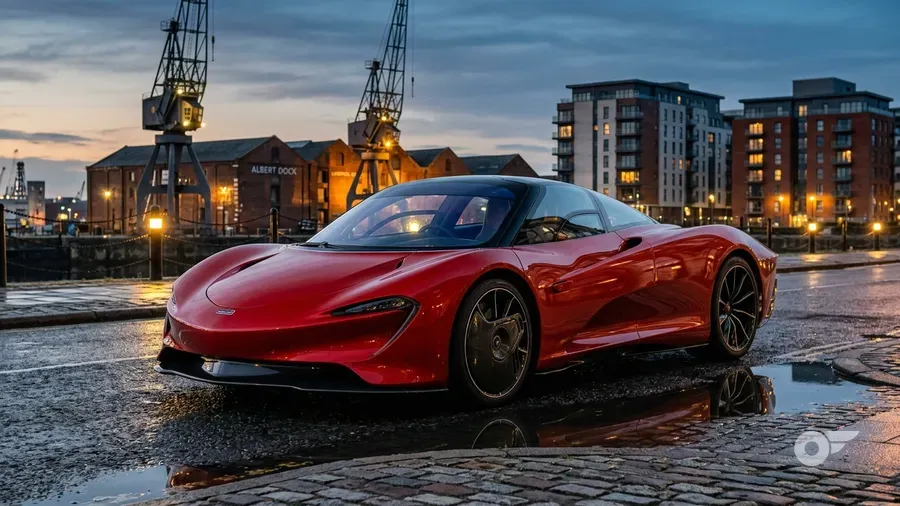
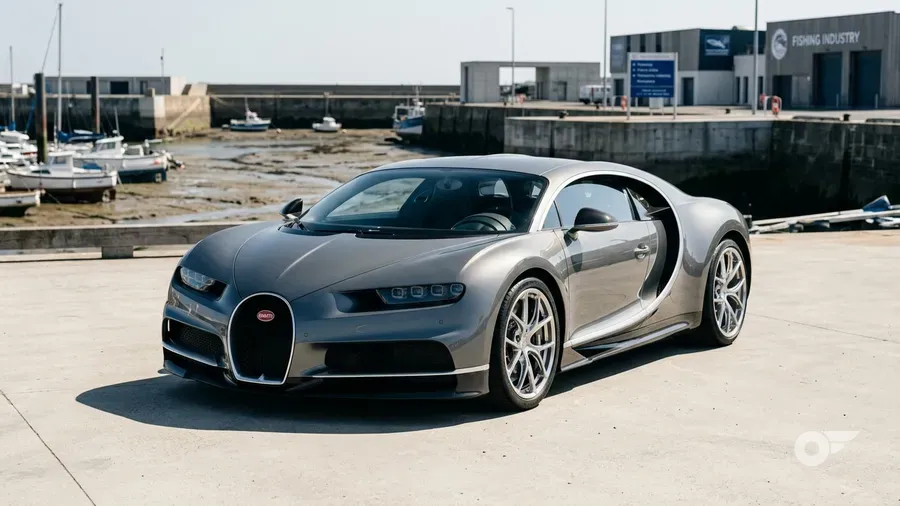
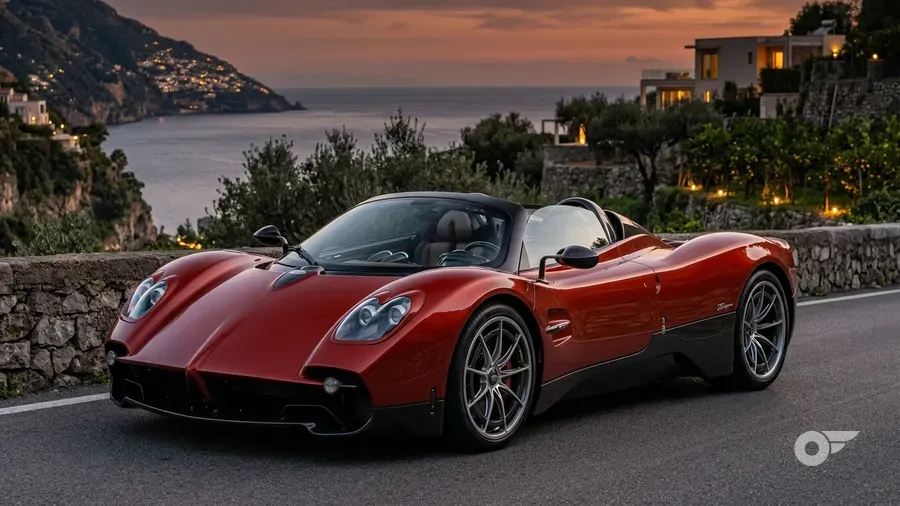
Cars from other manufacturers that competed for the same buyers when new.
Owning One

Why collectors want it

The T.50's case does not rest on scarcity, though 100 cars is scarce. It rests on the fact that nobody else is building this car and, for now, nobody else can.

Everyone chasing the same money went hybrid, or turbocharged, or both, and put paddles behind the wheel. Murray went the other way. Naturally aspirated, gated manual, under a tonne, three seats, and a V12 that weighs 178kg, less than any road-going V12 before it, and makes 166PS per litre with no forced induction at all.

The market decided quickly. Every one of the 100 cars was allocated within forty-eight hours of the August 2020 reveal, at 2.36 million pounds before local taxes. In December 2025 RM Sotheby's sold the 35th car in Abu Dhabi, 217km from new, for 5,630,000 dollars. Four months later Broad Arrow sold chassis 009, showing 27 miles, at a single-lot sale during the California Mille for 8,035,000 dollars.

Inside the run, the 25 T.50s Niki Laudas are the connoisseur's pick. Track only, sequential, no number plate, and each chassis named after one of Murray's Grand Prix wins rather than given a build number.

Which one to look for

Two cars, and the distance between them is far greater than the shared name suggests. The T.50 is the road car and the volume version, capped at 100. Cosworth GMA V12, 663PS at 11,500rpm as announced, 467Nm at 9,000rpm, 12,100rpm limit, six-speed H-pattern manual, 997kg dry, three seats, 288 litres of luggage space, air conditioning that works and a 700-watt Arcam stereo. Murray built it expecting owners to drive it to dinner, which is a design goal almost nobody else in this class states out loud. The T.50s Niki Lauda is only 25 cars and is a different proposition entirely. The V12 is substantially redesigned, with twelve throttle bodies, a 15:1 compression ratio, no variable valve timing and no catalytic converters. GMA now quotes 772PS at 11,500rpm and 497Nm. Weight drops below 900kg, the gearbox becomes a six-speed sequential with paddles on a yoke, and fixed aero working with the fan produces up to 1,200kg of downforce. Each chassis carries the name of one of Murray's Grand Prix victories. If you want to use one on a road, there is exactly one answer.

T.50 · 2023–present

The road car, and the one the whole project is about. 3,994cc Cosworth GMA V12 with four throttle bodies and variable valve timing, 663PS at 11,500rpm as announced, 467Nm at 9,000rpm and a 12,100rpm limit. Six-speed Xtrac H-pattern manual, 997kg dry, central driving position with two outboard seats, 288 litres of luggage space, air conditioning and a 700-watt Arcam stereo.

T.50s Niki Lauda · 2023–present

Track only, and drawn separately from the road car rather than developed out of it. The V12 gains twelve throttle bodies and a 15:1 compression ratio and loses variable valve timing and its catalytic converters; GMA quotes 772PS at 11,500rpm and 497Nm at 8,000rpm. Six-speed sequential pre-selector with paddles on a yoke, under 900kg, and up to 1,200kg of downforce from fixed aero working with the fan.

What owning one is like

Nobody yet knows what goes wrong with a T.50, and it is worth saying that plainly rather than inventing a fault list. The cars are three years old at most, almost all are with their first owners, and no failure pattern has surfaced in public. What is knowable is the discipline the car asks for. The V12 has so little inertia that a lazy upshift at low speed drops the revs below the gear you are reaching for, so the manual gearbox punishes inattention in a way that a modern dual-clutch cannot. That is a skill, not a fault, but it is the first thing an owner has to learn. The bigger practical issue is the opposite of use. Both cars that have reached public auction had delivery mileage, which means most of the run is being stored, and stored cars develop their own problems: flat batteries, tired fluids, seals that dry out. A T.50 driven regularly is likely to be the healthier car. The good news is unusual for this class. Air conditioning that works, 288 litres of luggage space, three seats and fitted luggage were designed in, not bolted on.

Upkeep & parts

Support runs through one door, and for now that is a strength. GMA services the cars itself from Surrey, there is no dealer network to route a job through, and with 100 road cars and 25 track cars the factory knows every chassis by number. Each car is delivered with a fitted tool chest and a diagnostics tablet, which tells you something about how the company expects ownership to work.

The engine is Cosworth's, and Cosworth is a live business with a continuing relationship to the programme rather than a supplier that walked away. That matters more than it sounds for a bespoke V12 nobody else builds parts for.

Consumables are conventional enough to source. Michelin Pilot Sport 4S in 235/35R19 and 295/30R20, CCM-R carbon ceramic discs at 370mm front and 340mm rear, 80 litres of fuel and 14 litres of oil into a dry sump system.

What does not exist yet is an ecosystem. There is no owners club, no registry, no independent specialist network and no published workshop documentation. GMA's own technical specification sheet is the only reference in the public domain.

Country of origin
UK
Class
Exotic
Production years
2023–present
Units built
In production
Model
T.50
Nickname
No nickname ("Fan Car" names Murray's Brabham BT46B specifically, not the T.50)
Body
Coupe
Layout
Mid-engine, RWD
Engine
3,994cc Cosworth GMA naturally aspirated 65-degree V12, 663 PS at 11,500 rpm and 467 Nm at 9,000 rpm, 12,100 rpm limit (GMA's current specification sheet quotes 650 PS at the same revs); 3,994cc Cosworth GMA V12, 772 PS at 11,500 rpm and 497 Nm at 8,000 rpm (T.50s Niki Lauda)
Transmission
6-speed Xtrac transverse H-pattern manual, full synchromesh, reverse lock-out, optional overdrive sixth; 6-speed Xtrac sequential pre-selector with paddle shift (T.50s Niki Lauda)
Designer
Gordon Murray