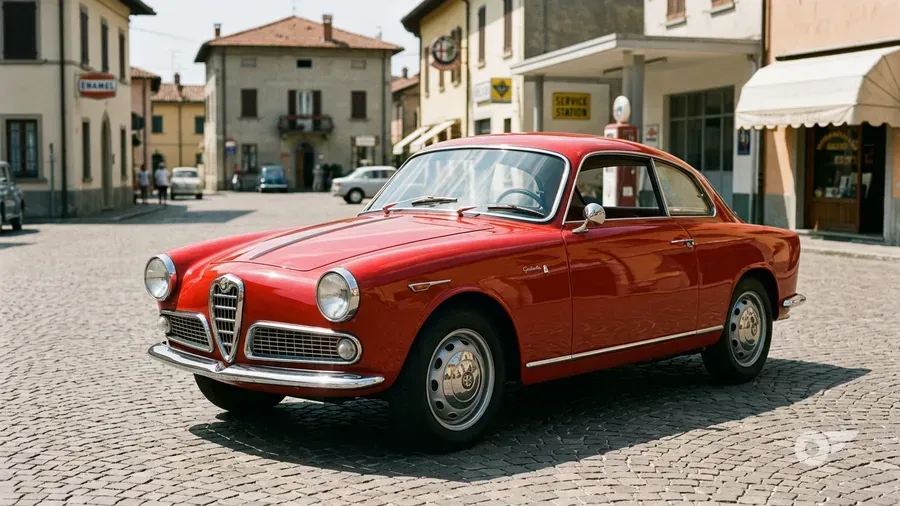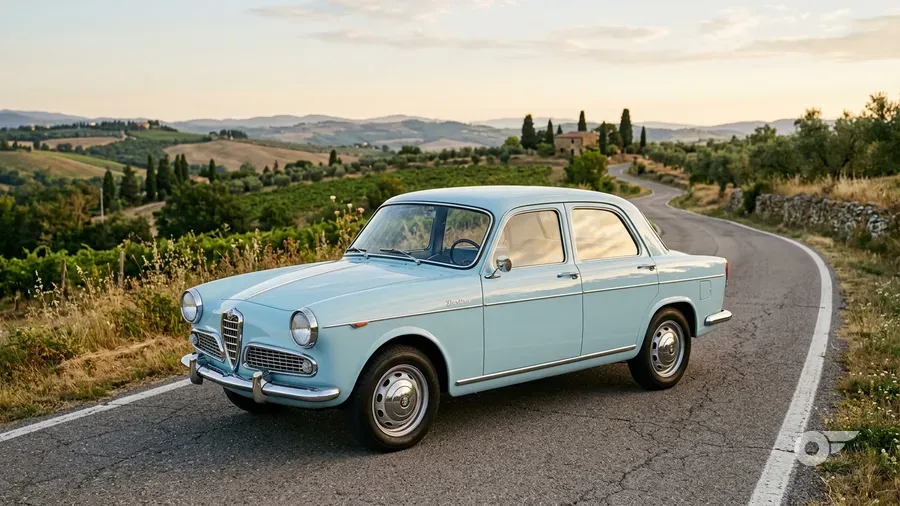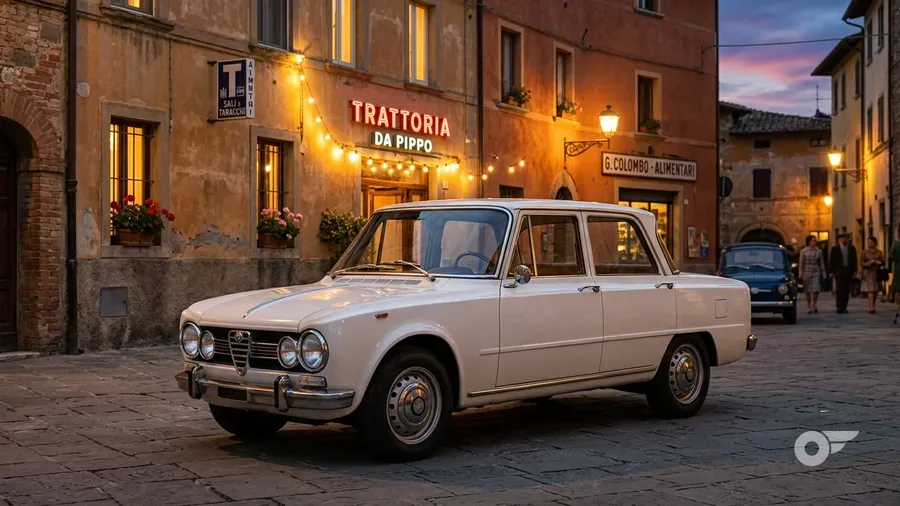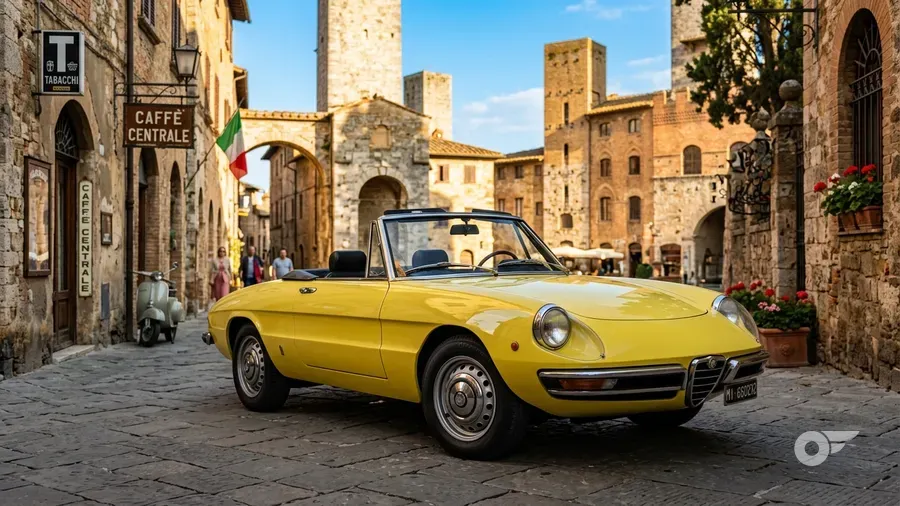
Alfa Romeo Spider Series 1
Italy·Sports·1966–1969

The defining attributes and collector status that make this car garage-worthy.

Rated 1 to 10 on the traits that matter for owning, driving, and holding on to a car like this.
Demand tier, price trend, and typical values by condition. Our own assessment, not a quoted valuation.
Values as of August 2026.
What anyone seriously considering this car should know first.
Cars from the same manufacturer family, like platform siblings or shared-era relatives.
Cars from other manufacturers that competed for the same buyers when new.
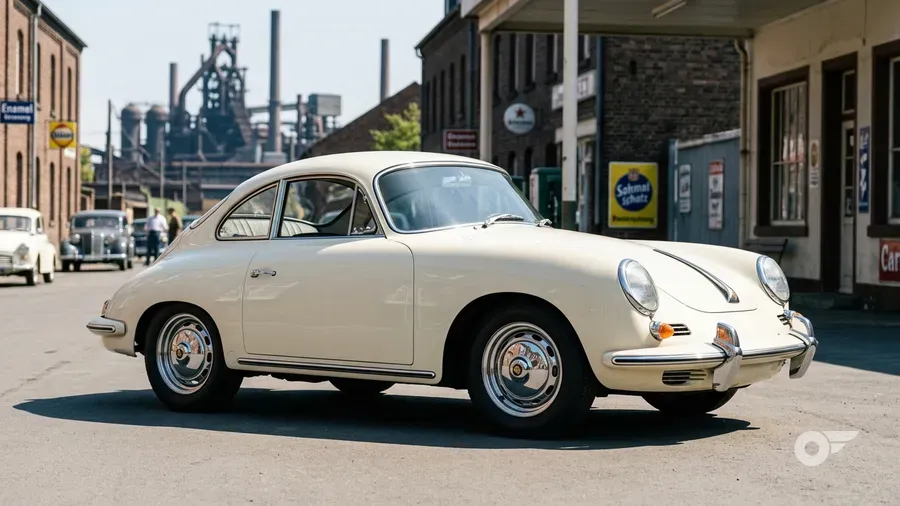
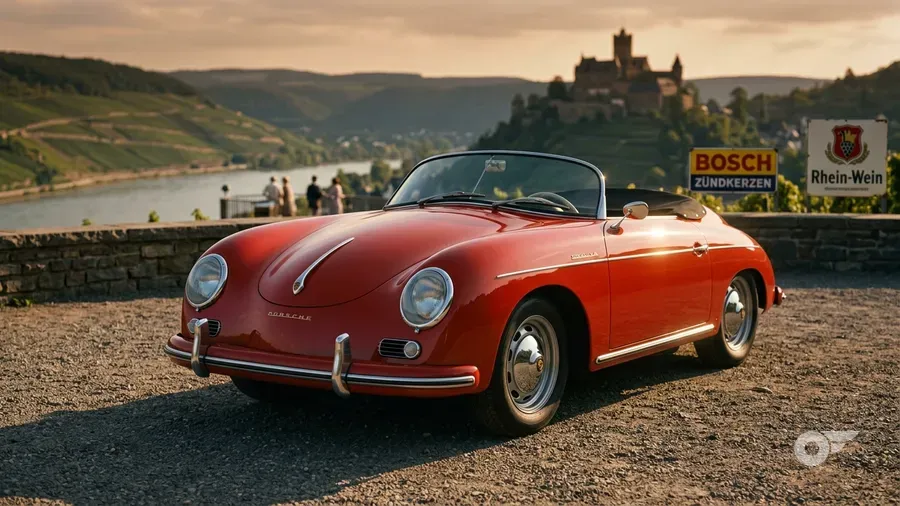
Shown at Frankfurt in September 1959 and the easier car to live with. The wheelbase grew 50mm to 2,250mm and the doors grew with it, giving roughly two inches more opening, which matters more than it sounds when you are climbing into a car this low. Round reflectors appeared beneath revised tail lights, and the glove compartment finally got a lid. Mechanically it carried on with the 80 PS 1,290cc twin cam introduced in 1958 rather than introducing anything itself, so the 101 buys you access and detail rather than pace. It is the version most buyers will be offered, and there is nothing second-rate about it.
The short-wheelbase car, and the one Italian dealers call the passo corto. 2,200mm between the axles, a dashboard pressed from sheet metal with a thin black vinyl pad laid on top, a glove compartment with no lid, and a two-spoke steering wheel with a horn ring. The earliest cars have roll-down windows but no quarter lights at all; fixed quarter lights arrived in 1957, though Alfa kept fitting old-pattern doors on occasion as late as 1959. The engine climbed through the run: 65 PS at 6,000 rpm at launch on 8.0:1 compression, 70 PS from 1956, then 80 PS at 6,300 rpm on 8.5:1 from 1958, which makes a late 750 the strongest standard Spider of the whole generation and the shortest wheelbase in the range at the same time.
The competition Spider, usually called the Sebring, and the rarest thing wearing this body. Max Hoffman commissioned it to go racing in America and promote the road car while it did. It has a reinforced lightweight chassis, aluminium body panels, doors and trim, no exterior door handles, a wraparound competition screen, an alloy panel covering the passenger seat, a Conrero-prepared 1,290cc engine quoted at 120hp, and a five-speed close-ratio gearbox at a time when the road cars had four speeds. Consalvo Sanesi, Alfa Romeo's own test driver, campaigned one through the 1956 Targa Florio, Giro di Sicilia and Mille Miglia. It is not a car anybody goes shopping for. It is one you hear about.
The last of them, and a detail update rather than a redesign. Larger tail lights are the identifying change from outside. Inside, an ashtray appeared on the floor next to the shifter and a cigarette lighter on the dashboard, which is a small thing that dates the car precisely. Everything else carries over from the 101: 2,250mm wheelbase, 80 PS, glovebox lid, drum brakes on all four corners. Production ran out in 1962 when the Giulia Spider took over the same Pininfarina body, and you tell the two apart instantly by the bump in the Giulia's bonnet with its faux chromed vent, put there to clear the taller 1,570cc engine.
The one to want. Two sidedraught twin-choke Weber carburettors, 9.5:1 compression, 90 PS at 6,000 rpm and 180km/h, in a body weighing the same as the standard car's. It ran the whole length of the generation, in 750 bodywork first and 101 bodywork afterwards, so a Veloce is not a series, it is an engine specification you find in either. Identification matters here more than anywhere else on the car. A genuine one reads 750F or 101.07 on the type plate, carries an engine number beginning 1315.3, runs twin Weber 40 DCO3 sidedraughts fed by an electric fuel pump, and has a blanking plate on the dashboard where the choke switch sits on a standard car, because a Veloce has no choke.