Octane Files
Browse CarsAlfa Romeo Spider Series 1

Alfa Romeo Spider Series 1

Overview

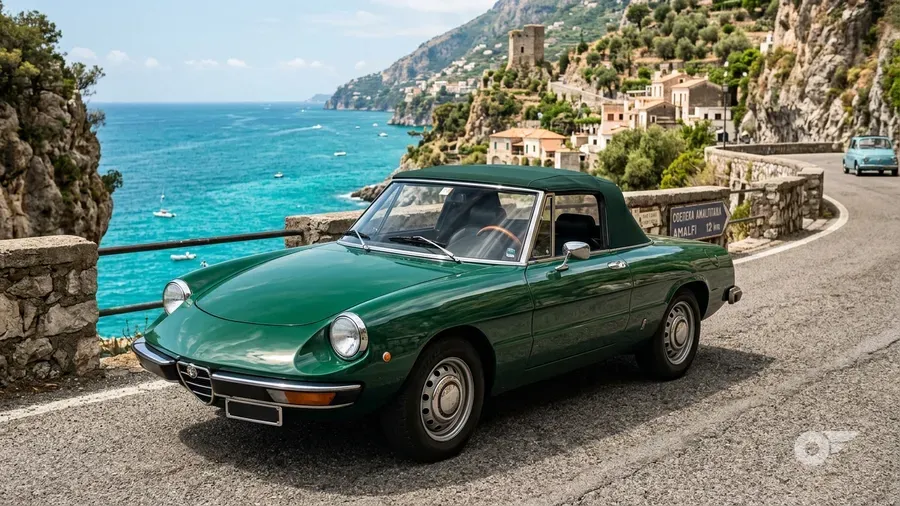
The Spider ran for 27 years, and only the first four of them look like this. Alfa unveiled the 1600 Spider at Geneva in March 1966 on Giulia mechanicals, the wheelbase cut to 2,250mm, the whole car under 1,000kg, with a 109 PS all-alloy twin cam, five speeds and a disc brake at every corner while rivals were still selling four gears and drums at the back. Battista Pininfarina had overseen the shape himself and died three weeks after the show, which makes the boat tail something like a signature at the bottom of a life's work. Alfa asked the public to name it, more than 100,000 ballots came back, and the winning entry, Duetto, turned out to belong to a Pavesi chocolate snack, so officially the car was only ever the Spider 1600. Everyone called it the Duetto anyway. Then Dustin Hoffman drove a red one up and down California in The Graduate and an Italian roadster acquired an American accent. By 1969 the long tapering tail was gone, cut square for the Series 2, and the cars built in those four years have been the ones collectors actually chase ever since.

Distinctions

The defining attributes and collector status that make this car garage-worthy.

Legend
A car that transcended the hobby, known far beyond the people who drive them.
Octane Files Select
Renowned for its history, engineering, or cultural weight.

Collectibility scorecard

Rated 1 to 10 on the traits that matter for owning, driving, and holding on to a car like this.

Desirability
8/10
Rarity
6/10
Driving thrill
6/10
Investment trajectory
6/10
Usability
6/10
Ease of restoration
6/10
Cultural impact
8/10
Electronic dependence
Fully analogHeavily electronic

There is no computer anywhere on the car. Fuelling is two Weber 40 DCOE sidedraft carburettors, ignition is points and a mechanical distributor, and every control is a direct linkage: unassisted steering, unassisted brakes, a cable throttle, manual windows, manual roof. The one injection system in the series is the SPICA unit on North American 1750s from model year 1969, and it is mechanical, a pump driven off the engine and closer to diesel practice than to anything electronic. Electricity runs the lights, wipers, starter and gauges, and that is the whole extent of it. A 1, and one of the few cars in the catalog that genuinely earns the bottom of the scale.

Market data

Demand tier, price trend, and typical values by condition, based on recent sales data.

Demand tier
EntrySolidHighBlue-chip

Strong, sustained collector demand. Good examples never wait long for a buyer.

Value trajectory
AppreciatingStableCooling

Values are holding steady. What you pay today is what it's worth tomorrow.

Price by condition
Driver
$35k
Excellent
$55k
Concours
$90k

Series 1 trades in a different market from the rest of the Spider line, and that split is the whole story. Hagerty's UK guide runs a 1600 Duetto Round Tail from 22,100 pounds in fair condition through 29,500 good and 40,100 excellent to 63,000 concours, at a moment when a good Series 3 is barely a five-figure car. Public results support that rather than exceed it. Conceptcarz's tally of eleven recorded sales of the 1969 1750 Spider Veloce averages $51,613, and the two ends are instructive: a high of $121,000 set back in 2013, and the most recent, at RM Sotheby's Monterey in August 2025, at $106,400. classic.com's Series 1 low is a $2,100 project 1600 from October 2024, which is roughly what a rotten one is worth. So the tier is High and the trajectory is stable rather than climbing. The best cars were making six figures more than a decade ago and still are. The band below describes a sorted 1600 or 1750 roundtail; Juniors sit about fifteen percent behind, and on this car condition moves the number much further than the badge does.

Values as of August 2026.

Buyer's guide

What anyone seriously considering this car should know first.

Why it's worth it
The boat-tail original, and the car The Graduate turned into a star
Callout
Battista Pininfarina died three weeks after its Geneva debut. This was the last shape he oversaw
What to watch for
The tail is the money, so start there. Series 1 panels were built for four years and are shared with nothing that came after, so a boat tail that has been filled or badly repaired is a real bill rather than a weekend. Get the car on a ramp. The inner sills are structural and they rot, and putting them right properly means cutting into both wings, which is exactly why so many of these have been repaired badly instead. Check the floorpans, the inner wheel arches, the boot floor and the spare wheel well. A leaking soft top is not a trim problem on this car, it is a sill and floor problem a year or two out. Chase the one-year details too, because the market now pays properly for a correct car and shrugs at a nearly correct one: the plexiglass headlamp fairings, the brightwork, the right interior. Mechanically the news is better. A little oil weeping from the all-alloy twin cam is normal, second gear buzzes on a tired gearbox and always has, and old cloudy coolant matters more than it looks because the alloy castings corrode from the inside out. On 1969 American cars the SPICA mechanical injection is not the liability its reputation suggests, but it wants a specialist who knows the pump.

The Story

Driving character

Under a thousand kilograms, 109 PS, and five speeds in 1966 when a Triumph still had four. That is the whole argument, and it works better than the numbers suggest. The all-alloy twin cam is the character of the car: two Weber sidedrafts, a hard metallic edge above 4,000rpm and a willingness to rev that turns ordinary speed into an event. Alfa quoted 185km/h and about eleven seconds to 62mph for the 1600, which was decent in period and is nothing now, and it matters not at all. The steering is unassisted, light once you are rolling and completely honest about what the front tyres are doing. The brakes are discs at all four corners, which no MGB owner could say. The gearbox asks for manners: the lever is tall and graceful, and second gear wants an unhurried beat on the way in, a ritual every owner learns inside a week and then performs for decades. The 1750 adds torque and makes the car easier in traffic without dulling it, and the Junior is the lightest and sweetest of the three. All of them do their best work at legal speeds with the roof down, which was always the point.

Design

The shape took ten years to arrive and then lasted four. Aldo Brovarone's Superflow, shown at Turin in 1956 on the chassis of a retired 6C 3000 CM racer, tried the rounded nose and the scalloped flanks first. The open Spider Super Sport at Geneva in 1959 added the long tapering tail. The 1966 production car distilled both under Battista Pininfarina's own eye, with Franco Martinengo directing the studio, on a Giulia floorpan shortened to a 2,250mm wheelbase. Italians called the result osso di seppia, the cuttlefish bone, and the English-speaking world has argued boat tail against roundtail ever since without settling it. The details date it precisely: headlamps faired in under plexiglass, a low shield grille, the scallop running the length of the flank, chrome bumpers and no rubber anywhere. Every car was bodied and assembled by Pininfarina at Grugliasco rather than by Alfa, which is unusual for a volume model and part of why the panel fit has its own reputation. In 1970 the tail was cut square for luggage space and aerodynamic fashion, and nothing Alfa built afterwards looked like this again.

Motorsport pedigree

The Spider never raced for the factory, and it is worth saying that plainly rather than borrowing glory from the family. The competition work in exactly these years went to the closed 105-series car. Autodelta's lightweight GTA won the European Touring Car Championship in 1966, 1967 and 1968, with Andrea de Adamich taking the drivers' title in the first two of those seasons, and the GTA's debut victory at Monza came in March 1966, the same month the Spider was shown at Geneva. So the roadster shares a birthday with a championship car and none of its trophies. What it does share is the hardware, which is why roundtails have spent decades as approachable club racers and vintage rally entries: the same all-alloy twin cam, the same all-synchro five-speed, the same suspension thinking, the same tolerance for tuning. Anyone who wants silverware in the family album buys the coupe. Anyone who wants the same mechanical education with the sky overhead buys this.

In culture

The Graduate opened in New York on 21 December 1967 and became the highest-grossing film of the year, and the red 1600 Duetto that Dustin Hoffman frets his way around California in came out of it about as famous as the actor. Alfa never let the association go; eighteen years later it was still selling an entry-level American Spider called the Graduate. The car had arrived famous anyway. Alfa asked the public to name it and more than 100,000 ballots came back, a Brescian named Guidobaldo Trionfi won with Duetto, and then a court handed the name to a Pavesi chocolate snack that had registered it first, leaving the Spider with a nickname it was legally forbidden to wear. For the American launch Alfa put three Spiders in the red, white and green of the Italian flag on the deck of the liner Raffaello and sailed them from Genoa to New York with 1,300 guests aboard and a stop at Cannes for the film festival. Sixty years on, Alfa's own museum at Arese marked the anniversary with a Spider exhibition running to the end of 2026. The charming Italian abroad has been playing the part ever since.

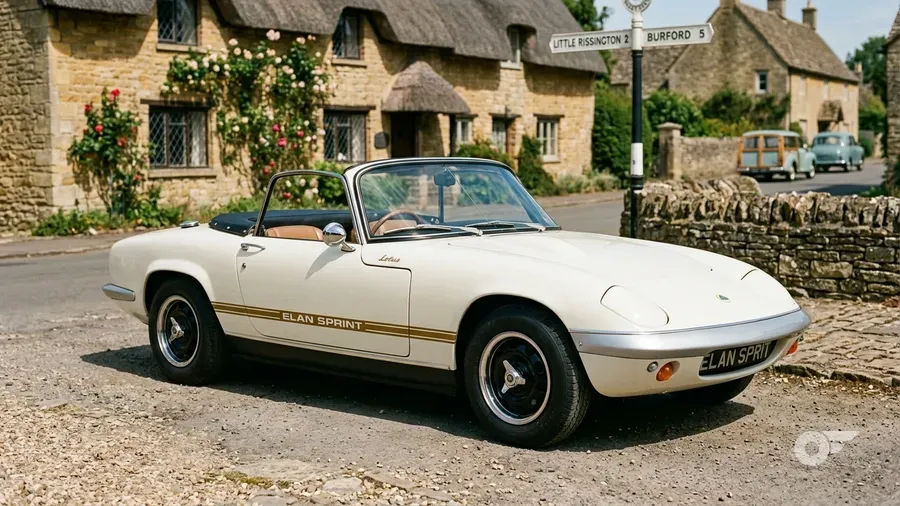
Rivals

Cars from other manufacturers that competed for the same buyers when new.
Owning One

Why collectors want it

Every Spider is a Pininfarina-bodied twin cam with five speeds, and most of them can be bought for the price of a used commuter. The Series 1 is the exception, and the gap is not small. Hagerty's UK guide puts an excellent 1600 Duetto Round Tail at 40,100 pounds while a good Series 3 struggles to be a five-figure car at all, and the reason is a tail shape that lasted four years out of twenty-seven. Roughly 13,700 cars carry it against 124,104 Spiders in total, so about one Spider in nine is the one people picture when they hear the name. Inside the series the order is settled. The 1600 Duetto is the grail, 6,324 built by the factory's own accounting, the shape Battista Pininfarina signed off and the car in the film. The 1750 roundtail that followed is quicker, better geared and scarcer in some markets. The 1300 Junior is the honest way in, and Classic & Sports Car reckons the Juniors trade about fifteen percent behind the bigger-engined cars. What you are buying at any of those levels is a design object that happens to be a genuinely good car, which is a rarer combination than the money suggests.

Which one to look for

Three cars wear the boat tail, and the pecking order is clear. The Spider 1600 of 1966 to 1967 is the one, 1,570cc and 109 PS, 6,324 built by the most widely cited factory accounting, and the only Spider Battista Pininfarina lived to see. It is also the car in the film, which is worth money and always will be. The 1750 Spider Veloce arrived with the rest of the 1750 range in January 1968 and is the better car to drive: 1,779cc, 118 PS, more torque, taller gearing, and from model year 1969 the North American version carried SPICA mechanical injection and a quoted 115bhp. The Spider 1300 Junior followed in June 1968 as the light, sweet, cheap one, 1,290cc and 89 PS, and it is easy to spot because it went without the plexiglass headlamp fairings and wore a black lower front bumper. Roughly 2,680 were built in this body. One boundary worth knowing before you shop: American roundtails ran into the 1970 model year, so a 1970-titled Series 1 car is a real thing rather than a paperwork error.

1750 Spider Veloce · 1967–1969

The roundtail to actually drive. Launched with the rest of the 1750 range in January 1968, with a 1,779cc twin cam, 118 PS, more torque and taller gearing, all of it under the same boat-tail body. North American cars from model year 1969 carried SPICA mechanical injection and a quoted 115bhp. The Kamm-tail 1750 that followed from 1970 is a Series 2 car.

Spider 1300 Junior · 1968–1969

The light one. Introduced in June 1968 with the 1,290cc twin cam and 89 PS, sold without the plexiglass headlamp fairings and with a black lower front bumper, which is how you spot one at fifty paces. Slower on paper and sweeter in practice, and the cheapest way into a boat tail. Junior production carried on into the Kamm-tail cars, so check the tail, not the badge.

Spider 1600 "Duetto" · 1966–1967

The original boat tail, and the only Spider Battista Pininfarina lived to see: he oversaw the shape personally and died three weeks after its Geneva debut. A 1,570cc all-alloy twin cam on twin Weber sidedrafts, 109 PS, five speeds and discs at all four corners, in a car under a thousand kilos. This is the one from the film, and the one the whole 27-year line is measured against.

What owning one is like

Owning a roundtail is mostly pleasant and occasionally structural. The drivetrain is the easy part. The twin cam is an unburstable design that will run for decades on oil changes and valve clearances, the five-speed is strong apart from the second-gear synchro every owner learns to work around, and the car starts and drives in a way that surprises people who came expecting Italian theatre. The body is where the money lives. These are monocoques, so corrosion in the sills, floors, arches and boot floor is structural business rather than cosmetic, and the most valuable thing an owner does is keep the car dry and the hood sound. Cooling deserves respect too, because the alloy castings corrode from the inside if the coolant is old, and a clogged radiator on a hot day costs far more than a radiator. American cars with SPICA injection run beautifully when they are set up and badly when they are guessed at, which is a specialist problem rather than a mechanical one. The scarce parts now are trim, glass and the headlamp fairings, not engine internals. None of it stops anybody. These cars get driven, and the people who drive them tend to keep them.

Upkeep & parts

Mechanically this is one of the cheapest Italian classics to keep, because the 105-series ecosystem never went away. Service parts, rubber, brake and suspension components, twin cam internals and full rust repair panels are all in steady supply through the specialist trade in Europe and North America, and any competent independent can service the engine, which is a simple and extremely well documented design. Budget for the predictable: a clutch, an exhaust, a hood every decade or so, a gearbox rebuild if a previous owner was clumsy with second, and on 1969 American cars a proper SPICA setup by somebody who genuinely knows the pump. What costs real money on a Series 1 is anything unique to the boat tail, meaning rear panels, brightwork, the plexiglass headlamp fairings and correct interior parts, all of them model-specific and getting scarcer. Buy the complete car rather than the cheap one with a box of missing pieces. The support network is deep: AROC in the United States, the AROC UK 105/115 register, the AlfaBB forum, the Alfa Spider FAQ and the Duetto Register, plus Alfa Romeo Classiche in Turin, which has been issuing certificates of origin from factory records since 2015.

Country of origin
Italy
Class
Sports
Production years
1966–1969
Units built
~13,678
Model
Spider
Nickname
Duetto
Body
Spider
Layout
Front-engine, RWD
Engine
1570cc twin cam I4 (109 PS DIN, Spider 1600), 1779cc twin cam I4 (118 PS DIN, 1750 Spider Veloce), 1779cc twin cam I4 with SPICA mechanical injection (115bhp, North American 1750 Veloce from model year 1969), 1290cc twin cam I4 (89 PS DIN, 1300 Junior)
Transmission
5-speed manual
Designer
Battista Pininfarina, Aldo Brovarone and Franco Martinengo (Pininfarina)