Octane Files
Explore CarsAlfa Romeo Giulietta

Alfa Romeo Giulietta

Overview

Alfa Romeo built the Giulietta because it had to stop being a company that made a few hundred cars a year for wealthy men. The 1900 had pointed the way. The Giulietta finished the job, and 177,690 of them left Portello and the coachbuilders' shops between 1954 and 1965.

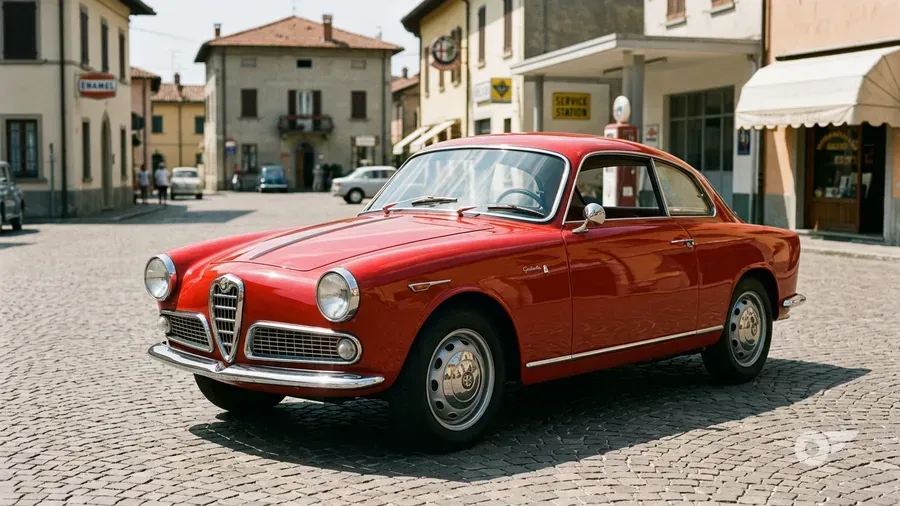
What paid for it was a bond issue dressed as a lottery. Italians bought interest-bearing Alfa bonds on the promise that 200 of them, drawn at random, would be handed a finished car. The draw came due before the saloon existed, newspapers began using the word fraud, and Alfa's answer was to have Bertone build a coupe fast enough to show at Turin in April 1954. That is why the Giulietta the world met first was the Sprint, and why the Berlina it was derived from did not appear until April 1955.

Underneath every one of them sat the same thing: a 1,290cc all-alloy twin cam with two chain-driven camshafts and hemispherical chambers, in a unitary shell on coil springs at both ends. In 1954 that was racing-car specification in a family saloon. Alfa built this engine for eleven years here and variations of it for another forty.

Distinctions

The defining attributes and collector status that make this car garage-worthy.

Legend
A car that transcended the hobby, known far beyond the people who drive them.
Octane Files Select
Renowned for its history, engineering, or cultural weight.

Collectibility scorecard

Rated 1 to 10 on the traits that matter for owning, driving, and holding on to a car like this.

Desirability
7/10
Rarity
4/10
Driving thrill
7/10
Investment trajectory
6/10
Usability
6/10
Ease of restoration
4/10
Cultural impact
8/10
Electronic dependence
Fully analogHeavily electronic

Nothing on a Giulietta is electronic in any modern sense. Fuelling is a single downdraught carburettor on the Berlina and twin sidedraught Webers on the Veloce, Sprint Speciale and Sprint Zagato engines. Ignition is coil and points through a mechanical distributor, charging is a dynamo, and the throttle is a cable. Brakes are unassisted hydraulic drums on all four corners, the only exception being the last SZs with front discs, and the steering has no assistance of any kind. The one electrically driven component anywhere in the powertrain is the Bendix fuel pump fitted to the Veloce engines, and that is a pump, not a control system. Every input a driver makes reaches the mechanism directly.

Market data

Demand tier, price trend, and typical values by condition. Our own assessment, not a quoted valuation.

Demand tier
EntrySolidHighBlue-chip

A dependable market. Well-kept cars hold their value and find ready buyers.

Value trajectory
AppreciatingStableCooling

Values are holding steady. What you pay today is what it's worth tomorrow.

Price by condition
Driver
$12k
Excellent
$22k
Concours
$38k

The band describes the Berlina, which is 131,785 of the 177,690 and the only body on this row a normal person buys casually. classic.com's Giulietta Berlina sale average is $17,156, its lowest recorded sale $2,826 for a 1955 car in August 2025, and a good 37,000-mile example made $20,000 on Bring a Trailer in April 2024. theclassicvaluer puts an average-condition Giulietta at GBP 9,634, and Hagerty's average value for a 1958 Berlina is $15,800. Prices have been flat for several years and nothing suggests that is about to change. The specials are a separate market and are excluded from the band. classic.com's Sprint Speciale average is $105,319, with $103,600 at Broad Arrow in August 2025 and $72,000 on Bring a Trailer in October 2025. The Sprint Zagato averages $316,717, and a 1962 Coda Tronca made $467,000 at Gooding & Company's Amelia Island sale in March 2025 against a $550,000 to $750,000 estimate, which is the one soft note in an otherwise firm corner of the market. The Promiscua trades too rarely to have a market at all.

Values as of August 2026.

Buyer's guide

What anyone seriously considering this car should know first.

Why it's worth it
The car that made Alfa Romeo a volume manufacturer: 177,690 built across six bodies in eleven years
Callout
Funded by a public bond lottery that promised 200 free cars, drawn before any car existed
What to watch for
Body first, always, and then work out which series you are standing in front of. These are unitary cars from the 1950s, so the shell is the car. Sills, floors, inner arches and boot floor are where they go, along with lower wings, door bottoms, the bulkhead and the suspension mounting areas. Bad earlier repair is as common as rust and often costs more to unpick than honest corrosion does to cut out. Then the series. A 750-series car (1954 to 1959) and a 101-series car (1959 onward) look similar and are not the same to own. The 101 engine and running-gear parts are plentiful and reasonably priced; 750 equivalents can be far more expensive and a few are simply absent. If you want a driver rather than a project, the 101 cars are the sane choice, and the stronger gearbox of 1958 with its Porsche-type synchromesh is the best mechanical change the model ever received. Trim is the hidden cost. Glass, brightwork, instruments and interior fittings are hard and dear, and Veloce-specific parts worse again. A complete tired car beats a stripped tidy one every time. On a Sprint Speciale or an SZ, take someone who knows the chassis sequences before you commit.

The Story

Driving character

The engine is the whole personality, and it is worth knowing why. It is 1,290cc, all aluminium with cast iron liners, two chain-driven camshafts overhead, hemispherical chambers and valves opposed at 80 degrees. In 1954 that was a specification you found in racing cars, and it means a Giulietta does not behave like any other family saloon of its decade. It pulls thinly to 3,000rpm, then wakes up, and it will sit at 6,000rpm making a hard, metallic, faintly fizzing noise that no pushrod engine has ever managed. A Berlina Normale has 50 PS and a column change and feels like a well-bred small saloon. A T.I. has 65 or 74 and starts to feel quick. The Sprint Speciale and the SZ have 100 PS and five speeds and feel like small racing cars, because that is close to what they are. The chassis underneath is common to all of them and it is honest rather than clever: coil springs front and rear, a live axle properly located by trailing links and a wishbone off the alloy differential housing, drums on all four corners. It rolls, it grips, it tells you everything, and it stops less well than it goes.

Design

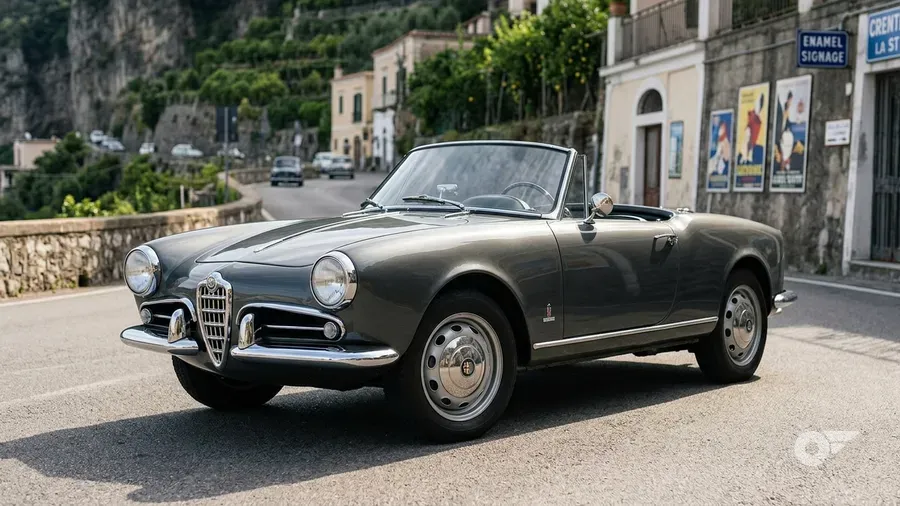
The Giulietta is really five design commissions on one set of mechanicals, and the fact that they read as one family is the achievement. The Berlina was drawn in-house by Alfa's own styling office, which took the Sprint's face and put it on a four-door body so the range would hang together. It is upright, small-windowed and slightly stern, and it was restyled twice: in 1959 with rounder wings, recessed headlights, chrome-framed grilles and larger tail lights on vestigial fins, then again in autumn 1961 with square mesh side grilles joined to the centre shield. Carrozzeria Colli built the Promiscua, which is the Berlina with a longer roof and a tailgate, and Boneschi built a handful of a rival estate called the Weekendina. The Sprint Speciale is the outlier. Scaglione had drawn Bertone's three B.A.T. aerodynamic studies immediately beforehand, and the SS carries that thinking onto the road: huge overhangs at both ends, a tapering tail and a drag coefficient quoted at 0.28, which almost nothing in production would beat for two decades. Zagato's SZ went the opposite way, all lightness, hand-formed alloy and Plexiglas, ending with a chopped Kamm tail.

Motorsport pedigree

The Berlina never raced and was never meant to, yet the Giulietta family ended up with a competition record most 1.3-litre cars would envy. It belongs to the two specials this page carries. The Sprint Zagato is the one that counts. Zagato had rebodied a crashed Sprint Veloce in late 1956 and went on to build 18 of the resulting SVZs, about 120kg lighter than the coupe they came from and running the hardest state of tune the 1,290cc engine had yet seen at 118 PS. That success produced the production SZ, launched at Geneva in 1960: all aluminium, Plexiglas glazed, 770kg, five speeds. Alfa Romeo took the 1.3-litre class of the International Championship for GT Manufacturers with it in both 1962 and 1963, and Michel Nicol had already won the Tour de Corse outright in a Giulietta in 1957. The Sprint Speciale competed too, though it was always the faster road car rather than the better race car, which is precisely why Zagato's version needed to exist. The Sprint Veloce's own record, including its 1956 Mille Miglia class result, sits on the Giulietta Sprint's page.

In culture

In Italy the Giulietta is remembered less as a car than as a period. Alfa's own heritage people call it la fidanzata d'Italia, Italy's sweetheart, and it was the first Alfa Romeo given a woman's name. It arrived exactly as the country stopped rebuilding and started buying, and for a decade it was what an Italian family bought when things had gone well. The lottery is part of that. Thousands of ordinary people held a bond in a car they had never seen, and a blindfolded boy drew the winning numbers in front of the press. Very few cars have been publicly owned in quite so literal a sense before they existed. The best single image of it is February 1961, when the 100,001st Berlina came off the line at Portello and the actress Giulietta Masina was there to mark it. It was the first Alfa Romeo model to pass six figures, and the company celebrated by borrowing the name back off the woman it sounded like. Fifty years on, Milan gave it an exhibition at the Palazzo della Ragione called Giulietta e il suo tempo, which is roughly the correct verdict.

Rivals

Cars from other manufacturers that competed for the same buyers when new.
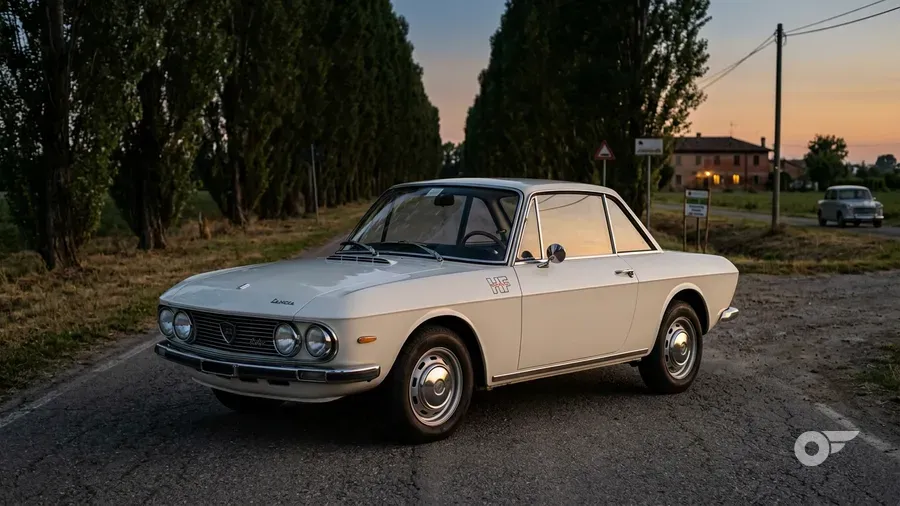
Lancia Fulvia Series 1

Lancia Fulvia Series 1

Italy·Sports·1963–1969

Owning One

Why collectors want it

The Giulietta is the cheapest way into a genuinely important car, and the range is wide enough that the entry point and the summit are two different worlds.

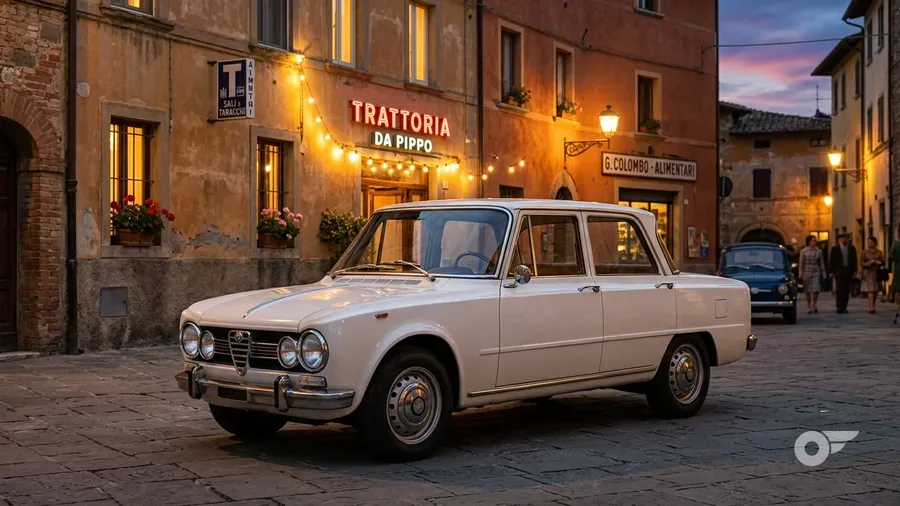
At the bottom sits the Berlina, 131,785 saloons that nobody wanted for decades and that still trade for less than a tidy MGB. It has the same engine, the same twin camshafts, the same gearbox and the same noise as the cars above it, in a body with four doors and a boot. That is the whole argument for it, and it is a good one.

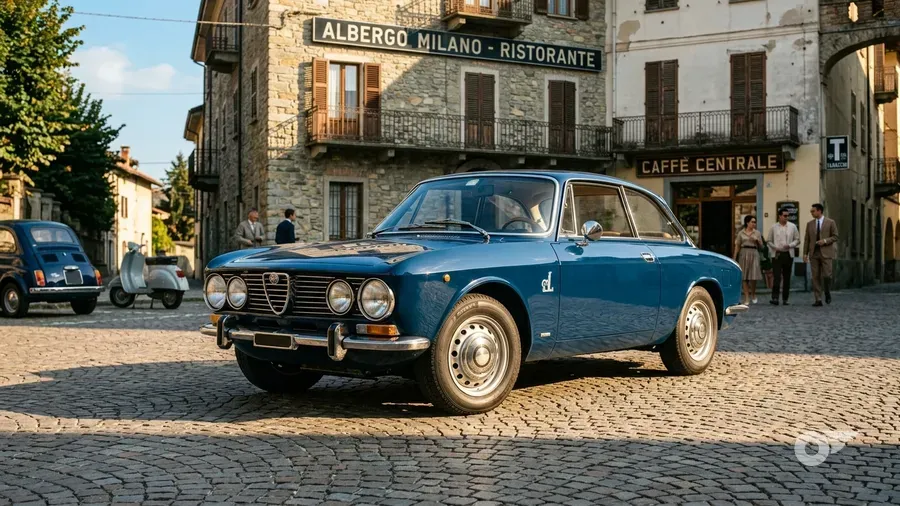
At the top sit the specials, and the gap is enormous. The Sprint Speciale, 1,366 cars carrying Scaglione's aerodynamic body, averages six figures. The Sprint Zagato, 217 hand-formed alloy berlinettas built to go racing, averages north of $300,000 and the best truncated-tail cars have passed $450,000.

Between those poles sit the Sprint coupe and the Spider, which have their own pages here. What connects all of it is the engine, and the fact that Alfa built several of these bodies in numbers small enough to matter: 91 Promiscua estates, 217 SZs, and a saloon that made the company.

Which one to look for

Rank them by what you want from the car, because the spread here is unusually wide. The Berlina T.I. is the sensible one. 92,728 built, a twin-choke Solex and 65 PS at first, 74 PS after the autumn 1961 revision, and individual seats in place of the bench from that point. It does everything a Giulietta does, with four doors, for a fraction of coupe money. The Berlina Normale is the same car in a lower state of tune, 39,057 of them, and worth having only when the price reflects that. The Promiscua is the curio: 91 estates by Carrozzeria Colli, 71 of them built in 1959 alone. Find one and it is a conversation for the rest of your life. The Sprint Speciale is where the money starts. Scaglione's aerodynamic body over a short-wheelbase chassis, 100 PS on twin twin-choke carburettors, five speeds, and one of the lowest drag figures of its decade. The Sprint Zagato is the grail. Hand-formed aluminium on the Sprint Speciale chassis, Plexiglas windows, 770kg, five speeds and a real racing record. The last cars took a truncated Kamm tail and front discs, and those are the ones the market chases hardest.

Berlina Normale · 1955–1963

The car the whole project was actually for, shown at Turin in April 1955, a year after the Sprint that was rushed out ahead of it. Same 1,290cc twin cam in a much gentler state of tune: 7.5:1 compression, one downdraught single-choke carburettor, 50 to 53 PS at 5,200rpm and 135km/h, chosen for economy and drivability rather than speed. Column change and a bench seat. Restyled in 1959 with rounder wings, recessed headlights and larger tail lights on vestigial fins, then again in autumn 1961, which lifted output to 62 PS and the top speed to 140km/h. Worth buying only when the price reflects the lower tune, because a T.I. is a better car for not much more.

Berlina T.I. · 1957–1965

Turismo Internazionale, from late summer 1957, and the version to have. A twin-barrel Solex and 8.0:1 compression took it to 65 PS at 5,500rpm and 150km/h, using an engine close to the Sprint's, with minor changes to the bonnet, dial lighting and rear lamps. The autumn 1961 revision brought a new exhaust, 74 PS at 6,200rpm, 155km/h and individual seats with net pockets in place of the bench. A right-hand-drive car finally appeared in 1961, late, because Alfa had not needed one while continental Europe and the United States were taking everything it built.

Promiscua · 1957–1960

The estate, bodied by Carrozzeria Colli on Berlina Normale underpinnings: longer roof, a tailgate, and otherwise the standard saloon's mechanical package. It is the rarest Giulietta of all by a wide margin and effectively unbuyable, so treat any sighting as a curiosity rather than a shopping option. Carrozzeria Boneschi built a small number of a rival estate conversion called the Weekendina, for which no production figure could be established.

Sprint Speciale · 1957–1962

Franco Scaglione's aerodynamic two-seater, drawn at Bertone immediately after he had done the three B.A.T. studies, and carrying that thinking onto the road: huge overhangs at both ends, a tapered tail and a quoted drag coefficient of 0.28 that almost nothing in production would beat for twenty years. Steel body on a short-wheelbase Giulietta chassis, 9.7:1 compression, two sidedraught twin-choke carburettors, 100 PS at 6,500rpm, five speeds and around 120mph. A Bertone prototype appeared at Turin in 1957 and a second, more restrained one at Geneva in 1958; series cars followed from 1959, the earliest of them low-nosed and carrying aluminium doors, bonnet and bootlid. The same body later took the 1,570cc engine as the Giulia Sprint Speciale.

Sprint Zagato (SZ) · 1960–1962

The competition Giulietta, and the grail of the family. Zagato had rebodied a crashed Sprint Veloce in late 1956 and built 18 of the resulting SVZs, roughly 120kg lighter than the coupe they came from and running a 118 PS version of the engine. That success produced a production car, shown at Geneva in 1960: Ercole Spada's design, hand-built by Zagato entirely in aluminium with Plexiglas windows, on the Sprint Speciale's chassis and mechanicals, 770kg, 100 PS, five speeds and 200km/h. The original round-tailed cars are the Coda Tonda; the last 30, and some sources say 46, took a truncated Kamm tail and front disc brakes and are known as Coda Tronca or SZ2. Those are the ones the market chases.

What owning one is like

You will spend your money on the body and very little of it anywhere else, which is unusual for an Italian car of this age and a genuine relief once you accept it. Rust is the whole story. The shell is unitary, so sills, floors, inner arches and boot floor are structural, and so are the suspension mounting areas that sit exactly where water collects. Lower wings, door bottoms and the bulkhead go next. What catches people out is not corrosion but the previous repair: these were cheap cars for thirty years and a great many were patched to whatever standard the decade allowed. Mechanically it is tough. The twin cam is strong when maintained and will run a very long time if the oil stays clean and the cooling system is honest, though it does mark its territory and a bone-dry one is suspicious rather than impressive. Watch the timing chains. Second-gear synchromesh wears out. Every owner learns to pause on the change and then stops noticing. Post-1958 boxes with the Porsche-type synchromesh are noticeably better. Electrics are simple and fragile in equal measure, which at least means a test lamp and a wiring diagram usually settle it.

Upkeep & parts

Parts support splits cleanly along the 750/101 line, and that is the first thing to establish about any car. From 1959 the 101-series engine and running-gear parts are plentiful and cheap by classic-car standards. The earlier 750-series equivalents can be several times the price and a few are not made at all.

Mechanical work is affordable. The twin cam had a forty-year production life behind it, so parts, machine shops and specialists exist in quantity, a rebuild is a known job at a known price, and any competent Alfa specialist has done dozens. Gearboxes are the same, and a rebuild here is closer to Volkswagen money than Ferrari money.

Body and trim are where the budget actually goes. Glass, brightwork, instruments, seat frames and the small interior fittings are hard to find and expensive when found, and Veloce-specific parts are worse. Budget for the trim before you budget for the engine.

The support network is genuinely good. Alfaholics and Highwood Alfa carry 750/101 stock in the UK, Classic Alfa supplies the family, and the registers listed below hold chassis records and forty years of accumulated owner knowledge.

Country of origin
Italy
Class
Sports
Production years
1954–1965
Units built
177,690
Model
Giulietta
Nickname
La fidanzata d'Italia (Italy's sweetheart)
Body
Sedan, Wagon, Coupe
Layout
Front-engine, RWD
Engine
1290cc Alfa Romeo Twin Cam I4 (50-53 PS, Berlina Normale 1955-61), 1290cc Twin Cam I4 (62 PS, Berlina Normale 1961-63), 1290cc Twin Cam I4 (65 PS, Berlina T.I. 1957-61), 1290cc Twin Cam I4 (74 PS, Berlina T.I. 1961-64), 1290cc Twin Cam I4 (65/70/80 PS, Sprint and Spider), 1290cc Twin Cam I4 (90 PS, Sprint Veloce and Spider Veloce), 1290cc Twin Cam I4 (100 PS, Sprint Speciale and Sprint Zagato)
Transmission
4-speed manual (column change on Berlina Normale, floor change on the sporting bodies), 4-speed manual with Porsche-type synchromesh from 1958, 5-speed manual (Sprint Speciale and Sprint Zagato)
Designer
Franco Scaglione (Bertone, Sprint and Sprint Speciale), Pinin Farina (Spider), Ercole Spada (Zagato, SZ), Carrozzeria Colli (Promiscua), Orazio Satta Puliga (Alfa Romeo design direction, Berlina)