Octane Files
Explore CarsAston Martin Vulcan

Aston Martin Vulcan

Overview

Aston Martin had never built a car it refused to let you register, and in March 2015 at Geneva it built 24 of them. The Vulcan was the first Aston conceived for the circuit alone: no homologation, no series to enter, no numberplate anywhere in the world.

Underneath sits a carbon fibre monocoque laid up by Multimatic in Ontario, loosely derived from the One-77 tub, around 180 kg raw, with an FIA roll cage built into it. The engine is a 7.0-litre naturally aspirated V12 developed by Aston Martin Racing from the architecture of its GT3 racer: 820 bhp at 7,750 rpm, driving through an Xtrac six-speed sequential and a magnesium torque tube. Kerb weight is about 1,350 kg. Against the One-77 it is 200 mm wider, 100 mm lower and 150 kg lighter.

What made it unusual was not the specification but the sale. Aston did not simply hand 820 bhp to 24 private buyers. It built a graduated driver development programme around the car, with works driver Darren Turner running owners through a V12 Vantage, then a Vantage GT4 on slicks, then a One-77, before they were let loose in their own car at its lowest power setting.

Distinctions

The defining attributes and collector status that make this car garage-worthy.

Poster Car
The car on the bedroom wall, the one people dreamed about before they could drive.
Octane Files Select
Renowned for its history, engineering, or cultural weight.

Collectibility scorecard

Rated 1 to 10 on the traits that matter for owning, driving, and holding on to a car like this.

Desirability
7/10
Rarity
10/10
Driving thrill
10/10
Investment trajectory
3/10
Usability
1/10
Ease of restoration
1/10
Cultural impact
5/10
Electronic dependence
Fully analogHeavily electronic

A race car of its era, which means comprehensively managed rather than digitised. The V12 runs full electronic engine management with three selectable power maps, and the driver can adjust the Bosch ABS and the traction control from the wheel. Almost everything else is mechanical and deliberately so: an Xtrac sequential gearbox with paddle shift, passive Multimatic DSSV dampers, adjustable anti-roll bars front and rear, and a mechanical limited-slip differential. There is no adaptive suspension, no active aerodynamics, no hybrid system and no infotainment to fail. It sits level with the One-77 and a clear step below the Valkyrie.

Market data

Demand tier, price trend, and typical values by condition. Our own assessment, not a quoted valuation.

Demand tier
EntrySolidHighBlue-chip

A dependable market. Well-kept cars hold their value and find ready buyers.

Value trajectory
AppreciatingStableCooling

Values are softening. Patience buys better cars for less.

Price by condition
Driver
$850k
Excellent
$1M
Concours
$1.2M

One Vulcan has sold at public auction and that single result is the entire verified record. On 23 January 2026 RM Sotheby's Arizona sold chassis two of 24, an original-owner car carrying the AMR Pro package and showing under 100 kilometres, for 771,680 pounds, about 1,045,000 dollars. It was estimated at 1.5 to 1.8 million dollars and did not reach the bottom of that, and it is roughly 45 per cent of the 2.3 million dollar launch price. Three others were offered and failed to sell: Mecum in August 2016, Mecum again in August 2017 and Gooding in August 2019. That is a sell-through of about 25 per cent across the model's entire auction history, on four cars in ten years. The band below is drawn around the one real result and describes a delivery-mileage car, which is what almost every Vulcan is. Because these cars are effectively unused, the spread inside it reflects the AMR Pro package, chassis number and provenance rather than condition. Dealer and broker asking prices have run past 2 million dollars, including a 3.4 million dollar ask back in 2016, and an asking price is not a sale.

Values as of August 2026.

Buyer's guide

What anyone seriously considering this car should know first.

Why it's worth it
Aston Martin's first car built purely for the track, sold with a driver training programme attached
Callout
Just one of the 24 has been made road legal, an 18-month conversion by RML
What to watch for
Start with where you will keep it and who will run it, because that decides everything else. A Vulcan is not a car you insure and drive; it is a race operation with one entry. Most owners store theirs with a specialist and have it transported, fuelled, warmed and set up before they arrive, and the budget for a track weekend looks like a GT3 programme rather than a hobby. Then ask what has actually happened to the car. Several of the 24 have barely turned a wheel and still show delivery mileage, which is easy enough to check and worth confirming against the factory record. The other question is the AMR Pro package. It was fitted by Q by Aston Martin's Advanced Operations team from autumn 2017 and changes the aerodynamics, the front-to-rear balance and the final drive, so a car with it and a car without it are not the same to drive or to sell. Then the awkward one. If you want to use it on a public road, RML has done that exactly once, over 18 months, with Aston Martin's blessing. More owners were reported to be interested in 2017 and no second conversion has surfaced since. Nobody should assume it is a quick job.

The Story

Driving character

The surprise, by every account of driving one, is how approachable it turns out to be once you accept the noise. evo found enormous mechanical grip and electronics that help rather than police, and a car that lets you feel the limit arriving instead of springing it on you. That is what the aerodynamics buy. At maximum speed the Vulcan generates about 1,362 kg of downforce against a kerb weight of roughly 1,350 kg, so it is pressing down harder than it weighs. The V12 is the event. Seven naturally aspirated litres with no turbo lag and no hybrid fill, pulling to 7,750 rpm with what evo called a serrated soundtrack, and nothing about the delivery is soft. The Xtrac sequential shifts with a bang rather than a swell, and the carbon ceramics let you brake absurdly late once the downforce is loaded. The power settings are the tell. There are three of them, topping out at the full 820 bhp, and the entire point of the driver programme was that you did not start at the top. Owners worked upward across events. Very few cars are sold with an implied instruction not to use all of it yet.

Design

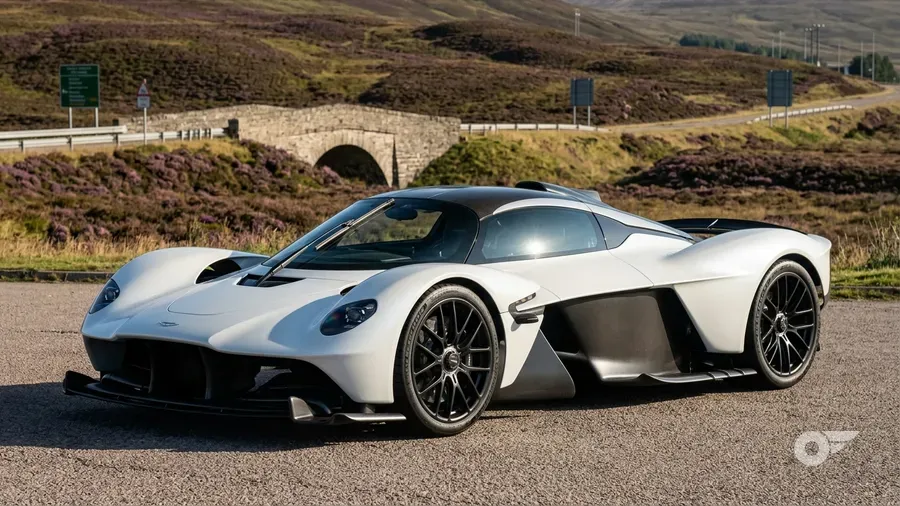
The name came first and it came from an aeroplane. Aston Martin took it from the Avro Vulcan, the delta-winged V bomber, and made the connection explicit in October 2015 by photographing the car alongside XH558, the last airworthy example, weeks before that aircraft's final flight on 28 October. Andy Palmer, then chief executive, said plainly that the bomber had provided the inspiration for the name. Marek Reichman's shape is the One-77's visual language pushed until it stops being a road car. Everything on it is doing aerodynamic work: the vast front splitter, the louvres over the arches, the sculpted flanks, the diffuser, the wing. The grille is still recognisably an Aston Martin grille, and that is close to the only concession the design makes. Inside there is no attempt at luxury and no pretence of one. A carbon tub, a racing wheel with the controls on it, an FIA cage bonded into the structure, and switchgear for the adjustable ABS and traction control. The genuinely interesting decision is that a car with these proportions still reads as an Aston Martin at all.

Motorsport pedigree

This is the strange part. The Vulcan was built as a race car and then handed to owners with nowhere to race it, because Aston Martin never homologated it for anything. No GT3, no GTE, no class in any championship in the world was written for a 24-car, 820 bhp track special. The driver development programme existed precisely because the obvious alternative, a one-make series, did not. One owner went and did it anyway. Glebs Stepanovs bought a Vulcan AMR Pro, had Venture Engineering run it, and put it on a grid: first at Britcar's Spa-Francorchamps double-header in 2020, then as an invitational entry in the 2021 Britcar Endurance Championship, where sitting outside the regulations meant the car could lead a race outright and still score nothing. He and co-driver Steve Tomkins then ran full seasons in 2022 and 2023 in the British Endurance Championship's Class A, against GT3 machinery. That remains the whole record. One car, one owner, and no championship the Vulcan was ever eligible to win.

In culture

Almost nobody has seen a Vulcan move. Twenty-four cars, no road registration and no race series means the public sightings are countable: the Geneva stand in March 2015, Darren Turner running it up the Goodwood hill that summer for its dynamic debut, a handful of track days, and the Britcar grids. So the car did most of its cultural work in games. It is a hero car in the Forza series, with both the standard car and the 2017 AMR Pro playable, and it turns up in Real Racing 3 and Need for Speed Unbound. A generation of people know exactly how a Vulcan sounds and have never been within a mile of one. The image that lasted is the October 2015 shoot with Vulcan XH558. Two British deltas photographed together on an airfield, one of them weeks away from its last flight and the other with nowhere in particular to go either. Aston Martin has rarely made its own case that well.

Rivals

Cars from other manufacturers that competed for the same buyers when new.
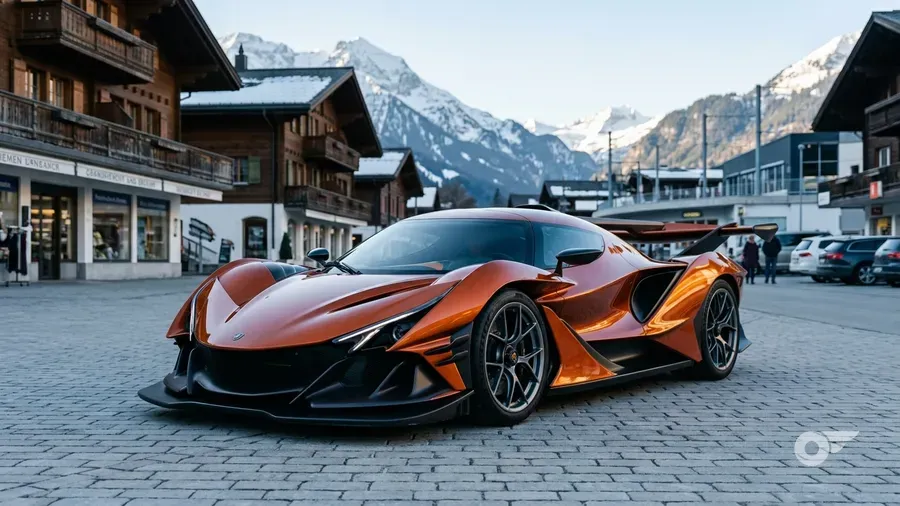
Apollo Intensa Emozione

Apollo Intensa Emozione

Germany·Exotic·2019–present
Lamborghini Sesto Elemento

Lamborghini Sesto Elemento

Italy·Exotic·2012–2012

Owning One

Why collectors want it

Twenty-four cars is the headline and it really is the whole supply, but rarity alone has not carried the Vulcan and the market has been honest about why. This is a car that cannot be used anywhere except a circuit you have hired on a day you have staffed. That narrows the buyer pool to people who want a race car and are content that it will never race for points, which is a smaller group than the one that wanted a One-77.

What it does have is a clear internal hierarchy. Cars carrying the AMR Pro package, the roughly 155,000 pound aero upgrade Aston offered from 2017, hold the real specification. Low chassis numbers matter. The single RML road-legal conversion is a category of one. And there is the racing car, the AMR Pro that Venture Engineering campaigned in British endurance racing, which has a history no other Vulcan has.

Against all that sits one verified public sale, which landed at under half the launch price. Buy it because it is the most extreme naturally aspirated car Aston Martin has ever built, not because the arithmetic says it will pay.

Which one to look for

There is one Vulcan mechanically, and then there are three things that happened to some of them. The standard car is the March 2015 specification: 7.0-litre V12, Xtrac six-speed sequential, Multimatic DSSV dampers, 380 mm and 360 mm carbon ceramic discs on Brembo racing calipers, 19-inch APP-TECH centre-lock wheels. The AMR Pro package, announced on 29 June 2017 and run at Goodwood the same week, is the one to look for. Louvred panels over the front arches, dive planes, turning vanes under the splitter, a dual-plane rear wing with a 20 mm Gurney and slotted endplates carrying 15 mm Gurneys, a lighter carbon engine cover saving 5 kg, and shorter gearing. Downforce at 100 mph rises from 3,150 N to 4,000 N, more than the Vantage GTE that won its class at Le Mans in 2017 generated, and the centre of pressure moves forward from 41.5 to 47 per cent. It was offered to all 24 owners. Then the outliers: RML's single road-legal car, and the AMR Pro that Venture Engineering turned into a genuine race car. Both are one-offs and both are more interesting than any colour choice.

AMR Pro · 2017

An aerodynamic upgrade rather than a new car, announced on 29 June 2017 and run at the Goodwood Festival of Speed the same week. Louvred panels over the front arches, dive planes, turning vanes beneath the splitter, a dual-plane rear wing with a 20 mm Gurney flap, slotted endplates carrying 15 mm Gurneys, a lighter carbon engine cover saving 5 kg, and shorter gearing. Downforce at 100 mph rises from 3,150 N to 4,000 N and the centre of pressure moves forward from 41.5 to 47 per cent.

RML road-legal conversion · 2017

Not a factory variant. RML Group in Wellingborough, with Aston Martin's approval, converted one customer car for road use over 18 months: ride height raised 30 mm, DB11 headlights and mirror caps, indicator lamps and a clear taillight lens, a shortened front splitter, revised cooling, revised gear ratios and clutch, wipers and washer jets, a numberplate housing, and reworked seats and steering wheel. The V12 was remapped to pass emissions.

Vulcan · 2015–2016

The launch specification, revealed at Geneva in March 2015. Multimatic carbon fibre monocoque and body with an integrated FIA roll cage, 7.0-litre naturally aspirated V12 by Aston Martin Racing at 820 bhp, Xtrac six-speed sequential, Multimatic DSSV dampers, Brembo racing calipers on 380 mm front and 360 mm rear carbon ceramic discs, 19-inch APP-TECH centre-lock wheels. Around 1,350 kg, 208 mph without the wing, and 324 kg of downforce at 100 mph.

What owning one is like

Owning a Vulcan is a logistics problem more than a mechanical one. There is no scenario in which you simply drive it. It goes on a truck, it comes off a truck, and somebody who understands a sequential gearbox and a dry-sumped race V12 is there when it does. Most owners run theirs through a specialist or through Aston Martin's own operation, and the day rate is the real running cost, not the parts. Mechanically the car is a race unit doing race-car things. Carbon ceramics, competition rubber, a V12 in a state of tune for which Aston Martin has never published a service interval publicly, and DSSV dampers that want checking rather than ignoring. Nothing about it was designed to sit still, which is awkward, because most of the 24 do exactly that. A car showing delivery mileage after a decade has fluids, seals and batteries that have aged without ever having been worked. None of this is unusual for a customer race car. It is only unusual for something wearing an Aston Martin badge, and owners who came at it from the race side tend to find it entirely normal.

Upkeep & parts

There is no independent Vulcan network and with 24 cars there was never going to be one. Everything routes back to Aston Martin, either through Aston Martin Works or through Q by Aston Martin's Advanced Operations team, who were the people who fitted the AMR Pro package in the first place. That is a strength as much as a constraint: the factory still holds the drawings, the spares and the people who built the car.

Around that sit the suppliers, and they are all serious motorsport names that still exist. Multimatic built the tub and the DSSV dampers, Xtrac the gearbox, Brembo the brakes and calipers, APP-TECH the wheels, Michelin the tyres. Parts move through motorsport channels rather than a parts counter, which means lead times and quotations rather than a catalogue price.

Budget for support rather than maintenance. Running a Vulcan properly for a weekend means transport, a crew, fuel, tyres and a set-up sheet. Owners who treat it as an occasional race programme are happy with it. Owners who expected a car are not.

Country of origin
UK
Class
Exotic
Production years
2015–2016
Units built
24
Model
Vulcan
Nickname
No nickname
Body
Coupe
Layout
Front-mid-engine, RWD
Engine
7.0-litre (6,949cc) naturally aspirated V12 developed by Aston Martin Racing from its GT3 race engine architecture (831 PS / 820 bhp at 7,750 rpm, 780 Nm at 6,500 rpm), with three selectable power settings
Transmission
Xtrac 6-speed sequential with paddle shift, magnesium torque tube, carbon fibre propeller shaft, limited-slip differential
Designer
Marek Reichman (Chief Creative Officer)