Octane Files
Explore CarsAston Martin Valhalla

Aston Martin Valhalla

Overview

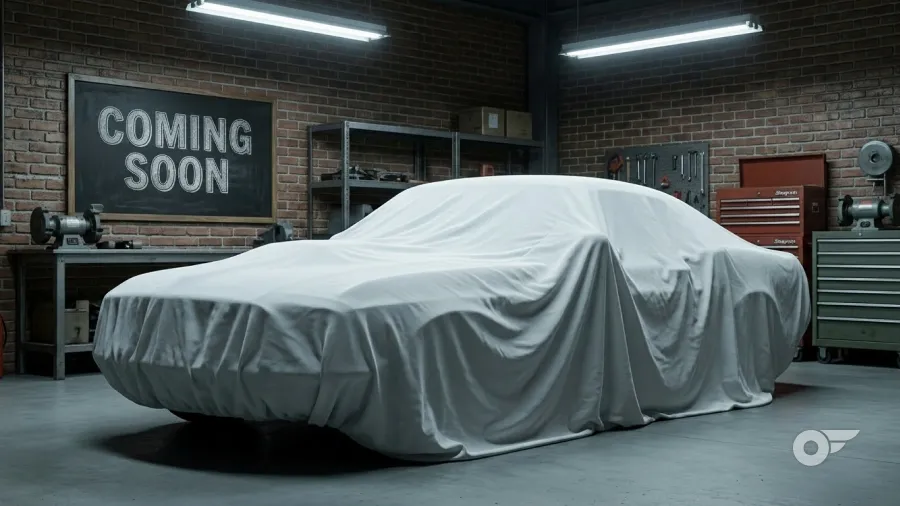
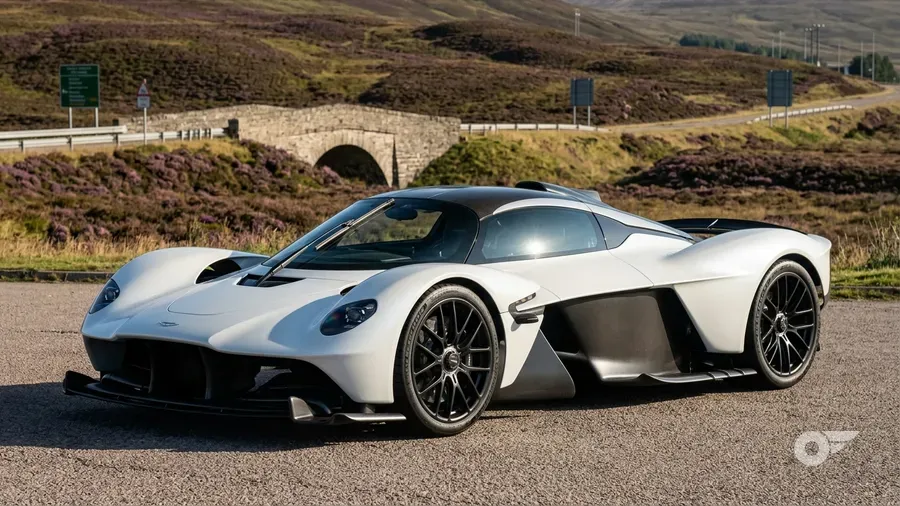
The Valhalla that reached its first customer in December 2025 shares a name and a silhouette with the car Aston Martin announced, and not a great deal else. The AM-RB 003 concept shown at Geneva in March 2019 was to be powered by TM01, a 3.0-litre twin-turbo V6 designed in-house and named for Tadek Marek, Aston Martin's first great engine man. It would have been the company's first wholly own engine since 1968, and 500 cars were planned.

It never happened. Tobias Moers arrived from Mercedes-AMG as chief executive in 2020 and cancelled it, saying that what he had found was a concept engine rather than a mature one and that the money belonged elsewhere. The Valhalla revealed in July 2021 carried a Mercedes-AMG 4.0-litre twin-turbo V8 instead, 950 PS with two electric motors, and the run had grown to 999.

The production specification, signed off in December 2024, moved again: 1,079 PS, three electric motors, an eight-speed dual-clutch with no reverse gear in it at all. Six years and two powertrains after the announcement, it is the first mid-engined car Aston Martin has ever put into series production.

Distinctions

The defining attributes and collector status that make this car garage-worthy.

Poster Car
The car on the bedroom wall, the one people dreamed about before they could drive.
Octane Files Select
Renowned for its history, engineering, or cultural weight.

Collectibility scorecard

Rated 1 to 10 on the traits that matter for owning, driving, and holding on to a car like this.

Desirability
8/10
Rarity
6/10
Driving thrill
9/10
Investment trajectory
5/10
Usability
5/10
Ease of restoration
2/10
Cultural impact
5/10
Electronic dependence
Fully analogHeavily electronic

There is no case for anything but the top of this scale. The Valhalla is a plug-in hybrid with three electric motors, a 400-volt battery and no mechanical connection between its axles at all, so the front wheels are driven entirely by software deciding what each motor should do, and torque vectoring across that axle is a calculation rather than a differential. Reverse is electric, because the eight-speed dual-clutch has no reverse gear. The brakes are brake-by-wire, the aerodynamics are active, with a rear wing that rises 255 mm and doubles as DRS and an air brake, and the four drive modes rewrite the powertrain, damping and aerodynamic maps together.

Market data

Demand tier, price trend, and typical values by condition. Our own assessment, not a quoted valuation.

Demand tier
EntrySolidHighBlue-chip

Strong, sustained collector demand. Good examples never wait long for a buyer.

Value trajectory
AppreciatingStableCooling

Values are softening. Patience buys better cars for less.

Price by condition
Driver
$1.3M
Excellent
$1.5M
Concours
$1.8M

Two Valhallas have sold at public auction and two have not, all four inside 2026, which is a thin record for a car that only began customer deliveries in December 2025. Both sales were at Mecum. The first, at Indianapolis on 16 May 2026, carried a 1,479,000 dollar window sticker with over 360,000 dollars of options and made about 2.2 million. The second, at Monterey on 15 August 2026, was a Speedway White car showing 196 miles with a 1,214,822 dollar sticker, and made about 1.5 million. A Bring a Trailer listing in July and a second Monterey car from the same owner in August both failed to sell. The direction is clear enough even on four data points. Both cars sold above their stickers, but the premium fell from roughly 50 per cent to roughly 25 per cent in three months as more of the 999 reached owners. That is what a first-to-market price looks like when it stops being scarce. The band below describes a delivery-mileage car as at August 2026 and sits around the Monterey result. The Indianapolis figure is deliberately excluded from it. Every car is effectively new, so the spread inside the band reflects options and colour rather than condition.

Values as of August 2026.

Buyer's guide

What anyone seriously considering this car should know first.

Why it's worth it
Aston Martin's first series-production mid-engined car, and its first plug-in hybrid
Callout
Announced with an in-house V6 that was cancelled before it was finished, it shipped with a Mercedes-AMG V8
What to watch for
Buying a Valhalla in 2026 means buying somebody's allocation or somebody's delivery-mileage car, because the 999 were spoken for through the dealer network before deliveries began. Both cars sold at public auction so far have been early United States cars showing under 200 miles. Options are where the money sits and where the real differences are. The two cars offered at Monterey in August 2026 came from one owner and carried 151,500 and 217,000 dollars of options against window stickers of 1,214,822 and 1,277,200 dollars, so on one of them close to a fifth of the sticker was specification. The ultra-lightweight magnesium wheels with Michelin Pilot Sport Cup 2 tyres are the option that changes how the car drives, taking 12 kg out of the unsprung mass. The rest is carbon, trim and paint. The practical checks are the ones for any new plug-in hybrid. Confirm the 400-volt battery has been kept exercised rather than left flat in storage, that the car is inside its warranty and service cover, and that the delivery paperwork and the Q by Aston Martin specification sheet came with it. On a car this new, provenance is a folder rather than an archaeology project.

The Story

Driving character

The thing reviewers keep returning to is how well behaved it is. Two motors on the front axle vector torque independently, there is no mechanical connection between the axles, and the effect is a 1,064 bhp car that changes direction on command and does not punish you for asking. The Drive found it progressive and eager, with active aero worth over 1,300 lb of downforce between 149 and 217 mph. Top Gear put it in the same conversation as an SF90 and a Revuelto and thought it the better-resolved car. The engine is the argument. It is a flat-plane crank version of AMG's 4.0-litre twin-turbo, which revs harder than the cross-plane V8 Aston Martin normally uses and sounds nothing like it. At idle, with the fans and the hybrid system running, more than one reviewer has said it sounds like a generator. Nobody has said that about the way it goes. Reverse is done by the front motors alone, so there is no reverse gear in the eight-speed dual clutch. In pure EV mode it will cover 14 km at up to 140 km/h, which is a strange and genuinely useful thing to have in a car that will also do 217 mph.

Design

Miles Nurnberger's line on the Valhalla is that it is a distillation of the Valkyrie rather than a dilution of it, and the production car mostly earns that. The proportions are low and wide, the doors are dihedral with a section of roof taken into them so that getting out is possible rather than theoretical, and the handles hide inside the air channels cut into each flank. Almost every surface is doing work. Venturi tunnels run under the car, the front wing is concealed and active with a cooling bypass built into it, turning vanes on the doors improve oil cooler performance by half, and the rear T-wing rises 255 mm in Race mode while doubling as DRS and an air brake. Aston Martin claims more than 600 kg of downforce at 240 km/h. What did not survive from the concept is FlexFoil, the NASA-validated wing that changed its shape rather than its angle to alter downforce without adding drag. The AM-RB 003 had it. The production car uses a conventional moving wing instead. That single component is the whole project in miniature: the concept promised something nobody had built, and the car that shipped does the same job by conventional means.

Motorsport pedigree

The Valhalla does not race and Aston Martin has announced no plan for it to. There is no GT3 version, no GT2 version and no track-only variant, and the reason is that the company already has both ends of that covered: the Vantage does its GT racing and the Valkyrie carries the top-class prototype programme. A 1,655 kg plug-in hybrid driving all four wheels through three electric motors would fit no GT category as written anyway. What it has instead is the traffic running the other way. The car was engineered alongside Aston Martin Performance Technologies, the consultancy arm of the Formula 1 team, on aerodynamics, chassis and materials, and the front suspension is an F1-style pushrod layout with the springs and dampers mounted inboard. Fernando Alonso and Lance Stroll did roughly 90 per cent of the dynamics and setup work in the simulator, and Alonso drove the finished car through Monaco on 23 May 2025 ahead of first practice. The engine family has a record the car does not. AMG's 4.0-litre twin-turbo V8 is the unit behind the Aston Martin Vantage GT3 and GTE that replaced the V12 racer in 2018. The Valhalla's flat-plane crank version is specific to this car.

In culture

The Valhalla was famous before it existed, which is a mixed blessing. It appeared in No Time to Die in 2021, briefly, in a wind tunnel, four years before anyone could buy one. It has been in Forza Horizon 5 and 6 and it is in 007 First Light, the 2026 Bond game. For most of its life it was a render and a promise. That gap became part of the story. Announced in 2019, delayed, re-engined, re-specified and finally delivered while Aston Martin's finances were a running news item, the Valhalla has been watched as a corporate test as much as a car. Reviewers said so out loud: The Drive's first drive called it a mission statement and a financial lifeline before it called it a great car. The other thread is Formula 1. Alonso's run through Monaco in May 2025 did more for the car's public profile than six years of press releases had managed, and it tied the road car to the racing team in a way Aston Martin has been trying to arrange since the Red Bull partnership began in 2016.

Rivals

Cars from other manufacturers that competed for the same buyers when new.
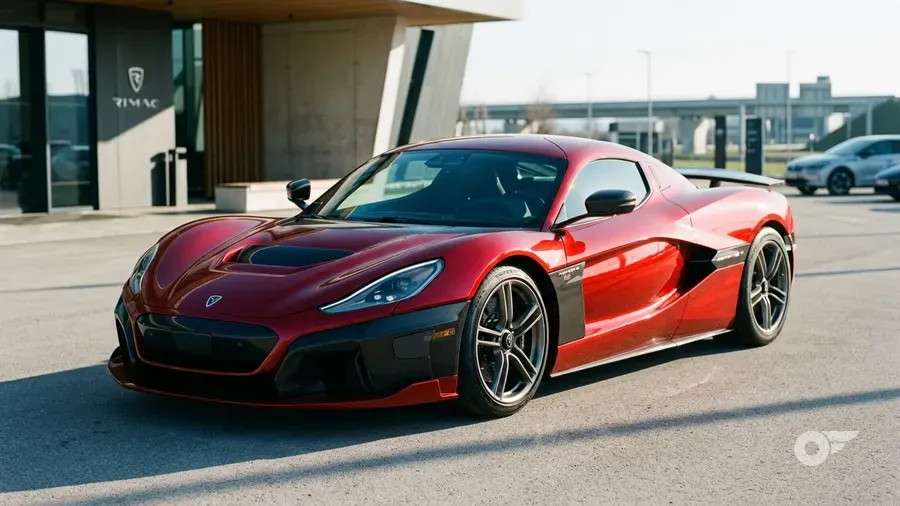
Rimac Nevera

Rimac Nevera

Other·Exotic·2022–present

Mercedes-Benz AMG One

We haven’t profiled this car yet. Request to add

Ferrari SF90 Stradale

We haven’t profiled this car yet. Request to add

Lamborghini Revuelto

We haven’t profiled this car yet. Request to add

Owning One

Why collectors want it

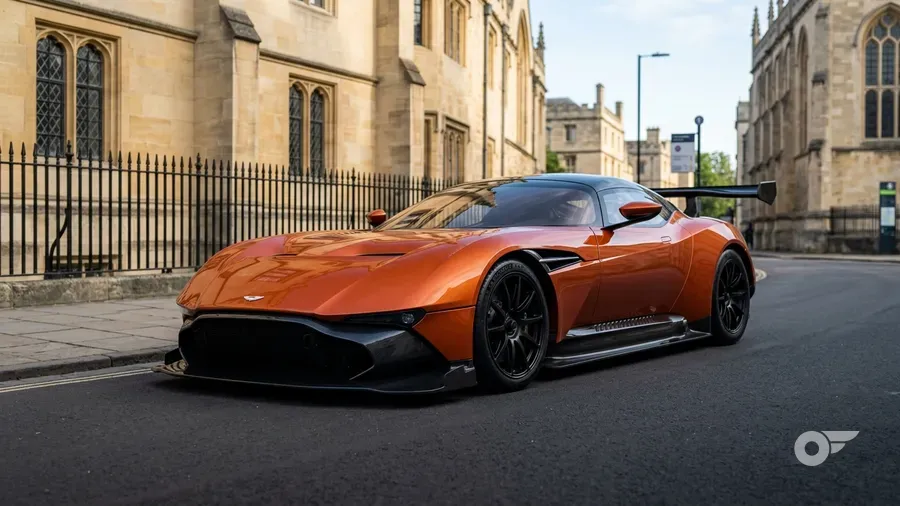
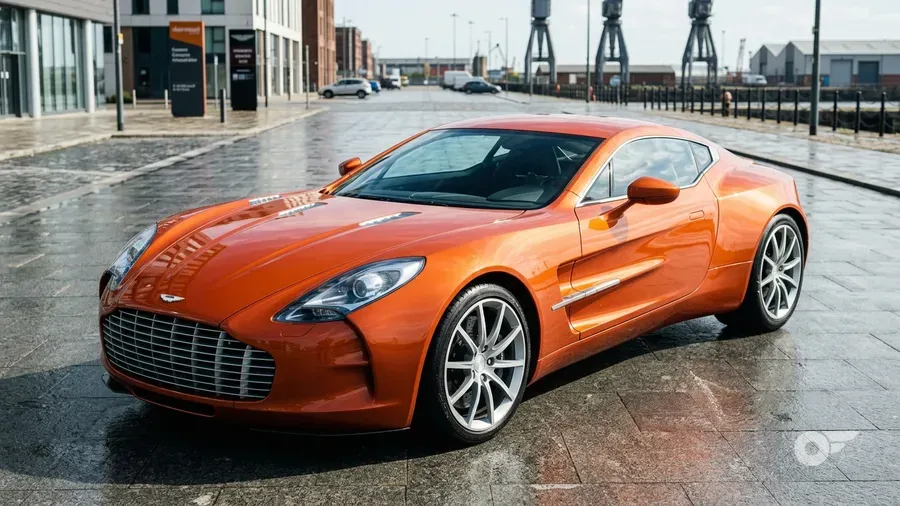
Nine hundred and ninety-nine is a lot of hypercars, and that number shapes this car's collectibility more than anything under the bodywork does. The Valkyrie's 275 will always be rarer and the One-77's 77 rarer still, and the Valhalla was never meant to compete with either on scarcity. It was meant to be the one you could use.

What it has instead is position. This is the first mid-engined car Aston Martin has put into series production in its history, its first plug-in hybrid, its first car with a dedicated electric range, and the first developed hand in hand with Aston Martin Performance Technologies, the consultancy arm of the Formula 1 team. Fernando Alonso and Lance Stroll signed off roughly 90 per cent of the dynamics in the simulator, and Alonso gave the car its public dynamic debut through Monaco on 23 May 2025, ahead of first practice.

The early market has been enthusiastic and is already normalising. The first car to reach public auction, in May 2026, made well over its window sticker. The second, three months later, made rather less over its sticker. Nine hundred and ninety-nine cars is why.

Which one to look for

There is one Valhalla. No Spider, no track-only sibling, no AMR version, and Aston Martin has announced none, so everything separating one car from another is specification rather than mechanical. The one that matters is the track package: ultra-lightweight forged magnesium wheels in place of the standard forged aluminium, saving 12 kg of unsprung mass, with Michelin Pilot Sport Cup 2 tyres instead of the standard Pilot Sport S 5. That is the difference between the road setup and the circuit setup, and it is the box to want ticked. After that it is finish rather than function, and there is a great deal of it. The carbon body panels come in gloss or satin lacquer with a red, blue or green tint. There are six bespoke liveries drawn from Aston Martin's own motorsport history. The cabin can be had with recycled forged carbon trim and a Bowers and Wilkins system, and Q by Aston Martin will do whatever else is asked. On the evidence of the first cars to change hands, owners asked for plenty: one carried 217,000 dollars of options on a 1,277,200 dollar sticker.

What owning one is like

The Valhalla is a year old, so what owning one is like is still mostly about what buying one was like. Deposit holders waited six years, watched the engine change, watched the specification and the price change, and a number of them sold their allocations before delivery. The first cars to reach auction showed 196 miles and belonged to a collector rather than a driver. Mechanically there is nothing to report yet, and that is the honest position rather than a gap: no pattern of failures has emerged, the cars are inside warranty, and Aston Martin is servicing them itself. What is worth knowing is what the car actually is. It is a plug-in hybrid with a 6.1 kWh, 400-volt, dielectrically cooled battery and a brake-by-wire braking system, which means it wants to be plugged in and exercised rather than parked for a season. The rest is ordinary hypercar reality. Carbon ceramic brakes, Cup 2 tyres if the track package was ordered, dihedral doors that need clearance to open, and a carbon monocoque that needs the correct jacking points rather than a trolley jack and optimism.

Upkeep & parts

This is the easiest of Aston Martin's low-volume cars to keep, which says more about the others than about this one. The V8 is a Mercedes-AMG 4.0-litre twin-turbo, an engine built in tens of thousands and understood by every AMG technician alive, rather than a Cosworth special with a rebuild interval measured in tens of thousands of miles. That single decision, the one that dismayed people when the in-house V6 was cancelled, is why a Valhalla will cost a fraction of a Valkyrie to run.

Servicing goes through the Aston Martin dealer network rather than a bespoke operation, and the cars are new enough to still sit under factory cover, so the first years are largely a matter of following the schedule. The consumables are where the money goes: 410 mm front and 390 mm rear carbon ceramic discs, and Michelin rubber in 285/30 ZR20 and 335/35 ZR21, which is not a size anybody discounts.

The one open question is the high-voltage battery, and nobody has had that conversation yet. Budget for it in a decade and be pleasantly surprised if it never arrives.

Country of origin
UK
Class
Exotic
Production years
2025–present
Units built
In production
Model
Valhalla
Nickname
No nickname ("Son of Valkyrie" and "baby Valkyrie" name the 2019 AM-RB 003 concept era specifically, not the production car)
Body
Coupe
Layout
Mid-engine, AWD
Engine
Mercedes-AMG M178-family 4.0-litre twin-turbocharged flat-plane-crank V8 (828 PS / 817 bhp) with three permanent-magnet electric motors, two on the front axle and one in the gearbox (251 PS / 247 bhp), 6.1 kWh 400-volt battery; 1,079 PS / 1,064 bhp and 1,100 Nm combined
Transmission
8-speed dual-clutch automatic with electronic rear differential and no mechanical reverse gear, reverse driven by the front electric motors
Designer
Miles Nurnberger (Director of Design), under Marek Reichman (Chief Creative Officer)