Octane Files
Explore CarsFerrari 330 GTC

Ferrari 330 GTC

Overview

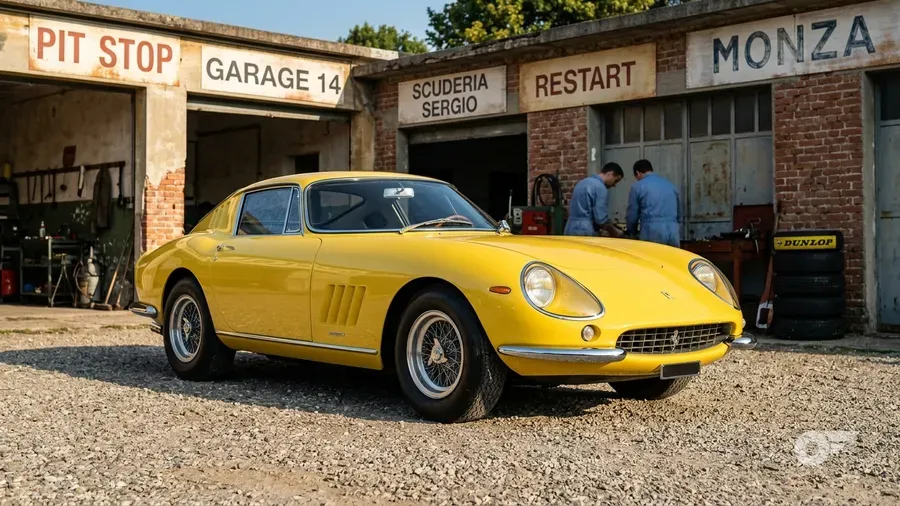
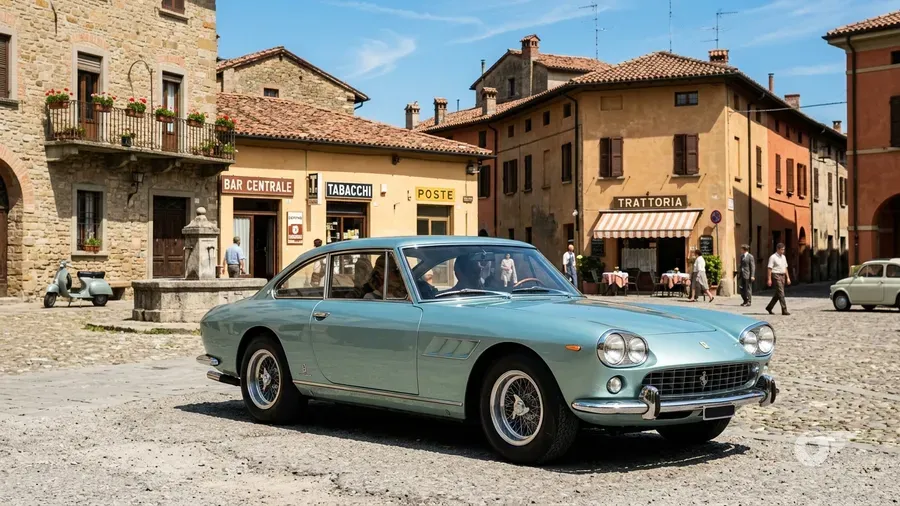
Ferrari built the 330 GTC out of its own parts bin, and the result was better than any of the donors. The chassis is the 275 GTB's, tipo 592, 2,400mm between the axles, with independent rear suspension and a five-speed transaxle tied to the engine by a rigid torque tube. The engine is the four-litre single-cam Colombo from the late 330 GT 2+2, tipo 209/66, 3,967cc, 300hp at 7,000rpm on three twin-choke Webers. The body is Pininfarina's, built at Grugliasco outside Turin and sent back to Maranello for its mechanicals, wearing the nose of the 500 Superfast and the tail of the 275 GTS. Ferrari showed it at the Geneva Salon in March 1966 and stopped building it at the end of 1968. Around 598 were finished, barely two dozen of them right-hand drive. What Ferrari was actually selling here was civility, and in 1966 that was new. A 275 GTB is a demanding car to use on an ordinary day. The GTC came with electric windows, a heater that worked, room for luggage and a V12 that would idle through a town without protest, and it gave up remarkably little on an open road to get there. Phil Hill, widely quoted from Road & Track, called it the best road-going Ferrari yet built.

Distinctions

The defining attributes and collector status that make this car garage-worthy.

Octane Files Select
Renowned for its history, engineering, or cultural weight.

Collectibility scorecard

Rated 1 to 10 on the traits that matter for owning, driving, and holding on to a car like this.

Desirability
8/10
Rarity
7/10
Driving thrill
7/10
Investment trajectory
6/10
Usability
6/10
Ease of restoration
4/10
Cultural impact
5/10
Electronic dependence
Fully analogHeavily electronic

Nothing on the car is electronic. Fuelling is three twin-choke Weber carburettors, ignition is coil and points through twin Marelli distributors driven off the back of the engine, and throttle, clutch, gearbox and unassisted steering are all direct mechanical linkages. The only electrical assistance anywhere is the brake servo and the standard electric windows, plus the optional air conditioning, none of which govern how the car runs. A points-to-electronic ignition conversion is a common and reversible owner upgrade that changes reliability, not character.

Market data

Demand tier, price trend, and typical values by condition. Our own assessment, not a quoted valuation.

Demand tier
EntrySolidHighBlue-chip

Strong, sustained collector demand. Good examples never wait long for a buyer.

Value trajectory
AppreciatingStableCooling

Values are holding steady. What you pay today is what it's worth tomorrow.

Price by condition
Driver
$400k
Excellent
$550k
Concours
$750k

Results through 2025 and 2026 have been consistent rather than exciting. RM Sotheby's sold a Classiche-certified matching-numbers car at Monterey in August 2025 for $742,000, at the top of the range, then a good honest example at Arizona in January 2026 for $588,000. Mecum took $511,500 at Kissimmee the same month and Gooding $489,735 at Retromobile in Paris. classic.com's running average sits around $540,000, and theclassicvaluer records 136 completed sales at a median just above £400,000. The band below describes a standard left-hand-drive coupe. Classiche certification, an unbroken history file and right-hand drive move a car to the upper end; a non-matching engine or a vague body history moves it a long way down. Halo cars sit outside the band, with Sergio Pininfarina's own Speciale bringing $967,500 in 2022.

Values as of August 2026.

Buyer's guide

What anyone seriously considering this car should know first.

Why it's worth it
The Ferrari V12 that finally became easy to live with
Callout
Sergio Pininfarina bought one for himself and used it to design its replacement
What to watch for
Start under the car, not under the bonnet. The body is Pininfarina steel over a tube frame, with only the doors, bonnet and boot lid in aluminium, and the corrosion follows the usual pattern: sills, floors, the bottoms of the A-pillars, the front of the rear wings, and the frame tubes themselves where they run under the sills. A paint-depth gauge and a torch are worth more here than a compression tester. Blistering along the sill returns, doors that need a shove, and suspiciously fresh underseal are the three things that should slow you down. Then the transaxle, which is this car's own particular item. It sits at the back, joined to the engine by a torque tube, and a rebuild is a five-figure job. Listen for whine on a trailing throttle and a change that turns notchy once the oil is hot. On the engine, blue smoke on the overrun points at valve guides, and a car that runs hot in traffic wants its cooling system properly sorted rather than a bigger fan. Paperwork closes the deal: Classiche red book, Massini history file, matching chassis, engine and gearbox numbers. Know too that GTC coupes have been cut into GTS spider lookalikes, and only 100 real spiders exist.

The Story

Driving character

First is a dog-leg, down and to the left, guarded by a clutch that does not much care how you feel about it, and the whole business feels heavy for the first mile. Then the car comes to you. The steering is unassisted and genuinely leaden at parking speed, and it lightens and sharpens the moment there is speed on it. With the gearbox at the back the balance is close to even, and the 330 changes direction with a solidity that Paul Frere, who raced for the works, compared to a racing car in an S-bend. The four-litre pulls from anywhere, which is the real difference between this and a 275 GTB: you can leave it in fourth and drive on the throttle. The noise builds rather than arrives, a hard mechanical hum at a cruise that hardens into a bellow past 5,000rpm. The brakes are servo assisted and over-eager at walking pace, then accurate once the discs have heat in them. The Nardi wheel sits at a bus-driver angle, arms out, knees apart, which sounds wrong and stops registering after ten minutes. Ferrari claimed 150mph. Period road tests recorded rather less, and it makes no difference at all to how the car feels.

Design

Pininfarina did not so much draw the GTC as assemble it from its own best work, and it is the rare car where that reads as coherence rather than compromise. The nose, with its small oval grille and slim bumper, comes from the 500 Superfast. The tail, cut off short with a subtle lip, is the 275 GTS's. The glasshouse, with pillars thin enough to make the cabin feel open, follows the 250 GT Lusso. Everything is steel except the doors, bonnet and boot lid, which are aluminium. Rolling chassis went from Maranello to Pininfarina at Grugliasco to be bodied and trimmed, then back to Maranello to be finished. The detail that dates a GTC at a glance is the vent behind each front wheel, inherited from the 330 GT 2+2 and deleted on the 365 GTC, which breathes through the bonnet instead. That change began on Sergio Pininfarina's own car. Wheels were Campagnolo ten-hole alloys as standard with Borrani wire wheels optional, and which set a car wears is one of the first things a knowledgeable buyer looks at.

Motorsport pedigree

There is no competition 330 GTC, and that is not an oversight. The car arrived in March 1966, in the middle of the years when Ferrari's racing effort was pouring everything into the 330 P3 and then the P4 to fight Ford at Le Mans, and the racing record attached to the 330 name belongs to those cars and to the earlier 330 LM, none of which share anything meaningful with this one. The GTC was Maranello's other answer to the same period, built for the customer who wanted the engineering without the ordeal. Ferrari never made a lightweight version, never homologated one for GT racing, and no period works or serious privateer campaign for the model could be verified from any reliable source. One claim circulates online that a lightweight GTC took a class second at the 1967 Targa Florio; it traces to a single unreliable page, calls the Targa a rally, and is not repeated here. What GTCs do instead is cover ground. They turn up on historic road events and long tours, where a four-litre V12, a boot and a working heater beat a race number.

In culture

The GTC's fame is not on screen. It is in the ownership lists, which for a car built in these numbers are remarkable. Sergio Pininfarina drove one and used it as a design laboratory. Leopoldo Pirelli, by then running the tyre company his grandfather founded, had his fitted with a bigger engine and special wheels. The first Speciale was built for Princess Liliane de Rethy, wife of King Leopold III of Belgium, and shown at Brussels in 1967; the second went to Michael DeBakey, the Houston heart surgeon. Klaus Kinski bought a late car in Rome in February 1969, according to the history file Marcel Massini compiled for it, and kept it into the early 1970s. The one-off Zagato targa, chassis 10659, appeared at the Geneva show in 1974 and at Pebble Beach in 1996. What the GTC never became is a poster, and that suits its reputation exactly. It is the Ferrari enthusiasts recommend to each other rather than the one on the bedroom wall, and the people who buy them are usually on their second or third Ferrari, not their first.

Owning One

Why collectors want it

The GTC is the sane way into a serious 1960s Ferrari V12, and the market has quietly worked that out. It shares chassis, suspension, steering and transaxle with the 275 GTB, whose running average at auction is now above two million dollars, and its engine with the 330 GT 2+2, the cheapest four-litre V12 Ferrari made. The GTC sits between them at around half a million and does most of what either does, better. Inside the model the hierarchy is short and clear. Matching-numbers cars with a Ferrari Classiche red book and a Marcel Massini history file lead; the twenty or so right-hand-drive coupes carry a premium in Britain; the Pininfarina Speciale bodies and Sergio Pininfarina's own development car sit in their own category, the latter having brought $967,500 at RM Sotheby's in Arizona in 2022. Open cars are a separate market, since the 100 GTS spiders now trade around three times GTC money. What holds the whole thing up is that the GTC is not a trophy. People drive them, on tours and rallies and to lunch, and that use has never hurt a good one's value.

Which one to look for

Almost every 330 GTC is the same car, which is why the exceptions matter. The Speciale is the grail: a Pininfarina body commissioned by Princess Liliane de Rethy of Belgium and shown at Brussels in 1967 on chassis 09439, followed by cars for the Houston heart surgeon Michael DeBakey, a private owner in Cortina and a doctor in Rome. Most accounts count four; RM Sotheby's counts six Speciales built on the GTC platform, folding in Sergio Pininfarina's own chassis 8727. That car is worth knowing on its own. He bought it new as a rolling design study, added pop-up fog lamps, moved the demister vents to the top of the dash and replaced the flank vents with a pair on the bonnet, and the 365 GTC that succeeded the GTC in 1968 wears exactly that bonnet. Leopoldo Pirelli had his own car built with the 4.4-litre engine and five-spoke Campagnolo wheels. Right-hand-drive cars number roughly twenty out of 598. Two curiosities sit outside the factory entirely: chassis 10659, rebodied by Zagato as a targa in 1974 and shown at Geneva, and the Felber FF roadsters of the mid-1970s. Both are conversions, not variants.

330 GTC · 1966–1968

The production car, and effectively the only one. A two-seat Pininfarina berlinetta on the 275 GTB's tipo 592 tube chassis, with the four-litre tipo 209/66 single-cam Colombo V12, three twin-choke Webers, 300hp at 7,000rpm, and a five-speed transaxle joined to the engine by a rigid torque tube. Steel body with aluminium doors, bonnet and boot lid, bodied and trimmed by Pininfarina at Grugliasco. Electric windows and full leather were standard; air conditioning was an option, and has been added to many cars since. Campagnolo ten-hole alloy wheels were standard fitment with Borrani wire wheels optional.

330 GTC Speciale · 1966–1967

Pininfarina one-offs on the GTC chassis, with clean-sheet bodywork rather than a decorated production car. The first was commissioned by Princess Liliane de Rethy of Belgium and shown at the Brussels Salon in 1967 on chassis 09439; the second, chassis 09653, went to the Houston heart surgeon Michael DeBakey and was displayed at Geneva in March 1967; the remaining pair went to private Italian owners. Sergio Pininfarina's own chassis 8727 is counted with them by some sources: bought new as a development study, it gained pop-up fog lamps, dashboard-top demister vents, dual heater controls and a pair of bonnet vents in place of the flank vents, and those last two changes went into production on the 365 GTC.
What owning one is like

A good 330 GTC is one of the easier old Ferraris to live with, and owners use them accordingly. The V12 is a robust design that is unforgiving in two specific places: cooling and valve guides. Left idling in traffic with a tired radiator it will run hot, and worn guides announce themselves as a puff of blue smoke on the overrun. Three Weber carburettors want synchronising properly rather than fiddling with, and a car that idles unevenly is usually telling you it has been fiddled with. The transaxle is what separates this car from a front-gearbox Ferrari: it whines when it is worn, it is expensive when it is tired, and it is not a job for a general workshop. Ignition is points and twin Marelli distributors, so cold starting is a technique rather than a switch. The cabin gets warm, and a lot of cars have had air conditioning added or rebuilt, which is money well spent when it is done properly. Rust is the thing that actually ends these cars, and it is slow, hidden and worth chasing early. None of it is mysterious, and none of it stops anybody driving them.

Upkeep & parts

Mechanical parts are better supported than the production number suggests. Maranello Classic Parts, Superformance and the specialist trade list 330 GTC components down to heater ducts and transaxle casings, and because the engine is a Colombo V12 the people who know it are the same people who keep 250s and 275s running. The names that come up repeatedly are DK Engineering, GTO Engineering, Bell Sport and Classic, and Ferrari Classiche itself at Maranello. Budget by job rather than by year. A top-end refresh on the four-litre is commonly quoted in the tens of thousands of dollars and a full engine rebuild at six figures; a transaxle rebuild sits between the two; a bare-metal restoration is the one that really bites, with a documented British example running to £150,000 in 2013. Routine running is gentler than that sounds, since these cars typically cover a couple of thousand miles a year and reward being driven rather than stored. The Ferrari Club of America publishes an as-built configuration and authenticity guide specific to the 330 GTC and GTS, which is the most useful free document a buyer or owner can read.

Country of origin
Italy
Class
Grand Tourer
Production years
1966–1968
Units built
~598
Model
330 GTC
Nickname
No nickname
Body
Coupe
Layout
Front-engine, RWD
Engine
3,967cc Colombo V12, single overhead camshaft per bank, three twin-choke Weber 40 DCZ/6 or 40 DFI/2 carburettors (tipo 209/66, 300hp at 7,000rpm)
Transmission
5-speed manual rear transaxle with dog-leg first gear, ZF limited-slip differential
Designer
Pininfarina (design and bodywork)