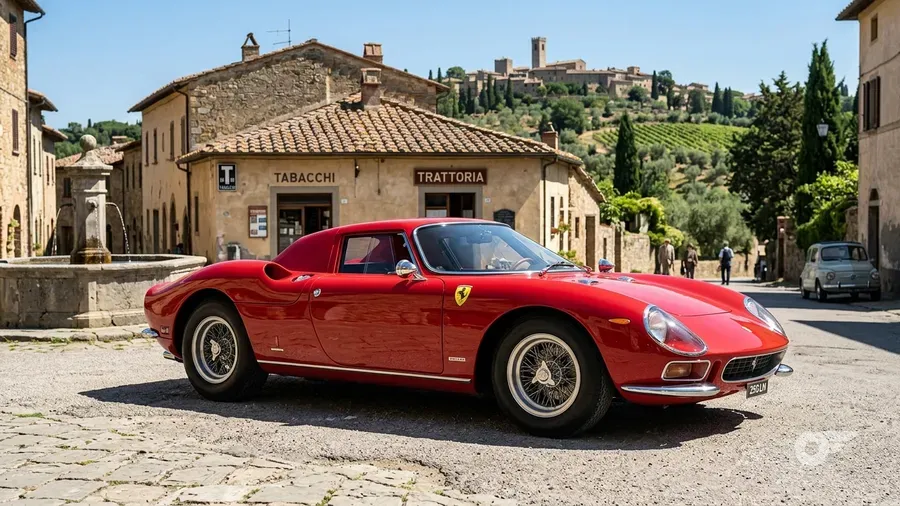
Ferrari 250 LM
Italy·Sports·1963–1966

The defining attributes and collector status that make this car garage-worthy.


Rated 1 to 10 on the traits that matter for owning, driving, and holding on to a car like this.
Demand tier, price trend, and typical values by condition. Our own assessment, not a quoted valuation.
Values as of August 2026.
What anyone seriously considering this car should know first.
Cars from the same manufacturer family, like platform siblings or shared-era relatives.
Cars from other manufacturers that competed for the same buyers when new.
The aerodynamic fix for the short nose's high-speed lift: a longer, more sloped front end and a smaller radiator opening. Most enthusiasts consider it the better-looking and better-behaved of the two GTB noses, and it commands accordingly.
The original berlinetta, with a shorter, more abrupt nose that Ferrari found lifted at speed once cars reached real velocity on the road. Steel-bodied cars are the volume specification; a small number of alloy-bodied competition-leaning cars command a real premium.
The four-camshaft engine, one per bank in addition to the single-cam layout's originals, paired with dry-sump lubrication and 300hp, Ferrari's first four-cam road car. Widely rated the best all-round 275 to drive.
The open spider version, sharing the GTB's mechanical layout under a different, Pininfarina-styled open body rather than the berlinetta's fastback roof.
The rarest and most valuable specification in the whole family: an open body over the four-cam GTB/4 running gear, commissioned through Luigi Chinetti's North American Racing Team. Steve McQueen owned one after seeing a sister car in The Thomas Crown Affair.