Alfa Romeo GTV
Italy·Sports·1965–1976

The defining attributes and collector status that make this car garage-worthy.

Rated 1 to 10 on the traits that matter for owning, driving, and holding on to a car like this.
Demand tier, price trend, and typical values by condition, based on recent sales data.
Values as of August 2026.
What anyone seriously considering this car should know first.
Cars from the same manufacturer family, like platform siblings or shared-era relatives.
Cars from other manufacturers that competed for the same buyers when new.
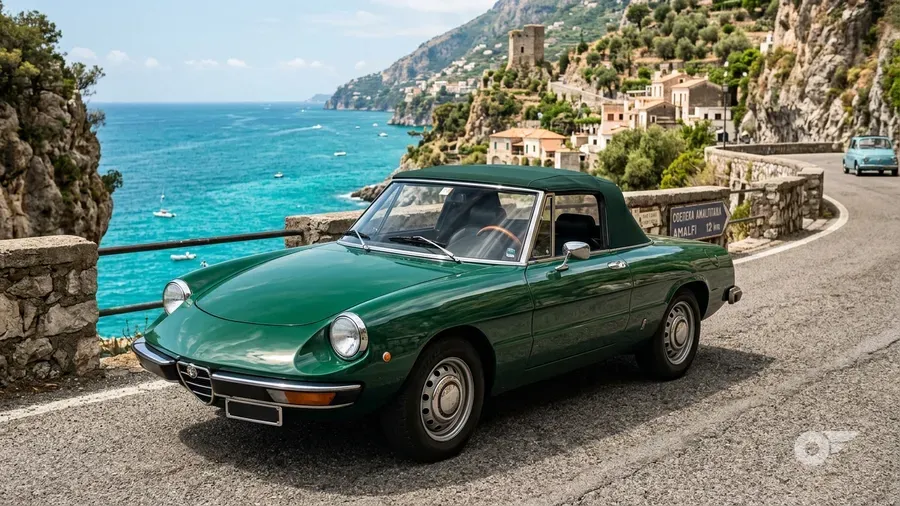
The American entry model, named after the 1967 film rather than descended from the car in it. Same 2.0 drivetrain as the Veloce, stripped of everything else: 14 inch steel wheels, plain door cards, roll-up windows, vinyl seats and a vinyl top, with air conditioning and a dealer-fitted radio the only options on the sheet.
The Series 3 flagship and the only one of the three trims that is genuinely scarce. Sideskirts, front and rear spoilers, a hard rubber bootlid spoiler with the third brake light built into it, unique 15 inch alloys and an optional removable hardtop, over grey leather stitched in red on blood red carpets. Red, silver or black only, and mechanically identical to the Veloce underneath.
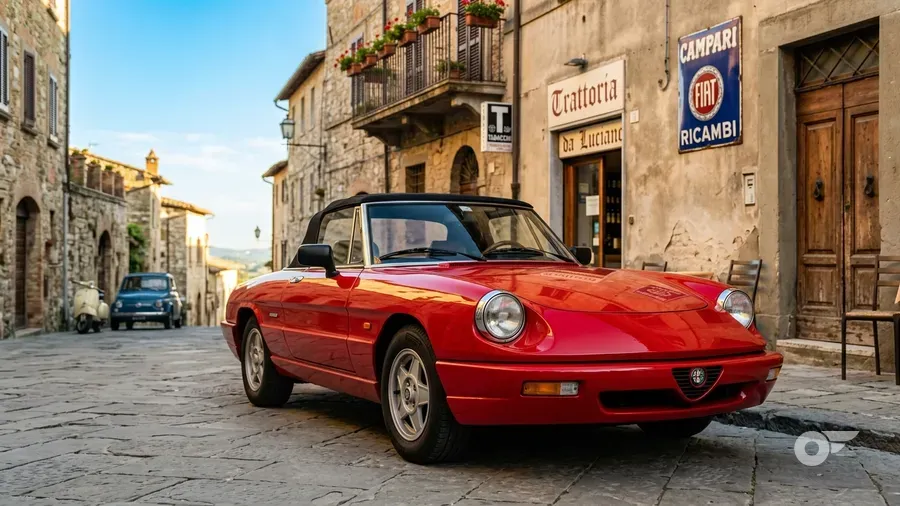
The volume Series 3 and the middle of the American range: the 1962cc twin cam with Bosch L-Jetronic injection, 115 horsepower, alloy wheels and a proper trim level, without the Quadrifoglio's bodykit. The revised interior with new seats, console and instrument cluster arrived in 1986. This is the car most Series 3 buyers actually meet.