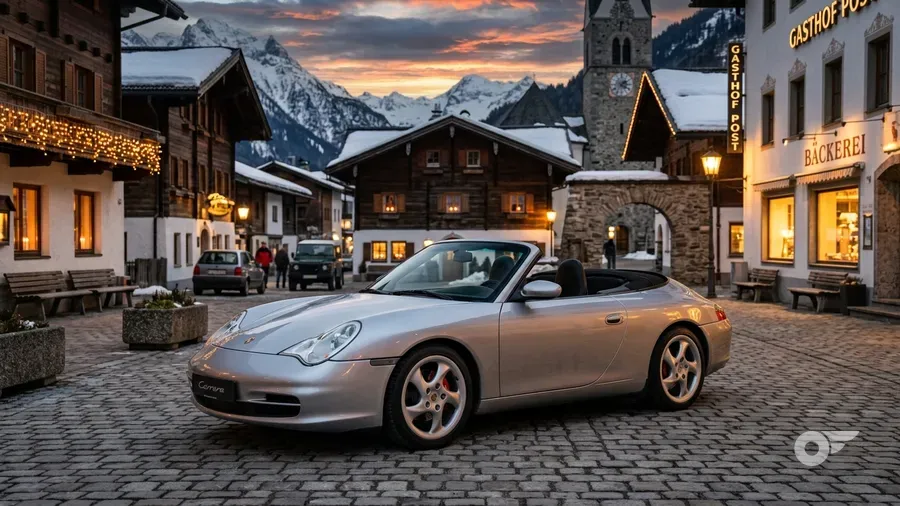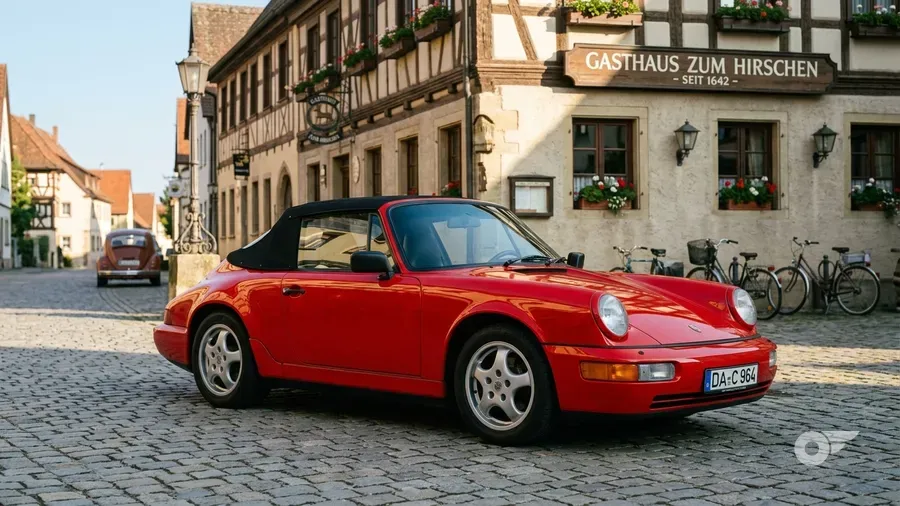
Porsche 911 964
Germany·Sports·1989–1994

The defining attributes and collector status that make this car garage-worthy.


Rated 1 to 10 on the traits that matter for owning, driving, and holding on to a car like this.
Demand tier, price trend, and typical values by condition. Our own assessment, not a quoted valuation.
Values as of August 2026.
What anyone seriously considering this car should know first.
Cars from the same manufacturer family, like platform siblings or shared-era relatives.
Cars from other manufacturers that competed for the same buyers when new.
The volume car and the one the market treats as the benchmark. Rear-wheel drive, 3.6 litres, 272 PS to 1995 and 285 PS with VarioRam from 1996, through the first six-speed gearbox fitted to a 911. Coupe, cabriolet and, from 1996, Targa.
The four-wheel-drive car, with a much lighter and simpler system than the 964 carried. Secure rather than exciting, and the sensible choice for anyone who intends to drive a 911 through a winter. Available in the same body styles as the rear-drive Carrera.
The car that started the wide-body idea for this generation: Turbo bodyshell, Turbo brakes and four-wheel drive with the naturally aspirated 285 PS engine. Heavier than a Carrera and more of an event to look at, and the most sought-after of the ordinary 993s.
The lightweight. A 3.8-litre engine at 300 PS, a stripped and stiffened shell, and the last normally aspirated air-cooled RS Porsche ever made. Sold in Europe rather than the United States, which has kept it scarce on the American market.
The rear-drive wide-body. Turbo arches and brakes, an air intake in each rear quarter, lowered suspension and no turbochargers, which makes it the connoisseur's normally aspirated 993. Late in the run and never common.
The racing homologation car: rear-wheel drive because four-wheel drive was not allowed in class, bolt-on plastic arches over enormous wheels, a huge rear wing and almost nothing inside. 430 PS at first and 450 PS for 1998. The hardest 993 to drive and the most successful in competition.
A complete reinvention of the name. No removable panel and no stainless hoop; instead a glass roof that slides back under the rear screen on rails, leaving a large opening and the coupe silhouette intact. Divisive when new and still divisive.
The first twin-turbocharged 911 and the first Turbo with four-wheel drive. 408 PS, a fixed rear wing, hollow-spoke alloys, and delivery so undramatic that it broke the widowmaker legend the 930 had spent twenty years building. The last air-cooled turbocharged Porsche.
A final, heavily specified Turbo with higher boost, larger turbochargers, extra intakes in the rear quarters and 450 PS. Built in small numbers at the very end of the generation and now among the most valuable air-cooled cars of any kind.