Octane Files
Explore CarsPeugeot 205 GTI

Peugeot 205 GTI

Overview

Peugeot was in real trouble when the 205 arrived in February 1983. Buying Chrysler's European operations had left the company with a range of outdated Talbots and losses to match, and project M24 was the small car it had to get right. It got it right twice over. The 205 ran to 5,278,050 cars across fifteen years, and in 1984 it produced the GTI: a 1,580cc four making 105hp, a body weighing 848kg, and a rear axle Peugeot had been quietly developing since the 305 estate. Small fast cars were never quite the same afterwards.

Ten years is a long run, and the GTI is not one car. The 105hp 1.6 gave way to a 115hp version in 1986. The 1,905cc 1.9 followed that December with 130hp, disc brakes all round and 15-inch Speedline wheels. Catalysed cars appeared from October 1989 and gave up eight horsepower for a cleaner exhaust; by October 1992 they were the only 1.9s left, and the last one was built in 1994. Four decades on, the argument about which hot hatch is best still starts here.

Distinctions

The defining attributes and collector status that make this car garage-worthy.

Legend
A car that transcended the hobby, known far beyond the people who drive them.
Octane Files Select
Renowned for its history, engineering, or cultural weight.

Collectibility scorecard

Rated 1 to 10 on the traits that matter for owning, driving, and holding on to a car like this.

Desirability
8/10
Rarity
4/10
Driving thrill
8/10
Investment trajectory
7/10
Usability
8/10
Ease of restoration
6/10
Cultural impact
8/10
Electronic dependence
Fully analogHeavily electronic

Bosch port injection is the only computer in an early car, and it manages fuel rather than the driver. Ignition is a separate system, the throttle is a cable, the steering on most cars is unassisted, and there is no anti-lock, no traction control and no driver aid of any kind. Later cars climb the scale a little: power steering became optional in October 1989, anti-lock brakes in September 1990, and catalysed cars run Bosch Motronic engine management with a lambda sensor and lower compression. Even fully optioned, everything the driver feels through the car is still mechanical.

Market data

Demand tier, price trend, and typical values by condition. Our own assessment, not a quoted valuation.

Demand tier
EntrySolidHighBlue-chip

Strong, sustained collector demand. Good examples never wait long for a buyer.

Value trajectory
AppreciatingStableCooling

Values are climbing. The market wants more of these than exist.

Price by condition
Driver
$14k
Excellent
$24k
Concours
$35k

The 1.9 rose further than any other car on Hagerty's Hot Hatch Index in 2024, with good examples up 13 percent year on year, and the segment as a whole is finally being taken seriously. The ceiling is French: the record is still the €82,960 paid for a 1987 1.9 at Aguttes during Tour Auto in April 2022, and French buyers consistently pay more than anyone else for the very best cars. Below that the market is broad and liquid, averaging around £13,000 across 160 recorded auction sales at close to an 80 percent sell-through rate. Originality is what separates a cheap one from an expensive one, not mileage.

Values as of August 2026.

Buyer's guide

What anyone seriously considering this car should know first.

Why it's worth it
The car every hot hatch since 1984 has been measured against
Callout
142 horsepower per tonne, roughly twenty more than the Golf GTI it was aimed at
What to watch for
Condition and originality decide everything here, and the model year matters much less than a seller would like. Start underneath. Rot collects where the sills meet the rear wings, in the inner wings, along the bulkhead seams, in the boot floor and around the rear bumper mounting panel, and the brake pipes corrode where you cannot easily see them. The shell is thin and only lightly galvanised, so a hard life shows up as distortion and shut lines that will not settle. Then the rear axle. The torsion bar beam runs on needle-roller bearings, and when they go the rear wheels take up negative camber and the car sits down at the back. Look at it from directly behind before you look at anything else. A reconditioned beam is a solved job with firms that do little else, but budget for it. Mechanically the XU is stout past 150,000 miles if the cambelt has been changed every 48,000 miles or four years. Blue smoke on the overrun means valve stem seals. A vague gearchange is usually the bell-crank pivot bushes rather than the gearbox. Paperwork matters more than mileage: most of these were modified at some point, and putting one back is expensive.

The Story

Driving character

The steering is the first thing you notice. Unassisted on most cars, quick, and full of information about what the front tyres are doing, which is exactly why owners argue against the power assistance that became optional in 1989. The engine wants revs. The 1.6 is the sweeter of the two, spinning happily to 6,250rpm with a hard flat rasp, while the 1.9 has genuine mid-range and hauls the car along in a way the smaller engine cannot, at some cost in delicacy. Then there is the back axle. The 205 rotates. Lift off mid-corner and the tail comes round, deliberately, because Peugeot set the trailing arm geometry to do it. Used well it is the best thing about the car, a way of pointing the nose with your right foot. Used carelessly in the wet it put a lot of cars through hedges in period, and that reputation is earned rather than invented. What surprises people who have only read about it is how civilised the rest is. It rides properly, the gearchange is light, and it will return 36mpg. This is a small French hatchback that happens to be thrilling, not a stripped-out special.

Design

The 205 is an in-house Peugeot design, which is worth saying plainly because the opposite gets repeated constantly. Gérard Welter's exterior studio won an internal competition against Pininfarina, and Paul Bracq did the interior. Pininfarina styled the Cabriolet, and that is the whole of its involvement. What Welter's team drew was a shape with no fat on it: a 2,420mm wheelbase, short overhangs and a glasshouse deep enough to see out of properly, which matters enormously in a car you place on your fingertips. The full-width rear light band and the grille treatment set the Peugeot look for a decade. The GTI additions are restrained by 1980s standards. A red pinstripe around the body, discreet arch extensions, red carpet, half-leather sports seats, and nothing else. The wheels do the identifying: 14-inch pepper pots mean 1.6, 15-inch Speedlines mean 1.9. Later cars date themselves from inside and behind, with a redesigned dashboard from October 1987 and darker plastics and 405-style rear lamps from 1990. One packaging decision shows up everywhere: moving the spare wheel out of the engine bay to the boot floor freed the space that let the 1.9 fit at all.

Motorsport pedigree

The 205's competition fame belongs to a different car. The mid-engined four-wheel-drive T16 won the 1985 and 1986 world rally titles and then the 1987 and 1988 Paris-Dakar, and it shares almost nothing with the GTI beyond a silhouette and a badge. Conflating the two is the most common mistake made about this car. The GTI's own record is quieter and more useful. It was homologated for Group N and Group A, which put it within reach of the people who actually bought one, and Peugeot Talbot Sport built a series around exactly that. The Coupe 205 GTI ran from 1984 to 1988 on French national rallies, eight rounds a season split between asphalt and gravel, drawing around fifty entrants a year. The prize money was real, and the champion's following season in the French championship was paid for. It worked as a ladder. François Delecour contested the cup in 1985 and 1986 and finished third both years, and that was enough to get Peugeot's attention and start a works career that ran all the way to the world championship. For a road car sold on price, that is a proper motorsport function.

In culture

Peugeot's own launch campaign sold the 205 as un sacré numéro, and the phrase stuck hard enough in France that it came back as a special edition name a decade later. The car became national furniture there in a way that has no British equivalent. Britain got something different. The GTI arrived as the car of the well-off young London professional and quietly displaced the Golf GTI in that role, complete with its own social uniform. Hagerty files it under Sloane Ranger cars, which is unkind and accurate. Then it became the car that got stolen. By the end of the 1980s the hot hatches were close to uninsurable in Britain, the 205 among the worst of them, and the aftermarket alarm and immobiliser trade grew out of that period. It has aged into something warmer. The 205 GTI '88 arrived in Gran Turismo 7 as a car players had specifically asked for, which is how a 1980s French hatchback reaches an audience that was not born when it was built. Stirling Moss owned one and called it exciting to drive.

Rivals

Cars from other manufacturers that competed for the same buyers when new.

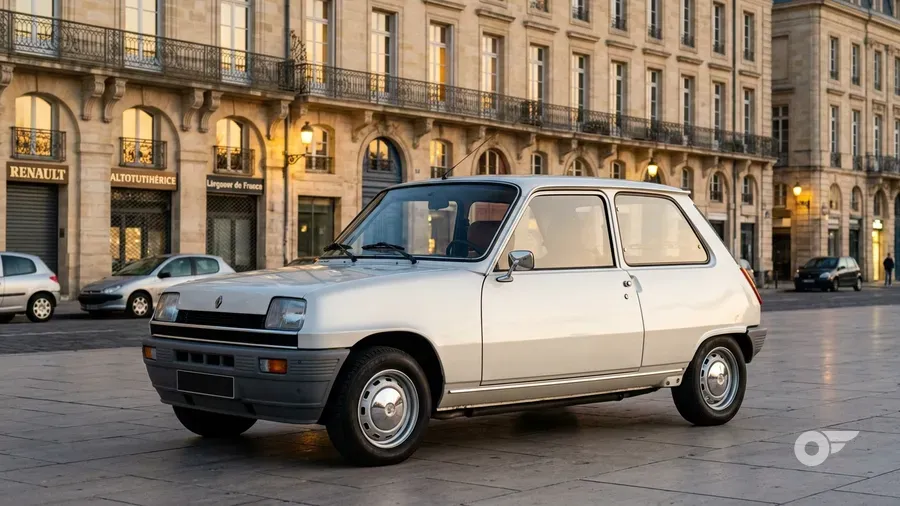
Renault 5 Turbo

Renault 5 Turbo

France·Sports·1980–1986
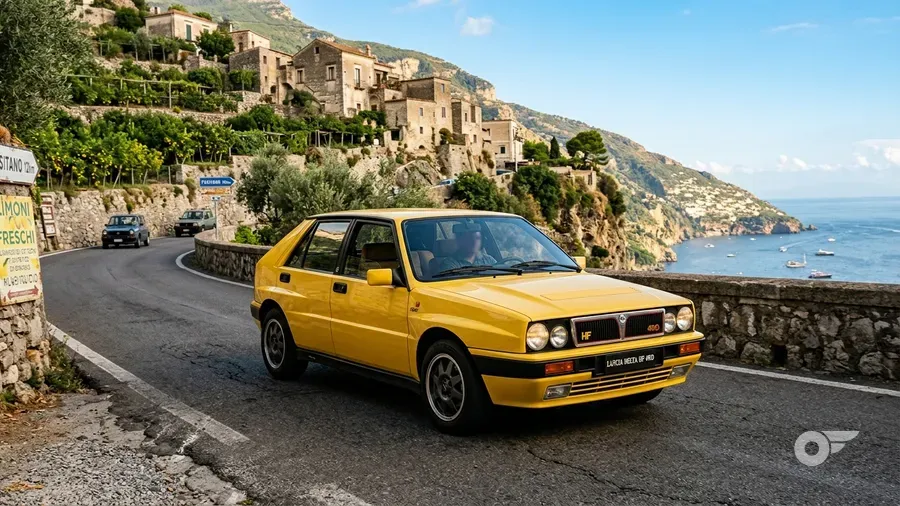
Lancia Delta HF

Lancia Delta HF

Italy·Sports·1986–1994

British Motor Corporation Mini Mark V

We haven’t profiled this car yet. Request to add

Volkswagen Golf GTI Mk2

We haven’t profiled this car yet. Request to add

Ford Escort RS Turbo

We haven’t profiled this car yet. Request to add

Owning One

Why collectors want it

The 205 GTI is the benchmark, and benchmarks hold their value. What makes it collectible now is not power, because 130hp buys nothing in 2026, but that nobody has repeated the recipe: 910kg, unassisted steering on most cars, no traction control, and a chassis tuned by people who were clearly enjoying themselves.

Supply is the other half of it. Somewhere between 295,000 and 333,000 were built depending on whose ledger you trust, which sounds like plenty until you remember what happened to them. They were cheap, quick and easy to steal. They were tuned, crashed and rallied, and the shell was thin steel with only light galvanising. Unmolested cars with their original engine, interior and paint are the scarce commodity, not GTIs in general.

The hierarchy is settled. The 1.9 leads on money and always has, and within it the limited editions sit on top, the 3,000-car Griffe and the 25-car British 1FM in particular. The 1.6 sells for less and rewards more, which is the standing argument in every 205 club. Project cars are still cheap; a genuinely original one is not.

Which one to look for

Four distinct cars wear the badge. The 1984 to 1986 1.6 has 105hp, 14-inch pepper pot alloys and rear drum brakes, and it is the purest and now the scarcest of the mainstream cars. The 1986 to 1992 1.6 takes 115hp from bigger valves and is the connoisseur's choice: 848kg, revvier, more delicate, and thousands cheaper than the car parked next to it. The 1.9 from December 1986 brings 130hp, discs all round, 15-inch Speedline wheels and half-leather, and it is the one the market wants. Catalysed 1.9s from October 1989 lose eight horsepower and get dismissed for it, which is unfair when they are also the cars most likely to have power steering and anti-lock brakes. Above them sit the limited editions. The 1989 Sorrento Green and Miami Blue cars, 600 of each, are the only GTIs trimmed in full grey leather. The 1990 Griffe, 3,000 built in Laser Green with ABS and power steering, is the halo car in France. The rarest is British: 25 1FMs built in 1992 for BBC Radio 1's 25th birthday, black, numbered on a brass plate, with £5,000 of the £17,000 price going to charity.

1FM · 1992

Britain's rarest 205 GTI, built to mark BBC Radio 1's 25th birthday. Black only, with Radio 1 FM decals, grey alloys, full black leather with green stitching, air conditioning, anti-lock brakes and a Clarion CD system, plus a numbered brass plate on the driver's door.

Griffe · 1990

The continental halo edition. Laser Green metallic only, grey leather with green stitching, and anti-lock brakes and power steering included rather than optioned. Sits at the top of the French market alongside the best original 1.9s.

GTI 1.6 (105hp) · 1984–1986

The launch car. 1,580cc XU5J making 105hp at 6,250rpm, 848kg, 14-inch pepper pot alloys, ventilated front discs and rear drums. Lightest and least insulated of the family, and the one that established the reputation before anyone had heard of the 1.9.

GTI 1.6 (115hp) · 1986–1992

Same 1,580cc block with a larger-valve XU5JA head for 115hp, still on 14-inch wheels and rear drums. Roughly 136hp per tonne, revvier and more delicate than the 1.9, and the version 205 people argue is the better driver's car. Ran alongside the 1.9 for six years.

GTI 1.9 · 1986–1994

The one the market wants. 1,905cc XU9JA making 130hp at 6,000rpm in a 910kg car, so 142hp per tonne, with disc brakes all round, 15-inch Speedline wheels and half-leather seats. Peugeot claimed 7.8 seconds to 62mph; independent tests recorded between 7.6 and 8.2.

GTI 1.9 Catalysed · 1989–1994

The XU9JAZ with Bosch Motronic M1.3, a lambda sensor and compression dropped from 9.6:1 to 9.2:1, rated at 122hp. Purists write it off over the eight horsepower, which misses that these are also the cars most likely to carry power steering and anti-lock brakes.

Limited Edition (Sorrento Green / Miami Blue) · 1989–1990

A two-colour limited run offered in both engine sizes, and the only 205 GTIs trimmed in full grey leather with grey rather than red carpet. Sunroof as standard. Both colours were popular enough that Peugeot later added them to the regular palette.

What owning one is like

Living with one is mostly cheap and occasionally annoying, which is the deal with any 1980s French car. The XU engine is the strong part: alloy, understressed and good well past 150,000 miles as long as the cambelt is changed on schedule, because it is an interference design and a snapped belt ends the engine. Airflow meters wear and make the idle wander. Valve stem seals harden and smoke on the overrun. The bodyshell is where the money goes. Thin steel, light galvanising and thirty-odd years of northern European weather find the sills, inner wings, bulkhead seams and boot floor. Owners also watch for cracked paint above the rear window, read as a sign the shell has been worked hard. The rear beam is the known consumable, and it wears gradually enough that people stop noticing the car has sat down at the back. Interiors do not age gracefully either: brittle plastics, collapsing seat bolsters, rattles that come and go. Electrical faults are almost always corroded connections rather than anything exotic, which is good news for patient people with a multimeter.

Upkeep & parts

Nothing about running a 205 GTI is exotic. Service parts are shared with millions of ordinary Peugeots and Citroëns, the XU engine is a known quantity to any independent garage, and most of the mechanical work is within reach of a home garage and ordinary tools.

The specialist money goes in two places. A reconditioned rear axle beam is the big one, and there are firms in Britain that do little else, so treat it as a scheduled item rather than a disaster. The other is trim. Original seats, dashboard plastics and interior fittings are drying up, and the good pieces move between owners rather than through shops, which is what the clubs are for.

Peugeot supports the car properly, with reproduction parts through its heritage operation and the archive at L'Aventure Peugeot Citroën DS, which will also document a car's build. Club coverage is unusually strong on both sides of the Channel: Peugeot Sport Club UK and Club Peugeot UK here, GTI Powers and the French forums there, and a dedicated registry for the 25 1FMs. Budget for rust repair rather than mechanical failure and you will be about right.

Country of origin
France
Class
Sports
Production years
1984–1994
Units built
~332,942
Marque
Model
205 GTI
Nickname
No nickname (Pug is British slang for any Peugeot, not this car specifically)
Body
Hatchback
Layout
Front-engine, FWD
Engine
1,580cc XU5J four (105hp, 1984-1986), 1,580cc XU5JA four (115hp, 1986-1992), 1,905cc XU9JA four (130hp, 1986-1994), 1,905cc XU9JAZ catalysed four (122hp, 1989-1994)
Transmission
5-speed manual (BE1 gearbox to 1989, BE3 from 1989)
Designer
Gérard Welter (exterior styling), Paul Bracq (interior)