Overview
197 cars. That is the entire production run of the second Skyline GT-R, built between January and April 1973, and it is one of the most consequential small numbers in Japanese car history. Nissan showed the C110-bodied GT-R at the Tokyo Motor Show in October 1972 alongside a works racing version carrying the number 73, for a season it fully intended to contest. Underneath sat the same S20 as the Hakosuka: 1,989cc, twin cams, four valves per cylinder, triple sidedraught carburettors, 160 PS at 7,000 rpm, the road-going descendant of the Prince R380's racing six. Then the ground moved. Japan's emissions legislation tightened to a point the S20 could not meet, Nissan disbanded its works racing team at the end of 1972, and the October 1973 oil crisis settled the argument. The GT-R was withdrawn after roughly three months on sale and the badge vanished for sixteen years. What survives is a car that never raced, was never developed, and is now both the rarest GT-R of any generation and among the most valuable Japanese cars in existence.
Distinctions
The defining attributes and collector status that make this car garage-worthy.
Collectibility scorecard
Rated 1 to 10 on the traits that matter for owning, driving, and holding on to a car like this.
Mechanically this is the same proposition as the first GT-R in every respect that matters here: triple Mikuni-Solex sidedraught carburettors, breaker-point ignition, a cable throttle and unassisted steering. There is no engine management, no fuel injection, no anti-lock braking and no driver aid of any kind. The only electrical systems on board are lighting, wipers, instruments and charging. A 1973 GT-R is about as close as this catalog gets to a purely mechanical Japanese performance car, and the fact that Japan's emissions rules of the following year made engines like the S20 effectively unbuildable is exactly why it is the last of them.
Market data
Demand tier, price trend, and typical values by condition, based on recent sales data.
The proven elite. Values are established, liquid, and defended at every auction.
Values are climbing. The market wants more of these than exist.
Blue-chip on rarity alone, and the trajectory has only pointed one way. The anchor is chassis KPGC110-000104, sold at Tokyo Terrada in January 2020 for ¥47,300,000, about $430,483, which set an auction record for any Skyline and roughly doubled the previous Hakosuka high. Be aware that the band below rests on very few public sales, because 197 cars almost never come to open market and most transactions happen privately in Japan. It should be read as a considered estimate rather than a dense set of comparables. Condition spread is narrower than usual here because almost every surviving car has been restored to a high standard; what separates values is originality of the engine, documented provenance and whether the chassis prefix is genuine.
Values as of August 2026.
Buyer's guide
What anyone seriously considering this car should know first.
The Story
Driving character
It drives like the Hakosuka carrying luggage, which is a fair summary of the whole car. The S20 is unchanged: soft and slightly sullen below 4,000 rpm, then hard, metallic and urgent to 7,000, with induction roar from three sidedraught carburettors doing most of the entertaining. But the C110 body is longer, wider and 45 kg heavier on a wheelbase stretched by 40 mm, and the extra mass against the same 160 PS makes it a softer, marginally slower car than the one it replaced. Nissan never got the chance to develop it, which is the part enthusiasts find genuinely frustrating. No racing programme meant no lessons fed back, no evolution model and no second season of chassis work. What is there is honest: unassisted steering that loads up beautifully once rolling, semi-trailing arms that will step the tail out on the throttle, and brakes that belong to 1973. It rides better than the Hakosuka and is quieter at speed, so as a car to actually cover distance in it is the more comfortable of the two. Almost nobody drives one.
Design
The C110 is the Skyline that stopped being a box. Where the C10 was slab-sided and upright, this car has a long bonnet, a rising waistline and a pronounced haunch over the rear wheel that period reviewers compared to contemporary American styling. The GT-R version adds steel arches riveted over wider wheels, a deep chin spoiler and a bootlid lip, and deletes the chrome the ordinary 2000GT-X wore. The four round tail lamps carry over from the C10 and by now are permanent Skyline currency. Where the two cars really separate is the roof: the KPGC110 is a pillarless two-door hardtop with a fastback rear screen, a far sleeker shape than anything the C10 offered. It is also, and this is the odd part, a better-looking car than the one that made the badge famous, and the one almost nobody has seen in the metal. The GT-R was on sale for three months while the ordinary Kenmeri Skyline sold in enormous numbers for five years, so the shape is instantly familiar in Japan and this specific car almost never is.
Motorsport pedigree
There is none, and the reason is the most interesting thing about the car. Nissan built the KPGC110 to race. It showed a works racing 2000GT-R at the Tokyo Motor Show in October 1972 with flared arches, a large rear wing and the number 73 on its flanks, a public statement of intent for the following season. That season never happened. Nissan disbanded its works racing team at the end of 1972 to redirect engineering effort into emissions compliance, and the October 1973 oil crisis removed any prospect of reversing it. The show car never turned a wheel in competition, and Japanese enthusiasts have called it the Phantom GT-R ever since. Two examples sit in Nissan's own heritage collection. So the second GT-R inherited the most successful touring car record in Japan, a fifty-win run built by the car it replaced, and added precisely nothing to it. That absence is not a footnote. It is why the badge went dormant for sixteen years instead of evolving through the 1970s.
In culture
The Kenmeri name belongs to Nissan's own advertising and to the whole C110 Skyline range rather than to the GT-R specifically. From 1972 Nissan ran a long television campaign following a young couple, Ken and Mary, driving a Skyline through the Japanese countryside; romanised, the pair read Ken and Meri, and the contraction attached itself to the car permanently. The actors were Jimmy Zinnai and Diane Krey, an American pilot's daughter then living in Japan. It is among the best-remembered Japanese advertising campaigns of the decade and it sold enormous numbers of ordinary Skylines. It sold 197 GT-Rs. That gap is the car's cultural position in a sentence: the shape is universally familiar in Japan and the specific car is a ghost, discussed far more often than it is seen. Western awareness arrived late and mostly through auction reporting and video games rather than anything the car did. Gran Turismo has carried it since the original PlayStation era, which for a great many people outside Japan is the only place they have ever encountered one.
Related cars
Cars from the same manufacturer family, like platform siblings or shared-era relatives.
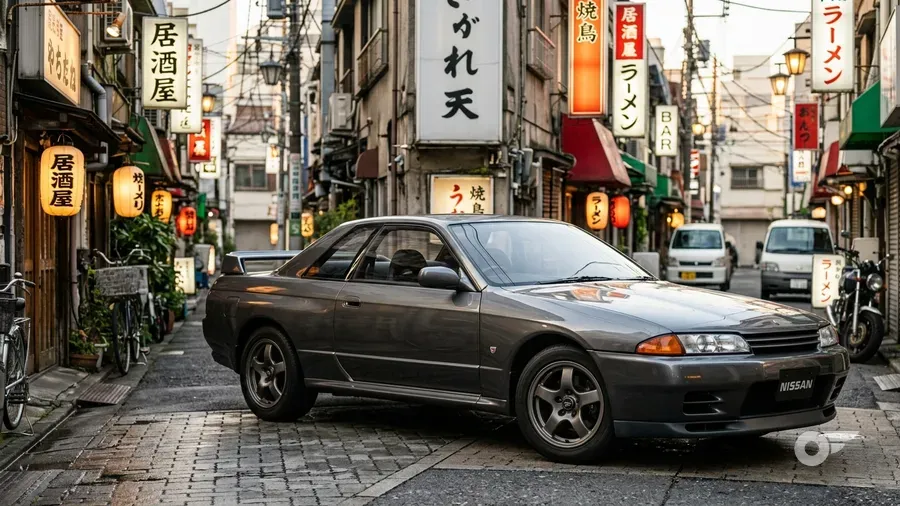

Nissan Skyline GT-R R32

Nissan Skyline C210

Nissan Skyline GT-R C10
Rivals
Cars from other manufacturers that competed for the same buyers when new.
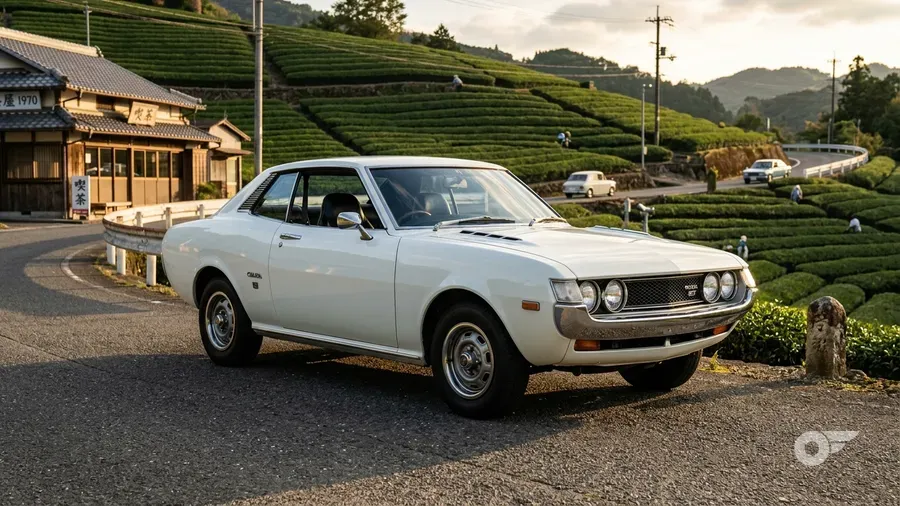
Owning One
Why collectors want it
Scarcity is the argument and it is not close. 197 cars were built, an unknown but small number survive, and they trade so rarely that the market has almost no comparables to work from. In January 2020 chassis KPGC110-000104 sold in Tokyo for ¥47,300,000, about $430,483, then a record for any Skyline and roughly double what a top Hakosuka had made. Nothing since has softened it. Beyond the number there is the story, which collectors of Japanese cars find irresistible: this is the car that closed the first GT-R era, killed by regulation and an oil shock rather than by anything it did wrong, and its absence is the reason the R32 landed in 1989 carrying the weight it did. There is no internal hierarchy to navigate, because there are no variants. Every KPGC110 is one specification. What separates one from another is originality, documentation, and whether the S20 in it is the engine it left the factory with. Provenance from a Japanese registry or a known restorer is effectively the whole valuation.
Which one to look for
There is nothing to choose between, and that is worth saying plainly rather than manufacturing a hierarchy. Every KPGC110 left the factory to one specification: two-door hardtop coupe, S20 engine, five-speed manual, flared steel arches, no options list worth the name. Nissan had a racing programme planned and a works car built and displayed, so an evolution variant would almost certainly have followed had the model survived its first year. It did not, and the works racer never turned a wheel in anger. What separates one car from another is condition, originality and paperwork. The engine number matching the chassis matters more than anything else, because the S20 was expensive and fragile and a proportion of surviving cars have been through more than one. Original paint is effectively nonexistent, so a documented restoration by a known Japanese shop is the realistic best case. Below the GT-R sits the ordinary C110 range, the 2000GT and 2000GT-X, sharing the body and none of the mechanicals. Those are genuinely good cars at a fraction of the money, and a great many now wear GT-R arches.
What owning one is like
Almost nobody uses a KPGC110 as a car, and the ownership experience reflects that. These are museum-grade assets in Japan, kept indoors, driven lightly and maintained by a handful of specialists. The practical issues are the S20's and they are the same ones the Hakosuka has: a low-volume 24-valve twin-cam on three sidedraught carburettors that want regular synchronising, shim-under-bucket valve clearances, and internals made in small batches to order rather than sitting on a shelf. An engine that needs work means a long wait and a large bill. The body is 1973 Japanese steel and rusts in the usual places, sills, rear arches, floors and screen surround, though a car that has reached this value has almost certainly had all of that addressed already. The greater ownership question is not mechanical at all. It is that the car is rare enough that using it hard feels irresponsible, and plenty of owners resolve that tension by not using it. Those who do drive theirs report an entirely ordinary early-seventies coupe, which is rather the point.
Upkeep & parts
Everything about keeping one of these runs through Japan. The C110 Skyline sold in huge numbers, so shared body, glass, trim, suspension and brake parts are supportable through the domestic classic industry and reproduction quality is decent. The GT-R-specific items are the problem: arches, badges, correct wheels, the rear spoiler and above all S20 internals, which come from small specialist runs and are priced accordingly. None of it is quick. Nissan's Nismo Heritage Parts programme, reissuing discontinued parts since 2017, concentrates on the R32 onward and does not reach the S20 cars. What does help is that the community is well organised: GTROC covers Prince-era cars through to the R35 and is recognised by Nissan, the long-running GTR Register forum holds decades of accumulated knowledge, and Japanese kyusha shops maintain most of the survivors. An owner outside Japan realistically needs a relationship with one of those shops and should expect to ship parts, and occasionally the car. Routine servicing is simple. Anything beyond routine is a project with a lead time measured in months.