Octane Files
Explore CarsLister Storm

Lister Storm

Overview

Brian Lister built Jaguar-powered sports racers in Cambridge in the 1950s, gave Archie Scott-Brown the car that made his name, and walked away from racing in 1959. The company came back in 1986 under engineer Laurence Pearce, who spent the next few years turning Jaguar XJ-S coupes into 200mph cars at over GBP 100,000 apiece. Roughly ninety of those paid for what came next.

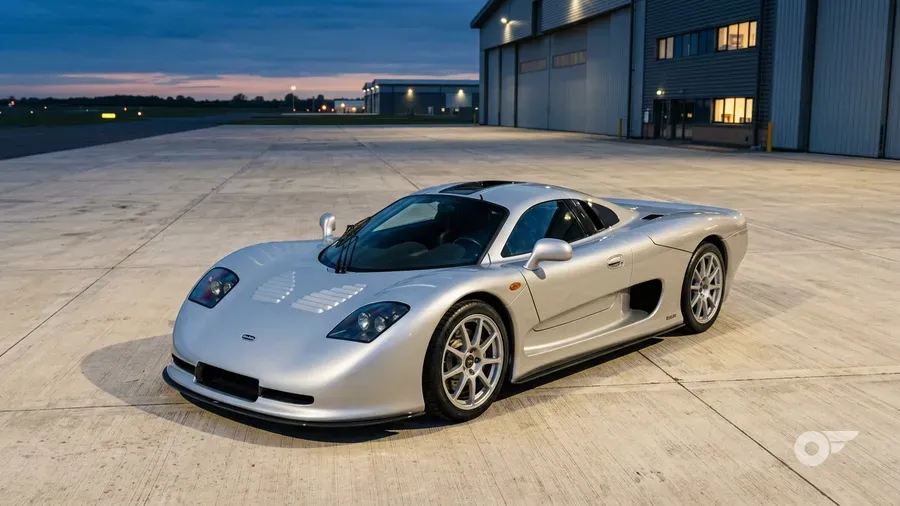
The Storm arrived at the 1993 London Motor Show as a proper Lister: front-engined, Jaguar-powered, and unreasonable. Mike Hughes drew it around an aluminium honeycomb monocoque with Kevlar and aluminium panels, and Pearce put a 6,996cc version of the Jaguar V12 in the nose, developed from the engine TWR had used in the XJR-9 sports prototypes. It made 546hp and 790Nm at 3,450rpm, and at seven litres it was the largest engine fitted to any road car of its day.

It cost GBP 220,000. Four were built. Then Lister took the same car racing for a decade, which is the part most people remember.

Distinctions

The defining attributes and collector status that make this car garage-worthy.

Octane Files Select
Renowned for its history, engineering, or cultural weight.

Collectibility scorecard

Rated 1 to 10 on the traits that matter for owning, driving, and holding on to a car like this.

Desirability
7/10
Rarity
10/10
Driving thrill
8/10
Investment trajectory
6/10
Usability
4/10
Ease of restoration
3/10
Cultural impact
5/10
Electronic dependence
Fully analogHeavily electronic

The V12 runs electronic engine management and fuel injection, which is where the software ends. The gearbox is a six-speed Getrag manual, the brakes are Brembo discs with hydraulic assistance, and the suspension is passive with no adjustable damping. There is no traction control and no stability system on the road cars, which matters given 790Nm arriving at 3,450rpm through the rear wheels alone. Instrumentation is analogue. In its own decade this was already an old-school way to build a 200mph car, and it is why the Storm feels like a 1980s racer rather than a 1990s supercar.

Market data

Demand tier, price trend, and typical values by condition. Our own assessment, not a quoted valuation.

Demand tier
EntrySolidHighBlue-chip

Strong, sustained collector demand. Good examples never wait long for a buyer.

Value trajectory
AppreciatingStableCooling

Values are holding steady. What you pay today is what it's worth tomorrow.

Price by condition
Driver
Excellent
Concours

No price band is published here, because four road cars cannot produce one. The verified record is a single public sale: chassis SA9STRM1BRP053004, a 1994 car in metallic green with an unmarked interior, sold at Historics at Brooklands on 19 May 2018 for GBP 170,240, against an original 1994 list price of GBP 220,000. The same catalogue described it as one of only three road-going Storms remaining. Competition Storms trade more frequently and are the more liquid asset: Bonhams has offered GT1 chassis with documented FIA GT and Le Mans history, and asking prices for championship-winning cars have run into the mid-hundreds of thousands. Those are race cars with race provenance and should not be read across to the road car. The honest position is that the road Storm is a four-car market where one motivated buyer sets the price on the day.

Buyer's guide

What anyone seriously considering this car should know first.

Why it's worth it
Four road cars, and a racing version that won the 2000 FIA GT Championship
Callout
Seven litres, the largest engine in any road car of its day
What to watch for
There are only four to consider, and Historics described its 2018 car as one of just three road-going Storms left in the world, so the first question is which car you are actually being offered. Race Storms come to market far more often than road cars, and a GT or GTL chassis is a different proposition entirely: no road registration, a racing gearbox and a life measured in rebuilds. Mechanically the news is good. The V12 is Jaguar at heart, so the machining, the parts and the specialist knowledge exist in the Jaguar world, and the six-speed Getrag is a known quantity. Brembo brakes and the running gear are similarly serviceable. The chassis is the specialist part. An aluminium honeycomb monocoque with bonded Kevlar and aluminium panels is not something a general restorer should be improvising on, and accident damage needs assessing by someone who understands bonded structures rather than steel. The doors and greenhouse came from the Volkswagen Corrado, which sounds like a compromise and is actually a gift: the glass, seals and door hardware are the only parts of this car you can buy over a counter.

The Story

Driving character

Seven litres and 790Nm at 3,450rpm tells you most of what the Storm is like. This is not a highly strung engine that needs winding up. It is a large-capacity V12 with enormous mid-range, in a car weighing 1,664kg, and the acceleration comes in one long uninterrupted shove rather than a series of steps. Lister quoted 4.1 seconds to 60mph and 208mph, and the Historics car was described as capable of 211. The shape of the experience is old-fashioned in the best way. The engine is in front of you, the gearbox is a six-speed Getrag manual, and there is nothing electronic sitting between your right foot and the rear tyres. It is a car that rewards being smooth and punishes being casual. And then there is the party trick nobody expects from a 200mph car: it has four seats and a boot. The Storm was built as a grand tourer that could race, not a race car with a numberplate, and that dual purpose is the thing that separates it from every mid-engined rival of the period.

Design

Mike Hughes drew a car with a job to do rather than a shape to admire. The Storm is wide, blunt-nosed and functional, built around an aluminium honeycomb monocoque with Kevlar and aluminium bodywork, and its drag coefficient of 0.35 tells you aerodynamics were about stability and cooling rather than slipperiness. The detail everyone repeats is that the doors and the greenhouse came from a Volkswagen Corrado. That is exactly the kind of decision a small British firm makes: the glass and door structure are the hardest parts of a low-volume car to engineer and certify, so you buy them from someone who already has, and spend your money on the chassis and the engine instead. The four-seat cabin drives the proportions. A long bonnet for the seven-litre V12, a roofline tall enough to seat people behind the driver, and a stance that is broad rather than low. The racing versions grew longer and more sculpted noses through the GTL and GT eras, which is where the shape finally looks purposeful rather than merely large.

Motorsport pedigree

This is where the Storm earned its reputation. Lister went GT racing in 1995 with the Storm GTS, entering the Le Mans GT1 class against the Ferrari F40, the Jaguar XJ220 and the McLaren F1 GTR, and retired. A substantial rethink for 1996, moving the engine and the Hewland gearbox, brought a 19th place finish at Le Mans. The GTL of 1997 and 1998 was a carbon-structured answer to the Mercedes CLK GTR and Porsche 911 GT1. The results came once the GT arrived. Jamie Campbell-Walter and Julian Bailey took the 1999 British GT Championship with seven wins from eleven rounds, then the 2000 FIA GT Championship, winning five of ten races in chassis GTM 002 and taking both the drivers' and teams' titles in Lister's first full season in the series. A second British GT title followed in 2001. The factory kept campaigning the car until 2005, then turned to the Storm LMP. For a firm that built four road cars, beating the works-supported GT teams of Europe outright remains an extraordinary return.

In culture

The Storm's fame is British and specific: it is the car that beat the establishment in FIA GT, and for a generation of British motorsport followers the black and yellow Lister is the memory of the 2000 season rather than any Ferrari or Chrysler in the field. Beyond the paddock it reached people mostly through games. The 1994 road car appeared in Gran Turismo 2 and the model never left the series, mostly through the race-modified version that carried on all the way to Gran Turismo 6, which is where most people under forty have driven one. That is a familiar route for a car with four road examples: the virtual population dwarfs the real one by several orders of magnitude. Its reputation is having a second wind. The Storm GT was announced in 2023 as the first car for the GTRevival series, which put a 1990s privateer GT1 car back in front of an audience that never saw it race. For a company whose founder walked away from motorsport in 1959, the Lister name has proved unusually hard to retire.

Rivals

Cars from other manufacturers that competed for the same buyers when new.

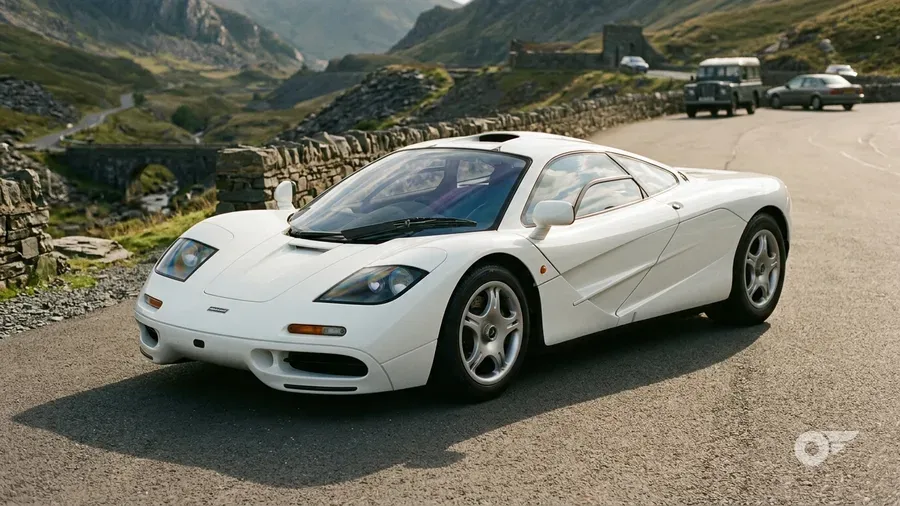
McLaren F1

McLaren F1

UK·Exotic·1992–1998

Bentley Continental R

We haven’t profiled this car yet. Request to add

Owning One

Why collectors want it

Four cars is the entire road-going production, which puts the Storm among the rarest British cars of the 1990s by a wide margin. It is also one of the very few road cars whose racing derivative went on to win an outright international championship, so the badge carries a genuine competition record rather than an implied one.

The engineering argument is unusual too. Almost everything exotic in 1993 was mid-engined, and the Storm was deliberately not: a front-engined GT with four seats, a seven-litre V12 and a claimed 208mph, built by a company whose 1950s reputation rested on doing exactly this with Jaguar power. That continuity is real rather than marketing.

The market has been slow to price it, which is what happens when a car trades once a decade. A road car sold at Historics in May 2018 for GBP 170,240 against an original list of GBP 220,000, which for a four-car production run is remarkably restrained money. The competition Storms trade more often and more expensively, and the road cars remain the scarcer thing.

Which one to look for

The road car is the rarest thing here and the reason the model exists: four built, 1993 to 1994, at GBP 220,000. Everything else wearing the Storm name is a competition car, and they matter because they are what the model is remembered for. The Storm GTS of 1995 to 1996 came first, taking the road car racing largely as it stood and reaching the Le Mans GT1 grid against the F40, the XJ220 and the McLaren F1 GTR. A mid-season rethink for 1996 moved the engine and relocated the Hewland gearbox, and the car finished 19th at Le Mans that year. The GTL of 1997 to 1998 was the serious answer to the Mercedes CLK GTR and the Porsche 911 GT1: carbon fibre structure and panels, a longer and more aerodynamic nose. The Storm GT, from 1999 to 2005, is the one collectors chase. It took the 1999 British GT title, the 2000 FIA GT Championship for drivers and teams, and the 2001 British GT title. A GT chassis with documented championship history is the connoisseur's Storm, and it costs accordingly.

What owning one is like

The Storm is easier to live with than its numbers suggest, and that is deliberate. It has four seats, a boot and a torque curve that makes it tractable at low speed, so it functions as a grand tourer rather than a weekend special. Owners report using them, which for a four-car production run is remarkable in itself. The V12 is the reassuring part. Jaguar built enormous numbers of that engine family, so the machining knowledge and much of the hardware exist outside the marque. Cooling deserves attention, as it does on every big Jaguar V12 in a tight engine bay, and the seven-litre capacity does the fuel consumption you would expect. The bespoke elements are the chassis, the panels and the trim. A bonded aluminium honeycomb tub is not a structure to repair casually, and body panels do not exist on a shelf. The Corrado-derived doors and glass quietly solve the parts problem that usually sinks low-volume cars, which is the single most practical thing about owning one.

Upkeep & parts

Split the car in two and the budget makes sense. The Jaguar V12 bottom end, the injection hardware and much of the ancillary equipment are supported by the wide Jaguar specialist trade, and the Getrag six-speed, Brembo brakes and suspension components are period racing and performance parts that can still be sourced or remade. The Volkswagen Corrado doors, glass and seals mean the most awkward category of low-volume parts is simply a matter of ordering.

Everything structural is bespoke. Panels, the honeycomb tub, the screen and the interior trim were made in tiny numbers and will need fabricating.

The marque itself is the useful asset here. The Lister Motor Company, based in Cambridge and trading continuously since 1954, acquired the assets and intellectual property covering the later road and racing cars including the Storm, and maintains a factory register of Lister chassis numbers compiled by the marque historian Robert Edwards. Specialists in historic Listers exist for the 1950s cars and know the family. For a four-car model, that institutional memory is worth more than any parts catalogue.

Country of origin
UK
Class
Grand Tourer
Production years
1993–1994
Units built
4
Model
Storm
Nickname
No nickname ("Knobbly" names the 1950s Lister-Jaguar sports racers, not this car)
Body
Coupe
Layout
Front-engine, RWD
Engine
6,996cc (7.0L) Jaguar V12, 546hp
Transmission
6-speed Getrag manual
Designer
Mike Hughes