Octane Files
Explore CarsJaguar XKSS

Jaguar XKSS

Overview

Jaguar stopped racing at the end of 1956 with a shed full of unsold D-Types and a large American market that wanted something with a windscreen on it. William Lyons' answer was to make the racing car legal: take out the bulkhead behind the driver, delete the tail fin, cut in a passenger door, fit a full-width screen, sidescreens and a folding hood, add bumpers and a set of XK140 rear lights, and sell it.

The result was road-legal by the letter and by very little else. It kept the D-Type's magnesium-alloy monocoque tub, the tubular front subframe, Dunlop discs on all four corners, a dry-sump 3.4-litre twin-cam six on three twin-choke Webers making around 250bhp, and a kerb weight of 921kg. It listed at about $6,900 in America and was never offered in Britain at all.

Twenty-five were planned. Sixteen were finished. On the evening of 12 February 1957 a fire that started in the tyre store at Browns Lane took nine more, along with the jigs and the tooling, and that was the end of the programme.

Jaguar finally built the missing nine in 2016 and 2017, fifty-nine years late, using the chassis numbers of the cars that burned.

Distinctions

The defining attributes and collector status that make this car garage-worthy.

Legend
A car that transcended the hobby, known far beyond the people who drive them.
Homologation Special
Built for the road only because racing rules demanded it.
Octane Files Select
Renowned for its history, engineering, or cultural weight.

Collectibility scorecard

Rated 1 to 10 on the traits that matter for owning, driving, and holding on to a car like this.

Desirability
10/10
Rarity
10/10
Driving thrill
9/10
Investment trajectory
8/10
Usability
3/10
Ease of restoration
3/10
Cultural impact
9/10
Electronic dependence
Fully analogHeavily electronic

There is nothing on this car that decides anything for you. Three twin-choke Webers, coil and distributor ignition, a mechanical throttle and clutch, an unassisted four-speed, and Dunlop discs on a servo-assisted hydraulic circuit that is the extent of the power assistance anywhere. Dry-sump lubrication is racing practice carried straight over. What passes for road equipment is a windscreen, a folding hood, sidescreens and a pair of slim bumpers, and even the wipers were fitted for legal reasons rather than for comfort.

Market data

Demand tier, price trend, and typical values by condition. Our own assessment, not a quoted valuation.

Demand tier
EntrySolidHighBlue-chip

The proven elite. Values are established, liquid, and defended at every auction.

Value trajectory
AppreciatingStableCooling

Values are holding steady. What you pay today is what it's worth tomorrow.

Price by condition
Driver
Excellent
Concours

No price band is published here, because the two public data points of recent years point in opposite directions and neither describes a volume car. There is no volume car. Chassis 707 sold for $13,205,000 at RM Sotheby's Monterey sale in August 2023, inside a $12m to $14m estimate. In November 2024 RM offered another XKSS at its London sale against £9m to £11m and it did not sell. Steve McQueen's own car is routinely valued above $30m, but it is museum property and has never been offered. What can be said with confidence is the shape of the market: sixteen cars, about a dozen believed to survive, most in long-term collections, and an eight-figure result whenever one does move. The 2016-17 continuations are a separate and far more liquid market at more than £1 million each, and should never be used as a comparable for an original.

Buyer's guide

What anyone seriously considering this car should know first.

Why it's worth it
A Le Mans-winning D-Type with a passenger door, and only sixteen were finished
Callout
Nine unfinished cars burned at Browns Lane in 1957, and Jaguar finally built them in 2016
What to watch for
The counting is the first thing to get right, because four numbers circulate and they mean different things. Sixteen cars were completed in 1957. Nine unfinished chassis were destroyed in the fire. Twenty-five was the plan. Nine continuations were built in 2016 and 2017. Separately, Jaguar later converted two further D-Types that were never part of the original twenty-five, which is why the population of cars that look like an XKSS is larger than sixteen. So identity is everything here, and it is knowable. Jaguar Daimler Heritage Trust will issue a certificate confirming a chassis's original specification and despatch details, and on a car at this level that document is the beginning of the conversation rather than the end of it. Structurally, know what you are looking at. The tub is magnesium alloy sheet, not aluminium. It corrodes differently, welds differently, and a shop that treats it as an alloy body will do harm. The front subframe is a separate tubular structure bolted to it. Any car that has raced, and many have, carries old repairs somewhere. The continuations are honest, factory-built and cost roughly a tenth of an original. They are not the same thing, and nobody involved has ever pretended otherwise.

The Story

Driving character

The XKSS drives like the racing car it is, because the conversion did nothing to soften it. The bulkhead came out, a door went in, and that was the extent of the domestication. The engine is the point. A dry-sump 3.4-litre XK six on three twin-choke Webers, around 250bhp, 921kg, a twin-cam top end that pulls cleanly from low down and a noise somewhere between a Le Mans start and an aircraft. It is not peaky in the modern sense. The torque arrives early and the car simply keeps gathering. Underneath is a monocoque tub with a tubular front frame, so it is far stiffer than the ladder-framed XK150 Jaguar was actually selling in 1957, and the Dunlop discs are the ones that won Le Mans. The steering is unassisted and quick, the seating position is racing-car low, and the weather equipment is a legal formality rather than a comfort feature. McQueen used his as a daily driver in Los Angeles and collected tickets doing it. That tells you both that the car is usable and what using it does to the person driving.

Design

Everything you like about the way this car looks was drawn by Malcolm Sayer for a different purpose. Sayer came to Jaguar from the Bristol Aeroplane Company and worked in aerodynamics rather than styling, and the D-Type's shape is what happens when small frontal area is the entire brief. The engine is canted over so the bonnet can be low. The tub is an elliptical section because that is what is stiff and slippery at once. The XKSS is that shape with the racing details taken off and the road ones added, and it is the subtraction that changes it. The fin behind the driver's head is gone, and with it the D-Type's most recognisable feature. In its place: a full-width chrome-framed windscreen, sidescreens in the doors, a folding fabric roof, slim bumpers at both ends, XK140 rear light clusters mounted high on the wings, and thin chrome strips along the edges of the front light fairings. It ought to look compromised and it does not. Losing the fin makes the car read lower and longer, and the additions are slight enough that from most angles you are still looking at a D-Type.

Motorsport pedigree

The XKSS itself has almost no competition record, and the reason is that it arrived after Jaguar had stopped. The works team withdrew from sports-car racing at the end of 1956, and the XKSS existed to sell what was left over. Its pedigree is inherited, and it is as good as pedigree gets. The D-Type it is made from won Le Mans in 1955, 1956 and 1957, the last of those with Ecurie Ecosse first and second and five D-Types in the top six. The 1955 win came in the race that ended with a Mercedes in the crowd. The road equipment was itself a racing decision. Bumpers, a windscreen and a passenger seat made these cars eligible for American production sports-car racing, which is where most of the sixteen went and what several of them then did. Racing an XKSS in period meant an SCCA grid rather than the Sarthe. The three-litre limit imposed at Le Mans for 1958 finished the D-Type as a front-runner. By then the XKSS had already been finished by a fire.

In culture

Steve McQueen bought his XKSS in 1958, painted British racing green, and called it the Green Rat. He drove it around Los Angeles at speeds that made him locally notorious, sold it in the 1960s, regretted it, and bought it back. It is now in the Petersen Automotive Museum and it toured America in 2010 and 2011 as part of the Allure of the Automobile exhibition. For a great many people the XKSS is McQueen's car first and a Jaguar second. The other moment is the fire. Browns Lane on the evening of 12 February 1957 is one of the few dates every Jaguar enthusiast knows, partly for what it destroyed and partly because the factory had an improvised line running again within six days. Jaguar came back to the story itself in 2016, building the nine missing cars, selling them before they were finished, and calling the XKSS the world's first supercar while it did so. That claim is marketing rather than history. The appetite it tapped was real enough.

Owning One

Why collectors want it

Sixteen cars, of which about a dozen are thought to survive, and every one of them is a real D-Type underneath. That is the whole argument and it is a strong one.

The XKSS sits at an intersection almost nothing else occupies: an outright Le Mans-winning design, made road-legal by the factory that built it, in a run small enough that individual chassis are known by number. Add Steve McQueen, who bought one in 1958, drove it hard around Los Angeles, sold it, regretted it and bought it back, and you have a car with a foot in two entirely separate cultures.

The money follows. Chassis 707 sold for $13,205,000 at RM Sotheby's Monterey sale in August 2023, right in the middle of its estimate. A second car was offered at RM's London sale in November 2024 against £9m to £11m and found no buyer, which is a useful corrective: in a market of a handful of cars, one reserve can decide the year's headline.

The 2016-17 continuation cars are a genuine and separate proposition, and they belong in the next section rather than folded into this one.

Which one to look for

There is one specification and two eras, and fifty-nine years between them. The 1957 cars are the ones that matter: sixteen conversions of unsold D-Type chassis, built at Browns Lane, most of them sold in America. Chassis 713 is Steve McQueen's, British racing green, now in the Petersen Automotive Museum in Los Angeles. 722 is in the Louwman Museum in The Hague. One was the centrepiece of James Hull's 450-car British collection, which sold privately in 2014 for a reported £100 million. The two later D-Type conversions are a footnote worth knowing. Jaguar did them after the fire, outside the intended run of twenty-five. They are genuine factory conversions rather than replicas, and they are not among the sixteen. The 2016-17 continuations are the third group: nine cars, hand-built by Jaguar Classic in Coventry to the original drawings, carrying the chassis numbers assigned to the nine that burned, all sold before delivery at more than £1 million each, and named Car of the Year at the 2017 Octane Awards. What they are not is an original, and the market has been consistent about the difference. Roughly a tenth of the money.

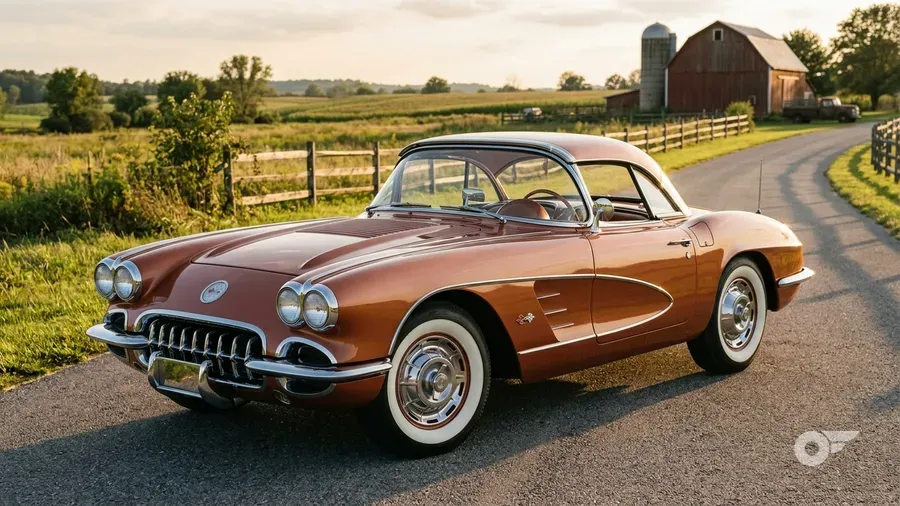
Continuation · 2016–2017

Nine cars hand-built by Jaguar Classic in Coventry to the original 1957 drawings and specification, carrying the chassis numbers allocated to the nine cars lost in the fire. Announced March 2016, world debut in Los Angeles that November, first deliveries early 2017. Named Car of the Year at the 2017 Octane Awards.

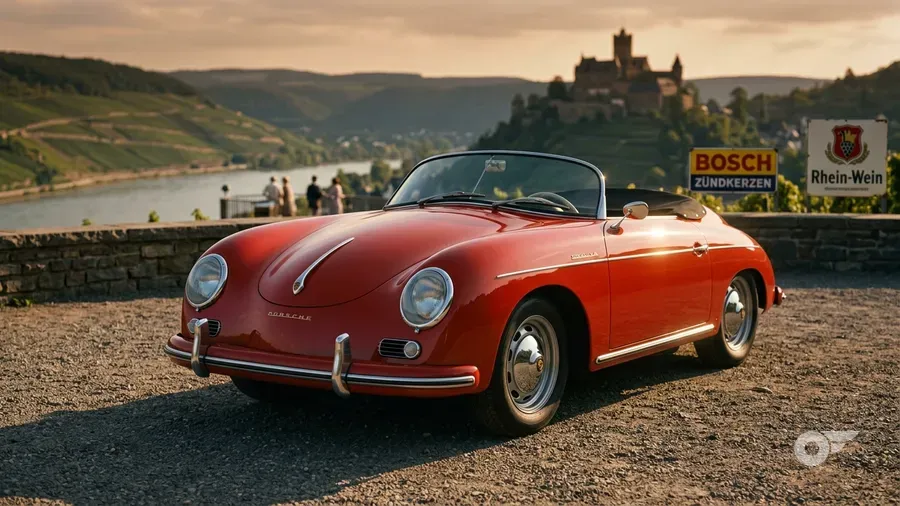
Original conversion · 1957

The factory conversion of unsold D-Type chassis into road-legal cars: bulkhead removed, tail fin deleted, passenger door cut in, full-width chrome-framed windscreen, sidescreens, folding fabric roof, bumpers and XK140 rear light clusters. Dry-sump 3.4-litre XK six on three twin-choke Webers, around 250bhp, 921kg, Dunlop discs all round. Listed at about $6,900 in America and never offered in Britain.
What owning one is like

Owning one is mostly a question of nerve. These are seventy-year-old racing cars with a hood, and they get used: at historic meetings, on tours, in anger. The people who own them tend to drive them, which is the best thing about the model and the reason so few are untouched. The tub is magnesium alloy, and magnesium is the thing to understand. It corrodes in ways aluminium does not, particularly where dissimilar metals meet, and it does not take a casual repair. Original panels are irreplaceable, and any car that raced carries old work somewhere in it. The XK engine's weaknesses are well known and shared with every Jaguar that used it. Cooling is the perennial one, and oil pressure is the health check on a tired unit. In dry-sump racing form it is more highly stressed than the road version and correspondingly less forgiving of neglect. The weather equipment is charming and largely notional. A folding fabric roof and sidescreens over a cockpit built for a racing driver is exactly what Jaguar advertised in 1957, and nobody who owns one appears to mind.

Upkeep & parts

For a car this rare the support is startlingly good, because the XKSS shares almost everything with the D-Type, and the D-Type shares its engine with half of Jaguar's 1950s output.

The XK six is the most reproduced classic engine in Britain. Blocks, heads, cams, Weber parts and the people to fit them are all available, and dry-sump racing components are kept alive by the historic racing trade. Suspension, brakes and running gear follow the same pattern.

The structure is where the money goes. Magnesium tub work is a very short list of specialists, and the right answer to corrosion is usually preservation rather than replacement.

On paperwork, Jaguar Daimler Heritage Trust issues Heritage Certificates confirming original specification and despatch details, and Jaguar Classic in Coventry has now built nine of these cars from scratch, which means factory knowledge exists in a way it has not since 1957. Jag-lovers, the Jaguar Drivers' Club and JCNA cover the model between them. Nobody who owns an XKSS is short of advice.

Country of origin
UK
Class
Sports
Production years
1957–1957
Units built
16
Marque
Model
XKSS
Nickname
No nickname ("Green Rat" names Steve McQueen's own car specifically, not the generation)
Body
Roadster
Layout
Front-engine, RWD
Engine
3,442cc XK twin-cam straight-six, dry sump, three twin-choke Weber carburettors, around 250bhp
Transmission
4-speed manual
Designer
Malcolm Sayer (D-Type bodywork), Sir William Lyons (road-going conversion)