Octane Files
Explore CarsFerrari 250 Testa Rossa

Ferrari 250 Testa Rossa

Overview

Ferrari built the 250 Testa Rossa to win the World Sports Car Championship outright, and across four seasons it did exactly that. The name means red head, for the red-painted camshaft covers on its three-litre V12, an engine that traced straight back to the same Colombo family powering every other 250. Only 33 were built between 1957 and 1961, evolving through works and customer specifications, from the pontoon-fendered Scaglietti body of 1957 and 1958 to the lower, more aerodynamic shapes of the TR59 and the spaceframe TRI61 that closed out the run. Ferrari's factory team and its best customers took it to Le Mans wins in 1958, 1960 and 1961, and to World Sports Car Championship constructors' titles in those same three years. It raced against Aston Martin, Jaguar and Maserati's fastest sports prototypes and beat them consistently enough that the FIA rewrote the rulebook afterward, capping sports-racing engines at three litres for 1962 specifically to end cars like this one's dominance.

Distinctions

The defining attributes and collector status that make this car garage-worthy.

Legend
A car that transcended the hobby, known far beyond the people who drive them.
Poster Car
The car on the bedroom wall, the one people dreamed about before they could drive.
Octane Files Select
Renowned for its history, engineering, or cultural weight.

Collectibility scorecard

Rated 1 to 10 on the traits that matter for owning, driving, and holding on to a car like this.

Desirability
10/10
Rarity
9/10
Driving thrill
9/10
Investment trajectory
8/10
Usability
2/10
Ease of restoration
2/10
Cultural impact
7/10
Electronic dependence
Fully analogHeavily electronic

Entirely mechanical, in keeping with every Colombo-descended Ferrari V12 of this era. Six Weber twin-choke carburettors, coil-and-distributor ignition with mechanical advance, and a manual gearbox with a mechanical linkage are the whole story. The relocated, outboard spark plugs that give the Tipo 128 competition engine its distinctive valve covers were a maintenance improvement for pit crews working under time pressure, not an electronic one. There is nothing on this car a computer could manage even if Ferrari had wanted one to.

Market data

Demand tier, price trend, and typical values by condition. Our own assessment, not a quoted valuation.

Demand tier
EntrySolidHighBlue-chip

The proven elite. Values are established, liquid, and defended at every auction.

Value trajectory
AppreciatingStableCooling

Values are holding steady. What you pay today is what it's worth tomorrow.

Price by condition
Driver
$16M
Excellent
$22M
Concours
$30M

The 250 Testa Rossa trades at the very top of the pre-GTO Ferrari market, and the headline numbers are genuinely historic. A pontoon-fendered TR set the then world record for any car sold at auction at $16.4 million in 2011, a record that stood for years afterward. A non-pontoon TR is reported to have changed hands privately for around $40 million in 2014, a single-source figure not independently confirmed. Most recently, chassis 0738 TR, one of the 19 pontoon-fendered cars, carried a $34 million to $38 million estimate at a sealed RM Sotheby's auction in February 2024 but did not sell, a result worth naming precisely because it shows even a well-documented, Classiche-certified example can find a thin market at that level. With so few cars and so few transactions, `stable` reflects that thinness at the very top end rather than any lack of underlying demand; the band below describes what a documented, correctly specified TR realistically commands rather than the outlier headline figures above it.

Values as of August 2026.

Buyer's guide

What anyone seriously considering this car should know first.

Why it's worth it
Won the World Sports Car Championship for Ferrari in 1958, 1960 and 1961, and forced the FIA to change the rules to stop it
Callout
Gave its name to the 1984 road-going Testarossa, revived twenty-seven years after this car first raced
What to watch for
A 250 Testa Rossa is bought on documented history first and everything else second, because at this money the story a chassis can prove is most of what you are paying for. Every genuine TR has a race record that can be traced through period entry lists and results sheets, and the gap between a car with a clean, provable history and one with a disputed identity is enormous. Ferrari Classiche's Red Book certification, confirming matching engine and gearbox numbers against factory records, is treated by the market as close to essential at this level rather than a nicety. Verify which specification you are actually looking at, since the pontoon-fendered 1957-58 cars, the lower 1959-60 TR59/60 cars and the spaceframe 1961 TRI61 are meaningfully different machines with different values, not simply older and newer versions of the same thing. Buy through a specialist who has handled multiple 250-series racing Ferraris and expect a purchase process built around provenance documents as much as a physical inspection.

The Story

Driving character

This is a works sports-racing car from the last era before mid-engine layouts took over the category, and it drives like exactly what it is. The three-litre V12 sits up front, ahead of the driver, breathing through six Weber carburettors and building to around 300hp with a hard, high-revving V12 note that period road testers consistently singled out as the car's most memorable feature. The manual gearbox and unassisted drum or early disc brakes, depending on specification and year, demand real physical effort and real anticipation, since there is no power assistance anywhere in the car to soften the experience. There is no windscreen wiper motor, no heater and nothing resembling a creature comfort, because none of that was ever the point. Balance was the TR's real advantage over its 1950s rivals: lighter and better-handling than Aston Martin's DB3S and Jaguar's D-Type, even when it gave up outright horsepower, which is exactly why it kept winning against faster-looking opposition for four straight seasons.

Design

Sergio Scaglietti's pontoon-fendered body, introduced for 1957, is the shape that defines this car in most people's minds: front wheel arches standing apart from the main body as separate pontoons, a low, wide radiator opening, and a driver's headrest fairing that became a signature Ferrari sports-racer detail repeated for years afterward. That body evolved fast, as it had to against Aston Martin and Jaguar's own rapid development pace. The 1959 TR59 smoothed and lowered the silhouette for better aerodynamics, the TR59/60 lowered the engine itself with a dry sump to drop the whole car's centre of gravity, and by 1961 the TRI61 wore a genuinely new, more slippery shape over an equally new spaceframe chassis, a faster rate of change than almost anything else Maranello built in the period. The red-painted camshaft covers that gave the whole family its name, Testa Rossa, red head, are visible the moment the bonnet opens and became one of Ferrari's most enduring pieces of engine theatre, borrowed decades later for the 1984 road car that revived the name.

Motorsport pedigree

The 250 Testa Rossa's whole reason for existing is its motorsport record, and it is one of the deepest in Ferrari's history. Works and customer TRs won the 24 Hours of Le Mans outright in 1958 (Phil Hill and Olivier Gendebien, 12 laps clear of the second-place Aston Martin DB3S), 1960 (Gendebien and Paul Frere) and 1961 (Gendebien and Hill again). Those results anchored World Sports Car Championship constructors' titles for Ferrari in 1958, 1960 and 1961, with TR variants credited with roughly ten championship race wins across the model's life against factory teams from Aston Martin, Jaguar and Maserati. The car's dominance was itself consequential: the FIA capped sports-racing engine displacement at three litres for 1962, a rule change aimed squarely at ending the kind of run the Testa Rossa had just had. Few Ferraris can claim to have changed the regulations of their own category by winning too much, and fewer still did it across four consecutive seasons.

In culture

The 250 Testa Rossa's cultural weight runs almost entirely through motorsport history rather than film or music, and that is fitting for a car that never pretended to be anything but a racing machine. Its deepest cultural legacy is linguistic: the name, Testa Rossa, red head, for those red-painted camshaft covers, sat unused for twenty-seven years after this car's last works outing until Ferrari revived it in 1984 for the road-going Testarossa, one of the most recognisable supercars of that entire decade and a very different kind of car built around a very different engine. Every retelling of the 1984 car's name inevitably reaches back to this one to explain where it actually came from. Beyond that, the TR's pontoon-fendered shape is among the most reproduced Ferrari silhouettes in model form and vintage motorsport art, less because of any single screen appearance and more because it is simply one of the most photographed and painted racing shapes of its era, still instantly recognisable on sight seven decades later.

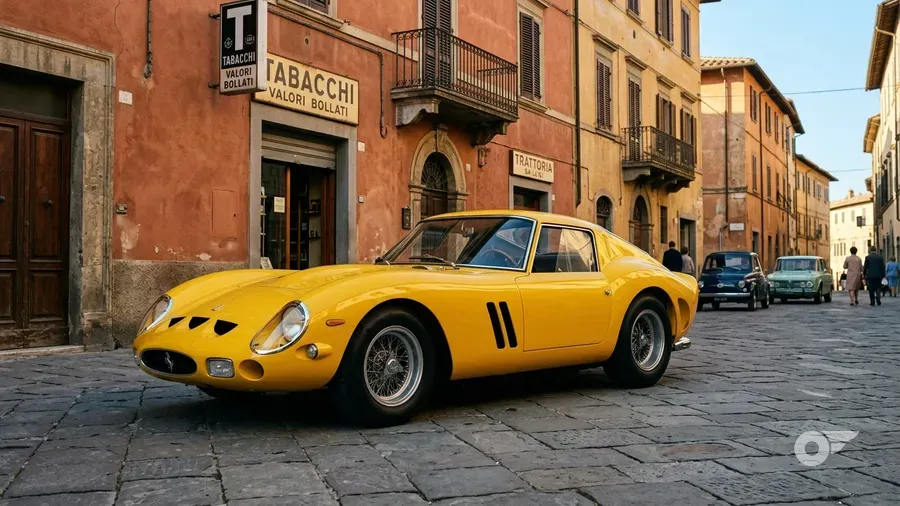
Rivals

Cars from other manufacturers that competed for the same buyers when new.
Owning One

Why collectors want it

The 250 Testa Rossa is a genuine works racing Ferrari from the marque's most dominant sports-car era, with only 33 built and a competition record that includes three Le Mans overall wins and three World Sports Car Championship titles. That combination, real works pedigree plus real rarity, puts it at the very top of the pre-war-adjacent Ferrari hierarchy, above even the 250 GTO in some collectors' eyes because the GTO came after Ferrari had already learned every lesson this car taught it the hard way. The pontoon-fendered 1957-58 cars, bodied by Scaglietti, are the most sought after for their looks alone, and results reflect it: a TR set the world record for any car sold at auction in 2011, and later private and auction results have run as high as the high thirty millions. Ownership at this level means buying into motorsport history that can be documented chassis by chassis, race by race, which is precisely what the market is paying for.

Which one to look for

The 33 cars span four real specifications, and which one a buyer is looking at changes everything about the car. The 1957-58 cars, 19 of the 33 total, wear Scaglietti's pontoon-fendered body with the front wheel arches standing apart from the main body line, the shape most collectors picture when they hear the name. The 1959 TR59 lowered and smoothed that body for less drag. Three of those cars were updated to TR59/60 specification for 1960 with dry-sump lubrication, letting the engine sit lower in the chassis, and one further car, the TRI60, added independent rear suspension where the rest kept a de Dion axle. The 1961 TRI61 was effectively a new car under a shared name, built on a spaceframe chassis with a more aerodynamic body. None of these is a trim level in the ordinary sense; each is a genuinely different racing specification, and provenance research has to start by confirming which one is actually in front of you.

What owning one is like

Owning a 250 Testa Rossa means owning a piece of motorsport history that was built to be raced hard for a season or two, not to last seventy years, so the real risks are about structure and identity rather than day-to-day mechanicals. The Colombo-family V12, Weber carburettors and manual gearbox are well understood by the small circle of specialists who work on 1950s and 1960s Ferrari racing cars, and mechanically these engines are robust when properly maintained. What actually matters at this level is the chassis's own history: decades of period racing, and in some cases later vintage racing, mean accident repair and rebuild quality have to be verified as carefully as the mechanical condition. Aluminium body panels beaten by hand over wooden bucks mean no two cars are perfectly identical, so panel work is fabrication rather than a parts-catalogue exercise, and any inspection has to separate genuine period fabric from later, honest restoration work.

Upkeep & parts

Parts and specialist knowledge exist but run through an extremely small circle, because there were only ever 33 of these cars and most of the mechanical hardware is shared only with other Ferrari sports-racers of the same handful of seasons rather than any road car. Ferrari Classiche in Maranello is the reference point for authenticating components and issuing Red Book certification, and its involvement is treated by the market as a material factor in a car's value, not a formality, given how much of the TR's worth rests on documented originality. Independent specialists who have handled multiple 1950s and 1960s Ferrari competition cars do the actual mechanical work, and any bodywork repair belongs with a shop experienced in hand-formed period aluminium rather than a general restorer. A car's full period and post-period history, ideally including chassis-by-chassis race results and every subsequent owner, should be treated as part of the maintenance file rather than a separate curiosity to be sorted out later.

Country of origin
Italy
Class
Sports
Production years
1957–1961
Units built
33
Model
250 Testa Rossa
Nickname
No nickname ("Pontoon Fender" names the 1957-58 Scaglietti bodywork specifically, not the generation)
Body
Roadster
Layout
Front-engine, RWD
Engine
2,953cc V12 (Tipo 128 competition specification, outboard spark plugs)
Transmission
4-speed / 5-speed manual (varies by specification)
Designer
Sergio Scaglietti and Carrozzeria Scaglietti (bodywork)