Octane Files
Browse CarsCadillac Eldorado 9th Gen

Cadillac Eldorado 9th Gen

Overview

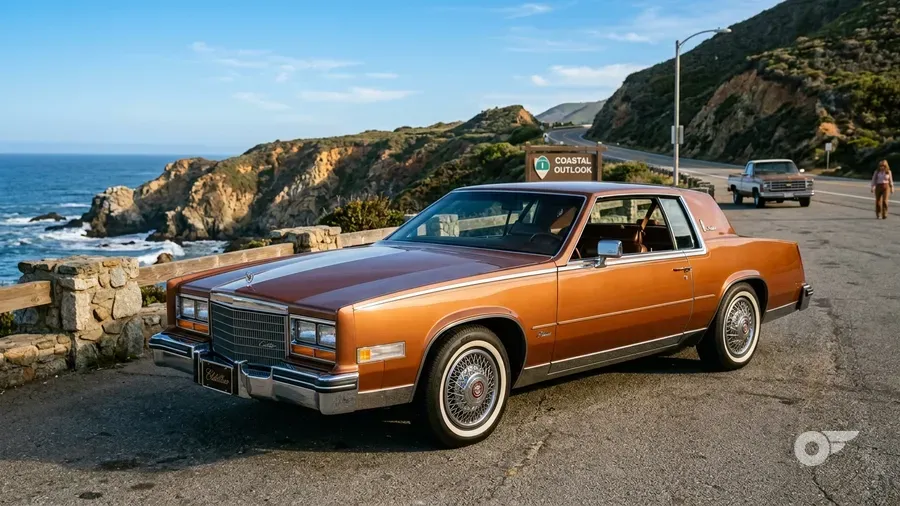
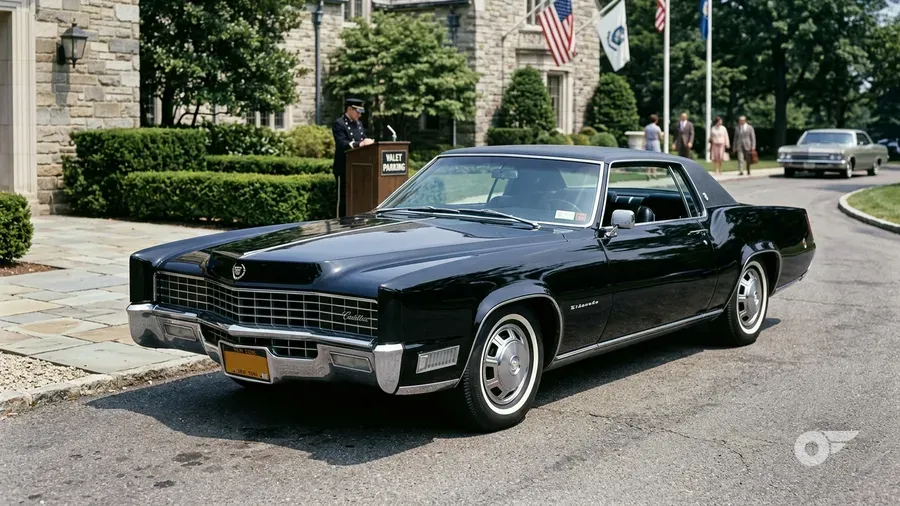
By 1971 the front-drive Eldorado had made its engineering point, so Cadillac stopped arguing hardware and started arguing scale. Wayne Kady's redesign stretched the wheelbase from 120 inches to 126.3 and the body past 223, put the fender skirts back over the rear wheels, and returned a convertible to the line for the first time since 1966. Because the de Ville convertible ended with 1970, the Eldorado was now the only open car Cadillac sold. Under the hood sat the 500 cubic inch V8, 8.2 litres, exclusive to the Eldorado until 1975 and rated at 365 gross horsepower for 1971. Eight model years followed, and almost everything that happened to them was decided outside Detroit: emissions rules that cut the same engine to 190 net horsepower by 1975, five mile per hour bumper standards that added inches and pounds, a fuel crisis that never actually dented sales, and a rollover rule everyone expected and nobody ever wrote. Cadillac built 347,401 of them, more Eldorados in eight years than in the previous eighteen combined, then replaced the whole thing for 1979 with a car twenty inches shorter.

Distinctions

The defining attributes and collector status that make this car garage-worthy.

Octane Files Select
Renowned for its history, engineering, or cultural weight.

Collectibility scorecard

Rated 1 to 10 on the traits that matter for owning, driving, and holding on to a car like this.

Desirability
6/10
Rarity
3/10
Driving thrill
3/10
Investment trajectory
4/10
Usability
6/10
Ease of restoration
5/10
Cultural impact
7/10
Electronic dependence
Fully analogHeavily electronic

A 1971 car is close to fully mechanical: Rochester four-barrel carburettor, breaker-point ignition, hydraulic power steering and brakes, and a vacuum-and-relay network running the climate control, the locks and the trunk. What lifts it off the bottom of the scale is what Cadillac layered on over eight years. Track Master, a rear-wheel anti-skid system with its own control box, sat on the option sheet. From 1974 to 1976 the coupe could be ordered with GM's Air Cushion Restraint System, sensor-triggered dual airbags, of which only around 10,000 were built across every GM model that offered them. And from 1975 the 500 could be had with Bendix-developed electronic fuel injection, an analogue computer reading manifold pressure and temperature, for $647. A fuel-injected car is genuinely computer-managed; a base carburetted one is not.

Market data

Demand tier, price trend, and typical values by condition, based on recent sales data.

Demand tier
EntrySolidHighBlue-chip

The accessible way in. Prices still forgive mistakes, and the upside is real.

Value trajectory
AppreciatingStableCooling

Values are holding steady. What you pay today is what it's worth tomorrow.

Price by condition
Driver
$15k
Excellent
$32k
Concours
$60k

Values split hard by body style. conceptcarz's aggregate of 510 recorded sales of the 1976 car puts the convertible median at $16,500 against $6,600 for the coupe, while classic.com's whole-generation average of $27,717 is skewed upward because convertibles are what reach auction. The ceiling belongs to the 1976 Bicentennial at $143,000 in January 2026; an ordinary 14,063-mile 1976 convertible made $39,600 at RM Sotheby's Hershey in 2024, and the cheapest recorded sale in the generation is a 1978 at $1,400. Entry tier reflects the volume car honestly: 347,401 built and a coupe market that starts in four figures. Stable rather than appreciating because the annual medians have moved sideways for three years and the coupes show no sign of moving at all.

Values as of August 2026.

Buyer's guide

What anyone seriously considering this car should know first.

Why it's worth it
Cadillac's last convertible for eight years, and the largest Eldorado the company ever built
Callout
Fourteen thousand people bought the 1976 as the last American convertible; when Cadillac built another for 1984, some of them sued
What to watch for
Start at the bumpers. Every 1974 and later car carries urethane filler panels between the chrome and the body, and the original compound crumbles; cracked or missing fillers usually mean a car that has been standing, and what is behind them is the real message. Then work the map: lower fenders, door bottoms, rockers, rear quarters, trunk floor, and the cowl under the windshield. On a convertible add the floors and the structure around the top well, because a leaking top rots the car from the inside and the evidence hides under carpet. Cycle the top fully and listen to the pump; cylinders, hoses and frame alignment are all fixable but not cheap. Mechanically the 500 is close to unburstable when the cooling system has been kept honest, and the THM425 transaxle is durable, but a whine or rattle from the chain drive is a transaxle-out job, so price it in. Everything else runs on vacuum and relays, so expect the automatic climate control, the door locks and the trunk pull-down to be sulking. On 1975 and later cars, check the electronic fuel injection is complete and original rather than half converted to a carburettor. On a pace car or a Bicentennial, the paperwork is the value.

The Story

Driving character

The party trick is the floor. Because the transaxle sits alongside the engine rather than behind it, driven by a chain, there is no transmission tunnel, so the front bench is flat from door to door and a two-door car seats six without apology. The rest is exactly what five thousand pounds and 500 cubic inches suggest. Nothing happens quickly: Motor Trend timed a 1975 coupe at 10.9 seconds to 60 mph on 190 net horsepower, and the New Cadillac Database's own figures put the top end between 115 and 120 mph at 10 to 13 mpg. What the engine does instead is refuse to be disturbed, pulling from idle in one long swell with almost no noise reaching the cabin. The variable-ratio power steering asks about a finger and a half of effort. Front-wheel drive keeps the nose pointed where you put it under power, which is more than any rear-drive Eldorado could claim in the wet, and the standard automatic level control holds the tail up when you load it. Brakes are discs at the front and drums at the back, and you plan ahead. It is not a driver's car and Cadillac never pretended otherwise.

Design

The 1971 car was Wayne Kady's, and he says so himself: promoted in August 1968 to run a new advanced Cadillac studio under Bill Mitchell, it was the first car he was responsible for, and he has named it his favourite of everything he drew. The language is sharply crowned separate front fenders, a bevelled hood carrying a spring-loaded laurel wreath and crest, fender skirts back over the rear wheels, and a fixed opera window in the coupe's rear quarter that Detroit then copied for a decade. Kady's own reservation is the most honest line anyone has offered about the car: it grew bigger than the studio wanted, and the narrower proportions of the earlier Eldorado were lost. After that the regulations did the styling. The 1973 facelift brought a massive eggcrate grille with new bumpers, decklid, rear fenders and tail lamps; 1974 added a rear bumper built to the five mile per hour standard; 1975 squared off the headlamps; 1977 laid the grille flat under a brushed chrome moulding and moved the tail lamps into the bumper tips. By 1978 there was nothing left to change but the grille.

Motorsport pedigree

Cadillac raced nothing in the 1970s and had nothing to race with: by 1975 the 500 cubic inch V8 made 190 net horsepower in a car weighing more than two and a half tons, and no series anywhere had a class for it. The nameplate does appear at a racetrack in an official capacity exactly once, and it landed on the darkest race meeting the Speedway has ever held. A Cotillion White Eldorado convertible paced the 1973 Indianapolis 500, driven by Jim Rathmann, who had won the race in 1960. It was only the second front-wheel-drive pace car in the event's history, after a Cord L-29 in 1930, and the first Cadillac-badged one since a V-12 in 1931. Cadillac built 566: two ran on the track, 53 were track and festival cars, the rest went to dealers as replicas with a dash plaque. The race was a disaster. Art Pollard was killed in practice on 12 May. The start on 28 May produced an eleven-car crash that injured eleven spectators. Rain wiped out two days. When it finally ran on 30 May, Swede Savage crashed on lap 59 and later died of his injuries, crewman Armando Teran was struck and killed in the pit lane, and rain stopped it at 133 laps.

In culture

No car carries the 1970s more literally. In Super Fly (1972) the dealer Youngblood Priest drives a 1971 Eldorado worked over by Les Dunham Coachworks of New Jersey: covered headlamps, a Rolls-style goddess on the nose, lake pipes, porthole windows. The car was not a prop. It belonged to a Harlem hustler credited as K.C., who also appears in the film. What followed was a national customising trend, and the Eldorado became the exact shape the word pimpmobile describes, which is both why the car reads instantly to anyone over forty and why so many were modified past recovery. The other screen credit is a straight one: the white 1971 Eldorado convertible that Raoul Duke and Dr Gonzo take across the desert in Fear and Loathing in Las Vegas (1998) is Hunter S. Thompson's White Whale made literal. Beyond the screen, the 1976 convertible had a cultural moment of its own. Fourteen thousand Americans bought a car specifically because they had been told nobody would ever be able to buy one again, and a great many of them drove it straight into a garage and left it there.

Rivals

Cars from other manufacturers that competed for the same buyers when new.

Lincoln Mark Series Mark III

We haven’t profiled this car yet. Request to add

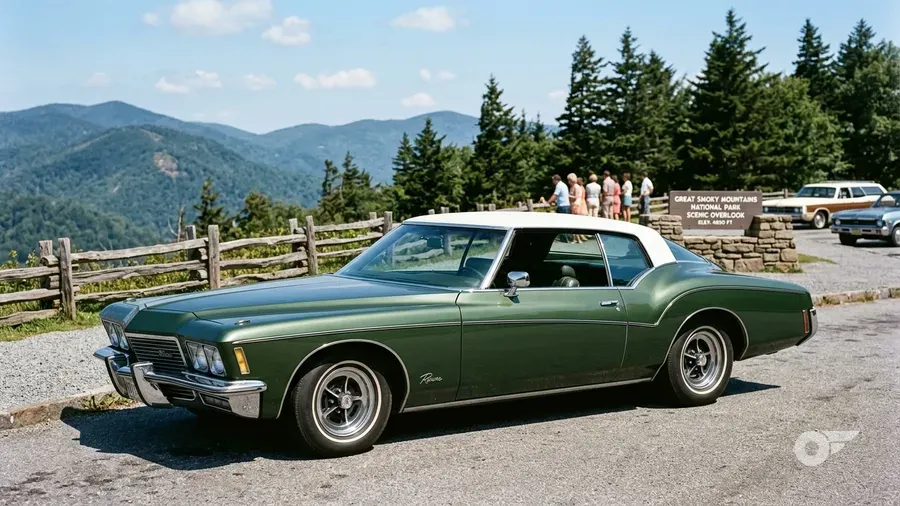
Buick Riviera 3rd Gen

Buick Riviera 3rd Gen

USA·Luxury·1971–1973

Lincoln Mark Series Mark IV

We haven’t profiled this car yet. Request to add

Buick Riviera 4th Gen

We haven’t profiled this car yet. Request to add
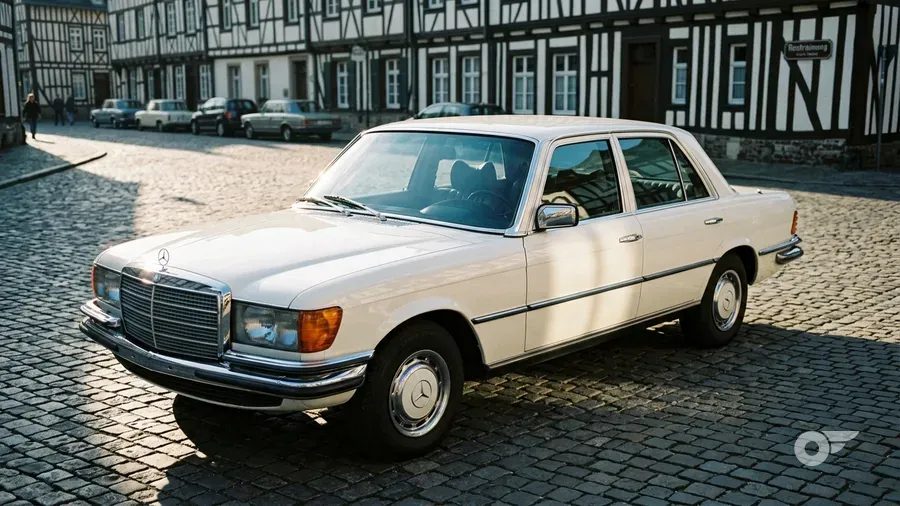
Mercedes-Benz S-Class W116

Mercedes-Benz S-Class W116

Germany·Luxury·1972–1980

Lincoln Mark Series Mark V

We haven’t profiled this car yet. Request to add

Owning One

Why collectors want it

This is the cheapest way into a genuinely consequential Cadillac, and the hierarchy inside it is steeper than a 347,401-car generation has any right to be. At the top are the 200 Bicentennial Edition convertibles that closed out 1976, white on white with red piping and a numbered dash plate; the generation's highest recorded public sale is a Bicentennial at $143,000 in January 2026. Below them come the 566 cars built around the 1973 Indianapolis 500 pace car, then ordinary convertibles, which conceptcarz's aggregate puts at a median in the mid teens and which reach the high thirties when they are original and low mileage. Then there is a cliff. Coupes are 84 percent of production and trade at around 40 percent of convertible money, which makes a running, honest, air-conditioned 1977 Eldorado one of the least expensive ways to own something with real presence. The argument here is not investment. It is that a 500 cubic inch V8, a flat floor, a chain-driven transaxle and more than eighteen and a half feet of car add up to an experience nothing modern sells at any price, and this is the generation where it got cheap.

Which one to look for

Body style is the first fork. Convertibles ran 1971 to 1976 and account for 54,640 of the 347,401 cars built; coupes did the volume. At the top of the convertible pile sit the final 200 cars of 1976, sold as the Bicentennial Edition, white with white tops and white leather piped in red, carrying a numbered plate on the dash. Next come the 566 built around the 1973 Indianapolis 500, Cotillion White with white tops and red leather; two were the actual pace cars and 53 were track and festival cars, so nearly every survivor is a replica and the documentation is the whole argument. Among ordinary convertibles the 1971 and 1972 cars are the pick, for the cleanest version of the shape and for a 500 still quoted in gross horsepower. The 1975 and 1976 fuel injection option is the technical curiosity, worth having if the system is intact. On the coupe side the Custom Biarritz, introduced mid-year in 1976, brings a padded landau roof and opera lamps, and 1,999 were built for 1977. The 1978 Custom Biarritz Classic, 2,000 cars in Arizona Beige over Demitasse Brown finished at American Sunroof, closes the generation out.

Bicentennial Edition · 1976

The final 200 convertibles built, and the most valuable cars of the generation by a wide margin. White paint, white top, white leather piped in red, a red and blue pinstripe along the upper body side, and a dash plate telling the owner the car was one of the last 200 identical US production convertibles. That claim held for eight years.

Custom Biarritz · 1976–1978

The Biarritz name, unused since 1964, came back mid-year in 1976 as a coupe-only appearance package: padded landau roof over the rear half of the cabin, opera lamps, Biarritz scripts and a heavily upgraded interior with pillowed and tufted leather from 1977. Not offered on the convertible.

Custom Biarritz Classic · 1978

A run-out edition marking the end of the full-size Eldorado, announced to dealers in April 1978 and built between May and July. Two-tone Arizona Beige over Demitasse Brown with dark brown accent striping, light beige Elk Grain cabriolet roof, saddle leather pillowed seats and gold-plated Biarritz scripts on the sail panels and deck lid. The option added $2,466.

Indianapolis 500 Pace Car · 1973

The Eldorado's only official appearance at a racetrack. Cotillion White convertibles with white tops and red leather, sold through dealers with a plaque on the instrument panel identifying the car as a replica of the official pace car. Jim Rathmann, winner of the 1960 race, drove the real one.

What owning one is like

Living with one is mostly a question of scale. It is more than eighteen and a half feet long, it returns 10 to 13 mpg on a good day, and parking is a planning exercise. Everything else is ordinary 1970s American car ownership. The 500 and the 425 are understressed and will run a very long time given an honest cooling system and a correctly set carburettor, and the chain-driven THM425 rarely lets go, though it is a serious job when it does. What actually consumes an owner's time is the periphery: the automatic climate control's servo and amplifier, seat and window motors, door locks, the trunk pull-down, and fifty-year-old grounds behind the dash. Convertible tops leak eventually and the leak reaches the floors. The bumper fillers crumble on schedule. Fuel-injected cars from 1975 on want somebody who knows the Bendix system rather than somebody who wants to fit a carburettor over it. None of this is mysterious and none of it is exotic, which is the point: this is a car an ordinary mechanic can keep on the road on an ordinary budget, which very few things with this much presence can claim.

Upkeep & parts

Mechanical parts are easy and cheap by any collector-car standard. The 500 and 425 share most service parts with every other big-block Cadillac of the period, brakes and suspension pieces are catalogue items, and specialists such as Caddy Daddy stock the routine stuff off the shelf. Bumper fillers, the most visible defect on any 1974 and later car, are reproduced in ABS and fibreglass by several firms, which is what happens when a part fails on essentially every surviving example. Convertible top motors, cylinders and pumps are reproduced too. Where it gets expensive is anything Eldorado-specific: correct exterior trim, Biarritz scripts and opera lamps, pace car and Bicentennial identification, good interior soft trim, and complete electronic fuel injection components, all hunt-and-wait items. Budget for a top rebuild and a full vacuum and electrics sort on any car that has been standing. The Cadillac and LaSalle Club is the marque authority, roughly 6,200 members with a museum and research centre and an active forum, and the New Cadillac Database is the deepest free reference on these years. Fuel is the honest running cost: at 10 to 13 mpg, driving one is a decision you make on purpose.

Country of origin
USA
Class
Luxury
Production years
1971–1978
Units built
~347,401
Model
Eldorado
Nickname
No nickname ("Bicentennial Edition" names the final 200 convertibles of 1976 specifically, not the generation)
Body
Coupe, Convertible
Layout
Front-engine, FWD
Engine
500ci (8.2L) OHV V8 with Rochester four-barrel (1971-1976), 500ci (8.2L) OHV V8 with electronic fuel injection (1975-1976), 425ci (7.0L) OHV V8 with four-barrel (1977-1978), 425ci (7.0L) OHV V8 with electronic fuel injection (1977-1978)
Transmission
3-speed Turbo Hydra-Matic 425 automatic transaxle
Designer
Wayne Kady (Cadillac studio, under design chief Bill Mitchell)