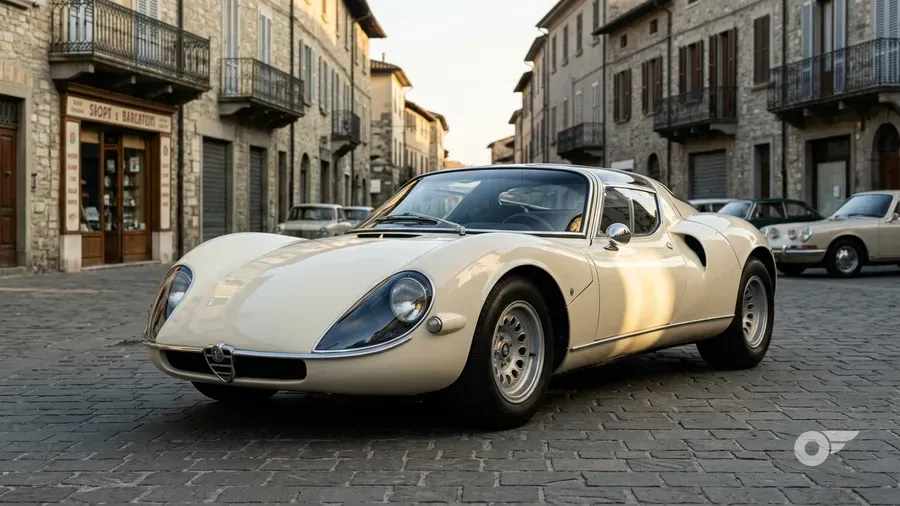
Alfa Romeo 33 Stradale
Italy·Exotic·1967–1969

The defining attributes and collector status that make this car garage-worthy.


Rated 1 to 10 on the traits that matter for owning, driving, and holding on to a car like this.
Demand tier, price trend, and typical values by condition. Our own assessment, not a quoted valuation.
Values as of August 2026.
What anyone seriously considering this car should know first.
Cars from the same manufacturer family, like platform siblings or shared-era relatives.
Cars from other manufacturers that competed for the same buyers when new.

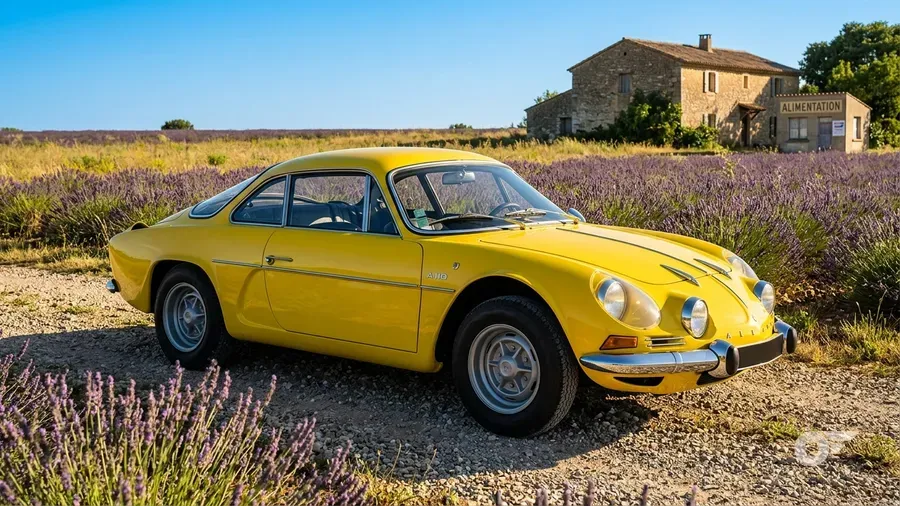
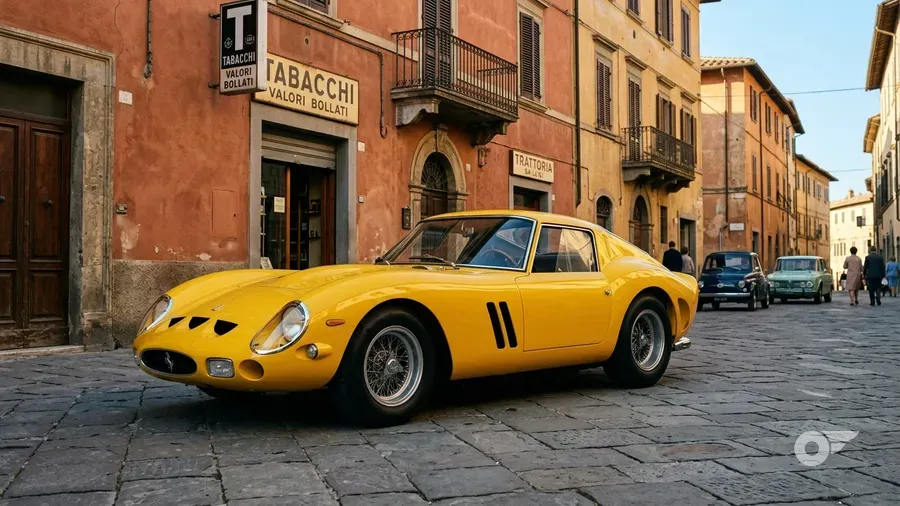
The original, called TZ1 only in retrospect. Tubular spaceframe by SAI Ambrosini in the province of Perugia, hand-formed aluminium bodywork by Zagato, independent suspension and discs on all four corners, a 1,570cc twin-plug Twin Cam laid over at an angle under the bonnet for airflow. 112 PS at 6,500rpm in road trim and up to 160 PS as raced, about 650kg, 216km/h. 3,950mm long, 1,509mm wide, 1,199mm tall on a 2,200mm wheelbase. Shown at Turin in 1962, first raced in 1963, homologated into Gran Turismo at the start of 1964 once the hundredth car was built.
A racing car only, never sold in road trim. Zagato replaced the aluminium with a fibreglass body moulded tight to the chassis for lower drag and less weight: 620kg, 3,680mm long, 1,600mm wide and just 1,020mm tall, with a single-pane rear window in place of the TZ's three-piece one. Autodelta supplied a twin-plug dry-sump 1,570cc engine worth around 170bhp at 7,000rpm, good for 245km/h. Shown on Zagato's stand at Turin in 1964; development stopped at the end of 1965 to free Autodelta for the GTA programme, though the last cars were not finished until 1967.