Octane Files
Explore CarsAlfa Romeo 8C 2300

Alfa Romeo 8C 2300

Overview

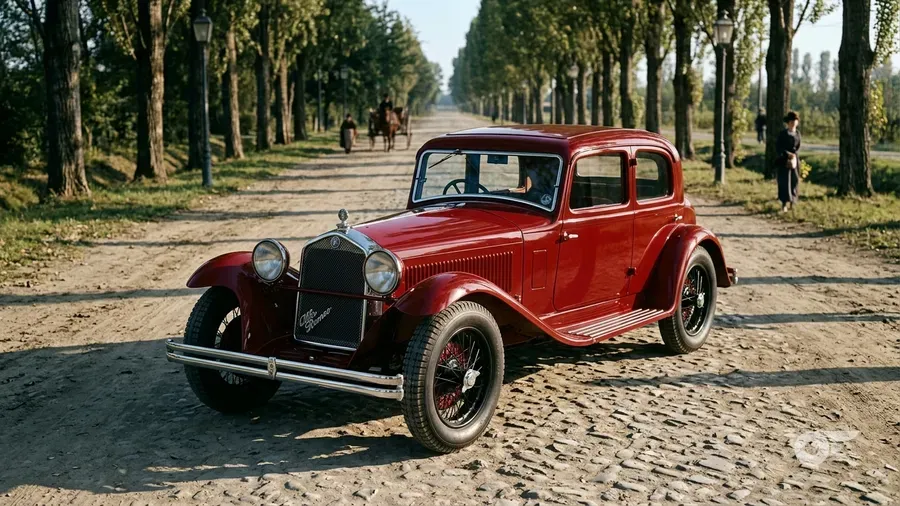
The 8C is the engine Alfa Romeo raced from 1931 until 1939, and the 8C 2300 is the car it arrived in. Vittorio Jano built it as two alloy four-cylinder blocks on a shared crankcase with a gear tower up the middle driving the camshafts, the supercharger and everything else. The blocks incorporate their own heads, so there is no head gasket to lift, which is a racing decision made at the cost of every future valve job. Bore and stroke came straight off the 6C 1750, so the eight is in a real sense two thirds of the six with two more cylinders behind them. Alfa built 188 chassis in four years and sold them to the sort of customer who bought a Bugatti or a Duesenberg, in short corto and long lungo wheelbases, mostly bodied by Zagato, Touring and Castagna. Then it went racing and did not stop winning: the Targa Florio, the Mille Miglia, the Italian Grand Prix and four consecutive runnings of the Le Mans 24 Hours. Almost no other single model in the history of the sport has a record that reads like that in so short a time.

Distinctions

The defining attributes and collector status that make this car garage-worthy.

Legend
A car that transcended the hobby, known far beyond the people who drive them.
Octane Files Select
Renowned for its history, engineering, or cultural weight.

Collectibility scorecard

Rated 1 to 10 on the traits that matter for owning, driving, and holding on to a car like this.

Desirability
9/10
Rarity
9/10
Driving thrill
9/10
Investment trajectory
7/10
Usability
2/10
Ease of restoration
2/10
Cultural impact
8/10
Electronic dependence
Fully analogHeavily electronic

Magneto ignition, a mechanical fuel feed, a Roots supercharger driven by the same central gear tower that turns the camshafts, and four-wheel mechanical drum brakes worked by rods. There is no fuel injection, no electronic ignition and nothing between the driver's foot and the mechanism. The electrical system exists only to provide lights and starting. Even the supercharger, which is the most complex thing on the car, is a fixed-ratio gear drive with no control over boost beyond the throttle. This is as close to the bottom of the scale as a car gets.

Market data

Demand tier, price trend, and typical values by condition. Our own assessment, not a quoted valuation.

Demand tier
EntrySolidHighBlue-chip

The proven elite. Values are established, liquid, and defended at every auction.

Value trajectory
AppreciatingStableCooling

Values are climbing. The market wants more of these than exist.

Price by condition
Driver
$1.2M
Excellent
$3.3M
Concours
$5.5M

The Classic Valuer records twelve all-time sales with a 55 percent sell-through, a median since 2020 of GBP 2,452,310 and an average of GBP 3,198,875, running from GBP 738,290 for a 1933 cabriolet at RM Sotheby's in August 2026 up to GBP 3,622,425. The all-time record is GBP 9,079,493 at Gooding in August 2016, and RM Sotheby's sold a 1934 Le Mans Spider for USD 4,075,000 at Monterey in August 2024. The band above describes a road-bodied lungo tourer or cabriolet, which is what actually reaches the market; Monzas, Le Mans cars and anything with a period competition record sit well above it and are excluded per the volume-car rule. Trajectory is appreciating on thin but consistent evidence: very few cars trade in a given year, the ones that do have been setting stronger numbers than a decade ago at the road-car end, and supply is fixed at 188 chassis. Note that recreations trade in a completely separate market, around USD 320,000 for a good one.

Values as of August 2026.

Buyer's guide

What anyone seriously considering this car should know first.

Why it's worth it
The most successful racing car of the early 1930s, sold in the showroom as a road car
Callout
Won the Le Mans 24 Hours four years running, 1931 to 1934, with four different driver pairings
What to watch for
Everything here turns on chassis identity, because the 8C 2300 is the most convincingly recreated pre-war car in the world. Purpose-built recreations from Pur Sang and others are good enough that classic.com maintains a separate market page for them, and they sell openly and honestly in the low-to-mid six figures. Problems start when a recreation, a rebodied car or a car assembled around a spare engine drifts into the genuine market. Read the wording in the catalogue: "to Monza specification" is not the same as "Monza", and a chassis that gained a racing body in the 1960s is a rebody however well done. The 1935 trap is worth knowing about too, because production stopped in 1934 and some cars were not registered until the following year, so a 1935 registration document is not evidence of a 1935 chassis. Verify the engine number against the chassis, get the factory archive at Arese to issue a certificate of origin, and take the car to somebody who has rebuilt one of these engines before, because the fixed-head architecture means a valve problem is a full strip.

The Story

Driving character

Two things dominate. The first is the sound: eight cylinders with a blower on them, geared up through a tower that also drives the cams, produces a hard mechanical shriek that has very little in common with the smooth straight eights of the same decade. The second is the way the car uses its power. 142hp in a chassis this size was enough in 1931 to make the 8C the fastest thing most drivers had encountered, and it arrives with boost rather than in a swell, so the throttle is a decision rather than an adjustment. The gearbox is a four-speed with no synchromesh and needs the revs matched on every change, up as well as down. Steering is heavy at parking speed and beautifully weighted once moving, and the mechanical drums are the limiting factor on any modern road, which is why anyone who drives one regularly develops a long-range view of what is coming. The corto chassis feels alert and slightly nervous, the lungo feels planted and long-legged, and both feel considerably more modern than their contemporaries.

Design

Because the 8C was sold as a chassis, the design story belongs to the coachbuilders, and this is the model where Italian coachbuilding hits its first peak. Zagato built the racing spiders, all function: a shallow tail, cycle wings, a scuttle cut low enough that the driver sits in the airstream. Touring built the elegant version of the same idea, and later applied its Superleggera principle to the 8C's successor. Castagna and Pinin Farina built formal cabriolets and saloons for owners who wanted the eight without the noise, and Figoni bodied at least one, chassis 2311239 in 1934. Whatever sits on top, the proportions come from Jano's layout. The engine is long and set well back, so the bonnet runs most of the wheelbase and the passengers sit almost over the rear axle, and the radiator carries the Alfa Romeo shield with the Milanese cross and the Visconti serpent flanked by the laurel wreath the marque had earned by then. The Monza's cut-down tail and side pipes are the most copied shape in pre-war racing.

Motorsport pedigree

This is the record the car exists for. Between 1931 and 1934 the 8C 2300 won the Le Mans 24 Hours four years in succession, and did it with four different crews: Lord Howe and Tim Birkin in 1931, Luigi Chinetti and Raymond Sommer in 1932, Tazio Nuvolari and Sommer in 1933, Chinetti and Philippe Étancelin in 1934. Nuvolari won the Targa Florio in 1931 and again in 1932, and Antonio Brivio made it three straight in 1933. The Mille Miglia fell to Baconin Borzacchini and Amedeo Bignami in a Touring-bodied Spider in 1932 and to Nuvolari and Decimo Compagnoni in a Zagato Spider in 1933, the latter billed by Ferrari itself as the Scuderia's first Mille Miglia win. The 1931 Italian Grand Prix at Monza gave the short two-seater its name after Nuvolari and Campari took over an 8C 2300 two hours into the race and won in it. The same engine, enlarged to 2,665cc and twin-supercharged, went on to power the Tipo B monoposto that dominated Grand Prix racing from 1932.

In culture

The 8C 2300 is where Alfa Romeo the company and Ferrari the idea overlap. Alfa withdrew its works team in 1933 as the Italian state took the business over through the newly created IRI, and Scuderia Ferrari, until then a well-connected private team run by an Alfa concessionaire, became the factory's racing arm by default. Many of the Monzas were built at Modena rather than Portello. Ferrari's own account of its history dates its first Mille Miglia victory to April 1933, taken by Nuvolari in an Alfa Romeo 8C 2300, which is a slightly awkward fact for both marques and is why it is worth stating plainly. Beyond that, the car's cultural weight is mostly in the imagery of the period: Zagato-bodied 8Cs at Le Mans in the dark, the Monza's side pipes, the drivers of the era photographed in goggles and no helmets. It is the shape a great many people picture when they hear the phrase pre-war racing car, without necessarily knowing whose badge is on the radiator.

Rivals

Cars from other manufacturers that competed for the same buyers when new.
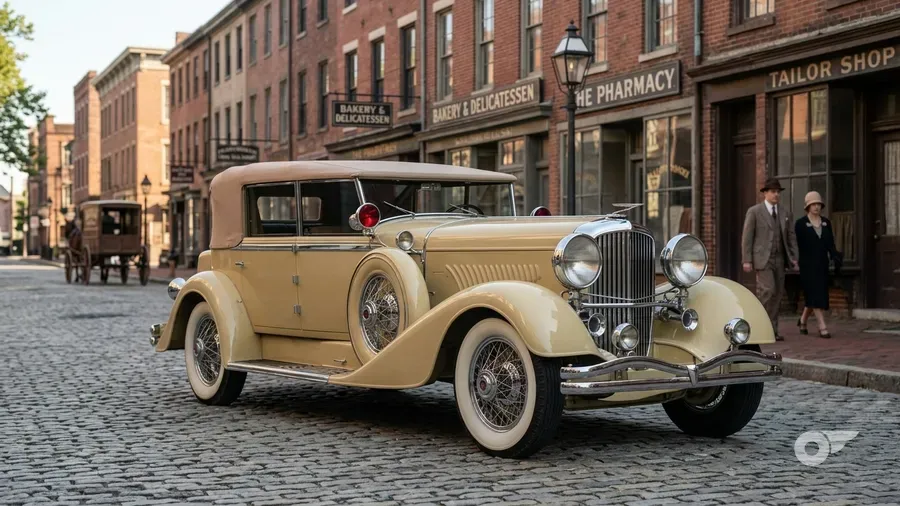
Duesenberg Model J

Duesenberg Model J

USA·Vintage·1928–1937
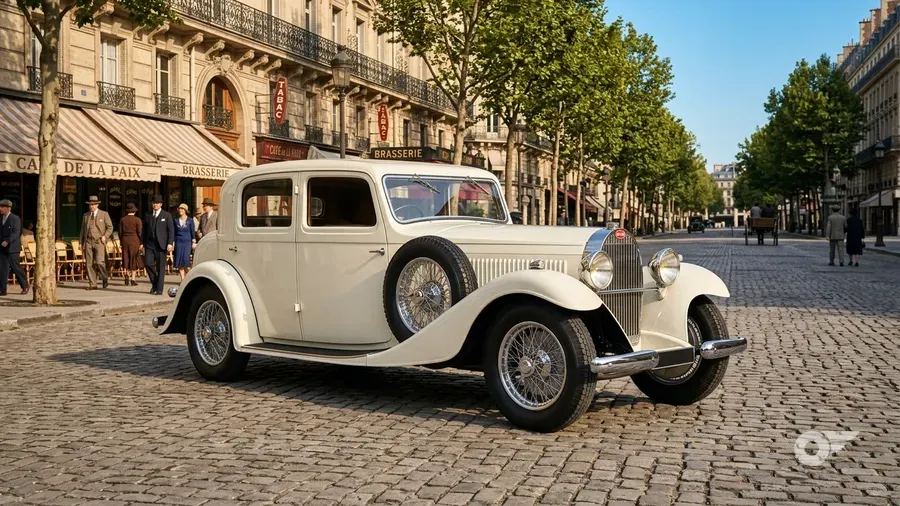
Bugatti Type 57

Bugatti Type 57

France·Grand Tourer·1934–1940

Owning One

Why collectors want it

The 8C 2300 is a genuine blue-chip and the reasons are unusually easy to state. There are 188 chassis, they are individually documented, and the competition record attached to them is the strongest of any pre-war production car. The hierarchy runs from the works and Scuderia Ferrari racing cars at the top, through the ultra-short Monza two-seaters and the long-chassis Le Mans type, down to road-bodied lungo tourers and cabriolets, and the spread between top and bottom is a factor of five or more. History is what moves a car within that spread. A chassis with a period entry list, a Scuderia Ferrari record or a class result in the Mille Miglia is a different proposition from an identical car without one, because the events these cars are welcome at now, the Mille Miglia Storica above all, care about exactly that. There is also a scarcity that is easy to miss: with 188 built and a large fraction of the survivors in long-term collections and museums, only a handful reach the open market in any given year, and the ones that do tend to be the road-bodied cars rather than the racers.

Which one to look for

There is no trim ladder in the ordinary sense, only chassis length and what the factory or Scuderia Ferrari did with it. Fusi's records split production simply into corto and lungo, short and long wheelbase, and everything else is a body and a specification on top of that. The long-chassis Le Mans type is the endurance car, carrying the rear seat the regulations demanded, and it is the version with the four Le Mans wins against its name. The short corto chassis in Mille Miglia trim is the road-racing car, quicker to change direction and the specification Nuvolari used in 1933. Above both sits the Monza, an ultra-short two-seater with cut-down bodywork, a tapered tail and a full-length side exhaust, named after the 1931 Italian Grand Prix it won and built in small numbers, many of them by Scuderia Ferrari rather than the factory. For a road car, the lungo with a Touring or Castagna body is the one to have, and it is also the version most likely to be genuine, because nobody bothers to fake down.

Corto · 1931–1934

The short-wheelbase chassis. Quicker to change direction and the basis for the road-racing cars, including the Mille Miglia specification Nuvolari used to win in 1933. Bodied mostly by Zagato and Touring as open two-seaters.

Le Mans · 1931–1934

The long-chassis sports version, carrying the rear seat the endurance regulations demanded. Debuted successfully in the 1931 Eireann Cup with Tim Birkin driving, then won the Le Mans 24 Hours four years in succession from 1931 to 1934 with four different crews. A 1933 example, chassis 2311201, is in the Simeone Foundation collection in Philadelphia.

Lungo · 1931–1934

The long-wheelbase chassis and the one most likely to be found under a road body. Cabriolets and tourers by Touring, Castagna, Pinin Farina and Figoni, sold to the sort of customer who was otherwise looking at a Duesenberg. The version the price band on this page describes.

Monza · 1931–1934

The ultra-short two-seat Grand Prix car, cut down from the Spider with a tapered racing tail, full-length side exhaust, shortened front springs and a distinctive radiator shroud. Named after the 1931 Italian Grand Prix at Monza, which Nuvolari and Campari won in an 8C 2300 after abandoning the Tipo A. Nuvolari also took the 1931 and 1932 Targa Florio in one.

What owning one is like

An 8C 2300 is a serious mechanical commitment, which is part of why so many sit in collections rather than getting used. The fixed-head engine is the defining fact of ownership: with the heads cast into the blocks there is no gasket to fail, but there is also no way to reach the valves without a major strip, so top-end work that would be a weekend on another car is a workshop project on this one. The central gear tower that drives the cams and the blower is beautifully made and expensive to put right if it has been neglected. Plain bearings need pouring rather than buying. The supercharger runs unintercooled, so fuel quality and ignition timing matter more than they would on an unblown car. Brakes are mechanical drums on a car capable of well over 160km/h, and keeping them balanced is a continuous job rather than an occasional one. None of it is mysterious to the specialists who do this work, and cars that are driven regularly are markedly healthier than cars that are not.

Upkeep & parts

Support for a car built in this quantity is remarkable, and the reason is that the 8C and the 6C 1750 share bore, stroke, connecting rods and pistons, so a real trade in newly made internals exists across two models rather than one. A handful of specialists in Italy, Britain and the United States can make anything else, including complete blocks, and the recreation industry has had the side effect of keeping tooling and knowledge alive. Budget properly for two things. The first is engine work, because the fixed-head architecture makes every internal job a big one. The second is documentation, which on this car is a material part of the value: Alfa Romeo Classiche will issue a certificate of origin from the Arese archive, the Historic Alfa Romeo Register holds the chassis knowledge, and the Registro Internazionale Touring Superleggera and the Zagato Car Club can speak to the bodies. If you plan to run it in the Mille Miglia Storica or at Goodwood, get the paperwork sorted before you buy, not after.

Country of origin
Italy
Class
Vintage
Production years
1931–1934
Units built
188
Model
8C 2300
Nickname
No nickname ("Monza" and "Le Mans" name specific chassis forms, not the generation)
Body
Spider, Coupe
Layout
Front-engine, RWD
Engine
2,336cc supercharged DOHC straight-eight (65 x 88mm, Roots supercharger, 142hp at 5,000rpm)
Transmission
4-speed manual
Designer
Vittorio Jano (chassis and engine), Zagato / Carrozzeria Touring / Castagna / Figoni (coachwork)