Octane Files
Explore CarsAlfa Romeo 6C 1750

Alfa Romeo 6C 1750

Overview

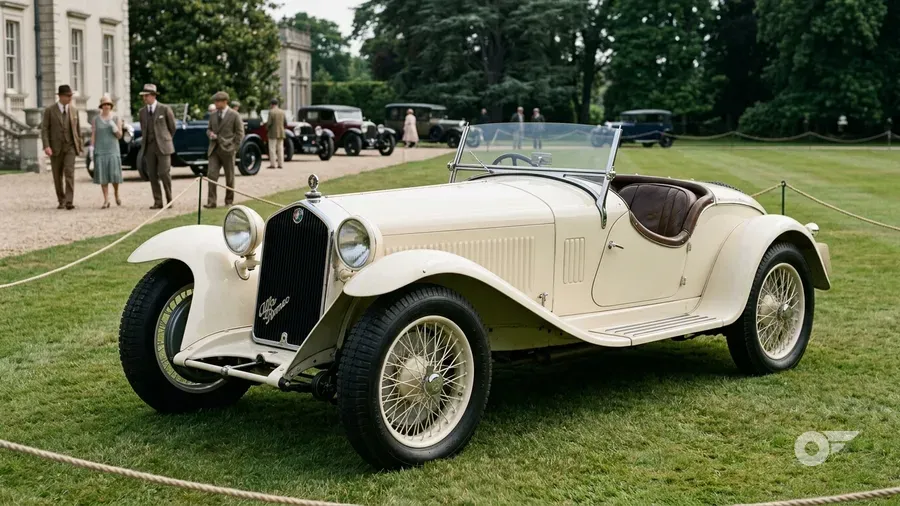
Vittorio Jano had already given Alfa Romeo the P2 and a world championship. The 6C 1750 is what he did next, and it is the car that made the badge mean something to people who would never stand at a Grand Prix. Announced in Rome in 1929, it put a 1,752cc straight six on a chassis deliberately built to flex and ride with a rutted road rather than fight it, steered by a geared-up box that wants a light hand. Six series ran through to 1933. Almost every car left Portello as a bare rolling chassis and went off to a coachbuilder, so a 6C 1750 can be a formal four-door saloon, a Touring show piece or a Zagato two-seater with barely any doors at all. In every one of those bodies it was fast. In 1929 the 6C won essentially everything it was entered in, including the Grands Prix of Belgium, Spain, Tunis and Monza, the Mille Miglia, the Brooklands Double Twelve and the Ulster TT. In 1930 it took the Mille Miglia again and the Spa 24 Hours. Luigi Fusi's factory tables record 2,579 built across the six variants.

Distinctions

The defining attributes and collector status that make this car garage-worthy.

Octane Files Select
Renowned for its history, engineering, or cultural weight.

Collectibility scorecard

Rated 1 to 10 on the traits that matter for owning, driving, and holding on to a car like this.

Desirability
8/10
Rarity
8/10
Driving thrill
7/10
Investment trajectory
6/10
Usability
3/10
Ease of restoration
2/10
Cultural impact
6/10
Electronic dependence
Fully analogHeavily electronic

Nothing on this car is electronic in any modern sense. Ignition is by magneto, fuel arrives through a single updraught carburettor on most versions and a twin-choke on the Super Sport, and the Roots supercharger on the blown cars is geared straight off the nose of the crankshaft rather than managed by anything. Braking is four-wheel mechanical drums working through rods and cables, so pedal effort and balance are entirely down to linkage adjustment. The electrical system exists to run the lights and, on later cars, the starter. Everything a driver does reaches the mechanism through metal.

Market data

Demand tier, price trend, and typical values by condition. Our own assessment, not a quoted valuation.

Demand tier
EntrySolidHighBlue-chip

The proven elite. Values are established, liquid, and defended at every auction.

Value trajectory
AppreciatingStableCooling

Values are holding steady. What you pay today is what it's worth tomorrow.

Price by condition
Driver
$200k
Excellent
$285k
Concours
$450k

Two separate markets share one model name. The Classic Valuer records 29 Gran Sport sales at a median of GBP 972,500, from GBP 318,997 at RM Sotheby's in August 2022 to GBP 1,532,492 in France in February 2025, with a further GBP 1,460,295 at Gooding Christie's in March 2026 and a 62 percent sell-through. Everything that is not a Gran Sport trades in an entirely different bracket: five recorded sales since 2020 at a median of GBP 178,158, the most recent GBP 160,816 at Broad Arrow in October 2025. The band above describes those unsupercharged Turismo and Gran Turismo cars, which are the volume of the run, and deliberately excludes Gran Sport money. The trajectory is called stable rather than rising because the top of this market was already past a million pounds several years ago and a strong Gran Sport went unsold against a 950,000 to 1,250,000 dollar estimate at Pebble Beach in February 2025.

Values as of August 2026.

Buyer's guide

What anyone seriously considering this car should know first.

Why it's worth it
Vittorio Jano's Grand Prix engineering, sold as a rolling chassis to anyone who could pay for it
Callout
The first car to average more than 100km/h for a whole Mille Miglia, in 1930
What to watch for
Buy the identity before you buy the car. Almost every 6C 1750 you will be offered has been apart, and the honest question is not whether the body is original but whether the chassis and engine numbers agree with each other and with the factory record. Auction catalogues are precise about this if you read them: "Gran Sport Spider by Zagato" and "Gran Sport Spider in the style of Zagato" are two very different cars, and the second is common, because a Gran Turismo saloon rebodied as a spider is worth a multiple of what it was. Some of those conversions were done at Zagato itself decades later, which makes them good cars but not original ones. Confirm the variant against the specification rather than the badge: a Testa Fissa has no separate cylinder head, a Compressore has the blower driven off the crankshaft nose, and the wheelbase differs between Turismo, Gran Turismo and Gran Sport chassis. Get the Historic Alfa Romeo Register and Alfa Romeo Classiche involved early. A certificate of origin from the factory archive costs a fraction of what a wrong car costs.

The Story

Driving character

This is a car that rewards commitment and punishes hesitation. The wheel is huge and heavy at a standstill, then goes light and precise the moment there is speed under it, which is the geared-up steering doing exactly what Jano intended. The chassis is soft by design and moves under you over bad surfaces, the leaf springs and friction dampers keeping it settled rather than flat. The engine wants revs. On a blown car the supercharger whines up through the scale and the gear whine from the four-speed box comes in over the top of it, and the noise arriving in the cockpit is close enough to a period racing car that the difference stops mattering. Every downshift needs a double declutch and a moment of thought, and the mechanical drums need to be planned for well in advance rather than leaned on. Given a decent road it will hold 145km/h without any sense of strain, which is the number that explains why these cars won long-distance events. The unblown Turismo is a gentler thing entirely, but the chassis underneath it is the same good one.

Design

The 6C 1750 is really a design brief rather than a design, because Alfa Romeo sold the chassis and left the shape to somebody else. That is why the model has no single silhouette and why the coachbuilder's name does so much work. Zagato's spider is the shape that got fixed in the collective memory: cut down to almost nothing, cycle wings, a body that stops where the mechanicals do, and a nose carrying the shield grille flanked by big mesh-guarded lamps. Touring worked the other way, building show cars of real extravagance, and the 1931 Gran Sport it made for the Concorso d'Eleganza Villa d'Este was named Flying Star and is still the most photographed 6C of all. Castagna and Garavini built formal bodies for owners who wanted the engineering without the theatre, and three chassis went to James Young in England. The constant across all of them is the proportion the chassis dictates: a long bonnet over that straight six, the driver sitting well back, and wheels that fill their arches because there was no bodywork to hide behind.

Motorsport pedigree

The 1929 season is close to a clean sweep. The 6C won the Grands Prix of Belgium, Spain, Tunis and Monza, the Brooklands Double Twelve, the Ulster Tourist Trophy and the Mille Miglia, the last of those in a Super Sport Spider by Zagato with Giuseppe Campari and Giulio Ramponi aboard. 1930 produced the result the car is remembered for. Tazio Nuvolari and Giovanni Battista Guidotti won the Mille Miglia in a Gran Sport Spider Zagato at an average of 100.450km/h, the first time anyone had covered the whole thousand miles at over 100km/h, and Alfa Romeos filled the first four places. Alfa's own archive tells the rest of it: that Nuvolari closed on Achille Varzi through the last stretch before dawn with his headlamps switched off, passed him unseen, and finished more than seven minutes clear. The same year Attilio Marinoni and Pietro Ghersi won the Spa 24 Hours and Nuvolari led an Alfa one-two-three at the Ulster TT. The 1930 Targa Florio, often lumped in with these, was won by a P2 and belongs to that car.

In culture

The 6C 1750 is the car Scuderia Ferrari was founded on. Enzo Ferrari set the team up in Modena at the end of 1929 while working as Alfa Romeo's concessionaire for Emilia-Romagna and the Marches, and its first entry was the 1930 Mille Miglia with a team of Alfas. One of the first cars it ordered, registered on 1 April 1930, carried a dashboard plaque reading "Concessionaria Emilia Romagna-Marche, Cav. Enzo Ferrari, Scuderia Ferrari", which is about as literal a founding document as a car can carry. The Nuvolari headlights story has meanwhile done what good racing stories do and detached itself from the event, retold by Alfa Romeo's own museum and by every book on the Mille Miglia since, usually without anyone noting that the only witnesses were the two men in the car. The 6C is also a fixture of the modern Mille Miglia Storica, where a handful run every May over the original route, which keeps the car visible to a public that has never heard of Vittorio Jano.

Rivals

Cars from other manufacturers that competed for the same buyers when new.

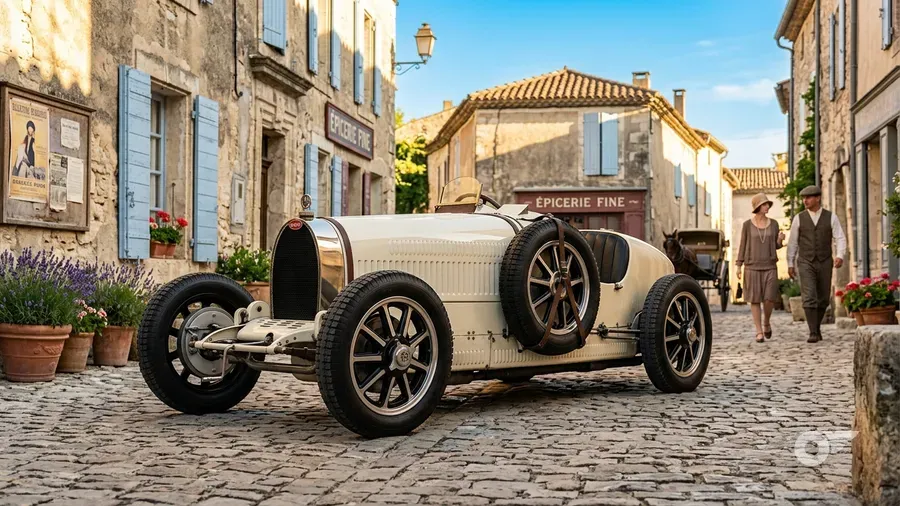
Bugatti Type 35

Bugatti Type 35

France·Vintage·1924–1931

Bentley Blower 4.5 Litre

We haven’t profiled this car yet. Request to add

Owning One

Why collectors want it

The 6C 1750 sits at the point where a pre-war Alfa stops being a curiosity and becomes a blue-chip asset, and the hierarchy inside it is steep enough to be worth learning. At the top is the Gran Sport Testa Fissa, the fixed-head supercharged car rated at 102bhp, then the ordinary supercharged Gran Sport, of which 257 were built, then the Super Sport that preceded it. Below those sit the Gran Turismo Compressore, 159 cars, and the large unsupercharged run of Gran Turismos and Turismos. The rule that governs money here is unusual: the body matters at least as much as the chassis, because these were sold bare. A Zagato spider on a Gran Sport frame is a different asset class from the same frame under a saloon body. Add competition history and the gap widens again, since a chassis that ran in period with Scuderia Ferrari or in the Mille Miglia carries paperwork nobody can replicate. What holds the whole market up is eligibility. A properly documented 6C 1750 gets you into the Mille Miglia Storica, Goodwood and the top concours, and there is no substitute for it.

Which one to look for

Rank by engine first, then by who bodied it. The Gran Sport Testa Fissa is the one collectors chase: supercharged, fixed cylinder head, 102bhp at 5,000rpm and 170km/h, and it is the specification that won in period. The plain Gran Sport, 257 built from 1930 to 1933, is the practical version of the same idea at 85bhp and is the car most people mean when they say 6C 1750. The Super Sport, 112 built in 1929 only, is the short-lived forebear of both and is rarer than either. The Gran Turismo Compressore of 1931 and 1932 is the connoisseur's pick and the one the market keeps underrating: 159 cars, supercharged, 80bhp, but on the long 3,160mm chassis, so it wears a full touring body and works as a fast road car rather than a stripped racer. Below it, the Gran Turismo at 652 cars and the Turismo at 1,131 are the volume of the run, single or twin cam, unblown, and genuinely usable. Whatever the chassis, a Zagato or Touring body moves the car up a tier on its own.

Gran Sport · 1930–1933

The one collectors chase, and the car Nuvolari and Guidotti won the 1930 Mille Miglia in. Supercharged twin cam, 85bhp at 4,500rpm on the short 2,745mm chassis. Above it sits the Gran Sport Testa Fissa of 1930 to 1932, monobloc with no separate cylinder head, 102bhp at 5,000rpm and 170km/h, which is the fastest 1750 Alfa built. The 1933 Gran Sport reverts to an aluminium head at 85bhp. Series IV, V and VI.

Gran Turismo · 1930–1932

Mechanically the Sport carried forward: twin cam, single carburettor, 55bhp at 4,400rpm, 125km/h. The unsupercharged fast tourer of the range and the basis for a great many of the elegant coachbuilt bodies. Series IV and V.

Gran Turismo Compressore · 1931–1932

The underrated one. Supercharged twin cam, 80bhp at 4,400rpm, 135km/h, but on the longest chassis in the range at 3,160mm, so it carries a full touring body rather than a stripped racing one. A blown 1750 you can actually travel in. Series IV.

Sport · 1929

The first twin-cam 1750. 55bhp at 4,400rpm on a single carburettor and 5.75:1 compression, 125km/h, on the 2,920mm chassis. Offered for one year only before the Gran Turismo took its place. Series III.

Super Sport · 1929

The 1929 competition car and the version Campari and Ramponi won that year's Mille Miglia in, bodied by Zagato. Twin cam on a twin-choke carburettor, 64bhp at 4,500rpm and 130km/h unblown; the Super Sport Compressore adds a supercharger for 85bhp and 145km/h, and the Super Sport Testa Fissa runs a monobloc fixed head for 85bhp at 4,800rpm and 165km/h. Short 2,745mm chassis. Series III.

Turismo · 1929–1933

The volume car and the only one with a single overhead camshaft. 46bhp at 4,000rpm, 5.5:1 compression, single carburettor, 110km/h, on the long 3,100mm chassis, so it wears full saloon and touring bodywork. Series III and IV.

What owning one is like

Owning one is a mechanical education, and the parts that ask most of you are the ones Jano deliberately made simple. The blown engines run high boost through a Roots blower with no intercooling, so heat management and fuel quality matter, and a rebuild is a specialist job because the crankshaft runs in plain bearings that have to be poured and scraped rather than bought. Magneto ignition is reliable until it is not, and a rewound armature is a wait rather than a purchase. The mechanical drums need constant attention to stay balanced, and everyone who runs one of these regularly learns to adjust them rather than tolerate them. The chassis flexes, which means the body has to be mounted so it can move with it, and a body fitted too rigidly by a restorer who did not understand that will crack its ash frame and its panels. On the positive side there is very little to go wrong that a competent vintage workshop cannot diagnose by looking at it, and cars that are used regularly stay far healthier than cars that are stored.

Upkeep & parts

This is not a car you keep going with a catalogue, but the support is better than the age suggests. A small international network of pre-war Alfa specialists in Italy, Britain and the United States can make anything on it, and because the 6C and the 8C share bore, stroke, rods and pistons, some engine internals are common across two of the most valuable Alfas ever built, which keeps a real supply of new-made parts alive. Budget for the body rather than the mechanicals. Coachbuilt aluminium over an ash frame is skilled hand work and any structural rot in the timber means the panels come off. Budget too for documentation, because with a car like this the paperwork is part of the asset: Alfa Romeo Classiche issues certificates of origin from the factory records at Arese, and the Historic Alfa Romeo Register and the AROC UK pre-war register between them hold the chassis knowledge that tells you what a given number should be. Expect to run it on modern high-octane fuel with an additive, and expect to use it, because these deteriorate faster standing still.

Country of origin
Italy
Class
Vintage
Production years
1929–1933
Units built
~2,579
Model
6C 1750
Nickname
No nickname ("Flying Star" names one 1931 Touring-bodied Gran Sport specifically, not the generation)
Body
Sedan, Convertible, Spider
Layout
Front-engine, RWD
Engine
1,752cc SOHC I6 (Turismo, 46bhp), 1,752cc DOHC I6 (Sport and Gran Turismo, 55bhp), 1,752cc supercharged DOHC I6 (Gran Turismo Compressore, 80bhp), 1,752cc DOHC I6 (Super Sport, 64bhp), 1,752cc supercharged DOHC I6 (Super Sport Compressore and Gran Sport, 85bhp), 1,752cc supercharged fixed-head DOHC I6 (Super Sport and Gran Sport Testa Fissa, 85 and 102bhp)
Transmission
4-speed manual
Designer
Vittorio Jano (chassis and engine), Zagato / Carrozzeria Touring / Castagna (coachwork)