Octane Files
Explore CarsPorsche 356 Pre-A

Porsche 356 Pre-A

Overview

Porsche's first car was built in a sawmill. The company had been evacuated to Gmünd in Carinthia during the war, and it was there, in borrowed premises with no press shop and almost no equipment, that fifty-two 356s were hand-beaten out of aluminium between the winter of 1948/49 and 1950: forty-four coupes and eight cabriolets. Ferry Porsche had gone looking for the car he wanted, failed to find it, and built it instead, on a rear-engined chassis of his own with a Volkswagen crankcase behind the axle. The first one was certified for the road in Austria on 8 June 1948 and won its class at Innsbruck straight away.

In 1950 the operation moved to Zuffenhausen, Reutter took over the bodies and the aluminium gave way to steel. What followed was seven years of a car nobody had asked for finding its buyers one at a time, 7,627 of them by the time the 356 A arrived in October 1955, starting at 40 PS and finishing at 70. Split windscreens to April 1952, a single creased pane after that.

This is the Porsche that had to work before any of the rest could exist.

Distinctions

The defining attributes and collector status that make this car garage-worthy.

Legend
A car that transcended the hobby, known far beyond the people who drive them.
Octane Files Select
Renowned for its history, engineering, or cultural weight.

Collectibility scorecard

Rated 1 to 10 on the traits that matter for owning, driving, and holding on to a car like this.

Desirability
9/10
Rarity
8/10
Driving thrill
6/10
Investment trajectory
7/10
Usability
4/10
Ease of restoration
4/10
Cultural impact
9/10
Electronic dependence
Fully analogHeavily electronic

Nothing here needs a computer and very little needs electricity. The system is six volts, the ignition is a distributor and points, fuelling is a pair of Solex carburettors, and on the early cars there is no fuel gauge at all: you check the tank by dipping a notched wooden rod into it. The ignition switch sits to the left of the wheel with a separate starter button beside it. The only concession to modernity across the whole series is the ring-synchronised gearbox of autumn 1952, and that is pure mechanism too.

Market data

Demand tier, price trend, and typical values by condition. Our own assessment, not a quoted valuation.

Demand tier
EntrySolidHighBlue-chip

The proven elite. Values are established, liquid, and defended at every auction.

Value trajectory
AppreciatingStableCooling

Values are holding steady. What you pay today is what it's worth tomorrow.

Price by condition
Driver
$130k
Excellent
$210k
Concours
$340k

classic.com's average for pre-A cars is $254,050 against $163,914 across all 356s and $76,417 for a 356 B T6 coupe, which is the clearest measure of what the early cars are worth. Coupes average $208,302, cabriolets $231,655 and Speedsters $335,967. The record is $687,000 for a 1954 1500 S Speedster in August 2021, and a 1951 split-window coupe took $527,500 in January 2022. Blue-chip and stable rather than climbing. The 356 market found its level in the middle of the last decade and has held it. Hagerty moved its 356 C SC coupe guide down about ten percent over the last year, and the volume end of the whole model has softened while the rare early cars have not. The band below describes an ordinary creased-screen coupe, which is the pre-A most buyers will actually meet, and excludes Gmünd cars, the SL, the America Roadster and every Speedster.

Values as of August 2026.

Buyer's guide

What anyone seriously considering this car should know first.

Why it's worth it
The first car to wear the Porsche name, and the one that proved the company could exist
Callout
Porsche's first 52 cars were hand-beaten from aluminium in an Austrian sawmill
What to watch for
Shop the pre-A as three cars, not one. The 1,100cc split-screen cars of 1950 to 1952 are the collector's end and share very little with what came after: engine, gearbox, brakes and glass are all early-only. The 1953 to 1955 cars with the single creased windscreen, the 1300 S and the 1500 Super are the ones you can actually use, and the ring-synchronised gearbox Porsche introduced in autumn 1952 is the single biggest quality-of-life difference in the series. Identity matters more here than on any other 356, because this is the series where a bare shell plus a box of later parts can be presented as a survivor. Ask what the car was when it left Zuffenhausen and then ask what it is now. A 1500 that started life as a 1300 is a different object, and the factory Kardex record is what settles it. Check the same metal you would on any 356, then check what only this series has: the early bumper shapes, the two-piece screen rubber, and whether the 1.5-litre has its Hirth roller-bearing crank or a later plain-bearing replacement. Parts for all of it exist. They are made in small batches by specialists, not stocked.

The Story

Driving character

Forty horsepower moves 810 kilos better than the arithmetic suggests, but nobody should pretend a 1,100cc pre-A is quick. It is geared short, it revs cleanly to four thousand and then stops being interested, and 140 km/h is the whole story. What it does instead is flow. The steering is light and immediate, the car is narrow, and you carry speed through corners you would brake for in anything else of the period. The early gearbox is what catches people out. Until autumn 1952 it is the unsynchronised Volkswagen unit and you double-declutch or you crunch. Porsche's own ring-synchronised four-speed replaced it, used in series here for the first time, and a car that has it feels a decade newer than one that does not. The 1500 Super is a different proposition again. 70 PS at 5,000 rpm, a Hirth roller-bearing crankshaft that lets it rev, 170 km/h, and a hard metallic noise off the back of the car that the 1,100 never makes. It is also the engine that will punish neglect, because roller bearings do not forgive standing still.

Design

Erwin Komenda drew this body and then ran Porsche's body-design department until he died in 1966, which is why the 356 changes so little across seventeen years. He had already shaped the Volkswagen for Ferdinand Porsche in the 1930s, and the 356 is the same aerodynamic instinct applied to something two thirds the size: one continuous curve from nose to tail, no separate wings, no grille to speak of, and a rear window set into a roof that simply keeps going. The pre-A carries details later cars gave up. The windscreen is split by a central bar until April 1952 and then becomes a single pane with a crease down the middle, fitted into the same aperture. There is no Porsche crest on the earliest cars because it had not been designed yet, so the nose and tail just say Porsche. The radio aerial wears a red tip, which is why owners still call the early cars red tippers. Everything Porsche has done since, up to and including the 911, is an argument with this shape rather than a departure from it.

Motorsport pedigree

Porsche went racing before it could really afford to build road cars. For Le Mans in 1951, with the regulations demanding that entries be available to private buyers, the factory turned leftover Gmünd chassis and aluminium bodies into the 356 SL, Super Leicht: underbody panelling, a 78-litre tank, spatted wheels and a Fuhrmann camshaft that lifted the 1,086cc engine from 40 to 46 bhp. Auguste Veuillet and Edmond Mouche won the 751 to 1,100cc class and finished twentieth overall. Porsche was the only German manufacturer in the field, six years after the war. It is the start of a relationship with Le Mans that has never stopped. The same cars kept working. In October 1951 one of them took eleven world speed and endurance records at Montlhéry, averaging 94.66 mph across 72 hours. Another finished eleventh overall and first in the 1,100cc class at Le Mans in 1952, and a Belgian-delivered car won the Liège-Rome-Liège outright the same year. Roughly eleven 356 SLs existed, and their chassis numbers have been swapped, restamped and argued over ever since.

In culture

Porsche dates itself from 8 June 1948, the day the 356/1 roadster was certified for the road in Austria, and every anniversary the company has ever celebrated counts from this car. Ferry Porsche's explanation has been repeated so often it has become the marque's founding text: he looked around, could not find the car he was dreaming of, and decided to build it himself. Gmünd is now a pilgrimage. There is a museum on the site of the old sawmill, and the 52 aluminium cars built there are the most fetishised objects in Porsche ownership, tracked individually by chassis number. The pre-A also has the first Porsche celebrity story. In March 1955 James Dean took a new 1500 Super Speedster to the Palm Springs Road Races, won the novice class and finished second in the main event. He traded it that September for the 550 Spyder he died in, which is why his Speedster is remembered as a footnote to a car that was not a 356 at all. The split-window coupe is still the shape people draw when they draw an old Porsche.

Rivals

Cars from other manufacturers that competed for the same buyers when new.
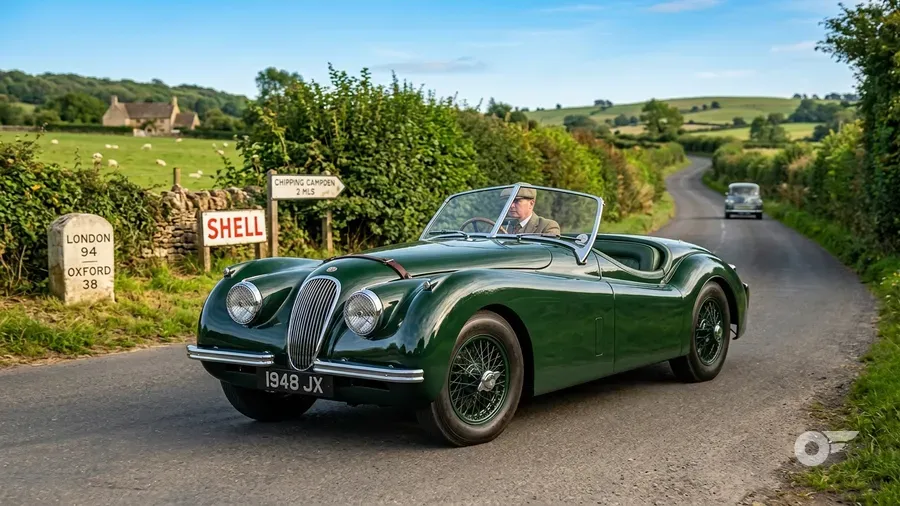
Jaguar XK XK120

Jaguar XK XK120

UK·Sports·1948–1954
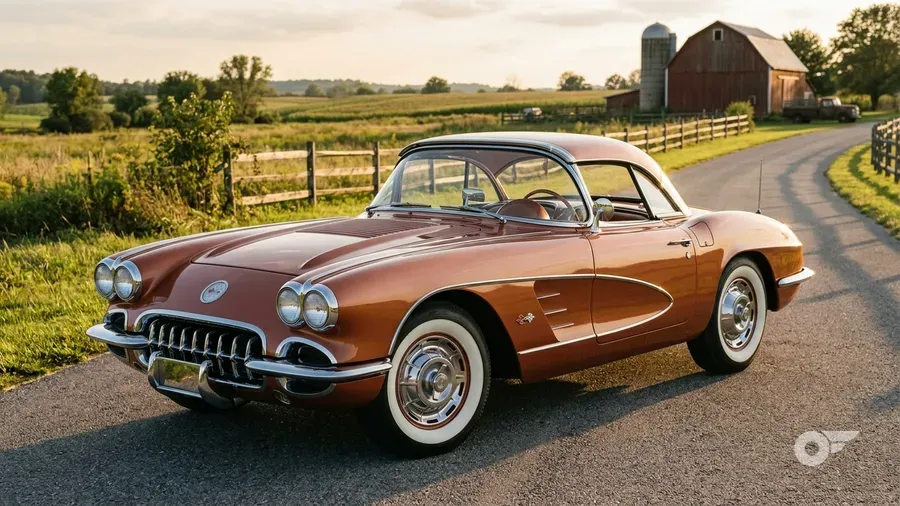
Chevrolet Corvette C1

Chevrolet Corvette C1

USA·Sports·1953–1962
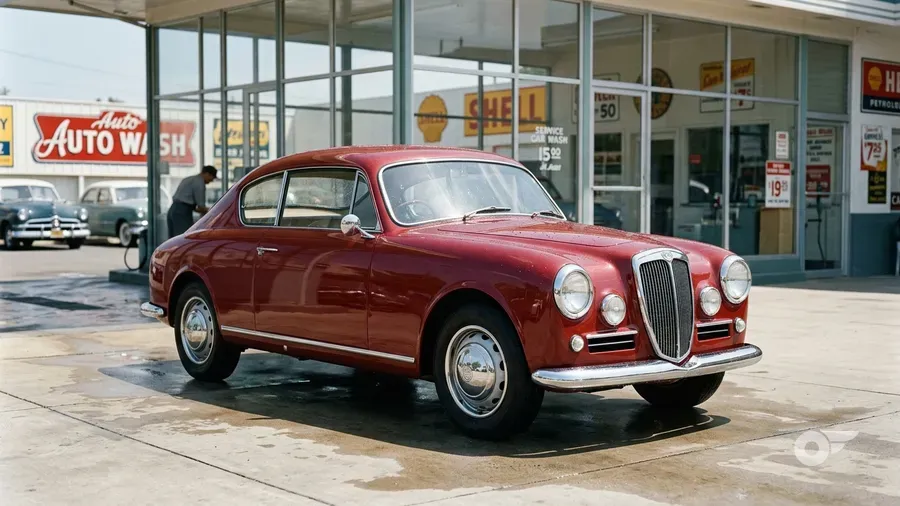
Lancia Aurelia B20

Lancia Aurelia B20

Italy·Grand Tourer·1951–1958
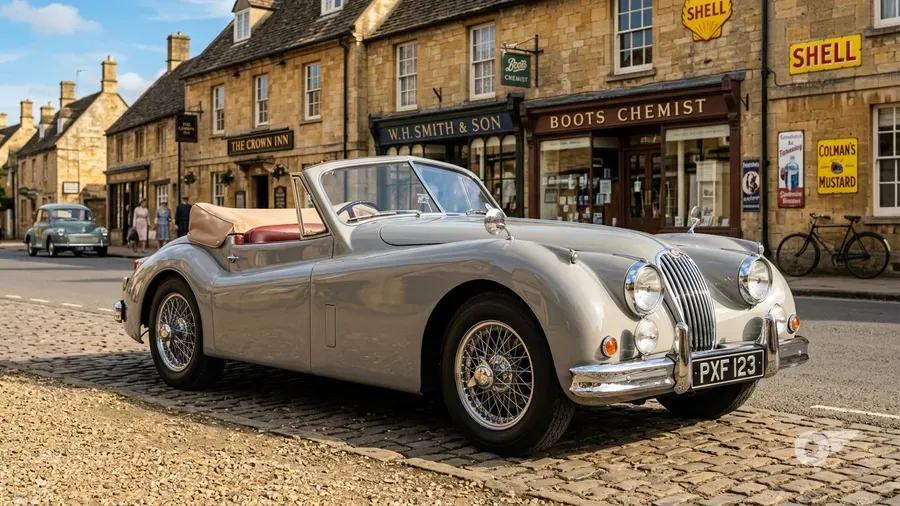
Jaguar XK XK140

Jaguar XK XK140

UK·Sports·1954–1957

Owning One

Why collectors want it

This is the beginning and the market prices it that way. classic.com's average across pre-A cars is $254,050 against $163,914 for all 356s, and the gap is not sentiment. Only 7,627 pre-As were built out of 76,313 across the whole run, and they carry the split and creased windscreens that no later 356 has.

The hierarchy inside the 356 world is steep and settled. The 52 Gmünd cars sit outside it altogether, museum property rather than market. Below them come the four-cam Carreras, then the Speedsters, then cabriolets, then coupes, and a pre-A of any body style sits a rung above its equivalent A, B or C. A pre-A coupe averages $208,302 where a 356 B T6 coupe averages $76,417.

Be careful with the 76,313. All four series figures come from a single table in one book, Brian Long's Porsche 356, and they sum exactly because they were allocated to sum. Other credible tallies put the run nearer 78,000. Nobody is lying. They are counting model years rather than series.

Which one to look for

The 52 Gmünd cars are the top of the tree and effectively unbuyable: 44 coupes and eight cabriolets, aluminium over a box-section chassis, bodies beaten by Kastenhofer, Keibl and Beutler rather than by Porsche. The 356 SL is the one with a competition record. About eleven were assembled from leftover Gmünd chassis and aluminium bodies for the factory and its customers, and one of them won its class at Le Mans in 1951. The America Roadster of 1952 is the rarest road variant, aluminium bodywork by Gläser of Ullersricht over a 70 PS 1500. German sources say fifteen were built, others say sixteen to twenty-one. The Speedster arrives late in 1954 at Max Hoffman's insistence: cut-down screen, bucket seats, side curtains instead of wind-up glass, $2,995 in America. It belongs to this series and to the A. The Continental is a badge rather than a model. Hoffman wanted a name instead of a number, the factory obliged for 1955, Ford objected because it owned the rights, and the name lasted a single year. It is worth real money now. Above all of them, an honest 1500 Super coupe is the pre-A most people should actually be looking for.

1500 Super · 1952–1955

The pre-A's performance model and the one worth hunting. 70 PS at 5,000 rpm from 1,488cc, 8.2 to 1 compression, 170 km/h, and a Hirth roller-bearing crankshaft that is what allows the engine to rev. It is also the pre-A engine that punishes standing still, because roller bearings want oil and regular use.

356 SL · 1951–1953

Super Leicht, and Porsche's first racing car. Built on leftover Gmünd aluminium bodies and box-section chassis for Le Mans 1951, where the regulations required entries to be available to private buyers. Underbody panelling, a 78-litre tank, spatted wheels and a Fuhrmann camshaft that took the 1,086cc engine from 40 to 46 bhp. One of them won its class at Le Mans on debut.

356/2 Gmünd · 1948–1950

The 52 cars built in Austria before Porsche had a factory. Aluminium bodies hammer-formed by hand over a welded box-section chassis, in borrowed premises at a former sawmill in Gmünd, Carinthia. Bodies came from Kastenhofer, Keibl and Tatra in Vienna and Beutler in Thun. They are the most tracked and most fetishised cars in Porsche ownership and effectively never trade.

America Roadster · 1952–1953

The rarest road-going pre-A and the Speedster's direct ancestor, built for the American market on Max Hoffman's prompting. Hand-formed aluminium bodywork by Gläser-Karosserie of Ullersricht made it 60kg lighter than the coupe, and with the 70 PS 1500 engine it would do 175 km/h. Only one is known to have stayed in Germany.

Continental · 1955

A badge rather than a model, and a one-year one. Max Hoffman wanted a name instead of a number for the American market, so the factory applied 'Continental' to US cars for 1955. Ford objected, owning the rights for its own forthcoming Continental Mark II, and the name was dropped. It was replaced for 1956 by the equally short-lived 'European' on 356 A cars.

Speedster · 1954–1955

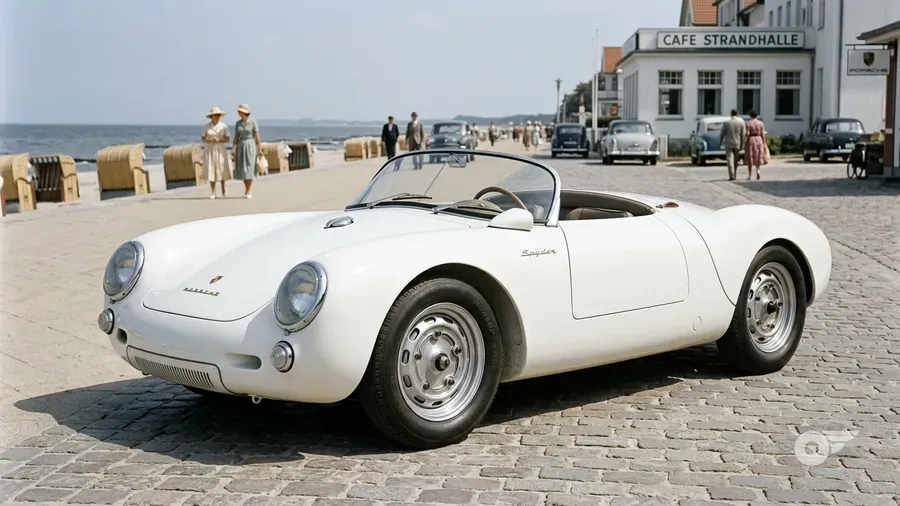
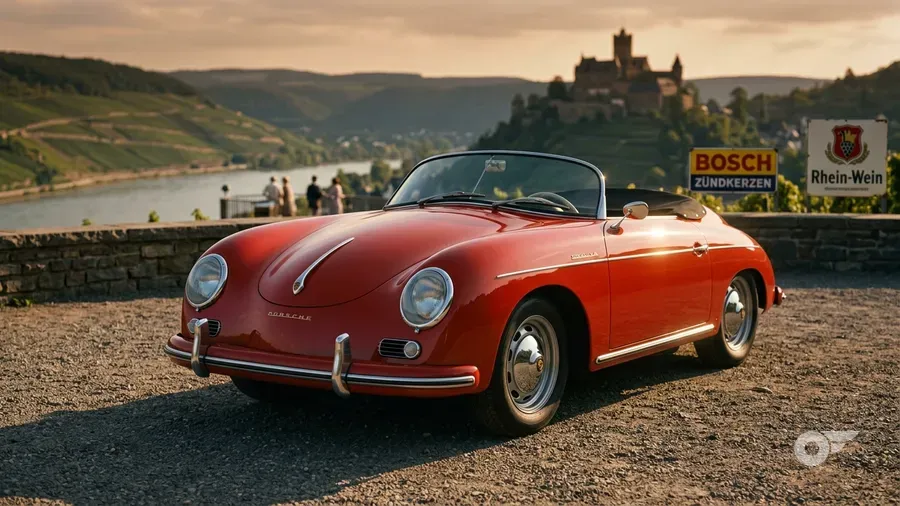
Introduced late in 1954 after Max Hoffman told Porsche that a cheap, spartan open car would sell in America. Cut-down removable windscreen, bucket seats, side curtains instead of wind-up glass, a hood that is more gesture than roof. $2,995 in the United States, 12,200 DM ex-works, offered with the 1500 or 1500 S engine. It became a Southern California object almost immediately.
What owning one is like

The pre-A rusts the way every 356 rusts, in the longitudinals and heater channels under the sills, and the 356 B page sets out that anatomy in full. What makes this series its own problem is that so much of the metal is early-only. Front and rear panels, bumper shapes, screen apertures and floor sections all changed during the run, so a repair section that fits a 1957 A will not fit a 1951 coupe, and the person who can fabricate one is not the person who sells you a catalogue part. Six-volt electrics are a fact of life. Everything works provided every earth strap is clean and every contact is bright. The moment they are not, the lights dim and the starter labours, and the owner starts reading about twelve-volt conversions. The Hirth roller-bearing crank in the 1.5-litre engines is the one item that punishes neglect. It is what lets the engine rev, and it wants oil, regular use and a rebuilder who has done one before. None of this is mysterious. It is a 1950s car built in small numbers that changed constantly, and it rewards knowing exactly which one you have.

Upkeep & parts

The 356 has one of the best parts economies in 1950s motoring, and the pre-A sits at the awkward edge of it. Mechanically you are fine: brakes, suspension, clutch, exhaust and most engine internals for the 1300 and 1500 are stocked by 356 specialists and shared with later cars. Body and trim are the problem. Split-screen rubbers, early bumper sections, early dash and instrument parts and anything specific to the 1,100 are made in small runs by a handful of people, and you wait.

The Porsche 356 Registry is the resource that matters. Nearly 7,000 members in 40 countries, officially licensed by Porsche, with a magazine, the largest 356 classifieds anywhere and the 356Talk forum, where the people who actually own pre-As answer questions.

Budget for metalwork before anything else. A pre-A needing longitudinals and heater channels needs a specialist body shop for a job measured in months, and that bill will outrun the mechanical work several times over. A sorted car costs less over five years than a cheap one. That is true of most classics and it is brutally true here.

Country of origin
Germany
Class
Sports
Production years
1948–1955
Units built
~7,627
Model
356
Nickname
Bathtub
Body
Coupe, Convertible, Roadster
Layout
Rear-engine, RWD
Engine
1,086cc Type 369 air-cooled flat four (40 PS), 1,286cc Type 506 flat four (44 PS), 1,286cc Type 589 1300 S flat four (60 PS), 1,488cc Type 527 flat four with Hirth roller-bearing crank (55-60 PS), 1,488cc Type 546 flat four (55 PS), 1,488cc Type 528 1500 S flat four (70 PS)
Transmission
4-speed unsynchronised manual (to autumn 1952), 4-speed Porsche ring-synchronised manual (from autumn 1952)
Designer
Erwin Komenda (body), Ferry Porsche (concept)