Octane Files
Explore CarsLotus Esprit S4

Lotus Esprit S4

Overview

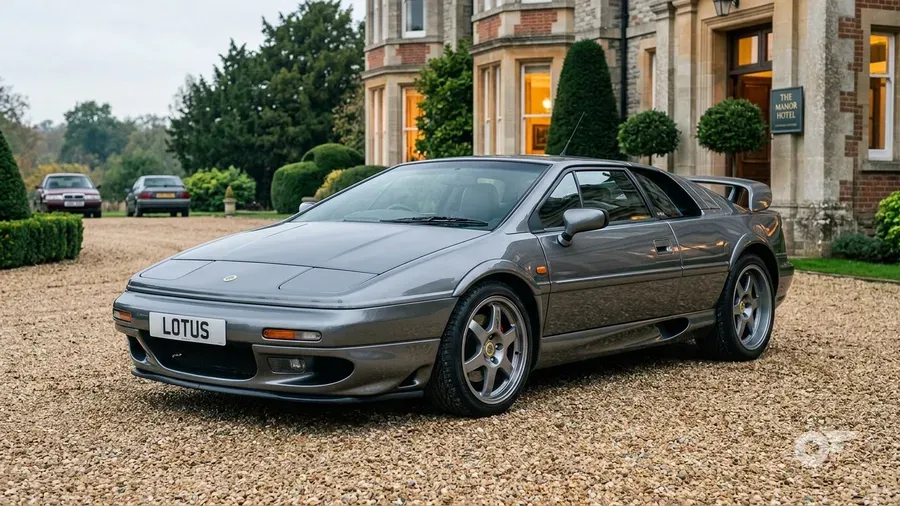
Julian Thomson's S4 arrived in 1993 and did the sensible things nobody had done in seventeen years. The rear spoiler shrank and moved halfway up the deck lid, the bumpers and skirts were reworked, five-spoke alloys went on, and the Esprit finally got power steering. GM owned Lotus at the time, so the switchgear, the door handles and a good deal of the interior came out of a Vauxhall Calibra. It made the car far easier to live with and slightly less special, which is the trade every Esprit facelift made.

Then in 1996 came the thing Lotus had been promising since the 1980s: the Type 918, an all-aluminium flat-plane 3.5-litre V8 with two Garrett turbos, designed in-house. It could make something close to 507 PS. Lotus shipped it at 355, because the Renault transaxle behind it would not survive any more.

That sentence is the whole of the Esprit's last decade. A genuinely brilliant engine held back by a gearbox a small company could not afford to replace. The last car left Hethel on 20 February 2004.

Distinctions

The defining attributes and collector status that make this car garage-worthy.

Octane Files Select
Renowned for its history, engineering, or cultural weight.

Collectibility scorecard

Rated 1 to 10 on the traits that matter for owning, driving, and holding on to a car like this.

Desirability
6/10
Rarity
5/10
Driving thrill
8/10
Investment trajectory
6/10
Usability
5/10
Ease of restoration
5/10
Cultural impact
5/10
Electronic dependence
Fully analogHeavily electronic

This is the electronic end of the Esprit. Power steering arrived with the S4 in 1993, the first the car ever had. Every engine in the generation is injected and managed: the chargecooled fours run Lotus and Delco engine management with on-board diagnostics, and the Type 918 V8 adds electronic control of two turbochargers and its own boost strategy. Anti-lock brakes and an airbag steering wheel came with the GM years, along with GM switchgear throughout. What keeps it off 5 is that there is still no drive-by-wire, no stability control, no traction control and no adaptive damping. It is a managed car, not an intervening one.

Market data

Demand tier, price trend, and typical values by condition. Our own assessment, not a quoted valuation.

Demand tier
EntrySolidHighBlue-chip

A dependable market. Well-kept cars hold their value and find ready buyers.

Value trajectory
AppreciatingStableCooling

Values are climbing. The market wants more of these than exist.

Price by condition
Driver
$34k
Excellent
$60k
Concours
$105k

classic.com's Series 4 average is $64,762, the highest of the five Esprit generations and about $13,000 above the average across all Esprits. It is the only generation trading above the model as a whole, and the V8 is why: a bespoke Lotus engine that exists in no other car, in the last of a 28-year line. The band above describes the volume car, which across this generation means a good four-cylinder S4 or S4s at the lower end and a sorted V8 at the upper. Sport 350s and late Final Edition cars sit above it and trade on rarity. Values have been climbing off a low base for several years, and documented V8 service history is doing most of the separating.

Values as of August 2026.

Buyer's guide

What anyone seriously considering this car should know first.

Why it's worth it
A bespoke Lotus V8 in the last of the Esprits, and the end of the line in February 2004.
Callout
Lotus had a 507 PS V8 and shipped it at 355, because the gearbox behind it could not take any more.
What to watch for
Decide between four cylinders and eight before anything else, because they are different ownership propositions. A four-cylinder S4 or S4s is the developed, well-understood 910S: quick, cheaper to run, and the S4s at 305 PS is barely slower in the real world than an early V8. A GT3 uses the smaller 2.0 Type 920 and is the lightest and sweetest-steering car of the four-cylinder set. A V8 buys the engine that makes this generation matter and adds the two things worth budgeting for: cam belts on a much shorter interval than the fours, and a Renault transaxle that was never designed for the torque even after Lotus upgraded it. Service history on a V8 is not a nice-to-have, it is the purchase decision. Bodies are VARI-moulded and dimensionally consistent, chassis are galvanised, and structural rot is rare enough that finding it means asking about an accident. GM-era electrics and switchgear are the everyday nuisance: window switches, headlamp pod motors and the loom behind the pods all take water and age badly.

The Story

Driving character

The V8 is a strange and very good engine. Flat-plane crank, so it sounds hard and flat rather than woolly, more Ferrari than Mustang, and with two small turbos it picks up cleanly from low revs and keeps going without the step the four-cylinder turbos always had. 0-60 in 4.1 seconds and 174mph out of 3.5 litres, in a car that weighs about 1,300kg, is quick now. What it is not is unlimited, and you feel exactly where the limit was set. Lotus held the Type 918 to 355 PS from a potential the factory file puts at 507, purely to keep the Renault transaxle alive, so the engine always feels like it is being asked for less than it has. The gearbox is the other half of that story: it does not enjoy speed-shifting and it will tell you so. Power steering arrived with the S4, and it is the one genuine loss across this generation. It is well judged, better than most 1990s systems, and it is still a layer of insulation between you and a chassis that never needed one.

Design

Thomson's job in 1993 was to make Stevens' shape look current without spending money, and the changes are all in the details: a smaller rear spoiler moved halfway up the deck lid, revised front and rear bumpers, new side skirts and valance panels, and five-spoke alloys. The AE86 tail lights carried straight over, which is how a Toyota Corolla Levin part ended up on a Lotus for nineteen years. Inside is where GM ownership shows. The door handles from 1994 are GM Calibra items, replacing the Morris Marina and Austin Allegro handles the car had used since 1976, which is one parts bin swapped for another. The steering wheel is a Pontiac Trans Am airbag unit, the aerial is Calibra, and much of the switchgear is Vauxhall. Even the V8's pistons came from a Renault Clio Williams. Russell Carr's 2002 facelift finally retired the AE86 lamps for a design built around the round units from the Elise S2, and left the mechanicals alone. Those cars are the last Esprits and the easiest to identify from behind.

Motorsport pedigree

The Esprit's serious racing was the X180R's, in America, and it was over by 1993. What this generation contributed is the Type 114 GT1, and it is a more interesting failure than most successes. Lotus GT1 Engineering, staffed largely from the recently dissolved Team Lotus Formula One operation, built three cars on S4 bodywork rendered in composite and carbon fibre, with a carbon splitter, diffuser and floor. Power came from a Type 918 with a single Garrett T4 at 557 PS, and because the Renault transaxle was nowhere near adequate the car used a Hewland TGT200 six-speed transverse unit. AP carbon ceramic brakes, Penske triple-adjustable dampers, 900kg. Two of them debuted at the 1996 BPR 4 Hours of Donington. Reliability killed the programme: brakes, oil pumps, oil pipes and overheating, all year. For 1997 Lotus replaced it with the Type 115 Elise GT1, which is the car that went to Le Mans and is routinely confused with this one. The three chassis survive unevenly. 114-001 is in a private museum in Tokyo, 114-002 became a parts donor after Oulton Park, and 114-003 burned.

In culture

The Esprit spent its last decade being outrun by its own reputation. By 1996 the shape was twenty years old, the Bond association was two decades behind it, and the car most people pictured when they heard the name was still the one from 1977. The V8 got respectful road tests, ran against an F355 and a 911 in the magazines, and never quite got the cultural moment its engine deserved. What it got instead was longevity. Twenty-eight years is an extraordinarily long run for any car, longer than the Countach, longer than the DB5 and the Testarossa combined, and the Esprit outlasted every rival it launched against in 1976. When the last one was built on 20 February 2004 and shipped to Chicago, it and the Corvette C5 were the final cars in the world with pop-up headlights, a detail that has quietly become the thing people remember about the ending. Lotus went a different way after it. The Elise had already arrived in 1996 and outsold the Esprit many times over, and it is the reason there was still a Lotus to buy.

Rivals

Cars from other manufacturers that competed for the same buyers when new.
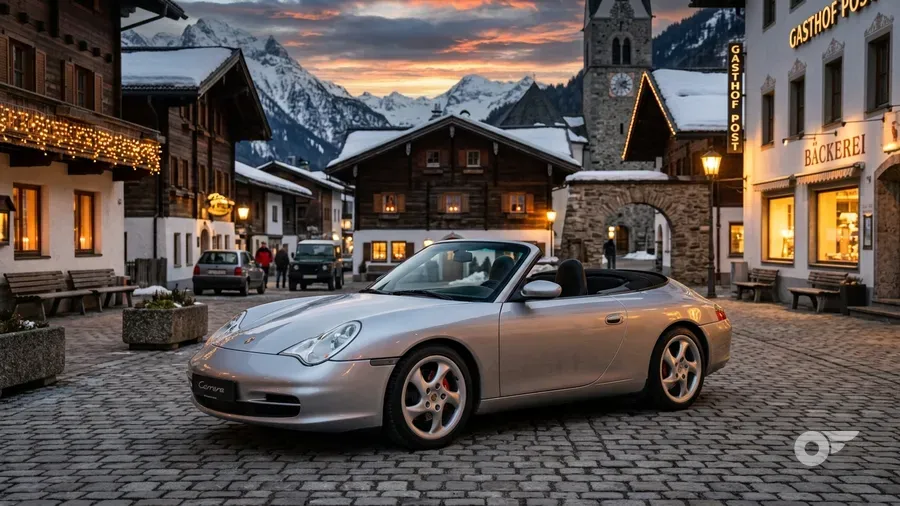
Porsche 911 993

Porsche 911 993

Germany·Sports·1994–1998
Porsche 911 996

Porsche 911 996

Germany·Sports·1998–2004
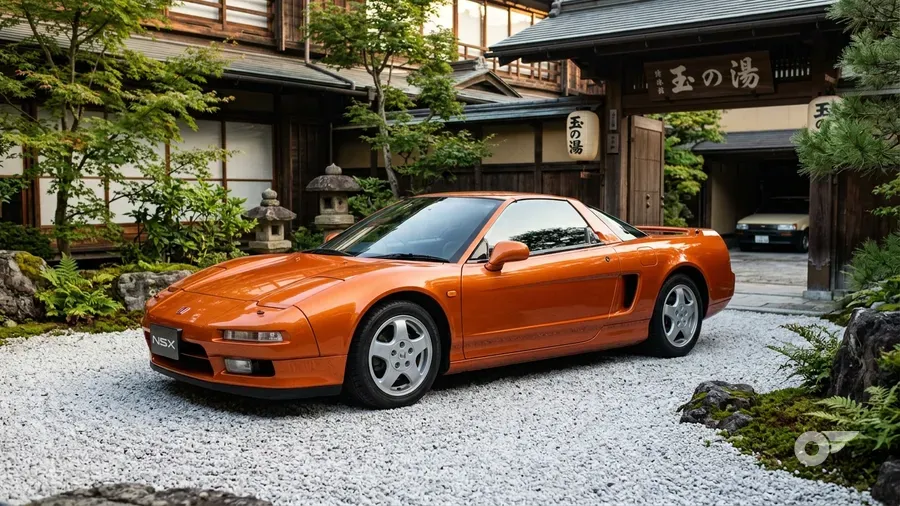
Honda NSX NA1/NA2

Honda NSX NA1/NA2

Japan·Exotic·1990–2005
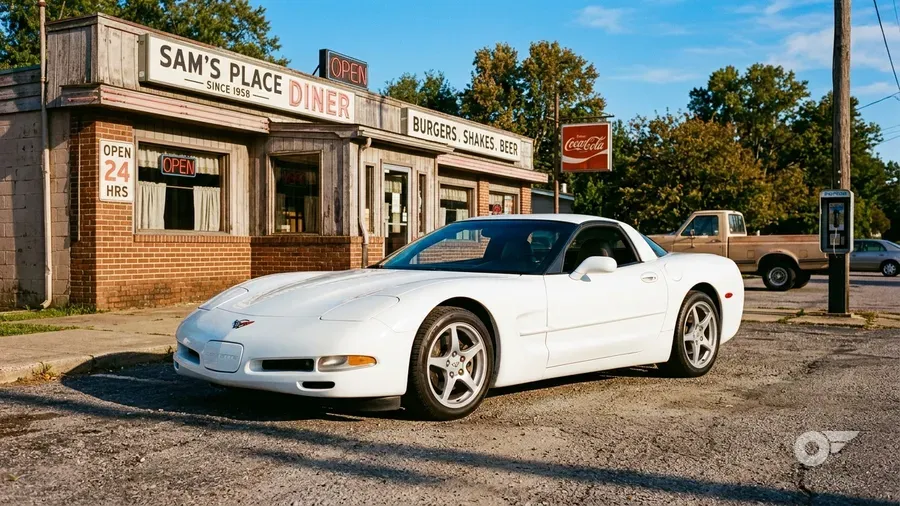
Chevrolet Corvette C5

Chevrolet Corvette C5

USA·Sports·1997–2004

Owning One

Why collectors want it

The V8 is the reason, and the numbers back it up. classic.com's Series 4 average is $64,762, well clear of every other Esprit generation and roughly $13,000 above the average across every Esprit. This is the only generation whose values sit above the model as a whole.

The engine is why. The Type 918 was designed by Lotus from a blank sheet, all aluminium, flat-plane crank, four valves per cylinder, twin turbochargers, and it is the only V8 the company ever put in a road car. It went in 1,483 cars including the GT and Sport 350 derivatives, and it is unlikely there will ever be another.

The rest of the case is arithmetic on the way out. This is the last Esprit, which means it is the last mid-engined Lotus with pop-up headlights, the last of a 28-year run, and the end of a car that started as a Turin show model in 1972. The very last one was built on 20 February 2004 and shipped to Chicago, and Lotus did not replace it for five years.

Which one to look for

The Esprit V8 is the headline and the one most buyers want: 3.5 litres, flat-plane crank, two Garrett T25/60 turbos, 350hp, 0-60 in 4.1 seconds and 174mph, from 1996 to the very end. In 1998 the range split into the more luxurious SE and the lighter, harder V8 GT, and the GT is the better car to drive. The Sport 350 of 1999 is the collector's target. Same 350hp remapped for a different delivery, thinner body laminate, AP Racing brakes, stiffer springs and a carbon fibre rear wing on aluminium uprights, at 1,300kg. Published counts of how many were built disagree by a factor approaching two, which tells you how few there were. Among the four-cylinder cars, the S4s is the one to have: Sport 300 rear wing, 305 PS, 290 lb ft, 168mph and 0-60 in 4.6 seconds, which is V8 territory. The GT3 that followed used the smaller 2.0 Type 920, was meant to be a 50-car run and sold far beyond it. The 2002 facelift cars, with Elise-derived round tail lights, are the last of everything.

GT3 · 1996–1999

Built around the Type 920 2.0-litre turbo Lotus originally created for Italy's sub-two-litre tax band, rated at 240hp. Lighter-feeling and cheaper than the V8, and underrated as a driver's car.

S4 · 1994–1996

Julian Thomson's restyle, and the first Esprit you could genuinely use every day: power steering and ABS standard, a raised rear wing for visibility, and a heavily revised interior drawing on the GM parts bin.

S4s · 1995–1997

The S4 given most of the Sport 300's hardware and a substantial lift in output, sitting between the standard S4 and the Sport 300. The last serious four-cylinder Esprit.

Sport 350 · 1999–2001

A lightweight V8 aimed at the same brief the Sport 300 had served for the four-cylinder car: around 80kg lighter than a V8 GT on magnesium wheels, 320mm discs with AP Racing calipers, stiffer springs and dampers, and a large carbon-fibre rear wing.

V8 · 1996–2004

Lotus's own Type 918 3.5-litre flat-plane V8, all aluminium, twin Garrett T25/60 turbochargers, 350hp. Capable of roughly 500hp but held back to protect the Renault UN1 transaxle it had to drive through.

V8 GT · 1998–2004

The focused half of the 1998 split: less equipment, less weight, the same 350hp. It sits between the standard V8 and the Sport 350 in intent, and is the value entry into V8 ownership because it lacks the SE's toys rather than any of its performance.

V8 SE · 1998–2004

The luxury half of the V8 range after Lotus split it in 1998 — the same 350hp Type 918 with the softer, better-equipped specification. The V8 most owners actually bought, and the one to look for if the car is meant to be driven a long way rather than quickly.

What owning one is like

This is the most usable Esprit and the one with the shortest patience for neglect. Galvanised chassis, VARI-moulded body, GM-era electrics that mostly work: none of the structural anxiety of an early car. What replaces it is a service schedule you cannot postpone. The V8's cam belts want doing on a genuinely short interval, and the job is not cheap because it is not quick. A car with no belt history is a car with a bill attached, and that is true regardless of mileage. The Renault transaxle is the other known quantity. Lotus upgraded it for the V8 and still had to hold the engine to 355 PS to protect it, which tells you where the margin is. Treat the shift with respect, listen in fifth, and read a rebuild as a normal part of ownership rather than a disaster. The rest is age. GM switchgear cracks and fails, headlamp pod motors and their wiring take water, and the interior plastics of the mid-1990s were not built for thirty years. All of it is fixable and most of it is cheap.

Upkeep & parts

Parts split neatly by engine. The four-cylinder cars are the easy ones: the 900-series ran until 1999, the Renault UN1 until 2004, and PNM Parts covers most of what wears out. The V8 is the harder proposition, because Lotus built the Type 918 for one car and roughly 1,500 engines exist. Specialist support is good but it is specialist, and there is no parts-bin equivalent to fall back on.

The parts bin does help elsewhere, and often comically. Door handles are GM Calibra, the steering wheel is a Pontiac Trans Am item, the alternator is shared with the V6 Opel Omega and the Lotus Carlton, the clutch master and slave cylinders on 1998-on cars are Girling parts also fitted to a Series 2A Land Rover, and the V8's pistons came from a Renault Clio Williams. Knowing that turns several expensive-looking jobs into ordinary ones.

Budget for V8 cam belts on interval and for the transaxle over the long run. The Esprit Fact File tracks specification changes year by year, and for a GT1 the dedicated archive at lotusespritgt1.com holds all three chassis histories.

Country of origin
UK
Class
Sports
Production years
1994–2004
Units built
~2,671
Model
Esprit
Nickname
No nickname ("Sport 350" names the 1999 run-out special specifically, not the generation)
Body
Coupe
Layout
Mid-engine, RWD
Engine
2.2L Type 910S chargecooled turbocharged inline-four, 2.0L Type 920 chargecooled turbocharged inline-four, 3.5L Type 918 twin-turbocharged V8
Transmission
5-speed Renault UN1 manual transaxle
Designer
Julian Thomson (1993 S4 restyle), Russell Carr (2002 facelift)