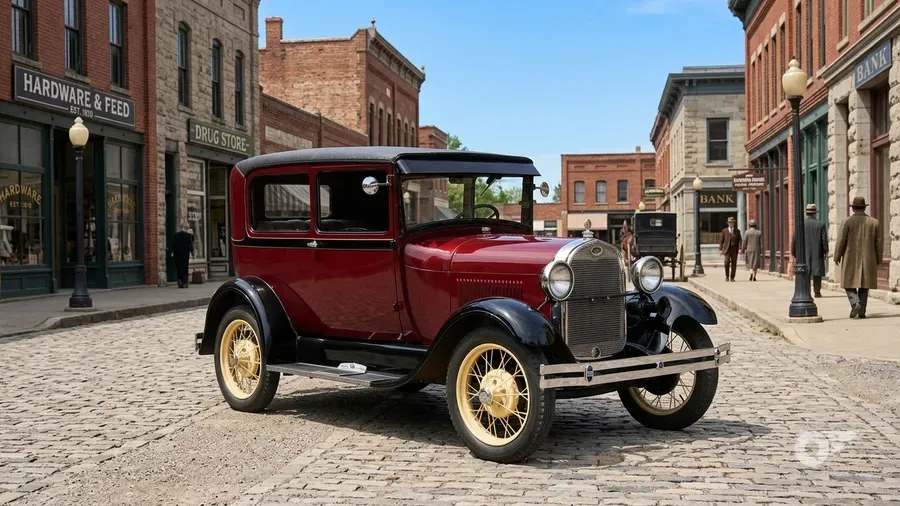
Overview
Distinctions
The defining attributes and collector status that make this car garage-worthy.
Legend
A car that transcended the hobby, known far beyond the people who drive them.
Octane Files Select
Renowned for its history, engineering, or cultural weight.
Collectibility scorecard
Rated 1 to 10 on the traits that matter for owning, driving, and holding on to a car like this.
Desirability
7/10
Rarity
3/10
Driving thrill
4/10
Investment trajectory
4/10
Usability
3/10
Ease of restoration
9/10
Cultural impact
10/10
Electronic dependence
Fully analogHeavily electronic
Market data
Demand tier, price trend, and typical values by condition. Our own assessment, not a quoted valuation.
Demand tier
EntrySolidHighBlue-chip
Value trajectory
AppreciatingStableCooling
Price by condition
Driver
$8k
Excellent
$16k
Concours
$28k
Values as of August 2026.
Buyer's guide
What anyone seriously considering this car should know first.
Why it's worth it
Callout
What to watch for
The Story
Driving character
Design
Motorsport pedigree
In culture
Rivals
Cars from other manufacturers that competed for the same buyers when new.
Data unverified, not shown

Owning One
Why collectors want it
Which one to look for
What owning one is like
Upkeep & parts
Resources
Model T Ford Club International
club
Model T Ford Club of America
club
Shelby American Automobile Club
club
Marti Auto Works
registry
MTFCA Forum
forum
Ford Heritage Vault
archive
The Henry Ford Digital Collections
archive
Shelby American Collection
museum
Ford Manual for Owners and Operators of Ford Cars and Trucks, 1919, full text
manual
Model T Ford Fix technical archive
other
Snyder's Antique Auto Parts, 1909-1931 Ford parts
other
Country of origin
USA
Class
Vintage
Production years
1908–1927
Units built
15,000,000
Marque
Model
Model T
Nickname
Tin Lizzie
Body
Sedan, Coupe, Roadster, Pickup
Layout
Front-engine, RWD
Engine
177ci (2.9L) flathead four, ~20hp, running on gasoline, ethanol or kerosene, through a pedal-operated two-speed planetary transmission
Transmission
2-speed planetary transmission with reverse, worked by three foot pedals instead of a gearshift (left pedal clutch and gear selection, centre pedal reverse, right pedal the transmission brake), plus a hand lever for neutral and the rear-wheel brake. One transmission across all nineteen years.
Designer
Henry Ford, C. Harold Wills, Joseph Galamb & Eugene Farkas