Octane Files
Explore CarsFerrari 330 GT 2+2

Ferrari 330 GT 2+2

Overview

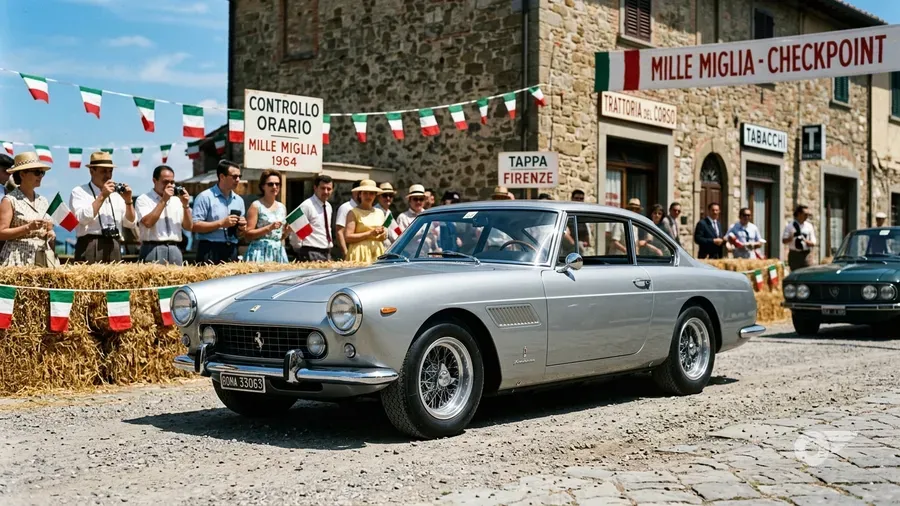
The 330 GT 2+2 is the car the 330 America was covering for, and once it arrived in 1964 it became Ferrari's most complete four-seat grand tourer yet. It kept the same 3,967cc V12 and 300hp, but this time on a chassis stretched roughly 50mm longer for genuine rear legroom, under a fully reworked Pininfarina body. The first cars, styled by Tom Tjaarda, carried an unusual quad-headlight front end that enthusiasts still call Chinese Eyes, paired with an overdrive four-speed gearbox borrowed from the outgoing 250 GT. Ferrari revised the car substantially partway through 1965: the quad lights gave way to a more conventional dual-headlight nose, the gearbox became a proper five-speed shared with the 275 GTB, wire wheels gave way to cast alloys, and options like power steering and air conditioning arrived by 1967. Across both series, roughly 1,100 were built, making the 330 GT 2+2 both the volume seller of Ferrari's early-330 family and the car that proved Ferrari could build a genuinely usable, comfortable four-seater without giving up V12 character.

Distinctions

The defining attributes and collector status that make this car garage-worthy.

Octane Files Select
Renowned for its history, engineering, or cultural weight.

Collectibility scorecard

Rated 1 to 10 on the traits that matter for owning, driving, and holding on to a car like this.

Desirability
6/10
Rarity
6/10
Driving thrill
5/10
Investment trajectory
5/10
Usability
7/10
Ease of restoration
6/10
Cultural impact
5/10
Electronic dependence
Fully analogHeavily electronic

Entirely mechanical, in keeping with every Colombo-descended V12 Ferrari of this era. Weber carburettors, coil-and-distributor ignition with mechanical advance, and a manual gearbox, four-speed with electric overdrive on Series I, five-speed on later Series I and all Series II cars, make up the whole drivetrain. Late-production power steering, where fitted, is a hydraulic assist system with no electronic control. There is nothing on this car for a computer to manage.

Market data

Demand tier, price trend, and typical values by condition. Our own assessment, not a quoted valuation.

Demand tier
EntrySolidHighBlue-chip

A dependable market. Well-kept cars hold their value and find ready buyers.

Value trajectory
AppreciatingStableCooling

Values are holding steady. What you pay today is what it's worth tomorrow.

Price by condition
Driver
$180k
Excellent
$250k
Concours
$350k

The 330 GT 2+2 prices well below the marque's blue-chip cars, consistent with its role as the practical, higher-volume side of the early-330 family. classic.com tracks the Series II average at $279,969, with European asking prices generally clustering between 230,000 and 330,000 euros depending on condition and specification. Series I cars, prized by some for the distinctive Chinese Eyes look, span a wide range from roughly 146,000 euros to the low $300,000s depending on originality and documentation, while exceptional, fully documented examples of either series can exceed $400,000. The market has stayed broadly steady rather than moving sharply in either direction, reflecting healthy but unspectacular demand for a genuinely usable classic V12 Ferrari rather than speculative interest in a rare investment piece, which is exactly the audience this car has always attracted and continues to attract today. A documented, well-maintained example with clear service history tends to sell close to the top of its range regardless of series.

Values as of August 2026.

Buyer's guide

What anyone seriously considering this car should know first.

Why it's worth it
Ferrari's first truly modern four-seat grand tourer, built in real volume rather than as a short-run stopgap
Callout
Nicknamed Chinese Eyes for the unusual quad-headlight front end of its first two years
What to watch for
Decide which series you actually want before shopping, because the two feel like genuinely different cars despite sharing a name. Series I's quad headlights and overdrive gearbox are the more distinctive, more collectible look to some buyers; Series II's five-speed gearbox, cast wheels and available power steering and air conditioning make it the more usable daily classic to others. Whichever you choose, verify chassis and engine numbers against Ferrari's own build records, since these cars have been bought, sold and restored across six decades and identity questions are common at this level of the market. Check the wire wheels on Series I cars specifically, since Ferrari itself moved to stronger cast alloys on the Series II partly because increasing power and grip were testing the wire wheels' limits. As with any classic V12 Ferrari, a specialist inspection focused on chassis and body condition matters more than a test drive alone.

The Story

Driving character

The 330 GT 2+2 drives like a proper grand tourer built to cover real distance with four people aboard, not a sports car with extra seats bolted in. The V12 delivers the same 300hp and effortless mid-range pull as the 330 America, but the longer wheelbase and genuinely reworked chassis give it a more settled, composed ride over distance, exactly what a buyer paying for real rear legroom actually wanted. Series I's overdrive gearbox suits relaxed cruising particularly well, dropping revs on the motorway; the Series II's proper five-speed feels more contemporary and more directly connected, closer in character to the sporting 275 it shares hardware with. Series II cars fitted with optional power steering are noticeably easier to place at low speed than the unassisted Series I, a real practical difference for anyone using the car regularly rather than admiring it in a garage, and one worth experiencing back to back before deciding which series suits you.

Design

Pininfarina styled the 330 GT 2+2, and the Series I nose, credited specifically to the Detroit-born Tom Tjaarda during his time there, is the car's most distinctive and most divisive feature: four headlights stacked in a tapered recess, with smaller driving lights set inboard, a look enthusiasts still call Chinese Eyes decades later. Ferrari clearly heard the mixed reaction, because the Series II update replaced that front end with a more conventional dual-headlight treatment roughly halfway through 1965, alongside at least twenty other detail changes including relocated fuel filler, new door panels and cast alloy wheels in place of wire spokes. The chassis itself, stretched roughly 50mm longer than the closely related 330 America's, is the less visible but more consequential design change, turning a genuinely tight 2+2 into a car with real usable rear seats, which was the whole commercial point of building it in the first place rather than a styling exercise for its own sake.

Motorsport pedigree

The 330 GT 2+2 has no competition history, and it was never intended to have one. It is a comfort-focused four-seat grand tourer built for owners who wanted a Ferrari badge, real usability and genuine touring range, positioned deliberately apart from the 250 GTO, the 250 LM and the competition-capable 275 variants that occupied Ferrari's actual racing attention through the same years. No works or privateer programme was ever built around it, and none would have made sense: this is the car Ferrari built for the road trip, not the podium, and its complete absence of a racing record is simply consistent with what it was designed to be from the start. Its stablemate the 330 America shares exactly the same story, for exactly the same reason, and neither car needs an apology for it. Ferrari's competition budget through these years went entirely into the 250 GTO, the 250 LM and the purpose-built prototypes that followed them, leaving the 2+2 range free to focus purely on comfort, refinement and the practicalities four real passengers actually need.

In culture

The 330 GT 2+2's cultural presence is modest and mostly built around its own distinctive looks rather than any screen or music moment. The Chinese Eyes nickname for the Series I's quad-headlight front end has taken on a life of its own among Ferrari enthusiasts, repeated in nearly every piece written about the car and effectively serving as the model's public identity even for people who don't know its formal name. Beyond that nickname, the car occupies a quieter place in Ferrari history: the practical, comfortable four-seater built in real numbers for buyers who wanted genuine V12 ownership without chasing the marque's more famous, far rarer nameplates, a role it filled well enough that roughly 1,100 examples found buyers across two distinct series, more than almost any other early-1960s V12 Ferrari built, quietly making it one of the more common classic Ferraris an enthusiast is likely to actually encounter at a cars-and-coffee gathering rather than only behind museum glass.

Rivals

Cars from other manufacturers that competed for the same buyers when new.

Owning One

Why collectors want it

The 330 GT 2+2 offers something rare inside the marque's early V12 lineup: a genuinely usable four-seat Ferrari built in real numbers, roughly 1,100 across two distinct series, rather than the tiny runs that define most of its 250 and 275-badged siblings. That volume, combined with a real internal choice between the distinctive quad-headlight Series I and the more refined, better-equipped Series II, gives buyers an actual decision to make rather than just a hunt for the one example that survives. Values sit well below the marque's sports and competition cars, which is precisely the point for buyers who want genuine V12 Ferrari ownership, four real seats, and a manageable price of entry rather than blue-chip money. It's the practical, drivable side of the same era that produced the 250 GTO, sharing the engine family without sharing the price tag, and it rewards buyers who want to actually use their Ferrari rather than trailer it to shows.

Which one to look for

Series I (1964 to mid-1965) is the one to know by its unconventional quad-headlight nose, styled by Tom Tjaarda at Pininfarina and nicknamed Chinese Eyes almost immediately by contemporaries. Most Series I cars paired a four-speed gearbox with an electrically operated overdrive fifth, a setup carried over from the outgoing 250 GT, on wire-spoke wheels. Series II (mid-1965 to 1967) replaced the quad lights with a more conventional dual-headlight front end, moved to a proper five-speed all-synchromesh gearbox shared with the 275 GTB, switched to stronger cast alloy wheels as power and grip outgrew the wire wheels' limits, and added standard electric windows plus optional power steering and air conditioning by 1967. Roughly 625 Series I and around 455 to 474 Series II cars were built; sources vary slightly on the exact Series II figure, and around 125 late Series I cars are sometimes described as an interim specification bridging the two.

Series I · 1964–1965

The quad-headlight original, styled by Tom Tjaarda and nicknamed Chinese Eyes almost immediately. Four-speed gearbox with electric overdrive fifth carried over from the 250 GT, on wire-spoke wheels.

Series II · 1965–1967

The refined follow-up: conventional dual headlights replace the quad-light nose, a proper five-speed all-synchromesh gearbox shared with the 275 GTB, cast alloy wheels in place of wire spokes, standard electric windows, and optional power steering and air conditioning by 1967.
What owning one is like

Mechanically the 330 GT 2+2 is straightforward by classic V12 Ferrari standards, sharing most of its running gear with the 330 America and the early 330 GTC and GTS that followed it, so specialist knowledge and parts support carry across a wide pool of closely related cars. Series I's wire wheels are a genuine period weak point under the power and grip this car offers, which is exactly why Ferrari itself moved to cast alloys for the Series II, so wire-wheel cars are worth inspecting for condition specifically. Overdrive units on Series I cars can develop electrical faults with age and are worth testing through their full range before buying. Rust follows the usual Pininfarina steel-body pattern: sills, floors, boot floor and lower rear wings are the places to check first, along with the wiring harness on any car this age, given how many owners this generation has passed through since new.

Upkeep & parts

Parts and specialist support for the 330 GT 2+2 are genuinely good relative to rarer Ferraris of the same era, since it shares most of its mechanical hardware with the 330 America, 330 GTC and 330 GTS, giving specialists a wider pool of closely related cars to draw experience and parts knowledge from. Ferrari Classiche in Maranello remains the reference point for authentication and certification. Budget for the overdrive unit's electrical components on Series I cars and the cast wheels' condition on Series II cars as the two most model-specific items worth a specialist's attention. Otherwise, routine servicing, the Weber carburettors, ignition and manual gearbox, is well within the capability of any specialist experienced with early-1960s V12 Ferraris generally, not just this specific model, which keeps ownership costs more predictable than on rarer siblings and makes finding a competent specialist far easier too, wherever in the world an owner happens to live.

Country of origin
Italy
Class
Grand Tourer
Production years
1964–1967
Units built
~1,100
Model
330 GT 2+2
Nickname
No nickname
Body
Coupe
Layout
Front-engine, RWD
Engine
3,967cc V12 (Tipo 209), 300hp at 6,600rpm
Transmission
4-speed manual with overdrive (Series I), 5-speed manual (late Series I and Series II)
Designer
Tom Tjaarda at Pininfarina (Series I design); Pininfarina (Series II design and bodywork)