Octane Files
Explore CarsFerrari 328

Ferrari 328

Overview

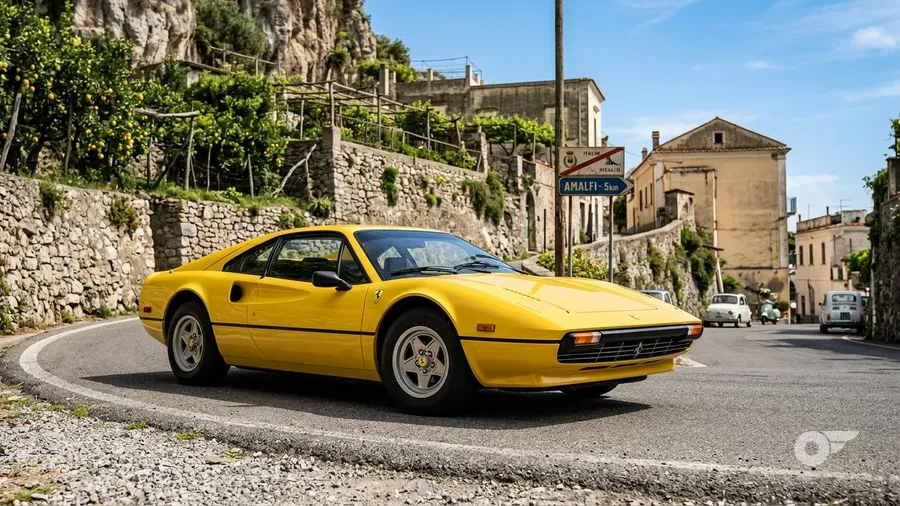
The 328 is the 308 line finally finished. Ferrari had been refining the transverse V8 berlinetta since 1975, through fibreglass and steel bodies, carburettors and injection, two valves and four, and by the time the 328 GTB and GTS arrived at the 1985 Frankfurt Salon the formula had nowhere left to hide a rough edge. Pininfarina softened the wedge nose into rounder, body-coloured bumpers shared in spirit with the Mondial 3.2, fitted new five-spoke Speedline wheels, and reworked the cabin with touch-sensitive switchgear and a redesigned centre console. Underneath, the quattrovalvole V8 grew from 2,926cc to 3,185cc and 270hp, and from 1988 buyers could finally option anti-lock brakes, a first for Ferrari's V8 line. None of it looked revolutionary next to the 308 it replaced, and that was the point. The 328 earned a reputation, still repeated today, as the most reliable and easiest-to-live-with Ferrari built up to that point, the car that proved a V8 Ferrari could be a daily proposition rather than a project.

Distinctions

The defining attributes and collector status that make this car garage-worthy.

Poster Car
The car on the bedroom wall, the one people dreamed about before they could drive.
Octane Files Select
Renowned for its history, engineering, or cultural weight.

Collectibility scorecard

Rated 1 to 10 on the traits that matter for owning, driving, and holding on to a car like this.

Desirability
8/10
Rarity
5/10
Driving thrill
7/10
Investment trajectory
6/10
Usability
6/10
Ease of restoration
8/10
Cultural impact
6/10
Electronic dependence
Fully analogHeavily electronic

Entirely mechanical in period form, with none of the electronic driver aids that would define later Ferraris. Fuel injection was already standard by this generation, using Bosch-derived K-Jetronic-family metering rather than a carburettor, but it is a mechanical injection system with no engine computer managing it, and the unassisted rack-and-pinion steering has no assistance to make electronic in the first place. The one system worth naming is the ABS option introduced from 1988, a genuine electronic safety system, which is the single reason this generation does not sit at the very bottom of the analog scale the way the early 308 does.

Market data

Demand tier, price trend, and typical values by condition. Our own assessment, not a quoted valuation.

Demand tier
EntrySolidHighBlue-chip

A dependable market. Well-kept cars hold their value and find ready buyers.

Value trajectory
AppreciatingStableCooling

Values are holding steady. What you pay today is what it's worth tomorrow.

Price by condition
Driver
$90k
Excellent
$150k
Concours
$210k

The 328 sits in the healthy middle of the classic Ferrari V8 market: desirable enough that good examples hold real money, common enough that supply keeps prices from running away. Recorded 2025-2026 results include a 1987 GTS at $145,600 at Pebble Beach in October 2025 and UK private listings commonly asked in the 150,000 to 200,000 pound range depending on condition and ABS equipment. Hagerty's UK guide places the closely related late-308 quattrovalvole cars at 65,000 to 100,000 pounds across condition, and the 328 trades in a similar band with a modest premium for its extra refinement. One aggregator's reported average of over $200,000 for the GTS appears to be distorted by at least one clearly erroneous outlier result in the same dataset and was not used. The market has been broadly flat to firming gently since 2021 rather than showing the sharp swings seen on rarer Ferraris of the same decade, which fits a car whose whole reputation is being the sensible one.

Values as of August 2026.

Buyer's guide

What anyone seriously considering this car should know first.

Why it's worth it
The most reliable and easiest-to-own Ferrari built up to that point, still the benchmark for the claim today
Callout
Given away as the grand prize at the 1997 Quake tournament widely credited with launching esports
What to watch for
Start with the cambelt record, not because it is hard to do but because it is easy to skip: the belts are serviced on a calendar interval regardless of mileage, and a seller who cannot show recent invoices is telling you something. Ask specifically whether a car has factory ABS, optional from 1988 in Europe and standard on 1989 US cars, since it is a genuine safety upgrade and a useful dating tool. Corrosion hides at the A-pillar base, the sill-to-front-wing joint, door bottoms, wheel arches and the boot floor, and blocked drains make all of it worse, so check those spots on any car regardless of how clean the paint looks. Ferrarichat's 308/328 forum and Marcel Massini history reports are the accepted way to check a car's story, and a documented history matters more here than on a car with a thinner ownership culture behind it. Parts availability is genuinely good through Superformance and Ricambi America, which is part of why this generation has such a strong reputation for being liveable rather than merely admired.

The Story

Driving character

The 328 drives like the 308 with every rough edge sanded down. The flat-plane V8 sits transversely behind your shoulders and wants to be worked, pulling cleanly through the mid-range and coming alive properly past five thousand rpm on its way to a 7,700rpm red line, with the metallic, slightly hard-edged bark that flat-plane Ferrari V8s are known for rather than a V12's smoothness. The five-speed manual works through Ferrari's open exposed gate, still cold and mechanical feeling until it warms up, and the unassisted steering loads up properly under real cornering load rather than staying light throughout. What changed from the early 308 is confidence at the limits: firmer brakes, and from 1988 the option of ABS, mean the car finally has stopping power to match what the engine and chassis can already do. It is not a soft car, but next to almost anything else wearing a prancing horse from the same decade, it feels like the one that was actually finished.

Design

Pininfarina's job on the 328 was refinement, not reinvention, and the changes show a design house sanding its own earlier work smooth. The 308's sharper wedge nose softened into a rounder shape, with body-coloured bumpers integrated into the valance panels rather than the 308's separate black rubber units, a treatment developed alongside the contemporary Mondial 3.2 and sharing its grille and headlight layout. New five-spoke Speedline wheels, seven inches wide at the front and eight at the rear, replaced the earlier pattern. Inside, the biggest change is the switchgear: touch-sensitive electronic controls replaced the 308's mechanical levers, the centre console was redesigned around them, and the supplementary gauges moved from an angled pod on the transmission tunnel into the dash itself, now lit orange on black instead of white on black. None of it changes the silhouette Leonardo Fioravanti drew for the 308 a decade earlier. It just makes clear that silhouette had aged well enough to be worth polishing rather than replacing.

Motorsport pedigree

The 328 itself never raced factory-backed; the competition history belongs to its immediate predecessor. Michelotto of Padua built eleven Group IV rally cars and four Group B cars from the 308 GTB between 1978 and 1985, and Jean-Claude Andruet won the Tour de France Automobile twice in them, in 1981 and 1982, then finished second on the 1982 Tour de Corse, a World Rally Championship round and Ferrari's only WRC podium. Michelotto also built three purpose-built GT/M prototypes on the 308 platform, development work that fed directly into the road-going 288 GTO that arrived the same year the 328 did. By the time the 328 itself replaced the 308 in 1985, Group B's own rules and Ferrari's competition attention had moved on to that car instead, and no factory or Michelotto rally programme followed for the 328. What it inherited was the reliability case those competition cars had already made for the platform underneath it, without ever needing to prove it on a stage itself.

In culture

The 328's best-known cultural moment belongs to gaming rather than film. In May 1997, id Software co-founder John Carmack put up his own 1987 Ferrari 328 GTS as the grand prize at Red Annihilation, the Quake tournament held alongside that year's E3 in Atlanta, an event now widely credited as one of the first major esports competitions in history. Dennis 'Thresh' Fong won it in a 14-1 final against Tom 'Entropy' Kimzey and drove away in Carmack's own car, which Carmack had modified enough that dealerships reportedly would not service it. Its predecessor, the 308 GTS, is the far more famous screen car, driven by Tom Selleck through eight seasons of Magnum, P.I., but that fame belongs to the earlier model rather than this one. The 328 mostly earns its place in enthusiast conversation the same way it earns its place on the road: quietly, and on merit rather than spectacle.

Rivals

Cars from other manufacturers that competed for the same buyers when new.

Owning One

Why collectors want it

The 328 is where Ferrari V8 ownership stopped being a compromise. It carries the same flat-plane-crank, transverse-mounted V8 formula the 308 introduced, the same Pininfarina styling language, and the same five-speed manual as the only gearbox ever offered, but with a decade of running changes ironed flat: better brakes, better switchgear, more power, and eventually ABS. The reliability reputation is not marketing. It is repeated independently across buyer's guides and owner forums, and it rests on something mechanical: unlike most classic Ferraris, a 328's cambelt service does not require pulling the engine, which keeps routine maintenance from becoming a four-figure production every time. That combination, real Ferrari V12-adjacent theatre from a V8 that does not punish its owner, is why the 328 is so often recommended as the sensible entry point into classic Ferrari ownership, and why demand for good ones has stayed healthy even as flashier Ferraris of the same era have swung harder in both directions.

Which one to look for

The core choice is body style: the GTB berlinetta or the GTS targa, mechanically identical and split roughly 1,344 to 6,068 in Ferrari's favour of the targa, which sold far better new but now often prices the other way in the collector market. Beyond that, the meaningful line is drawn by year rather than badge. Cars built from mid-1988 through the end of production in 1989 are the ones to look for if usability matters at all, since they carry the option of anti-lock brakes and a set of smaller detail updates that came with it, including a switch to convex wheel styling on some markets. Earlier cars, 1985 to early 1988, are mechanically identical under the skin but lack that safety margin. There is no rare halo trim to chase here the way there is on some Ferraris; the whole generation is one specification refined in place, which is exactly why it has the reputation it does.

328 GTB · 1985–1989

The closed berlinetta, and the rarer of the two body styles despite carrying the more famous name. Identical mechanically to the GTS, so the choice comes down entirely to whether you want a fixed roof or a lift-out targa panel.

328 GTS · 1985–1989

The targa-roofed version, and the one Ferrari actually sold most of. The lift-out roof panel stows behind the seats rather than in the boot, and it was the clear sales favourite in period, especially in the US market.
What owning one is like

This is the classic Ferrari that gets recommended to first-time Ferrari owners for a reason: the known issues are well understood and rarely expensive by classic-exotic standards. The timing belts are the headline service item, on a calendar interval rather than a mileage one, but the genuine good news is that the engine does not have to come out to do them, accessed instead through the wheel well and engine bay on a lift, which keeps the bill far more reasonable than on cars where a belt job means dropping the drivetrain. Clutches wear around 30,000 miles. Corroded fusebox contacts cause most of the electrical gremlins owners report, and the pop-up headlight motors are a known weak point. Rust hides at the A-pillar base, the sill-to-wing joint, door bottoms, wheel arches and the boot floor, made worse by blocked drains, and it applies to both the fibreglass-influenced early cars and the later steel-bodied ones. None of it should surprise a buyer who does the homework first.

Upkeep & parts

Parts and specialist support for the 328 are genuinely good, which is most of why its reliability reputation has held up. Superformance in the UK and Ricambi America both stock parts for this generation, and independent Ferrari specialists who know the transverse V8 cars are common enough that owners are rarely stuck waiting on a single source. Do the cambelts, water pump, cam seals and valve clearances together on the calendar interval your specialist recommends, budget for a clutch around the 30,000 mile mark, and keep the fusebox and headlight motors on the inspection list. A car fitted with the optional ABS system adds one more component worth a specialist's eye at service time, though it is not a common failure point. For provenance, a Marcel Massini history report or F-Register documentation is the accepted way to verify a car's story, and the Ferrarichat 308/328 forum is the single best source of specific, model-year-accurate ownership knowledge available for free.

Country of origin
Italy
Class
Exotic
Production years
1985–1989
Units built
7,412
Model
328
Nickname
No nickname
Body
Coupe, Targa
Layout
Mid-engine, RWD
Engine
3,185cc quattrovalvole V8, 270hp (Europe) / 260hp (US)
Transmission
5-speed manual
Designer
Leonardo Fioravanti at Pininfarina (design); Carrozzeria Scaglietti (bodywork)