Octane Files
Explore CarsCitroën Traction Avant

Citroën Traction Avant

Overview

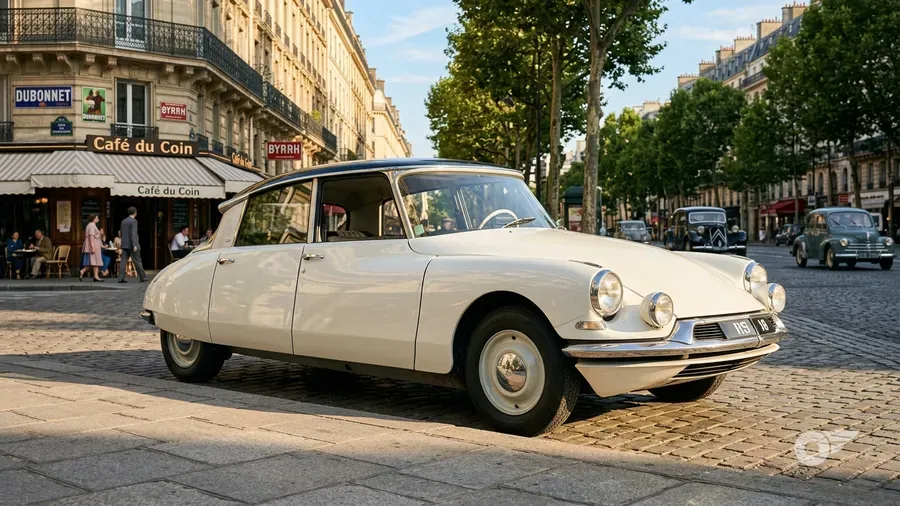
Citroën showed the Traction Avant in Paris on 18 April 1934 and effectively ended the ladder-frame era in the same afternoon. Front-wheel drive itself was not new; Alvis, Cord and DKW had all got there first. What nobody had done was put front-wheel drive under a welded steel monocoque, hang the whole thing on torsion bars, stop it with hydraulic brakes, and sell the result to French families at a price they could manage. Citroën promoted it as the car with 100 patents. The bill came due fast. André Citroën had spent so heavily on development and on retooling the Javel works that the company filed for bankruptcy on 21 December 1934, eight months after launch. Michelin took control in early 1935 and would own Citroën until 1976. André Citroën himself died that July, aged 57. The car that ruined him then went on to carry the Gestapo and the Resistance, and after them the police and the gangsters chasing each other around postwar Paris, and stayed in production until 25 July 1957. By then every mainstream manufacturer in Europe was heading the same way, and the Traction had shown them the road.

Distinctions

The defining attributes and collector status that make this car garage-worthy.

Legend
A car that transcended the hobby, known far beyond the people who drive them.
Octane Files Select
Renowned for its history, engineering, or cultural weight.

Collectibility scorecard

Rated 1 to 10 on the traits that matter for owning, driving, and holding on to a car like this.

Desirability
7/10
Rarity
4/10
Driving thrill
5/10
Investment trajectory
5/10
Usability
5/10
Ease of restoration
5/10
Cultural impact
8/10
Electronic dependence
Fully analogHeavily electronic

Nothing on a Traction is electronically controlled. Fuelling is a single carburettor fed by a mechanical pump, ignition is coil and breaker points with mechanical advance, and the throttle is a cable to a linkage. The steering rack and the hydraulic drum brakes are both unassisted. French and Belgian cars ran 6-volt electrics and Slough-built cars 12-volt Lucas equipment, but either way that is a dynamo, a battery and a starter. Even the 15-Six H's self-levelling rear suspension of 1954 is purely mechanical and hydraulic, driven by an engine-mounted pump with no sensors and no control unit anywhere. Most cars do not even have an oil pressure gauge.

Market data

Demand tier, price trend, and typical values by condition. Our own assessment, not a quoted valuation.

Demand tier
EntrySolidHighBlue-chip

A dependable market. Well-kept cars hold their value and find ready buyers.

Value trajectory
AppreciatingStableCooling

Values are holding steady. What you pay today is what it's worth tomorrow.

Price by condition
Driver
$13k
Excellent
$25k
Concours
$42k

The market splits by body, not by year. Four-door berlines are the honest entry point and have been remarkably steady: Osenat sold a 1953 11BL for about £11,600 in November 2025, H&H a 1954 Light Fifteen for about £11,000 in July 2025, and Bonhams a 1951 11BL for about £13,000 in January 2026. Six-cylinder 15-Six cars, Commerciales and Familiales all sit above that. Prewar factory cabriolets are a separate market entirely, with good original examples quoted from around £100,000 and saloon-to-convertible conversions trading well below. Nothing here is running away, which is part of the appeal: the Traction is bought by people who intend to drive one.

Values as of August 2026.

Buyer's guide

What anyone seriously considering this car should know first.

Why it's worth it
The first mass-produced car to combine front-wheel drive with a monocoque body, the layout almost every car uses now
Callout
Bankrupted Citroën eight months after launch, and Michelin owned the company by early 1935
What to watch for
Rust is the whole argument, because there is no chassis to fall back on. The sills are structural and open-ended, so they trap water, and a car whose doors no longer shut cleanly is telling you the shell has moved. Check the wheel arches, the footwells and the boot floor, then look hard at the nose: when the monocoque goes soft ahead of the windscreen, the engine subframe begins pulling away from the body, and that is the repair that ends projects. Mechanically, listen before you look. There was no oil filter on anything but the late 11D and no oil pressure gauge or warning light on any of them, so a rumble or a knock from the bottom end is the first warning you will ever get about a bearing. The original Perfo engines ran white metal poured straight into the con rods, which is expensive to replicate now; plenty of cars have been converted to 11D shell bearings and rods, and that is an upgrade rather than a black mark. A tick from the driveshafts on full lock means joints on the way out. Be careful with open cars: saloons cut into convertibles change hands for real money, so have any cabriolet inspected before you pay cabriolet prices.

The Story

Driving character

The first surprise is the gear lever, which comes horizontally out of the dashboard on a chrome quadrant with the ratios numbered on it. Down and right for first, up and left for second, down and left for third. There are only three and you will not miss the fourth, because the long-stroke four pulls from almost nothing and does its best work well below the top of the rev range. The second surprise is the steering, which is genuinely heavy at parking speed even on the rack and pinion cars from 1936, then lightens and sharpens the moment the car is rolling, at which point it becomes one of the most precise systems of its era. Then the Traction starts making its case. You sit low, because there is no chassis rail under the floor, and the combination of that low mass, torsion bars at both ends and driven front wheels means it corners flat and tracks straight in a way nothing else from the 1930s manages. Push too hard and it washes wide at the front, politely. It is not a fast car. It is an astonishingly composed one.

Design

Flaminio Bertoni gave the Traction its shape, and Citroën's own telling has him modelling it in plasticine in a single night in 1933, a story the company still repeats and nobody has ever fully documented. What is beyond argument is what the monocoque let him do. With no ladder frame to sit on top of, the body dropped several inches, and the car reads as low and planted next to every upright saloon of 1934. The double chevron sits in a tall, narrow grille flanked by free-standing headlamps, with the starting handle hole beneath it. The nose then changed with the mechanicals: when the six-cylinder engine reversed its rotation for 1948 the crank shaft moved up, and the old hole was covered by a pair of chrome wings. In 1952 the boot was enlarged into the rounded shape enthusiasts call the malle bombée, and the spare wheel finally moved inside instead of hanging off the tail. Three wheelbases covered everything from the short Légère to the nine-seat Familiale. The 1934 show cars for the stillborn V8-engined 22CV wore the same body on a longer nose.

Motorsport pedigree

The Traction never became a racing car, and Citroën never really tried to make it one. What the company chased instead were endurance records, which suited a car whose entire argument was that it would not break. In July 1934, months before the bankruptcy, Tractions took five international class E records, including six days at an average of 111.183km/h and 10,000 miles in 14 hours 43 minutes 14 seconds. The same year a car covered the Tour of France and Belgium, 5,007km, in 77 hours, and ran the first Paris to Moscow and back postal link, 3,200km in eight days. The most extraordinary effort was François Lecot's. Between 22 July 1935 and 26 July 1936, under Automobile Club de France supervision, he drove a Traction roughly 400,000km, mostly back and forth between Paris and Monte Carlo, averaging about 1,000km every single day for a year. Tractions still turn out in numbers for the Rallye Monte-Carlo Historique, which is about the right kind of motorsport for them.

In culture

In France the Traction is not really a car, it is a period. The Gestapo requisitioned them during the occupation and used them for night arrests, so one stopping outside meant something specific and terrible. The same cars, recaptured and repainted with Free French markings, then carried the Resistance. After the liberation both meanings survived and a third arrived: Pierre Loutrel, Pierrot le Fou, ran an armed gang through 1946 that stole and used Tractions so consistently the French press simply called them the Gang des Tractions Avant. He shot himself by accident during a jewellery robbery on the avenue Kléber in November 1946, and for three years afterwards nobody knew he was dead. In Germany the car picked up the name Gangsterlimousine from the thrillers it kept turning up in. On screen it belongs to Maigret above all: Rupert Davies liked the Traction he drove in the 1960 to 1963 television series enough to buy it from the French rental company when filming ended, and the 2016 ITV revival with Rowan Atkinson filled its streets with them.

Rivals

Cars from other manufacturers that competed for the same buyers when new.
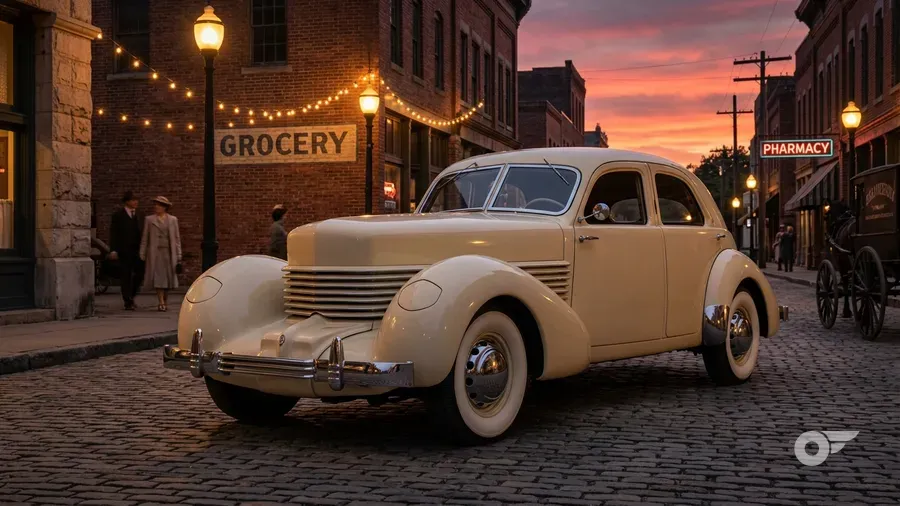
Cord 810/812

Cord 810/812

USA·Vintage·1936–1937

Owning One

Why collectors want it

The Traction is bought for what it did rather than for what it costs, which makes it one of the great value entries in prewar and early postwar collecting. Nothing else from 1934 feels this modern from the driver's seat, and nothing else at this money carries this much engineering history. The market is sharply stratified, though, and worth understanding before you fall for one. Four-door berlines, the 11 Légère and 11 Normale, are the volume cars and stay affordable: real auction results through 2025 and into 2026 cluster tightly around £11,000 to £14,000 for honest, usable examples. Above them sit the six-cylinder 15-Six cars, the nine-seat Familiale and the Commerciale with its lift-up tailgate, all of which command clear premiums. At the top are the prewar factory cabriolets and faux cabriolets, which trade in a completely different market from the saloons. The saloons are the point, though. A Traction berline is a car you can buy, drive across France, park outside a hotel, and know that almost everything else in the car park owes it something.

Which one to look for

Start with the number, which is the French fiscal rating and not anything you can see. The 7 series ran from April 1934 with 1,303cc, then 1,529cc, then 1,628cc, and finished in 1941. The 11 arrived in November 1934 with the 1,911cc four and became the car everyone means: 11 Légère on the short wheelbase, sold in Britain as the Light Fifteen, and 11 Normale on the longer one, the Big Fifteen. Between them they are the volume cars and the sensible first Traction. The 15-Six, launched in June 1938 with a 2,867cc six making 77hp, is the one the French called the Queen of the Road, and just over 50,000 were built across the G, D and H versions through to 1956. The 15-Six H is the connoisseur's pick: from April 1954 it carried hydropneumatic self-levelling rear suspension, the direct trial run for the DS, and only around 3,000 were built. The Familiale seats up to nine on the long wheelbase, and the Commerciale has a lift-up rear panel that makes it an early hatchback. Grail territory is a factory cabriolet, roughly 4,672 built and gone by November 1939, or the faux cabriolet, of which fewer than 700 were made.

11 Légère (Light Fifteen) · 1934–1957

The short-wheelbase 1,911cc four-door and the definitive Traction for most buyers. Britain knew it as the Light Fifteen because of the different fiscal horsepower calculation. Lighter on its feet than the Normale and the easiest one to live with.

11 Normale (Big Fifteen) · 1934–1957

The same 1,911cc four on the longer wheelbase, with more rear legroom and a slightly more sedate gait. Sold in Britain as the Big Fifteen. The one to take if you actually intend to carry four adults across a country.

15-Six D · 1947–1953

The postwar six. From September 1947 the engine rotation switched to clockwise to suit a strengthened gearbox, which moved the starting handle shaft up the nose and gave the car its distinctive pair of chrome wings over the blanked-off original hole.

15-Six G · 1938–1947

The six-cylinder flagship, launched in June 1938 with a 2,867cc engine making 77hp on a strengthened 11 body with a longer front subframe. The G denotes the anticlockwise-rotating engine. This is the car the French called the Reine de la Route.

15-Six H · 1954–1956

The most significant Traction of all for what came next. From April 1954 the H carried hydropneumatic self-levelling rear suspension, the first hydraulically sprung Citroën and the public trial run for the system that made the DS famous a year later.

7 (7A/7B/7C) · 1934–1941

The car that launched the whole idea, and the one that changed fastest. The 7A of April 1934 used a 1,303cc four, the 7B from June 1934 a 1,529cc, and the 7C from October 1934 a 1,628cc. Small, light and short-wheelbase, it is the purest expression of Lefèbvre's package and the hardest to find in good order.

Cabriolet · 1934–1939

The full convertible, built on both 7 and 11 chassis, and the body that turned a clever family saloon into a genuinely glamorous car. It sits several price rungs above every closed Traction and has done for decades.

Commerciale

The Familiale body sold with removable rear seats and the same lift-up rear panel, aimed at tradespeople. Now one of the most sought-after Tractions precisely because so few survived being worked.

Familiale

The long-wheelbase body with three rows and seating for up to nine, and a lift-up rear panel that made it an early hatchback. Prewar and postwar, it was the French country doctor's and hotelier's car.

Faux Cabriolet · 1934–1938

A two-door fixed-roof coupé styled to look like a cabriolet with the hood up, complete with a dummy folded-roof profile. Rarer than the real convertible and frequently mistaken for one.

What owning one is like

A Traction asks for attention on a schedule and repays it by simply carrying on. The two jobs that define ownership are greasing and oiling. The front driveshafts want a grease gun roughly every 600 miles, and the accepted figure is around 60 strokes, so you learn to keep the gun in the boot. Oil changes come every 1,500 miles on anything without the late 11D filter, which is most of them, because there is no filtration at all and no oil pressure gauge to warn you when something is going wrong. Owners who keep to both rarely have bottom-end trouble; owners who do not eventually hear the knock. The three-speed gearbox announces worn synchromesh by baulking on second and third or jumping out of gear. Six-volt electrics on the French and Belgian cars mean the starter wants a healthy battery and clean earths, while Slough-built cars got 12-volt Lucas equipment and are easier in that one respect. Rust is the only thing you cannot maintain your way out of, so a dry garage and a car that actually gets used are worth more than any amount of polish.

Upkeep & parts

Parts support is excellent, which is what happens when a car is built for 23 years and adopted by an entire country. Mechanical and body parts are made new: the Belgian and Dutch specialists Traction Avant José Franssen, De Graaf Spare Parts Service and CTA Service consolidated under one holding in 2018, PAT2D supplies France, Citroën Classics covers the UK and runs a discount arrangement with the Traction Owners Club, and Brad Nauss Automotive fills most orders from stock in the United States. The Traction Owners Club also runs its own volunteer spares service. Budget for the things the car genuinely consumes: driveshaft grease, frequent oil, brake hydraulics, and eventually a set of engine mounts, which are part of what made the car quiet in 1934 and are perishable rubber now. The white metal bearings in an unconverted Perfo engine are the one truly specialist job, and most rebuilders now fit 11D shell bearings and rods instead. Bodywork is where the money goes. Structural sill and subframe repair on a monocoque is fabrication rather than panel-swapping, so find someone who has done a Traction before, not just someone who has done bodywork before.

Country of origin
France
Class
Vintage
Production years
1934–1957
Units built
~759,123
Model
Traction Avant
Nickname
Reine de la Route (Queen of the Road)
Body
Sedan, Coupe, Convertible, Hatchback
Layout
Front-engine, FWD
Engine
1303cc OHV four (7A), 1529cc OHV four (7B), 1628cc OHV four (7C), 1911cc OHV four (11 Légère, 11 Normale, later 11D), 2867cc OHV six (15-Six G/D/H)
Transmission
3-speed manual with dashboard-mounted lever, synchromesh on 2nd and 3rd
Designer
André Lefèbvre (engineering), Flaminio Bertoni (styling)