Octane Files
Explore CarsCitroën DS

Citroën DS

Overview

The DS was the car Citroën's rivals could not answer for twenty years. It arrived at the Paris Salon on 6 October 1955 into a Europe still building cars around prewar assumptions, and it took 743 orders in the first fifteen minutes and around 12,000 by the end of the first day. Nothing about it was ordinary. Every wheel rode on a nitrogen-filled sphere fed with hydraulic fluid at 2,400psi from a single engine-driven pump, and that same pump also worked the steering, the brakes, the clutch and the gearchange. It was the first mass-production car in the world with front disc brakes, and they sat inboard next to the differential to keep unsprung weight down. There was no brake pedal, just a rubber mushroom on the floor. The roof was fibreglass. The engine, notoriously, was a long-stroke 1,911cc four derived from the unit Citroën had been building since the Traction Avant of 1934, which is why the DS was quick on a bad road and unremarkable on a good one. That mattered far less than anyone expected. It ran until April 1975, and the D-series total came to more than 1.45 million.

Distinctions

The defining attributes and collector status that make this car garage-worthy.

Legend
A car that transcended the hobby, known far beyond the people who drive them.
Octane Files Select
Renowned for its history, engineering, or cultural weight.

Collectibility scorecard

Rated 1 to 10 on the traits that matter for owning, driving, and holding on to a car like this.

Desirability
8/10
Rarity
3/10
Driving thrill
5/10
Investment trajectory
6/10
Usability
6/10
Ease of restoration
4/10
Cultural impact
9/10
Electronic dependence
Fully analogHeavily electronic

Almost everything that feels futuristic about a DS is hydraulic, not electronic. Suspension, brakes, steering, clutch and gearchange all run off one engine-driven pump at 2,400psi, and none of it involves a wire or a sensor. Carburettor cars have points ignition and no computer of any kind, which on its own would put them at 1. The score is 2 only because of the late injected cars: from October 1969 the DS 21, and from 1972 the DS 23, could be ordered with Bosch D-Jetronic, an early analogue electronic injection system with a real control unit reading manifold pressure. That is the only electronic engine management in the entire generation, and the overwhelming majority of DS built never had it.

Market data

Demand tier, price trend, and typical values by condition. Our own assessment, not a quoted valuation.

Demand tier
EntrySolidHighBlue-chip

Strong, sustained collector demand. Good examples never wait long for a buyer.

Value trajectory
AppreciatingStableCooling

Values are holding steady. What you pay today is what it's worth tomorrow.

Price by condition
Driver
$20k
Excellent
$40k
Concours
$75k

DS money peaked during the pandemic boom, when the very best saloons crested $100,000, and has settled back since. Hagerty now puts solid, drivable examples in mid-five figures, and classic.com's DS 21 saloon average sits near $30,000, so the honest picture is a world-famous car with a steady rather than spectacular market and a very wide spread between a tired driver and a properly sorted one. Sorted matters more here than on almost any other classic, because a neglected hydraulic system costs real money to put right and a good one costs nothing. The Chapron Décapotable trades in a separate market at multiples of any saloon and drags every blended DS average upwards, so ignore headline averages that mix them in. Break and Safari estates have quietly closed the gap on saloons as buyers who actually use their cars found them.

Values as of August 2026.

Buyer's guide

What anyone seriously considering this car should know first.

Why it's worth it
The first mass-production car sold with front disc brakes, hydropneumatic suspension and powered everything
Callout
743 orders in the first fifteen minutes of the 1955 Paris Salon
What to watch for
Two things decide whether a DS is a good car or a money pit, and neither of them is the engine. The first is rust. Look at the sill box sections from underneath, the boot floor, the rear wing gutters from inside the boot, the bottom rear corners of the front wings, and on 1968-on cars the panels below the faired-in headlamps. Bubbling anywhere along the sills means structure, not paint. The second is hydraulic fluid, and it comes down to a date. Cars built before 1966 use LHS, a red synthetic fluid that holds water and corrodes the pipework from the inside out. Citroën switched to LHM, a green mineral fluid, in 1965 and 1966, and dyed both the fluid and the components green so nobody could mix the two. Converting an LHS car to LHM means replacing every seal in the system, so buy the car already on the fluid you want rather than planning to change it. Then run the checks. At standard height, push each corner down: it should sink willingly and rise softly. Raise the suspension to maximum and look under the nearside rear arch for weeping. Count the pump ticks, because roughly every thirty seconds is healthy and more often than that is a leak.

The Story

Driving character

The first hundred yards tell you most of it. You turn the key, the pump starts, and the car rises off its haunches like an animal getting to its feet. Then you drive off a kerb at speed and nothing happens, because the wheel goes down, the sphere absorbs it and the body carries on level. That is the party trick and it does not wear off. The brake is the other shock. There is no pedal, just a rubber mushroom, and it takes almost no travel, so the first three stops in a DS are all more abrupt than you meant them to be. The semi-automatic cars have no clutch pedal either: you move the column lever, the hydraulics disengage the clutch, select the gear and let it back in, and the whole business takes a beat longer than you expect until you learn to lift slightly, at which point it turns seamless. Power is not the point. The 1,911cc four is a 1934 design and sounds like one, and even the injected DS 23 takes its time reaching an indicated 120mph. What the DS does instead is make a broken French backroad disappear at 80, which in 1955 no other car on earth could do.

Design

Flaminio Bertoni was a sculptor before he was a car designer, and it shows. He worked the DS as full-size clay rather than as a set of drawn elevations, and the result is a body with almost no straight lines and a nose that narrows away to nothing. The rear track is about eight inches narrower than the front, which is why the tail tapers the way it does and why a parked DS still looks like it is moving. The panels bolt on to a steel platform rather than carrying load, the roof is fibreglass, and drag was 0.36, later 0.34, lower than a contemporary Porsche 356. Safety thinking runs through it too, in the heavy sills and in the wide single-spoke steering wheel, shaped that way so the column would not spear the driver's chest. In late 1967 Robert Opron, who went on to draw the SM and the CX, reworked the nose into four lamps behind one curved glass cover, the inner pair swivelling with the steering by up to 80 degrees and the outer pair self-levelling against pitch. American rules banned both, so US cars got four exposed fixed lamps and none of the magic. The best measure of what sat underneath: Rolls-Royce licensed Citroën's high-pressure hydraulic system for the Silver Shadow.

Motorsport pedigree

For a car with no sporting pretensions at all, the DS had a remarkable rally career, and it was built on exactly the qualities that made it good on the road. The suspension carried speed over surfaces that broke other cars, and self-levelling meant it did not care what was in the boot. Citroën won the Monte Carlo Rally in 1959 with Paul Coltelloni, though the winning car was an ID 19 rather than a full DS, and took the manufacturers' cup the same year. The 1966 Monte is the one everybody remembers, and not fondly: scrutineers disqualified ten cars including the Mini Coopers that had finished first, second and third, over the dipping circuits on their quartz iodine headlamps, and Pauli Toivonen inherited a win he is widely reported to have wanted no part of. Robert Neyret and Jacques Terramorsi won the Rallye du Maroc in 1969 and again in 1970 in a shortened-chassis DS 21 prototype. The best of it came right at the end. In the 1974 London to Sahara to Munich World Cup Rally, 19,300km across Europe and Africa, 70 cars started and 19 finished, only five of them over the full distance. The winner was a privately entered DS 23 crewed by Australians Ken Tubman, André Welinski and Jim Reddiex.

In culture

In France the DS stopped being a car almost immediately. Roland Barthes put it in Mythologies in 1957 and compared the automobile to the Gothic cathedrals, the supreme creation of an era, conceived in passion by unknown artists and consumed as a magical object by a whole population that would never own one. The name helped: say the two letters in French and you get déesse, goddess. Then on 22 August 1962 the OAS ambushed Charles de Gaulle's black DS at Petit-Clamart, firing more than 150 rounds in roughly 45 seconds and shredding its tyres, and the car got away at speed on flat rubber because the hydraulics held it level. De Gaulle was untouched and reportedly never travelled in anything else again. On screen it has played the future twice: Fantômas se déchaîne in 1965 gave a DS retractable wings and jet engines, and Back to the Future Part II turned one into a flying Luxor cab for 2015. Louis de Funès made a black DS 23 part of his act in Les Aventures de Rabbi Jacob. In 1999 a jury of 112 motoring writers from 33 countries voted it third Car of the Century, behind the Model T and the Mini and ahead of the Beetle and the 911.

Rivals

Cars from other manufacturers that competed for the same buyers when new.
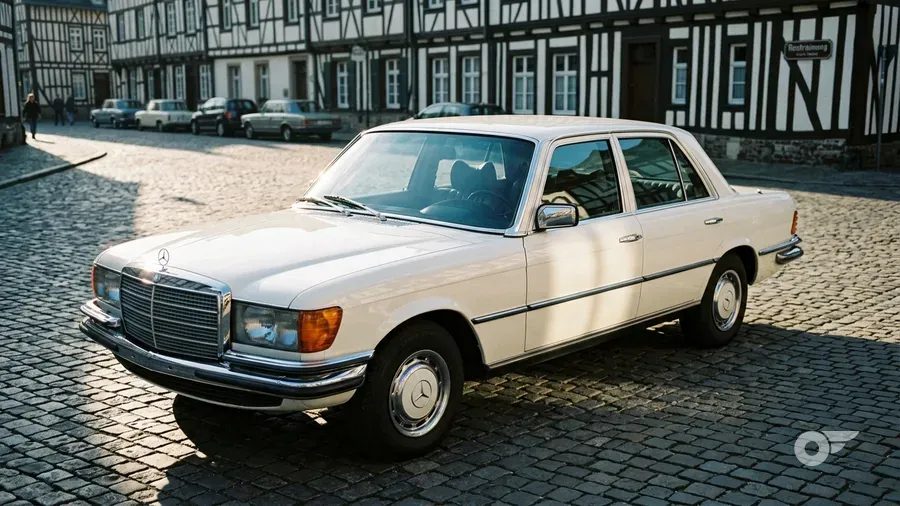
Mercedes-Benz S-Class W116

Mercedes-Benz S-Class W116

Germany·Luxury·1972–1980

Owning One

Why collectors want it

Nothing else drives like it and nothing else looks like it, and seventy years on both statements are still true. That is the whole argument. The DS is bought by people who care how a car was engineered rather than how fast it reaches the end of a road, and the market reflects that: it is one of the very few genuinely world-famous cars a normal person can still buy in good condition for the price of a well-optioned new hatchback. The hierarchy inside the range is unusually clean. At the bottom sit the ID and later D Spécial cars, simplified and cheaper, with conventional steering, ordinary brakes and a normal gear lever, and they are the sensible way in. Above them the DS saloons with the full hydraulic suite. Above those the Pallas, from 1965, with the better trim and the sound deadening. The Break has its own following among people who actually use their cars. And far above all of it, in a market of its own, sits the Chapron Décapotable: 1,365 factory cars built between 1961 and 1971, priced now like a Ferrari. Everything below that line remains, remarkably, affordable.

Which one to look for

Start with the split between ID and DS, because it changes the car more than any engine does. The ID, launched in 1957, shared the body and the suspension but did without the hydraulic steering, brakes and gearchange, using a conventional four-speed with a real clutch pedal and a detuned engine of about 66 to 69hp. It was rebadged D Spécial for 1970, with the D Super above it. If the hydraulics worry you, that is your car. On the DS side the engine ladder runs 1,911cc in the DS 19 until 1968, then 1,985cc in the DS 20, 2,175cc in the DS 21 from 1965 to 1972, and 2,347cc in the DS 23 from July 1972 to the end. From October 1969 the DS 21 could be ordered with Bosch D-Jetronic injection, and the injected DS 23 is the quickest of the lot at 130hp DIN. Pallas trim, from 1965, brought better seats, brightwork and sound deadening. The Break, sold as the Safari in Britain, keeps a steel roof for load carrying. The grail is the Chapron Décapotable: 1,365 factory cars, of which 112 were ID 19, 770 DS 19 and 483 DS 21.

Break / Safari / Familiale · 1958–1975

The estate, on a longer wheelbase and with a steel roof instead of the saloon's fibreglass for load carrying. Break has side-facing rear seats in the load bay, Familiale a full third row set further back. Self-levelling suspension means a fully loaded car sits exactly where an empty one does.

D Spécial / D Super · 1970–1975

The rebadged ID range for the final years. D Spécial replaced the ID 19 with the 1,911cc engine, D Super replaced the ID 20 with the 1,985cc unit. Conventional steering and brakes, ordinary gearbox, lower price.

Décapotable (Chapron) · 1961–1971

The factory-catalogued convertible, built by coachbuilder Henri Chapron on chassis supplied by Citroën and sold through Citroën dealers. Structurally a different car below the waist, and by a wide margin the most valuable D-series variant.

DS 19 · 1955–1968

The original, and for thirteen years the standard car: 1,911cc, 75hp, the full hydraulic suite driving suspension, steering, inboard front discs, clutch and column gearchange. Superseded by the DS 20 in 1968.

DS 20 · 1968–1975

The 1,985cc five-bearing four, sitting between the ID-derived cars and the DS 21. The volume DS of the later years and the most common car in the classified ads today.

DS 21 · 1965–1972

The 2,175cc short-stroke four, roughly 106 to 109hp in carburettor form, and the engine most people think of when they think of a DS. The first D-series car that was genuinely quick rather than merely capable.

DS 21 Injection Électronique · 1969–1972

The 2,175cc engine with Bosch D-Jetronic electronic injection, rated 125hp DIN. One of the earliest production applications of D-Jetronic anywhere, and the only electronic system the DS ever carried.

DS 23 · 1972–1975

The last and largest engine, 2,347cc, 115hp DIN on carburettors. Mechanically the DS 21 with a bigger bore and stroke, and the strongest low-down pull of any D-series car.

DS 23 Injection Électronique · 1972–1975

The fastest DS Citroën ever sold: 2,347cc with Bosch D-Jetronic, 130hp DIN, good for an indicated 120mph. The one to have if you intend to cover distance in it.

ID 19 · 1957–1969

The cheap way into a DS body. Same shell, same hydropneumatic suspension, but no hydraulic steering, brakes or gearchange: a conventional four-speed with a real clutch pedal, and a detuned 1,911cc four making roughly 66 to 69hp. Simpler to own than any DS and priced accordingly.

Pallas · 1965–1975

The luxury trim, not a separate model. Better seats and optional leather, extra brightwork, and a significant step up in sound deadening. Commands a premium over a standard saloon of the same year and engine.
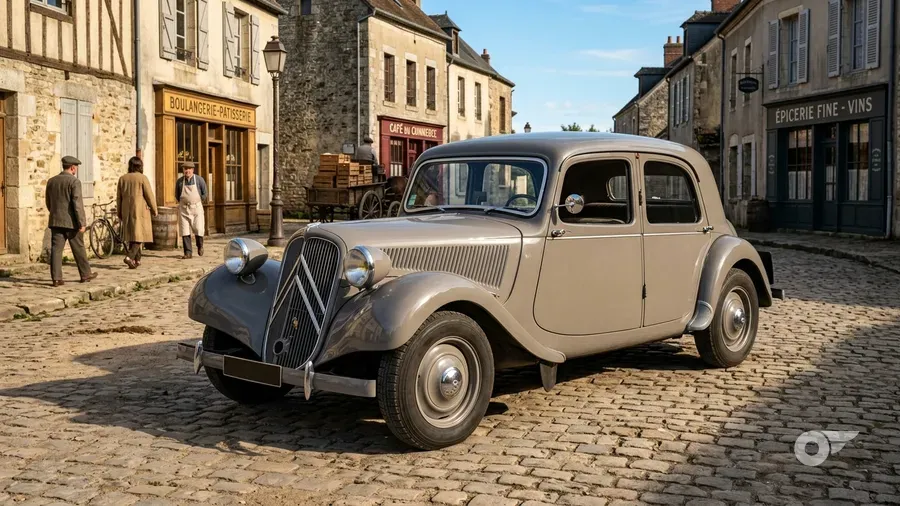

What owning one is like

A DS asks for regular use more than it asks for money, and that is the single most useful thing to know before buying one. The cars that give trouble are the ones that sat. Seals dry out, LHS cars corrode from the inside, and the hydraulic system that runs everything turns sulky in exactly the way it never does on a car driven every week. The hydraulics themselves are not fragile once sorted, but they are unforgiving of neglect: pipework runs at 2,400psi, the spheres slowly lose their nitrogen charge and go hard, and a worn accumulator announces itself as a clicking from the engine bay. Engines are stout, but the alloy head cracks between the valve seats and the plug holes if coolant is ignored, and a rattling timing chain usually means the engine has to come out to fix it. The semi-automatic gearbox is the most complex thing on the car, with a hydraulic selector brain, a centrifugal regulator and a clutch cylinder that all have to agree with each other, and it wants a specialist rather than an optimist. None of it is mysterious, and almost all of it is prevented by driving the thing.

Upkeep & parts

Parts are far better than the DS's reputation suggests. The specialist trade in France, the Netherlands, Britain and the United States covers almost everything mechanical and structural, reproduction interior trim is good, and hydraulic spheres are a stocked consumable rather than a hunt. Service intervals are short by modern standards at roughly every 3,000 miles, but the work is genuinely home-garage territory, and the Citroën Car Club's own guidance is that routine maintenance and a good deal beyond it can be done on a DIY basis. Budget for spheres, because they are wear items and a full set comes round eventually. Budget properly for anything structural, because sills and boot floors are the expensive end of a DS and some of it can only be reached with bodywork off. If you are buying an early car still on red LHS, price in either scrupulous fluid changes or a full conversion to green LHM, which means every seal in the system. The club network is the real asset: the Amicale Citroën Internationale ties together around a thousand clubs worldwide, and Citroënvie and the Citroën Car Club both run DS-specific technical support.

Country of origin
France
Class
Luxury
Production years
1955–1975
Units built
~1.5 million
Model
DS
Nickname
La Déesse (The Goddess)
Body
Sedan, Wagon, Convertible
Layout
Front-engine, FWD
Engine
1,911cc OHV four (DS 19, 75hp; ID 19, approx 66-69hp), 1,985cc OHV four (DS 20, ID 20, D Super), 2,175cc OHV four (DS 21, approx 106-109hp carburettor; 125hp DIN with Bosch D-Jetronic injection from October 1969), 2,347cc OHV four (DS 23, 115hp DIN carburettor; 130hp DIN with Bosch D-Jetronic injection)
Transmission
4-speed hydraulic semi-automatic with column change and no clutch pedal, 4-speed manual, 5-speed manual (from September 1970), 3-speed Borg-Warner automatic (from September 1971, DS 21 and DS 23 only)
Designer
Flaminio Bertoni (styling), André Lefèbvre (engineering), Paul Magès (hydropneumatic suspension), Robert Opron (1967 restyle)