Octane Files
Browse CarsChevrolet Nova 2nd Gen

Chevrolet Nova 2nd Gen

Overview

The Chevy II arrived in 1962 as Chevrolet's sensible answer to the Ford Falcon, a boxy, thrifty compact with a four-cylinder base engine and no pretensions at all. What happened in 1966 is the reason collectors care. The line got a sharp-edged restyle drawn in part from the Super Nova show car, with a semi-fastback roofline and gently humped fenders that finally gave it some presence, and Chevrolet quietly dropped its hottest small-block into the top Nova SS. That engine was the L79, a 327 rated at 350 horsepower, the same high-compression, free-breathing 327 that made the Chevelle and Corvette move. In a car this light it was a genuine sleeper, quick enough to embarrass much bigger machinery from a stoplight while wearing the badges of an economy sedan. The window was short. For 1967 the L79 was deleted from the order sheet, most likely to keep clear road for the incoming Camaro, and the SS topped out at the 275-horsepower 327. That makes the 1966 L79 the car everyone chases, and the whole 1966-1967 run the moment the Nova stopped being just transportation.

Distinctions

The defining attributes and collector status that make this car garage-worthy.

Octane Files Select
Renowned for its history, engineering, or cultural weight.

Collectibility scorecard

Rated 1 to 10 on the traits that matter for owning, driving, and holding on to a car like this.

Desirability
6/10
Rarity
5/10
Driving thrill
6/10
Investment trajectory
6/10
Usability
7/10
Ease of restoration
7/10
Cultural impact
4/10
Electronic dependence
Fully analogHeavily electronic

Carbureted throughout, from the single-barrel sixes to the Holley four-barrel on the L79 327. Breaker-point distributor ignition, a mechanical fuel pump and no electronic engine management of any kind. The only electrics are the alternator charging system and the lighting. Every throttle and ignition-timing input is a direct mechanical linkage.

Market data

Demand tier, price trend, and typical values by condition, based on recent sales data.

Demand tier
EntrySolidHighBlue-chip

A dependable market. Well-kept cars hold their value and find ready buyers.

Value trajectory
AppreciatingStableCooling

Values are holding steady. What you pay today is what it's worth tomorrow.

Price by condition
Driver
$18k
Excellent
$30k
Concours
$50k

Value follows documentation and drivetrain, not badges. A base six-cylinder Chevy II remains one of the most affordable ways into 1960s Chevrolet ownership, while a documented Nova SS, and above all a genuine 1966 L79 car, sits at the very top of the generation's market. Because the SS was a package and not a model, paperwork separates a real car from a tribute and does most of the work in setting price.

Values as of August 2026.

Buyer's guide

What anyone seriously considering this car should know first.

Why it's worth it
The economy compact that became a factory sleeper when Chevrolet dropped in the 350hp L79 327.
Callout
In the Chevy II, the 350hp L79 327 was a 1966-only option, deleted for 1967.
What to watch for
Two things decide whether a 2nd-gen Nova is a good buy: the metal and the paperwork. The Chevy II is a semi-unibody car, a bolt-on front subframe carrying the engine and front suspension mated to a unitized cabin and rear structure, so structural rust is the thing that ends projects. Look hard at the floor pans, the trunk floor, the rear frame rails, the subframe mounts, the lower quarters, the rockers and the cowl, and treat a car repainted over filler with real suspicion, because a soft body is expensive to put right and easy to disguise. The mechanicals are the easy part. The small-blocks and the manual gearboxes are tough, simple and cheap to rebuild, and almost every part is a shelf item. The paperwork is where the money is made or lost. Because the SS was an option package and the VIN encodes only the base engine, a genuine L79 or SS car has to be proven with the engine block's suffix code and casting date, and ideally a build sheet or dealer paperwork, not just badges. A base six-cylinder car needs none of that and is a wonderful, cheap way in. A car wearing SS badges and asking SS money needs all of it.

The Story

Driving character

The L79 is what you came for, and it delivers the way a great small-block should. It is a 327 with high-compression forged pistons, a lumpy hydraulic cam, good heads and a Holley four-barrel on an aluminum intake, and in a compact this light it feels urgent everywhere. It pulls hard from low down, keeps pulling well past where the sixes give up, and makes the hard-edged small-block bark that Chevrolet people spend their lives chasing. Behind it the Muncie four-speed is light and precise, and because the car is small and the nose is not heavy, it turns in more willingly than any big-block muscle car of the era. The flip side is honest. The brakes are drums, the rear axle is light and will light up a tire or step sideways if you are careless with the throttle, and the suspension was tuned for a grocery car, not a back road. None of it matters at a stoplight, which was always the point. The 1966 L79 Nova looks like nothing in particular and leaves like it has something to prove.

Design

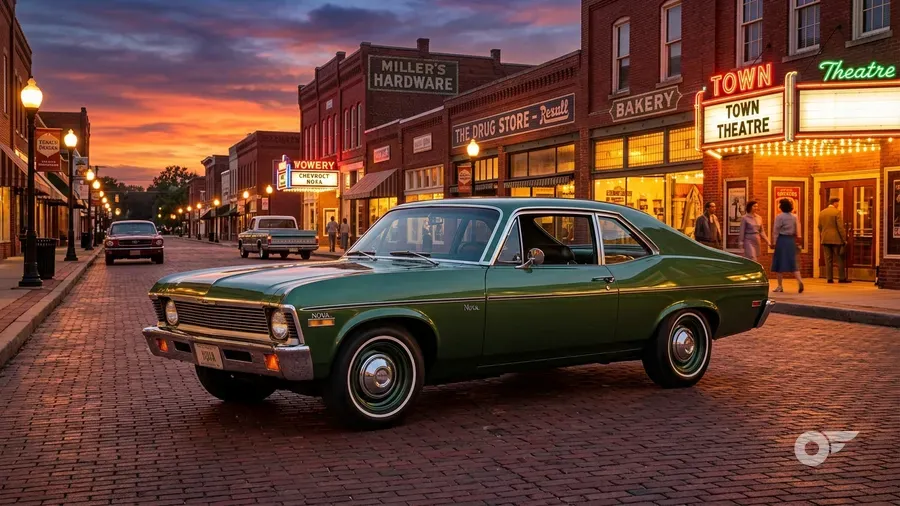
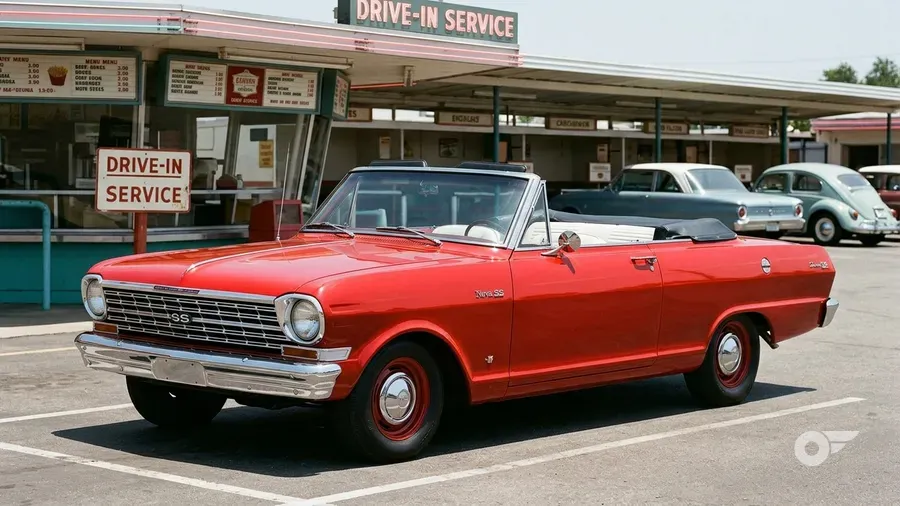
The 1966 restyle is what gave the car its looks. Chevrolet reskinned the Chevy II with a sharper, more grown-up body drawn in part from the Super Nova show car, adding a semi-fastback roofline, gently humped fenders and an angular tail that echoed the full-size 1966 Chevrolets, all of it still on single headlights and vertical taillights. It reads as a scaled-down big Chevy, which was the intent. The Super Sport treatment was deliberately restrained: bright sill moldings, an aluminum panel across the rear cove, SS badging and special wheel covers, with bucket seats and a console inside. For 1966 the car wore Chevy II SS emblems; for 1967 those became Nova SS, the grille picked up a black-accented insert, and the SS borrowed the full wheel covers from the 1965-1966 Impala SS. There is no scoop, no stripe package shouting for attention, nothing to announce the L79 underneath. That understatement is a large part of why the car is loved. It looks like exactly what most of them were, and hides what a few of them could do.

Motorsport pedigree

The 2nd-generation Nova never had a factory racing program, and it is not a road-racing car. Its natural home was the drag strip and the street, where a light body and a strong small-block are exactly the right recipe. The L79 SS was a ready-made stock-class drag car and a giant-killer at stoplights, and that quarter-mile and street reputation, rather than any circuit result, is the competition story that matters here. It is a sleeper, and sleepers do their racing where nobody is watching.

In culture

The 1966-1967 Nova holds a specific and enduring place in American car culture: it is one of the original sleepers, the everyday compact hiding a serious engine, and that idea has outlived the car itself. Among Chevrolet enthusiasts and hot-rodders the L79 Nova is spoken of with real affection, a small-block believer's car rather than a big-block showpiece, and the shape remains a staple of the grassroots drag and street scene decades later. It never became a poster on a bedroom wall the way a Corvette did. Its fame is quieter and inside the hobby, earned at stoplights and in the classifieds rather than on screen, which suits a car that always did its best work without drawing attention.

Rivals

Cars from other manufacturers that competed for the same buyers when new.
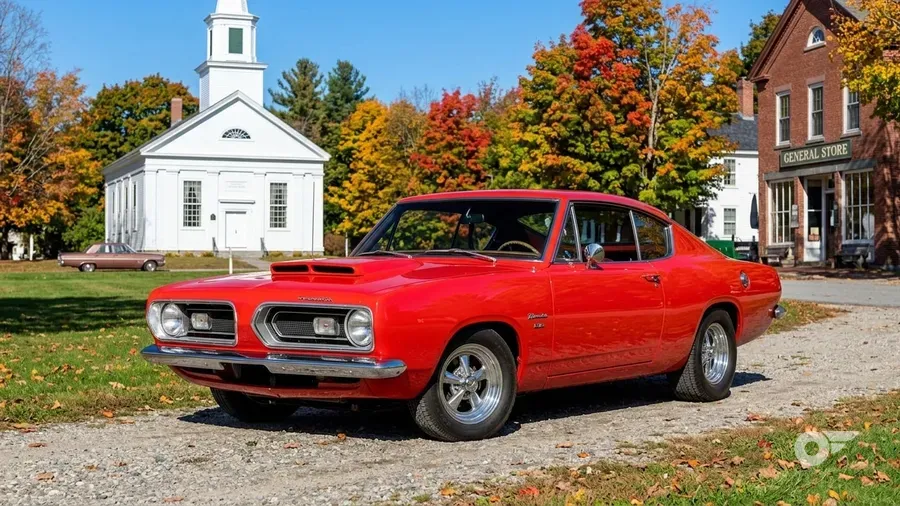
Plymouth Barracuda 2nd Gen

Plymouth Barracuda 2nd Gen

USA·Muscle·1967–1969
Ford Mustang 1st Gen

Ford Mustang 1st Gen

USA·Muscle·1964–1973

Owning One

Why collectors want it

The case for a 2nd-generation Nova rests almost entirely on the small-block. As a plain compact it is pleasant, cheap and largely overlooked, which is exactly why the hot version is so appealing: for the price of a nice base car you get access to one of the definitive factory sleepers. The hierarchy is steep and well understood. A base Chevy II 100 with a six is transportation, affordable and honest but not an investment. A Nova with the 275-horsepower 327 is a genuinely quick and pretty coupe. At the top sits the 1966 Nova SS with the L79, and the gap between it and everything below it is enormous, because the L79 was a one-year option and the badge alone means nothing without paperwork to back it. That last point is the whole game. The Super Sport was a package, not a separate model, and the VIN does not record which engine the car left with, so a documented L79 car and a well-built tribute can look identical and sell for wildly different money. Buy the documentation and the numbers, not the stripes.

Which one to look for

Start at the bottom and work up. The Chevy II 100 was the stripped economy line, four-cylinder or six, bench seat and rubber mat, and it is the cheapest entry into the generation. The Nova was the nicer trim, better appointed and the one most often found with a V8. The Super Sport, offered only as the two-door hardtop coupe, is the one collectors chase: bucket seats, a console, unique wheel covers, sill moldings and the SS badging that turned the compact into something that looked the part. Within the SS, engine is everything. A 283 or the 275-horsepower L30 327 makes a lovely, usable car. The grail is the 1966 Nova SS with the L79, the 350-horsepower 327, which is the fastest and rarest factory configuration of the run and the only one that commands serious money. For 1967 the L79 was gone, so the year's hottest Nova SS topped out at the 275-horsepower 327. If you want the legend, it wears a 1966 title.

Nova SS · 1966–1967

The Super Sport was the performance flagship of the restyled Chevy II, offered only as the two-door hardtop coupe. It added bucket seats, a console, special instrumentation, bright sill moldings, an aluminum rear cove panel, unique wheel covers and SS badging (Chevy II SS in 1966, Nova SS in 1967). The engine, not the trim, is what separates the cars: a 283 or the 275hp L30 327 makes a pretty, usable coupe, while the 1966-only L79 327/350hp is the grail configuration and the reason the model is collected.

What owning one is like

Living with one is mostly easy, with one big caveat. The Chevy II is a semi-unibody, so rust in the floors, trunk, rear rails and subframe mounts is structural, not cosmetic, and a car that has rotted there has lost strength that filler and paint only hide. That is the thing to stay ahead of: keep it dry, fix rust early, and it will not come back to bite you. Everything mechanical is refreshingly friendly. The small-blocks and manual boxes are among the toughest, best-understood drivetrains ever built, they tolerate neglect and reward simple maintenance, and nothing under the car will surprise a competent home mechanic. The chassis is of its time. The 1966 cars have four-wheel drums on a single-circuit master cylinder and want a long look ahead before you need to stop; the 1967 cars gained the federally mandated dual master cylinder, a real safety improvement. The light rear end that makes the L79 car so lively will also spin a wheel or wag its tail on a damp road. None of it is a deterrent. It is simply an honest 1960s compact, and an unusually rewarding one.

Upkeep & parts

This is a cheap car to keep, which is a large part of its appeal. Mechanically it shares the Chevrolet small-block world with the Camaro, Chevelle and countless others, so engine, transmission, brake and suspension parts are everywhere and inexpensive, and any competent shop knows the drivetrain cold. Where you spend real money is body and trim. Reproduction sheet metal and interior and exterior trim for the 1966-1967 Chevy II is thinner on the ground than it is for the hugely supported 1968-and-later Nova, so a rust repair or a fussy restoration of correct SS pieces can mean hunting original parts rather than ordering new ones. Budget for the metal, not the mechanicals. The community is strong and generous: Steve's Nova Site and NovaResource.org are deep references for these cars, and Nova and Chevy II clubs and forums will answer almost any question you can ask. For a first vintage project this is close to an ideal car, provided you buy the most solid body you can find and let someone else pay for the rust you can avoid.

Country of origin
USA
Class
Muscle
Production years
1966–1967
Units built
~278,915
Marque
Model
Nova
Nickname
Chevy II
Body
Sedan, Coupe, Wagon
Layout
Front-engine, RWD
Engine
153ci (2.5L) I4; 194ci (3.2L) I6 (120hp); 230ci (3.8L) I6 (140hp); 250ci (4.1L) I6 (155hp, from 1967); 283ci (4.6L) V8 (195/220hp); 327ci (5.4L) V8 L30 (275hp); 327ci (5.4L) V8 L79 (350hp, 1966 only)
Transmission
3-speed manual, 4-speed manual, 2-speed Powerglide automatic
Designer
Irv Rybicki (Chevrolet studio), Bill Mitchell (GM Design direction)