Octane Files
Browse CarsChevrolet Nova 1st Gen

Chevrolet Nova 1st Gen

Overview

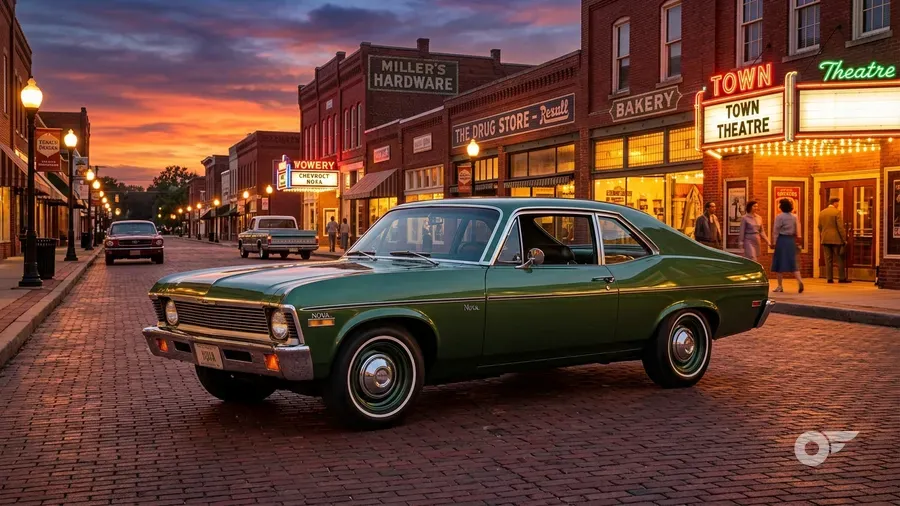
The Chevy II is the car Chevrolet built when its big gamble went sideways. The rear-engine, air-cooled Corvair had been Chevrolet's answer to the compact question, and in 1960 the plain, conventional Ford Falcon outsold it and kept selling. So Chevrolet did the un-Chevrolet thing and built something deliberately ordinary: a front-engine, water-cooled, leaf-sprung compact with nothing to prove and nothing to explain. The studio under Clare MacKichan brought it from decision to showroom in a hurry, and it arrived for 1962 in three series (the plain 100, the mid 300, and the top Nova 400) across sedans, a sport coupe, a wagon, and a convertible. Under the hood sat a 153ci four or a 194ci six, and not a single factory V8 until 1964. That last fact is the whole story of the first Nova: it started as honest, thrifty transport and spent its four years quietly growing teeth. The Nova SS arrived in 1963, the 283 V8 in 1964, and the 327 in 1965, and by the time the second generation replaced it, the compact economy Chevy had become something a hot-rodder looked at twice.

Distinctions

The defining attributes and collector status that make this car garage-worthy.

Octane Files Select
Renowned for its history, engineering, or cultural weight.

Collectibility scorecard

Rated 1 to 10 on the traits that matter for owning, driving, and holding on to a car like this.

Desirability
5/10
Rarity
5/10
Driving thrill
4/10
Investment trajectory
6/10
Usability
7/10
Ease of restoration
7/10
Cultural impact
5/10
Electronic dependence
Fully analogHeavily electronic

Fully analog. Carburetor fuel delivery, a breaker-point distributor with mechanical advance, generator charging on early cars, and manual or Powerglide transmissions with no electronic control anywhere. Every driver input is a direct mechanical or hydraulic linkage; there is no computer, no fuel injection, and no electronic ignition of any kind from the factory.

Market data

Demand tier, price trend, and typical values by condition, based on recent sales data.

Demand tier
EntrySolidHighBlue-chip

A dependable market. Well-kept cars hold their value and find ready buyers.

Value trajectory
AppreciatingStableCooling

Values are holding steady. What you pay today is what it's worth tomorrow.

Price by condition
Driver
$12k
Excellent
$30k
Concours
$45k

First-generation cars sit at the affordable end of the Nova market and remain undervalued next to the muscle-era Novas that followed, which is much of their appeal. Base six-cylinder sedans and coupes are genuinely entry-level classics, while documented Nova SS cars, the 1962-1963 convertibles, and original V8 cars carry a clear premium and are the examples that hold and gain value as clean survivors thin out. Condition and documentation drive price more than anything here, since drivetrain swaps are common and SS badges are easy to add.

Values as of August 2026.

Buyer's guide

What anyone seriously considering this car should know first.

Why it's worth it
The car that founded the Nova name, Chevrolet's conventional compact after the Corvair faltered against the Falcon.
Callout
The first two model years offered no factory V8, only a four or a six.
What to watch for
Rust is the first thing to understand, because the Chevy II's semi-unibody hides its worst enemy. The body bolts a front subframe to a unitized cabin and rear structure, and the places that rot are the ones that matter structurally: the floor pans, the trunk floor, the rear frame rails, and the subframe mounts. Lift the carpet and the trunk mat before anything else, and look hard at the lower quarters, rockers, and the cowl where water sits under the windshield. Next, know what you are buying, because badges are easy to move. The SS was a factory option package, not a separate model, so an SS emblem proves nothing on its own; a real Super Sport shows in the trim tag and the original equipment, and any V8 in a 1962 or 1963 car is by definition a later swap since none left the factory that way. Numbers-matching means less here than on a Corvette, and drivetrain swaps are common and often well done, so decide early whether you want an original car or a good driver. Reproduction sheet metal and mechanical parts are widely available, but early-specific trim, glass, and interior pieces are the hard-to-find items, so buy the most complete car you can.

The Story

Driving character

A six-cylinder Chevy II drives exactly like what it is, which is a light, honest, unhurried car with nothing between you and the road. The 194 and 230 sixes are torquey and unstressed rather than quick, happiest trundling along a back road, and the whole car weighs so little that even modest power feels adequate and the steering and brakes never feel overwhelmed. Then you find a V8 car and the personality changes completely. Drop a 283 or a 327 into a body this light and the Chevy II turns eager and slightly overpowered in the best way, the nose still steering easily because there is not much car to move. The Powerglide is smooth and lazy and suits the six; the four-speed manual is the one to have with a V8, because it lets the small-block spin and gives the car the pace its size promises. None of it is sophisticated. The ride is tall and simple, the leaf-sprung rear axle hops if you provoke it, and the cabin is plain. That plainness is the appeal. This is a car you drive with your hands and feet and ears, and a good V8 one is genuinely quick in a way the badge on the fender never advertised.

Design

The first Chevy II looks the way it does because Chevrolet wanted it built fast and cheap and inoffensive, and the studio under Clare MacKichan delivered exactly that: crisp, upright, and boxy in a clean early-1960s way, with none of the tailfins the decade was leaving behind and none of the Corvair's engineering theatrics. It is a car of straight lines and honest proportions, a flat hood, a simple grille, round headlamps, and a greenhouse with good glass and slim pillars that make it feel airy inside. The semi-unibody underneath is the real design story: a bolt-on front subframe carrying the engine and front suspension, mated to a unitized cabin and rear structure, a construction that kept weight and cost down and, as a bonus, gave the aftermarket an easy car to modify decades later. The Nova 400 trim added the brightwork, and the SS added bucket seats and a sportier dash, but the shape never pretended to be exciting. It aged well precisely because it never chased a trend. Parked next to the finned excess it replaced, the Chevy II looks modern and deliberate, the work of a company that had decided, for once, to build something plain on purpose.

Motorsport pedigree

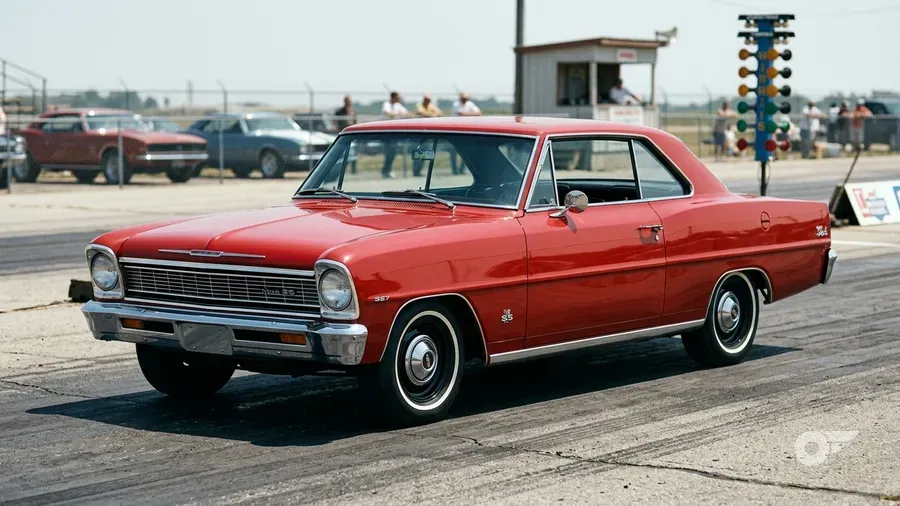
The first Chevy II earned its competition reputation on the drag strip rather than the road course. A body this light with a Chevrolet V8 in it was a natural combination, and once the factory 283 and 327 arrived the Chevy II became a familiar sight in stock and modified drag classes, the opening chapter of a Nova drag-racing story that ran for decades. Even before the factory V8, racers and tuners were dropping small-blocks into the early cars, and that grassroots swapping culture, more than any works program, is the first generation's real motorsport legacy. Chevrolet ran no factory team here; the racing was privateer, and it was everywhere.

In culture

The lasting cultural fact about the first Chevy II is the name it introduced. Nova started life as the top trim of an economy compact and grew into one of the most recognized model names Chevrolet ever used, carried across four generations and into drag-strip and street legend long after this car was gone. The first-generation car itself sat in the background of ordinary early-1960s American life, the sensible second car in the driveway, the kind of honest transport that does not get written about because it simply worked. There is a persistent piece of folklore worth knowing and disbelieving: the story that the Nova name hurt sales in Spanish-speaking markets because 'no va' means 'doesn't go.' It is a good story and it is not true; the car sold perfectly well under the name and the anecdote has been debunked for years. What the first Chevy II really contributed was quieter and more durable than any movie cameo: it planted the Nova badge, and everything the name later came to mean, from grocery-getter to giant-killer, grew out of this plain, well-judged little compact.

Rivals

Cars from other manufacturers that competed for the same buyers when new.
Owning One

Why collectors want it

The first Chevy II is the affordable ground floor of Nova collecting, and its appeal is exactly the thing that makes people overlook it: it is honest, simple, and cheap to get into. The base six and four cars are humble transport and priced like it, which makes a clean one the rare classic a normal person can still buy and drive without ceremony. The interest climbs with the hardware. The Nova SS, offered from 1963, is the trim collectors chase, and it moves from dress-up package to genuine performer the moment a V8 sits between the frame rails. The 1962 and 1963 convertibles are the other prize, dropped after just two years and never offered again on this body, which makes any first-generation Chevy II ragtop scarce today. Early V8 cars matter too, both the factory 1964-onward 283 and 327 cars and the countless period small-block swaps that the Chevy II's light body invited. It is a car that rewards knowing what you are looking at: a six-cylinder Nova 400 sedan and a 327 SS convertible wear nearly the same sheet metal and live in completely different markets.

Which one to look for

Start with the Nova SS, because it is the one everyone means when they say they want a first Chevy II. Introduced for 1963 as option Z03 on the top 400-series sport coupe and convertible, it added bucket seats, a floor shifter, special instrumentation, emblems, and brightwork for about a hundred and sixty dollars. On its own it was a look; paired with the V8 that arrived a year later it became the template for every hot Nova that followed. Rank the bodies next. The convertible was built only for 1962 and 1963, which makes it the scarce and desirable shape regardless of engine. The sport coupe is the one most people want, the four-door sedans and the wagon the practical and cheaper ends of the range. Then rank the engines: the 153 four is the curiosity, the 194 and later 230 sixes are the volume cars, and the V8s are where the money and the fun concentrate, the 283 from 1964 and the 327 from 1965 with up to 300 horsepower. The grail is a genuine, documented 1965 327 SS, ideally a convertible, and it is a very different car from the six-cylinder sedan that shares its shape.

Nova SS · 1963-1965

The Super Sport, first offered for 1963 as option package Z03 on the top 400-series sport coupe and convertible. It added bucket seats, a floor shifter, special instrumentation, unique emblems, wheel covers, and body-side moldings for about $161. Purely a trim-and-dress package at launch over a four or six, the SS became the performance Nova the moment the 283 V8 arrived for 1964 and the 327 for 1965, and it is the first-generation trim collectors chase today.

What owning one is like

Living with a first Chevy II is mostly living with rust and simplicity, and the simplicity is what makes the rust bearable. These cars corrode in the usual unibody places, the floors, trunk, rear rails, and lower quarters, and because the structure is semi-unitized, serious rot is a structural job rather than a cosmetic one. The good news is that the panels are basic stampings and widely reproduced, so a rusty but complete car is a solvable project rather than a lost cause. Mechanically there is very little to fear. The sixes and small-block V8s are among the most understood engines on earth, the Powerglide and manual boxes are stout and cheap to service, and there is no electronics to chase, no injection to troubleshoot, nothing that a points-and-carburetor tune-up will not sort. The weak spots are the ordinary ones for the era: kingpins and front-end bushings wear, the generator and mechanical fuel pump eventually give up, the single-circuit brakes want careful maintenance and respect, and the light rear end will spin a tire the moment you add power. None of it is intimidating. This is one of the friendliest old American cars to own precisely because everything that goes wrong is cheap, common, and fixable in a home garage.

Upkeep & parts

Parts support is the quiet reason to own one of these. The Chevy II shares its engines, transmissions, and much of its running gear with the rest of the 1960s Chevrolet catalog, which means the mechanical side is essentially a solved problem: small-block and six-cylinder parts are everywhere, rebuilds are cheap by any classic-car standard, and every machine shop in the country knows these engines cold. Reproduction sheet metal, floor pans, weatherstrip, and suspension parts are all available from the major Chevy restoration suppliers, so structural repair is a question of labor rather than of finding pieces. The harder items are the early first-generation-specific trim, emblems, interior soft parts, and glass, which were made in smaller numbers than later Nova equivalents and turn up less often, so a car missing its correct SS trim or convertible pieces can be slow and expensive to complete correctly. Budget for brakes and front-end wear on any unrestored car, and for a fuel-system and ignition refresh on anything that has sat. The Nova and Chevy II hobby is active and well documented, with long-running online forums where the answer to almost any question already exists, and the cars are simple enough that a patient owner can do most of the work themselves.

Country of origin
USA
Class
Vintage
Production years
1962–1965
Units built
~1 million
Marque
Model
Nova
Nickname
Chevy II
Body
Sedan, Coupe, Convertible, Wagon
Layout
Front-engine, RWD
Engine
153ci (2.5L) I4; 194ci (3.2L) I6 (120hp); 230ci (3.8L) I6 (from 1964); 283ci (4.6L) V8 (195hp, from 1964; 220hp dual-exhaust midyear 1965); 327ci (5.4L) V8 (up to 300hp, 1965)
Transmission
3-speed manual, 4-speed manual, 2-speed Powerglide automatic
Designer
Clare MacKichan