Octane Files
Browse CarsSaab Sonett II

Saab Sonett II

Overview

The Sonett II exists because Saab's North American dealers asked for one. They had a two-stroke saloon with a rally record and nothing on the showroom floor that a young buyer would call a sports car, and by the early 1960s they had talked Trollhättan into fixing it. Two proposals were built in 1965. The MFI-13 was drawn by the aircraft illustrator Björn Karlström and built in sheet metal at Malmö Flygindustri; a second car came from Sixten Sason about a month later. Karlström's won, then changed material. The production Sonett II is a fibreglass coupe bolted to a steel box chassis with an integral roll bar, 85 inches between the axles and 48 inches tall, carrying the 841cc two-stroke triple and front-wheel drive of the 96 Monte Carlo. It was assembled not at Trollhättan but by the railway works ASJ at Arlöv. Twenty-eight were built in 1966, 230 in 1967, and then serial number 259 arrived with a Ford Taunus V4 under a bulged hood. That car is the one nearly every American buyer actually got: 1,610 more of them through 1969.

Distinctions

The defining attributes and collector status that make this car garage-worthy.

Octane Files Select
Renowned for its history, engineering, or cultural weight.

Collectibility scorecard

Rated 1 to 10 on the traits that matter for owning, driving, and holding on to a car like this.

Desirability
5/10
Rarity
8/10
Driving thrill
5/10
Investment trajectory
4/10
Usability
4/10
Ease of restoration
5/10
Cultural impact
3/10
Electronic dependence
Fully analogHeavily electronic

There is nothing here for a computer to do. The two-stroke breathes through three Solex carburettors, with an oil-injection pump feeding lubricant from its own tank so the driver never mixes fuel by hand. The Ford V4 that replaced it runs a single carburettor and a breaker-point distributor. Fuel arrives by mechanical pump. The freewheel is a mechanical unit in the driveline worked by a pull handle, not a solenoid. Instruments are cable and sender driven. Beyond lights, wipers, starter and charging there is barely any wiring at all, which is why an owner with a test lamp can trace the entire car in an afternoon.

Market data

Demand tier, price trend, and typical values by condition, based on recent sales data.

Demand tier
EntrySolidHighBlue-chip

The accessible way in. Prices still forgive mistakes, and the upside is real.

Value trajectory
AppreciatingStableCooling

Values are holding steady. What you pay today is what it's worth tomorrow.

Price by condition
Driver
$9k
Excellent
$18k
Concours
$30k

The band covers the V4, which is 1,610 of the 1,868 cars built and effectively the whole traded market. classic.com's tracked average across Sonett II and V4 sales is around $11,460, the top public result is $36,500 for a 1968 car in November 2023, and ordinary sorted cars have been changing hands between roughly $7,500 and $9,500 through 2024 and 2025, with unfinished projects falling to a few hundred dollars. Two-stroke cars sit above the band and trade too thinly to price separately: a 1967 restoration project made 10,925 euros at Bonhams in Paris in June 2021, and pre-production 1966 cars get advertised at figures with no established comparables behind them. The trajectory is flat rather than rising. The buyer pool is small, the body-parts problem is real, and a full restoration will always cost more than the finished car is worth.

Values as of August 2026.

Buyer's guide

What anyone seriously considering this car should know first.

Why it's worth it
Saab's only 1960s sports car, built to fight Sprites and Spitfires in American club racing
Callout
Saab ramped up V4 production largely to clear SCCA's minimum-production rule for racing eligibility
What to watch for
The body cannot rust and the car underneath it can, which is the whole inspection in one sentence. Under the fibreglass sits a steel box-section frame, and it corrodes from the inside surfaces outward, helped along by trapped moisture, battery acid and spilled brake fluid. Get underneath, work along the main box sections and the floors, and pay particular attention to where the floor meets the firewall, which is where these let go first. A tidy shell tells you nothing. On a V4 car, the failure that matters is the balance shaft. Its bearings wear, the balance-shaft gear then strips, and it takes the fibre camshaft gear with it. The tell is low oil pressure at idle; the check takes a minute, with the fan belt off, feeling the front pulley for play, since that pulley rides on the balance shaft rather than the crank. An over-tight fan belt is what kills those bearings, so ask how it has been serviced. Confirm the freewheel actually engages and releases on the pull handle. And check the year against the car: side marker lights arrived for 1969, and Sonett Yellow with them.

The Story

Driving character

Start with the two-stroke, because nothing else drives like it. Three cylinders, 841cc, three carburettors and 710 kilos, and the noise fills the whole car. Sports Car Market's description of it above 3,000rpm is hanging onto an out-of-control chainsaw, which is affectionate and accurate. Then there is the freewheel. Lift off and the driveline disconnects, the engine drops to an idle, and the car glides in near silence, which is exactly what a two-stroke needs so the fuel-oil mix keeps lubricating it on a closed throttle. Saab kept the freewheel on the V4, where it is not needed at all, and kept the column shifter too, so you change gear in a sports car using a lever on the steering column. The V4 is the easier machine and the less charming one: more torque, a boom under load, and a noticeable weight of iron ahead of the front axle, which Club Sonett Sweden puts at 60 percent of the car on the front wheels. It understeers, but not stubbornly, and it grips better than 1968 tyres suggest. Quick rather than fast, and entertaining the entire time.

Design

Karlström drew aircraft for a living, and the Sonett II reads like something shaped by a man used to thinking about fuselages. It stands 48 inches tall on an 85-inch wheelbase, with a curved wrap-around rear screen and a nose that hinges forward in one piece, the whole front of the car swinging up out of the way like an Austin-Healey Sprite's. The steel roll hoop is not an accessory, it is structure, buried in the fibreglass. What the shape does not have is a boot lid. The rear glass is fixed, and luggage goes in through a slot barely bigger than a letterbox, a decision the Sonett III finally reversed with a proper hatch. Then there is the bulge. When the Ford V4 arrived it stood too tall for Karlström's bonnet, so Gunnar A. Sjögren drew an asymmetric blister over the offending bank, and it is now the fastest way to tell a V4 from a two-stroke at fifty paces. American magazines of the day were unkind about all of it. Saab handed the next Sonett to Coggiola in Turin.

Motorsport pedigree

Wikipedia's own line is that the Sonett II was designed as a race car, and the record supports the intent more than the results. In American SCCA club racing it went up against Austin-Healey Sprites and Triumph Spitfires and did well enough to be worth entering, but its problem was arithmetic rather than pace. 258 cars was too few to satisfy minimum-production rules, and one reason Saab pushed V4 output to 1,610 was to reach the numbers a class entry needed. What survives from the period is mostly privateer, and no class championship can be pinned to the car with confidence. The factory moment is Erik Carlsson at the 1966 Coupe des Alpes, in a Sonett II whose two-stroke had been bored out to 940cc and made at most 93bhp. It would only run to 140km/h flat out but reached 100km/h from rest in eight seconds, and Wikipedia records it as able to hold station with a Porsche 904. It never finished. The plugs let go, and the fuel was later analysed at Saab and found contaminated. Sabotage was suspected and never proven.

In culture

The Sonett's cultural footprint is thin, and it is worth saying so plainly. It was not a film car and it was not a poster. It was a fibreglass oddity in American Saab showrooms that the period press enjoyed at its expense, one Road & Track test opening on the observation that even the dimmest wit could find something funny to say about the way it looked. What it has instead is a reversed geography. Nearly the whole run was exported, overwhelmingly to the United States, so a Swedish sports car ended up as a largely American object, easier to find in Minnesota than in Malmö. Inside the Saab world it does real work as the answer to a standing question, which is whether Saab ever built a sports car at all. Officially this one is the Saab 97, and nobody has ever called it that, not even the people who own them. The name itself comes from a remark made about the 1955 prototype, 'så nätt den är', meaning how neat it is, and not from the poem.

Rivals

Cars from other manufacturers that competed for the same buyers when new.
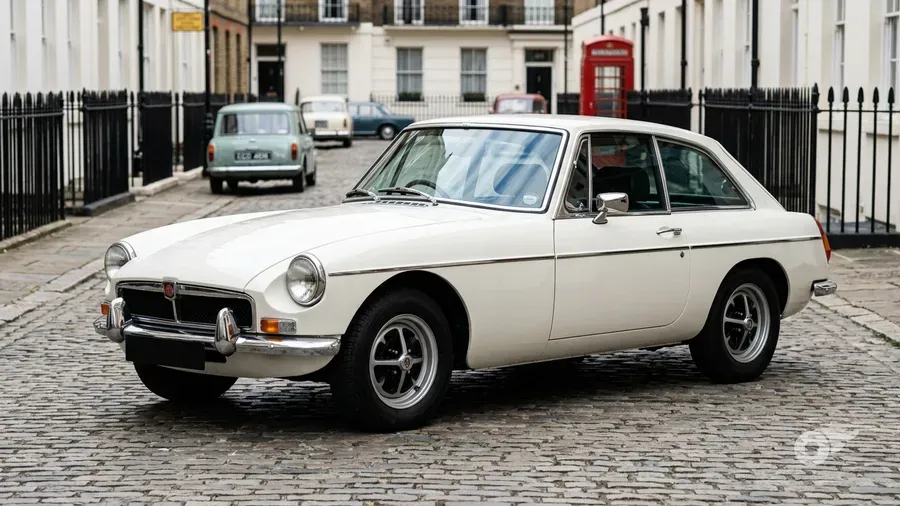
MG MGB

MG MGB

UK·Sports·1962–1980
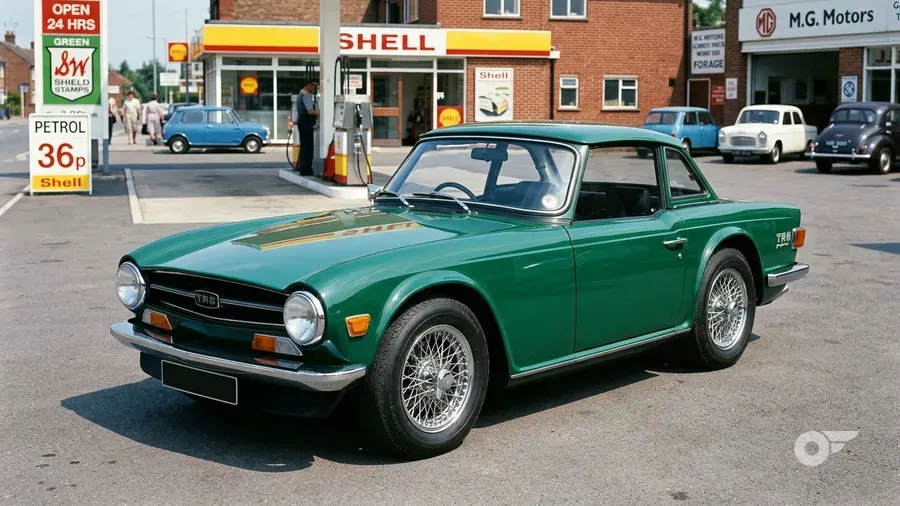
Triumph TR6

Triumph TR6

UK·Sports·1969–1976
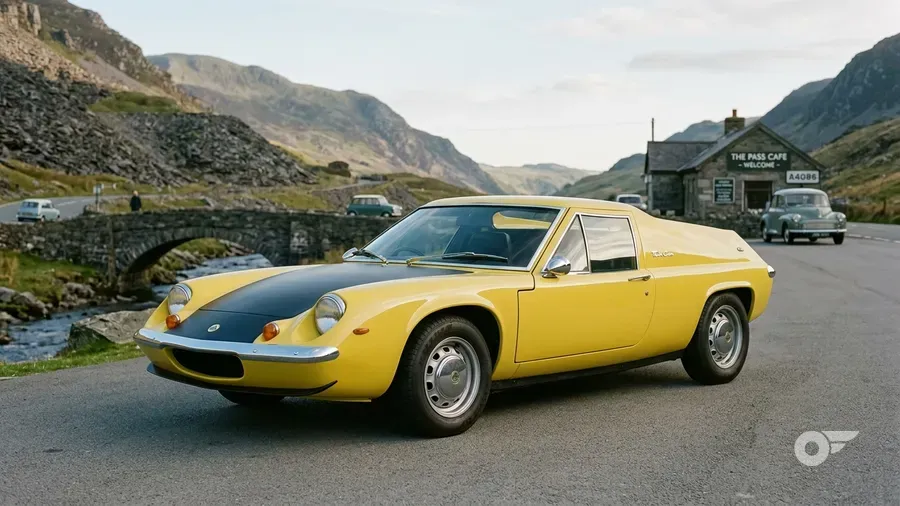
Lotus Europa

Lotus Europa

UK·Sports·1966–1975
Volkswagen Karmann Ghia Type 14

Volkswagen Karmann Ghia Type 14

Germany·Sports·1955–1974

Triumph Spitfire Mk I–IV

We haven’t profiled this car yet. Request to add

Austin-Healey Sprite Mk IV

We haven’t profiled this car yet. Request to add

Owning One

Why collectors want it

1,868 cars in four model years, and almost all of them left Sweden on a boat, which means the survivors are American cars now. That is the first thing to understand about the market: this is a Swedish sports car that Sweden barely saw. The hierarchy inside the generation is steep and simple. The 258 two-stroke cars are the connoisseur's Sonett, and the 28 built in 1966 mostly stayed home, so a two-stroke in the United States is a genuinely uncommon find. Everything after serial 259 is a V4, and the 1,610 of those are what the market trades. Prices have stayed within reach in a way that seems unlikely for the numbers involved. classic.com's average across tracked Sonett II and V4 sales sits around $11,460, the top recorded result is $36,500 for a 1968 car in November 2023, and another 1968 example sold on Bring a Trailer for $7,500 in August 2025. Nothing else buys you a fibreglass, front-drive, roll-bar-equipped Swedish sports car with a two-stroke racing story attached, and that is the whole argument.

Which one to look for

There are two Sonett IIs, and the split falls at serial number 259. Before it, 258 cars carry the 841cc two-stroke triple on three Solex carburettors with oil injection, 60hp, the same engine Saab put in the 96 Sport and Monte Carlo. After it, everything is the Ford Taunus V4 of 1,498cc and 65hp, sitting under Gunnar A. Sjögren's asymmetric bulge in the bonnet, drawn purely because the engine would not otherwise fit. The two-stroke is the one collectors chase, and inside it the 28 cars built in 1966 are the scarcest thing in the generation, most of them delivered in Sweden rather than exported. The 70 V4s built during the 1967 changeover are the next-rarest slice, then 900 for 1968 and 640 for 1969. If you want to drive the car rather than argue about it, take a 1968 or 1969 V4. It is the version Saab actually developed, it runs on ordinary fuel with no oil pump to trust, and there are enough of them that a good one turns up. The two-stroke costs more and always will.

Sonett II (two-stroke) · 1966–1967

The original car, and the one collectors want. An 841cc three-cylinder two-stroke on three Solex carburettors, 60hp, oil injection from its own tank, and the same engine Saab sold in the 96 Sport and Monte Carlo. 710kg, 150km/h, and a noise nothing else makes. Bodies built in fibreglass over a steel box chassis by ASJ at Arlöv.

Sonett V4 · 1967–1969

Saab's answer to US emissions rules, and the version nearly every American buyer got. The 1,498cc Ford Taunus V4 with 65hp, under an asymmetric bonnet bulge by Gunnar A. Sjögren added because the engine was too tall for the original nose. 0 to 100km/h in 12.5 seconds, 160km/h, a column-mounted four-speed, and the freewheel carried over even though a four-stroke has no use for it.

What owning one is like

A Sonett II asks you to accept a few things and then rewards you for it. There is no boot lid, so a weekend's luggage goes in through a letterbox slot behind the seats, one soft bag at a time. It is loud, particularly the two-stroke, and the V4 booms when it is working. The column shift takes a day to stop feeling wrong and then becomes normal. The freewheel is what new owners misunderstand most: coast with it engaged and there is no engine braking at all, which on a long descent is a conversation with the brakes you want to have in advance. Mechanically the news is good, because almost everything below the fibreglass is Saab 95 and 96, and those parts are still on shelves. The two areas that cost money are the steel frame, where rust repair means working under and sometimes into the structure, and the Ford V4's balance-shaft and timing-gear chain of failures. Sports Car Market also flags freewheel gear damage under V4 torque. None of it is mysterious, and none of it stops anybody.

Upkeep & parts

The running gear is the easy half. The Sonett shares its mechanicals with the Saab 95 and 96, and the 1.5-litre Ford Taunus V4 was fitted to half of Europe, so wear items, gaskets, bearings and clutch parts are ordinary things to buy. The one upgrade worth planning is the camshaft gear. The original is fibre, all-steel replacements are sold openly by Ford V4 specialists, and fitting one while the front of the engine is already apart is cheap insurance against a balance-shaft failure taking the whole timing set with it. The hard half is anything Sonett-specific. Body panels, glass, trim and brightwork are close to unobtainable through normal channels. Club Sonett Sweden keeps a stock of more than 250 original parts and commissions reproductions of what runs out, though you need to be a member to buy. Vintage Saab Manuals carries the parts catalogues and workshop books, and the chassis-number registry at saabsonett.org is where a car's identity gets confirmed. Budget for frame repair and body fabrication; budget very little for the engine.

Country of origin
Sweden
Class
Sports
Production years
1966–1969
Units built
1,868
Marque
Model
Sonett
Nickname
No nickname
Body
Coupe
Layout
Front-engine, FWD
Engine
841cc Saab two-stroke I3, three Solex carburettors, 60hp (1966 to mid-1967); 1,498cc Ford Taunus V4, 65hp (mid-1967 to 1969)
Transmission
4-speed manual (column-mounted shifter on the V4), freewheel unit standard on all cars
Designer
Björn Karlström (design); Gunnar A. Sjögren (V4 bulge hood)