Octane Files
Browse CarsPorsche 911 F-Series

Porsche 911 F-Series

Overview

Porsche showed it at Frankfurt in September 1963 as the type 901, began building it on 14 September 1964, and then had to change the name, because Peugeot held a French trademark on three-digit numbers with a zero in the middle. Eighty-two cars were badged 901 before the letters were swapped. Everything else stayed exactly where Ferdinand Alexander Porsche had put it. The flat six sat behind the rear axle, the roofline fell in one unbroken curve, the headlamps stood proud of the wings, and the shape has been argued with ever since without ever being replaced. It started at 2.0 litres and 130 PS, which made it quick rather than fast, and over nine years it grew to 2.2, then 2.4, then the 2.7 of the 1973 Carrera RS. Along the way came the Targa, mechanical fuel injection, and in 1969 a wheelbase stretched by 57mm to make the handling less exciting. Porsche built 81,100 before the impact bumpers arrived in 1974. Collectors call them longhoods, and the word has become a market category rather than a description.

Distinctions

The defining attributes and collector status that make this car garage-worthy.

Legend
A car that transcended the hobby, known far beyond the people who drive them.
Octane Files Select
Renowned for its history, engineering, or cultural weight.

Collectibility scorecard

Rated 1 to 10 on the traits that matter for owning, driving, and holding on to a car like this.

Desirability
9/10
Rarity
6/10
Driving thrill
8/10
Investment trajectory
7/10
Usability
5/10
Ease of restoration
5/10
Cultural impact
9/10
Electronic dependence
Fully analogHeavily electronic

Almost every input is a rod, a cable or a lever. Carburettors on the T and the early cars, Bosch mechanical fuel injection on the E, the S and the Carrera RS, which meters fuel by a pump driven off the engine rather than by a computer. Steering and brakes are unassisted, the throttle is a cable, the cooling fan is belt-driven off the crankshaft, the heater takes warm air off the exhaust. What keeps it off a 1 is the electric fuel pump and the electrics around the injected engines. There is no engine management of any kind.

Market data

Demand tier, price trend, and typical values by condition, based on recent sales data.

Demand tier
EntrySolidHighBlue-chip

The proven elite. Values are established, liquid, and defended at every auction.

Value trajectory
AppreciatingStableCooling

Values are holding steady. What you pay today is what it's worth tomorrow.

Price by condition
Driver
$60k
Excellent
$110k
Concours
$185k

Values climbed hard from roughly 2012 to 2016 and have held rather than retreated. Tracked sale averages sit near $89,000 for a long-wheelbase 911 T and $95,000 for a 911 E, with short-wheelbase cars, 911 S variants and documented original engines well above that. The Carrera RS 2.7 trades in a separate market in six and seven figures and is excluded from the band, as are the earliest 1964-65 cars.

Values as of August 2026.

Buyer's guide

What anyone seriously considering this car should know first.

Why it's worth it
The original 911, and the car that won the Monte Carlo Rally three years running
Callout
Eighty-two cars were badged 901 before Peugeot's trademark forced the rename
What to watch for
Rust decides everything, because none of these bodies was galvanised. Start underneath at the front suspension pan and the kidney bowls either side of it, then the battery boxes, the torsion bar tube, the bottoms of the doors, and the screen surrounds front and rear where water sits under the seals. A car restored badly is worse than a car left alone. Then work out what you are actually looking at. Short wheelbase means 1965 to 1968; from 1969 the rear wheels moved back 57mm and the arches were flared to suit. The 1972 cars carry an external oil filler flap on the right rear quarter, deleted after a single year. Engines from 1968 use magnesium crankcases, which pull cylinder-head studs if the car has ever been run hot, so a leakdown test and a look at the stud tops matter more than a compression figure. Matching numbers and a Porsche Certificate of Authenticity are worth real money here. Backdated and hot-rodded cars are a legitimate and much cheaper corner of the market. Just price them as what they are.

The Story

Driving character

The engine is behind you and slightly above the rear axle, and the car never lets you forget it. Turn in and the nose goes light and keen. Lift in the middle of a corner and the tail begins to rotate, which is either the best thing about the car or the reason people fit modern tyres and a rear anti-roll bar. Get it right and there is nothing better: unassisted steering that talks constantly, about a tonne of car, and 130 or 160 PS that feels like plenty because none of it is wasted. The flat six is the other half of it. Quiet and metallic below 4,000rpm, then hardening into the mechanical shriek every later 911 has been chasing, and it wants to be revved rather than short-shifted. The gearbox is the acquired taste. Cars up to 1971 use the Type 901 box with first gear on a dogleg, down and to the left, and a shift that rewards deliberate hands. The Type 915 from 1972 gives a conventional H-pattern and is no quicker. Nothing here is heavy. Everything is direct.

Design

Ferdinand Alexander Porsche drew it, and the discipline is what makes it last. The roof falls in one continuous line from the windscreen header to the tail, with no break and no step at the decklid. The wings rise above the bonnet on both sides so the driver can place the car by looking at its own fenders. The headlamps stand upright and proud, a detail every later 911 has kept even when aerodynamics argued otherwise. The bonnet runs long and low to a slim chrome bumper, and that single line is where the longhood name comes from: shorten it in 1974 for the impact bumpers and the whole face changes. Detail work carries the era. Chrome trim, painted steel wheels on the base cars, and from 1967 the five-spoke Fuchs forged alloy, first fitted to the 911 S and still the only correct wheel for an air-cooled 911. The 1972 cars wear that oil filler flap on the right rear quarter, deleted after one model year for reasons the hobby has never fully settled. The Carrera RS added the ducktail, the first rear spoiler Porsche put on a road car.

Motorsport pedigree

The competition record starts on loose surfaces. Vic Elford and David Stone won the 1968 Monte Carlo Rally in a 911 T after a fight with Gerard Larrousse's Alpine that ran to the final night stage over the Col de Turini. Bjorn Waldegard then won the next two, in 1969 and 1970, giving Porsche three Monte Carlos in a row with a car whose weight was supposedly in the wrong place. On circuits the payoff came right at the end of the generation. The 2.8-litre Carrera RSR, built from the 1973 Carrera RS, won the Daytona 24 Hours outright on its race debut in February 1973, Peter Gregg and Hurley Haywood finishing twenty-two laps clear. It took Sebring, then won the Targa Florio in May with Herbert Muller and Gijs van Lennep. Porsche counts three international and seven national championships for the RSR in that one season, including six of the nine European GT Championship rounds. The Targa Florio result carries the most weight, because 1973 was the last running of that race as a world championship event, and a 911 won it.

In culture

Steve McQueen opens the 1971 film Le Mans by driving a slate grey 1970 911 S through the French countryside for several minutes without saying a word, and that sequence did more for the car's image than any advertisement Porsche ever placed. It was McQueen's own car, ordered with air conditioning and leather, and when RM sold it at Monterey in 2011 it made $1.375 million, a record for a 911 at auction at the time. Beyond film, the longhood carries a different sort of weight: it is the car the Porsche world measures itself against. Luftgekuehlt, the air-cooled gathering that Patrick Long and Howie Idelson started in a Venice car park in 2014 and now runs internationally, exists because of these cars and what came after them. And the shape got out of the car world entirely. A silhouette drawn in 1963 is still legible on a new 911 sixty years later, which is true of almost nothing else, and it means people who have never driven one can still name one from behind.

Owning One

Why collectors want it

The longhood is the reference point for the whole 911 market, and the hierarchy inside it is steep and well understood. Short-wheelbase cars from 1965 to 1968 are the purest and the most fragile, and the earliest of them have crossed into museum money. The 911 S from 1967 is the driver's choice: more power, Fuchs forged alloys, the sharpest reflexes in the family. The 911 T is the volume car and the sane way in, the 911 E the one people underrate. Above all of it sits the Carrera RS 2.7, 1,580 cars trading on arithmetic of their own. What holds the ordinary cars up is that they are not ordinary to drive. A 2.4-litre 911 weighs about a tonne, has no power assistance anywhere, and hands you more information per mile than almost anything built since. Values ran hard between 2012 and 2016 and have not gone backwards. A good 911 T is still a car you can use every weekend, which is more than most things at the same money can claim.

Which one to look for

Read the car in two steps: wheelbase first, then badge. Short-wheelbase cars from 1965 to 1968 are the delicate ones and carry the premium; long-wheelbase cars from 1969 are better to drive quickly and easier to live with. On badges, the 911 T is the base car and the one most buyers should want, the 911 E sits in the middle with mechanical injection and hydropneumatic front struts, and the 911 S is the fast one: 160 PS at 2.0 litres in 1967, 180 at 2.2, 190 at 2.4, wearing the Fuchs forged alloys that became a family signature. The 911 L is a one-year 1968 oddity. The Targa, shown in autumn 1965 and sold from the 1967 model year, put a stainless steel hoop where an American rollover rule looked likely to demand one. The grail is the 1973 Carrera RS 2.7: 1,580 cars at 210 PS, made up of 17 stripped homologation cars, 200 M471 Sport at 975kg, 1,308 M472 Touring at 1,075kg and 55 RSR racers. It is the most valuable road 911 of the era, and the reason the ducktail exists.

911 2.0 · 1965–1969

The launch car. A 2.0-litre air-cooled flat six behind the rear axle, 130 PS, 210 km/h, a five-speed Type 901 gearbox with first gear on a dogleg, and a body that has outlasted every argument about it. Short wheelbase until 1968, and the purest thing here.

911 E · 1969–1973

The middle car and the one people underrate. Bosch mechanical fuel injection, 155 PS at 2.2 litres and 165 at 2.4, and from 1969 to 1971 Boge self-levelling hydropneumatic front struts that soften the ride without dulling the steering. Quieter than an S, quicker than a T.

911 L · 1968

A single model year only, effectively the outgoing 130 PS 2.0-litre car repositioned above the new T when the range was restructured. Easy to miss and easy to misidentify, which is why 1968 cars need reading carefully.

911 S · 1967–1973

The fast one. 160 PS at 2.0 litres in 1967, 180 at 2.2, 190 at 2.4, mechanical fuel injection from 1969, and the first car to wear the five-spoke Fuchs forged alloy. Peakier and more highly strung than the T or the E, and the driver's choice within the generation.

911 T · 1968–1973

The base car once the range split into T, E and S. Carburettors in most markets, simpler brakes and trim, and a softer state of tune: 125 PS at 2.2 litres, 130 at 2.4. US cars for 1972-73 got mechanical fuel injection and 140 PS. The sensible longhood, and still the most traded one.

Carrera RS 2.7 · 1973

The homologation car and the most valuable road 911 of the era. 2.7 litres, 210 PS, thinner steel, thinner glass, and the ducktail that was the first rear spoiler Porsche fitted to a road car. Never sold new in the United States. The Sport is the stripped one, the Touring the one people actually drive.
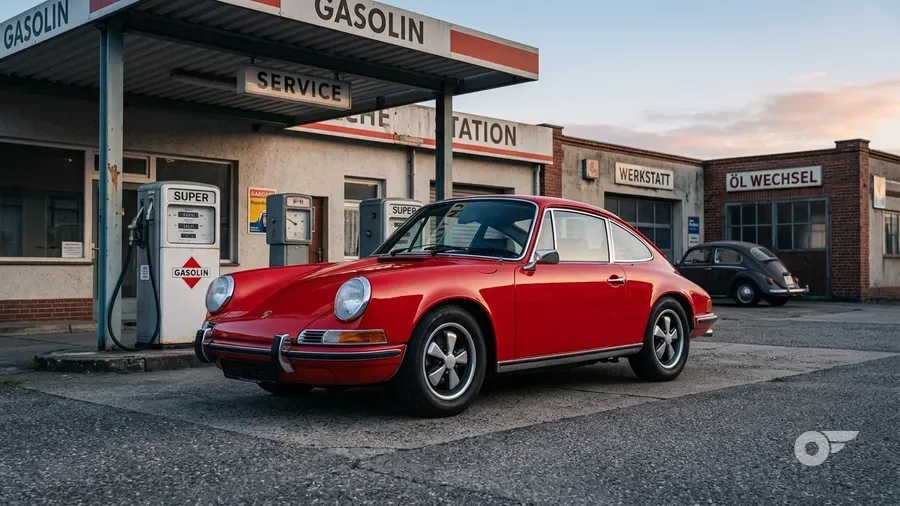
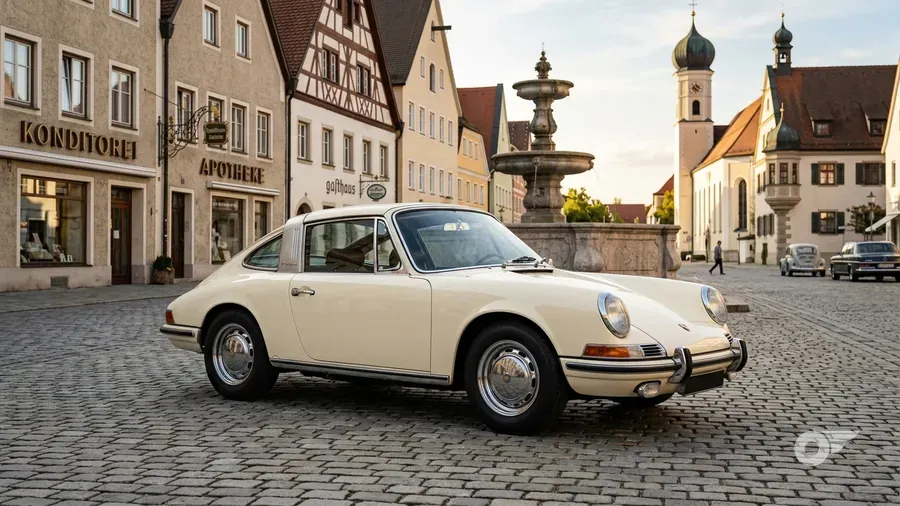
What owning one is like

Living with a longhood is mostly about heat, oil and water. Oil first: it is a dry-sump engine with a separate tank and long external lines, it holds a lot of it, and it will mark its territory somewhere. Chain tensioners are the known weak point, and the pressure-fed conversion is the standard answer. Heat next: engines from 1968 use magnesium crankcases, and a car run lean or hot can pull a cylinder-head stud clean out of the case, which is an engine-out repair. Case savers go in during any rebuild as a matter of course. Water is the one that decides values, because nothing was galvanised and it collects in the front suspension pan, the kidney bowls, the battery boxes and the torsion bar tube, where the repairs are structural rather than cosmetic. Day to day the car asks very little. It starts, it idles, the heater smells faintly of exhaust, the wipers are slow, and none of that stops anyone. Owners drive these hard and far and the cars keep going, which is exactly why the market respects them.

Upkeep & parts

Parts support is close to total. Porsche Classic remanufactures factory parts to the original drawings, Stoddard and Pelican cover most of the rest, and a longhood is one of very few sixty-year-old cars for which you can order new panels, new trim and a new wiring loom without finding a fabricator. That does not make it cheap. A proper top-end rebuild on a magnesium-case engine, with case savers and new studs, runs well into five figures, and a full body restoration is a larger number again because the rust is structural. Budget for chain tensioners, a valve adjustment every few thousand miles, and the clutch, which means the engine comes out. The consolation is that the engine coming out is a two-person afternoon rather than a specialist event. The Porsche Club of America and the Early 911S Registry hold the documentary record between them, and a Certificate of Authenticity from the factory archive tells you what the car left Zuffenhausen as. At this money that document has become part of the transaction.

Country of origin
Germany
Class
Sports
Production years
1964–1973
Units built
~81,100
Model
911
Nickname
Longhood
Body
Coupe, Targa
Layout
Rear-engine, RWD
Engine
2.0L air-cooled flat-six (130 PS, 160 PS in the 1967 911 S), 2.2L air-cooled flat-six (125/155/180 PS as 911 T/911 E/911 S), 2.4L air-cooled flat-six (130/165/190 PS as 911 T/911 E/911 S, 140 PS for the US 911 T), 2.7L air-cooled flat-six (210 PS, 1973 Carrera RS)
Transmission
5-speed manual (Type 901, dogleg first, to 1971), 5-speed manual (Type 915, from 1972), 4-speed manual, Sportomatic semi-automatic
Designer
Ferdinand Alexander Porsche