Octane Files
Browse CarsPlymouth GTX 3rd Gen

Plymouth GTX 3rd Gen

Overview

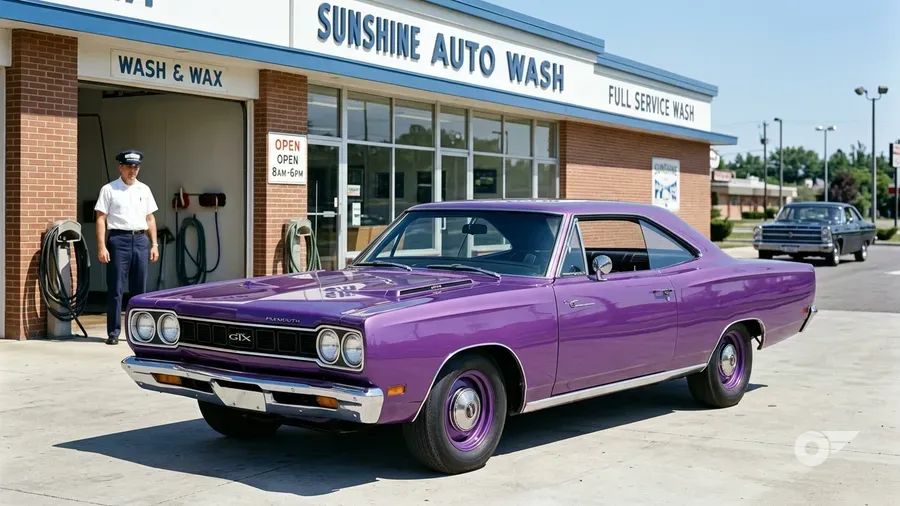
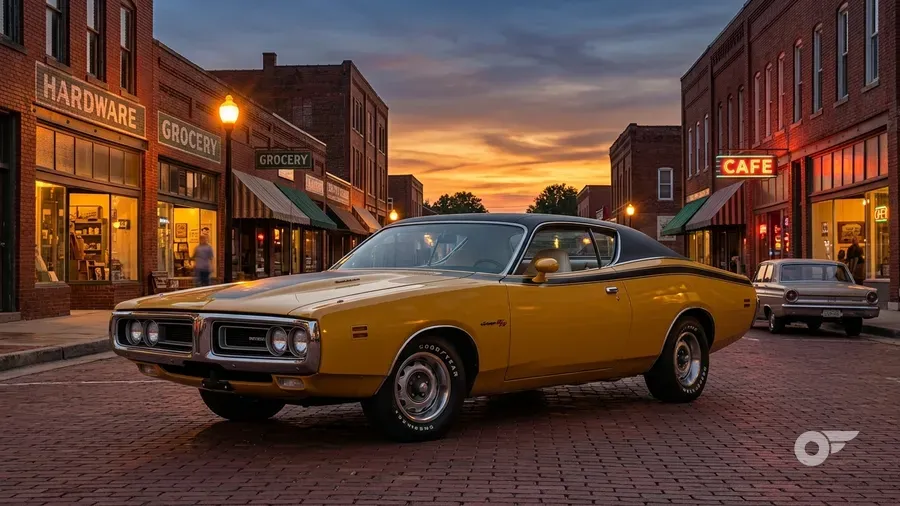
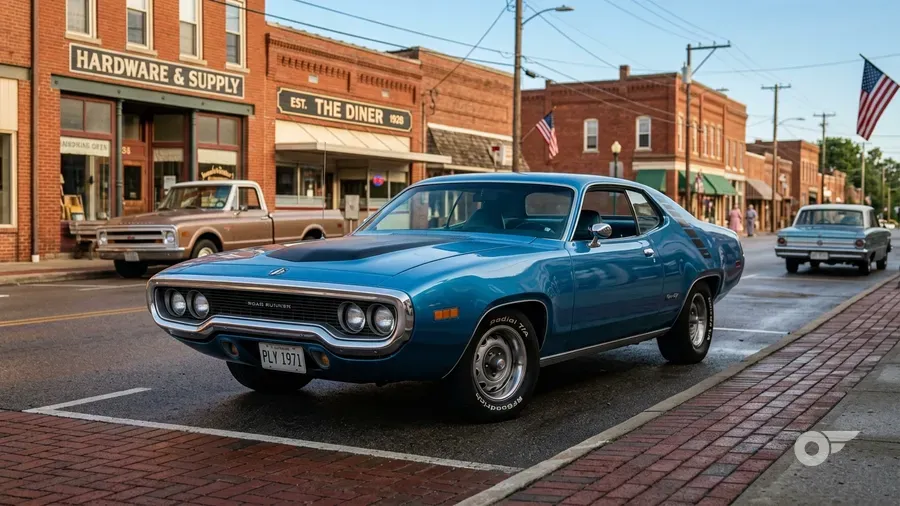
The 1971 GTX lasted one model year and found 2,942 buyers, and both facts are the story. Chrysler restyled the B-body completely that season, putting the two-door on its own 115-inch wheelbase under a curved, hipped shell that looks larger than the car it replaced and is actually shorter. The GTX sat at the top of it as a hardtop only, still with the 440 standard, still with the Six Barrel and the Street Hemi on the order form. It is arguably the best GTX Plymouth ever built. It also walked into the worst market a muscle car ever faced. Insurance underwriters had begun surcharging big-engine cars to the point where a young buyer could not realistically run one, Chrysler had cut compression across the range so the engines would take regular fuel, and the switch from gross to net horsepower ratings was one year away. Thirty people ordered the Hemi. For 1972 Plymouth stopped building a GTX altogether and turned the name into a badge applied to any Road Runner ordered with the 440.

Distinctions

The defining attributes and collector status that make this car garage-worthy.

Octane Files Select
Renowned for its history, engineering, or cultural weight.

Collectibility scorecard

Rated 1 to 10 on the traits that matter for owning, driving, and holding on to a car like this.

Desirability
8/10
Rarity
8/10
Driving thrill
8/10
Investment trajectory
8/10
Usability
5/10
Ease of restoration
6/10
Cultural impact
6/10
Electronic dependence
Fully analogHeavily electronic

A big-block 1971 B-body is fully analog. Ignition is breaker points and a condenser, fuelling is a mechanical pump feeding a Carter four-barrel, three Holley two-barrels on the Six Barrel or two Carters on the Hemi, and everything the driver touches is a rod, a cable or a hydraulic line. One qualification belongs here because 1971 is the changeover year: Chrysler's transistorised electronic ignition appeared in May 1971, but only on 340-powered manual cars, and it did not become standard across the line until 1973. No 1971 GTX has it.

Market data

Demand tier, price trend, and typical values by condition, based on recent sales data.

Demand tier
EntrySolidHighBlue-chip

Strong, sustained collector demand. Good examples never wait long for a buyer.

Value trajectory
AppreciatingStableCooling

Values are climbing. The market wants more of these than exist.

Price by condition
Driver
$40k
Excellent
$72k
Concours
$115k

Rarity is doing more work here than the market has fully priced. classic.com's highest recorded GTX result of any year is a 1971 Hemi car at $539,000 in May 2026, while the 3rd Gen sub-market's own high is $148,500 from 2022, and the whole-model GTX average sits near $76,000. The band below describes the volume car, a documented 440 four-barrel hardtop, and excludes Hemi and Six Barrel cars. A one-year model with fewer than 3,000 built and the last public Hemi in it has an obvious floor.

Values as of August 2026.

Buyer's guide

What anyone seriously considering this car should know first.

Why it's worth it
The last stand-alone GTX, and the last year Plymouth sold a Hemi in anything
Callout
2,942 built, 30 of them Hemis, and then the name became a badge on another car
What to watch for
Documentation is everything, because the 1971 GTX and the 1971 Road Runner are the same shell wearing different badges, and the Road Runner outnumbers it nearly five to one. The fender tag on the driver's side inner wing, read with the engine code in the VIN and the casting numbers on the block, is what separates the two; on a Hemi or Six Barrel car pay for a Galen Govier decode before you pay for the car. Rust follows the 1971-1974 B-body map, which adds one item to the earlier one: the ends of the torsion bar crossmember where they meet the inner rocker pack mud and rot from the inside, and that is structural. Then the usual lower quarters, wheel arches, trunk pan, rockers, floors, rear frame rails and K-member mounts. The awkward part is repair supply. AMD and OER reproduce quarters, patch panels and floors for 1971-1974, but the catalogue is thinner than for 1968-1970 and the inner rocker is not reproduced at all, so a car that needs one needs fabrication.

The Story

Driving character

The 1971 car is the most civilised GTX and, on the road, close to the quickest. It is two inches shorter in the wheelbase than the 1970 model, wider in the track, and the new body puts more weight in the middle, so it turns in more willingly than any earlier GTX even though the recirculating-ball steering still tells you almost nothing. The 440's character survived the compression cut intact: the low-rpm shove that defines these cars is a function of 480 lb-ft of torque, and losing a fraction of a compression ratio does not touch that. Left in Drive it moves off idle like nothing else at the price. The Six Barrel is the one worth chasing, because manifold vacuum brings the outboard carburettors in with a distinct second wind that the four-barrel simply does not have. The Hemi is the theatre choice, and pulling the Air Grabber knob so the hood door rises in front of the windscreen remains the best party trick Detroit built into a road car.

Design

The 1971 B-body is where Chrysler stopped drawing with a ruler. Where the 1968-1970 Plymouth was all crisp coke-bottle creases, the 1971 car is compound curves throughout, a rounded, hipped shell with a semi-fastback roof, hidden wipers, no vent windows and a full loop bumper wrapping the grille. Chrysler split the platform to do it, putting two-doors on a 115-inch wheelbase and leaving sedans and wagons at 117, so for the first time in this family the coupe is genuinely its own body rather than a shortened sedan. The assignment for the Road Runner and GTX went to John Herlitz in Dick Macadam's Plymouth studio, the same designer who had drawn the 1970 Barracuda, and the family resemblance around the front wheel arches is not accidental. The GTX's own contribution is a power-bulge hood, blackout trim and badging, plus the Air Grabber scoop when ordered. It is a car that photographs far better in high-impact paint than in anything sober, which is a joke at the gentleman's expense.

Motorsport pedigree

1971 is the year Chrysler stopped paying for racing and Plymouth won anyway, which makes the GTX's position here odd. NASCAR had capped winged cars at 305 cubic inches for the season, killing the Superbird outright, and factory support had been cut back to almost nothing. Richard Petty took the championship regardless, winning 21 of 46 races in Plymouth Road Runners, becoming the first driver to earn more than $300,000 in a season. The GTX shares that car's shell and its engines but never carried the number on the door. On the drag strip the picture was similar: the Hemi that a GTX buyer could still order in 1971 was the same engine Sox and Martin had used to take the 1970 NHRA Pro Stock world championship, and NHRA rewrote the rules for 1972 specifically to blunt it. The GTX was the last showroom car you could buy with that engine in it, which is a racing pedigree of a kind, if a second-hand one.

In culture

For most of its life the 1971 GTX was the muscle car nobody outside the hobby could name, which changed abruptly in 2017 when The Fate of the Furious put Dom Toretto in a heavily modified black one and turned it into a Hot Wheels casting, a Revell kit and a decade of internet argument about whether a real 1971 GTX would do anything the film claimed. That is a strange fate for a car whose original advertising sold restraint, and it is now the single most likely reason a younger enthusiast has heard of the model at all. Beyond that the record is quiet. The GTX is a hobby car rather than a screen car, and its cultural weight lives in Mopar circles, where the phrase Plymouth coined for the 1967 model has attached itself permanently to the last one. Twenty-nine hundred cars was never going to build a legend on its own. What it built instead was a reputation among people who already knew.

Owning One

Why collectors want it

Scarcity, finality and a very good car, in that order. At 2,942 units this is by a wide margin the rarest GTX, roughly a quarter of the 1967 car's output and a fraction of any 1968-1970 year, and it is the only one where every single example is a last-of-its-kind. It is also the end of two lines at once: the last GTX Plymouth built as its own model, and the last year the 426 Street Hemi was sold to the public in anything. Thirty Hemi GTXs exist, and the market treats them accordingly. classic.com's highest recorded GTX sale of any year is a 1971 Hemi car at $539,000 in May 2026, while the 3rd Gen sub-market's own high is a $148,500 result from 2022 for a non-Hemi car. Between those poles sits the reason to be interested: a documented 440 four-barrel 1971 GTX is a genuinely rare, genuinely quick car that still costs less than a common Road Runner from three years earlier. The correction has started but has some way to run.

Which one to look for

One year, one body, three engines, and the whole hierarchy fits in a paragraph. The 440 four-barrel hardtop is the standard car and the overwhelming majority of the 2,942 built, rated 370 horsepower gross or 305 net after the compression cut. The 440 Six Barrel is the enthusiast's choice, three Holley two-barrels for 385 gross and 330 net, and it is the version that best survives the 1971 detuning because the induction does the work the compression ratio no longer can. At the top are the 30 Hemis, which is a small enough number that individual cars are known to the registry community by chassis. Transmission is the second axis: TorqueFlite was the default, the A833 four-speed the minority choice, and four-speed cars carry a premium in every engine. Beyond that, look for the Air Grabber hood, which is the most desirable single option on the car and, on a Hemi, was part of the package. Anything with the loop bumper painted body colour is wearing a real and sought-after 1971 option.

426 Street Hemi · 1971

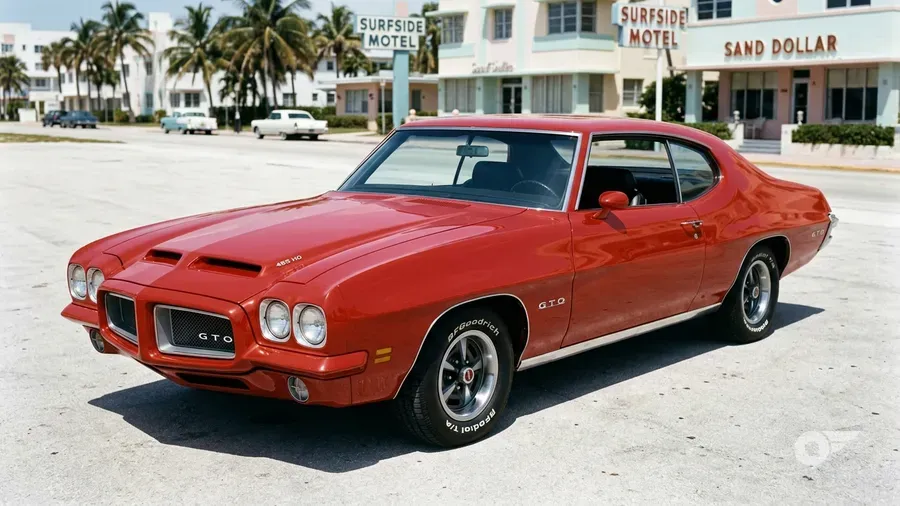
The last Hemi GTX and the last year Plymouth sold the engine to the public in anything. Still 425hp gross, rated 350hp net under the measuring system that arrived the following year, with the Air Grabber hood included and hydraulic lifters as fitted since 1970. classic.com's highest recorded GTX sale of any year is a 1971 Hemi car at $539,000 in May 2026.

440 Six Barrel · 1971

Three Holley two-barrels for 385hp gross and 330hp net, and the version that best survives the 1971 compression cut, because the induction does the work the compression ratio no longer can. The throttle linkage operates the centre carburettor only and manifold vacuum opens the outboards, which gives the car a distinct second wind the four-barrel does not have.
What owning one is like

The mechanical picture is the familiar Mopar one, which is to say durable and hot. The 440 will outlast the body, but it fills a tight engine bay with heat, so a correct radiator, shroud and fan are the difference between a usable car and a summer ornament. Six Barrel cars need someone who understands that the throttle linkage works the centre carburettor only and the outboards run on manifold vacuum; badly set up they feel flat and drink. The 1971-specific worry is structural rather than mechanical. The torsion bar crossmember rots from the inside where it meets the inner rocker, and because the inner rocker is not reproduced for these years, a car that has gone that far is a fabrication project rather than a panel-swap. Bulkhead connector corrosion causes the flickering gauges every Mopar owner recognises. On the upside the TorqueFlite is close to unbreakable, the torsion-bar front end is easy to adjust, and nothing here needs a specialist workshop.

Upkeep & parts

Running one is cheap; restoring one is not, and the gap between those two statements is bigger for a 1971-1974 B-body than for a 1968-1970 car. Mechanically you are extremely well served: 440 parts are everywhere, the TorqueFlite is a solved problem, and MyMopar hosts the factory service manuals, parts books and wiring diagrams free. Bodily it is harder. AMD and OER reproduce quarter panels, patch panels and floors for these years, but the catalogue is noticeably thinner than for the earlier car and the inner rocker is not reproduced, so serious structural work means fabrication or good used steel. One-year 1971 GTX trim is genuinely scarce, and the loop bumper and grille are expensive when damaged. For B Bodies Only is where the technical knowledge actually sits, and the 1971 registry community is small enough that a documented car often comes with a known history. On a Hemi car, budget for a Galen Govier decode as part of the purchase.

Country of origin
USA
Class
Muscle
Production years
1971–1971
Units built
2,942
Marque
Model
GTX
Nickname
Gentleman's Muscle Car
Body
Coupe
Layout
Front-engine, RWD
Engine
440ci Super Commando V8 (370hp gross / 305hp net), 440ci Six Barrel V8 (385hp gross / 330hp net), 426ci Street Hemi V8 (425hp gross / 350hp net)
Transmission
3-speed TorqueFlite automatic, 4-speed A833 manual
Designer
John E. Herlitz (Plymouth studio, under Dick Macadam)