Octane Files
Explore CarsHonda S800

Honda S800

Overview

Honda had been selling cars for barely three years when the S800 reached showrooms in January 1966, and the engine it arrived with made very little sense next to the British roadsters it was priced against. 791cc, twin overhead camshafts, four Keihin constant-velocity carburettors, 70hp arriving at 8,000rpm and a street redline of 8,500. Nothing else at that price revved anywhere near it, and nothing that small did 100mph, which the S800 did, making it the first Honda road car to manage it. The earliest cars drove the rear wheels through twin roller chains housed in pivoting oil-filled cases that doubled as the trailing arms, a motorcycle answer to independent rear suspension. Honda abandoned that partway through the run for a conventional live axle on radius rods, and front discs arrived later still, so an S800 is really three cars sharing one badge. It is 3,335mm long and weighs 782kg, which is to say it is smaller than almost anything currently on sale and lighter than all of it. Around 11,500 were built before production stopped in May 1970, and Honda then left the two-seat sports car alone for three decades.

Distinctions

The defining attributes and collector status that make this car garage-worthy.

Octane Files Select
Renowned for its history, engineering, or cultural weight.

Collectibility scorecard

Rated 1 to 10 on the traits that matter for owning, driving, and holding on to a car like this.

Desirability
6/10
Rarity
8/10
Driving thrill
8/10
Investment trajectory
6/10
Usability
4/10
Ease of restoration
3/10
Cultural impact
5/10
Electronic dependence
Fully analogHeavily electronic

There is nothing electronic on an S800 beyond a coil, a distributor with contact-breaker points and a generator. Fuelling is four Keihin constant-velocity carburettors set by hand. Throttle, clutch, gearbox and brakes are all direct mechanical or hydraulic linkages with no servo assistance anywhere, and the early cars do not even have a disc brake. The only concession to complexity is the number of things needing synchronising, which is a mechanical problem rather than an electrical one. A points-to-electronic ignition conversion is the single upgrade owners commonly fit.

Market data

Demand tier, price trend, and typical values by condition. Our own assessment, not a quoted valuation.

Demand tier
EntrySolidHighBlue-chip

A dependable market. Well-kept cars hold their value and find ready buyers.

Value trajectory
AppreciatingStableCooling

Values are climbing. The market wants more of these than exist.

Price by condition
Driver
$22k
Excellent
$40k
Concours
$75k

Values have risen steadily rather than sharply. Across 34 recorded public sales the median sits around 20,000 pounds, with a low near 5,800 pounds for a project and a high of 77,322 pounds for an exceptional 1969 roadster in February 2025. A 1967 roadster made $37,351 on Bring a Trailer in January 2026, and a 44,000-mile car was bid to $41,000 without selling in August 2025, which tells you where owner expectations sit. Sell-through runs around 72 percent, which is high for a car this specialised. Coupes trade below roadsters throughout.

Values as of August 2026.

Buyer's guide

What anyone seriously considering this car should know first.

Why it's worth it
Honda's first 100mph road car
Callout
70hp from 791cc, all of it arriving at 8,000rpm
What to watch for
Everything expensive about an S800 is either rust or the engine. The body is a light steel monocoque with no separate chassis, so corrosion in the sills, floors, inner wings and the rear suspension mounting points is structural rather than cosmetic, and the off-the-shelf repair panels that exist for a Spitfire or an MGB do not exist here. Lift the carpets and get underneath before you look at anything else. On chain-drive cars, inspect the pivoting chain cases: they are oil-filled, the seals harden and leak, and a chain that has run dry is not a Sunday afternoon job. The AS800E engine is durable when maintained and unforgiving when it is not, because it was designed to live at revs almost nothing else of the period saw. Ask about oil-change intervals, listen at idle, and treat a car that has stood for years as a rebuild waiting to be paid for. The four Keihin carburettors want balancing by someone who has done a set before, and a car running badly is far more often carburetion than anything internal. Then check what you are actually buying. Most cars in Europe and America are later Japanese imports, phases get mixed during restoration, and a chain-drive shell with a live axle under it is not the car the advert says it is.

The Story

Driving character

An S800 does not feel fast the way a modern car feels fast, and then you look at the tachometer. Peak power lands at 8,000rpm against a street redline of 8,500, so the gearing, the carburetion and the whole temperament of the car are built around a rev range nothing else in 1966 went near. Below 4,000rpm it feels exactly like what it is, a 791cc four hauling 782kg without much urgency. Above it the car changes character completely, hard and metallic and much closer to a superbike than to a Spitfire, pulling cleanly until the needle runs out of numbers. The four-speed is all-synchromesh with a short throw. The steering is unassisted and almost weightless, because there is next to nothing sitting over the front wheels. Chain-drive cars and live-axle cars are not the same to drive: the chain cars have a distinct whirr from the rear and better compliance over broken surfaces, while the live-axle cars are tidier at speed and less strange to sit behind. Drums all round on the early ones deserve respect in traffic. What stays with you afterwards is the noise, four carburettors and an equal-length manifold at full revs, in a car no bigger than a Mini.

Design

The S800 is small in a way photographs never convey: 3,335mm long, 1,400mm wide and 1,215mm tall on a two-metre wheelbase. That is a consequence of the engine, which is short, narrow and mounted well back, and it gives the car proportions that read as properly scaled rather than merely cheap. The roadster's shape is essentially the S600's, a clean piece of early-sixties international design with no obvious national accent: a shallow oval grille, a low bonnet line, a raked screen and a tail that simply stops. The coupe is the more interesting object, a fastback with a lifting rear window and a roofline that resolves the car far better than a bootlid does. Detail is where the effort went. The instruments are proper round dials with a tachometer scaled past the redline by a wide margin, which tells you what Honda thought the car was for, and the plain block S badge carried straight over from the S500 and S600. Honda's own retrospective on the S-series names no designer for any of the three cars, and no credible individual attribution has surfaced since, so this is effectively an anonymous work.

Motorsport pedigree

The S800's competition record is small, sharp and almost entirely privateer, and the reason is straightforward: Honda's own racing money was in Formula One. The company had taken its first Grand Prix win at Mexico in 1965 with Richie Ginther in the RA272, and a 791cc production roadster was never going to outrank that programme for resources. What the S800 did have was Racing Service Center, Honda's semi-official competition arm, and one result that still gets quoted in Japan. At the 1968 Suzuka 12 Hours, RSC entered car number 25 for Kuniomi Nagamatsu and Yoshifumi Kikura, running an engine enlarged to roughly 0.9 litres and making over 100hp. It finished third overall and won the GT-1 class, beating far larger cars over a long race, which is the specific thing a small high-revving engine is supposed to be good at. Beyond that the S800 raced wherever small-capacity classes existed, in club events in Japan and Britain, and it still does. It remains a common sight in historic racing for cars of its size, where the ability to hold 8,000rpm all day is still its entire argument.

In culture

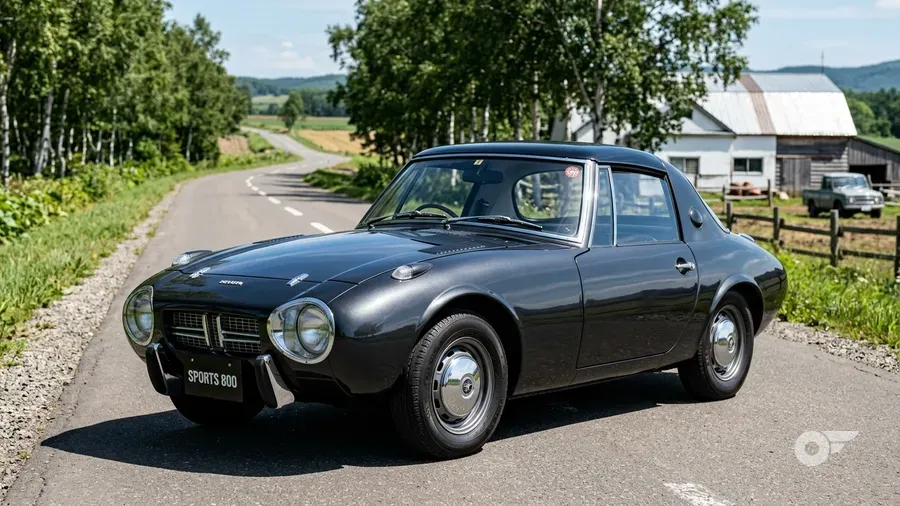
In Japan the S800 has a name that tells you exactly where it sits. It is the Esu-hachi, the S-eight, coined to keep it apart from Toyota's Sports 800, the Yota-hachi, which arrived the year before and competed with it directly. The two are still discussed as a pair sixty years later, and no serious account of the Japanese sports car starts anywhere else. Outside Japan the footprint is thinner and more specific. In Britain it went on general sale in 1967 at a price that undercut both the Mini Cooper and the Triumph Spitfire, and the motoring press of the day treated it as an unwelcome surprise: a company nobody thought of as a car maker had built something that revved to 8,500rpm and cost less than the establishment did. The S800 has almost no screen record and no film moment, which is worth stating plainly rather than dressing up. Its cultural weight sits entirely inside the car world, where it is the origin point of a lineage Honda has been referring back to ever since.

Rivals

Cars from other manufacturers that competed for the same buyers when new.
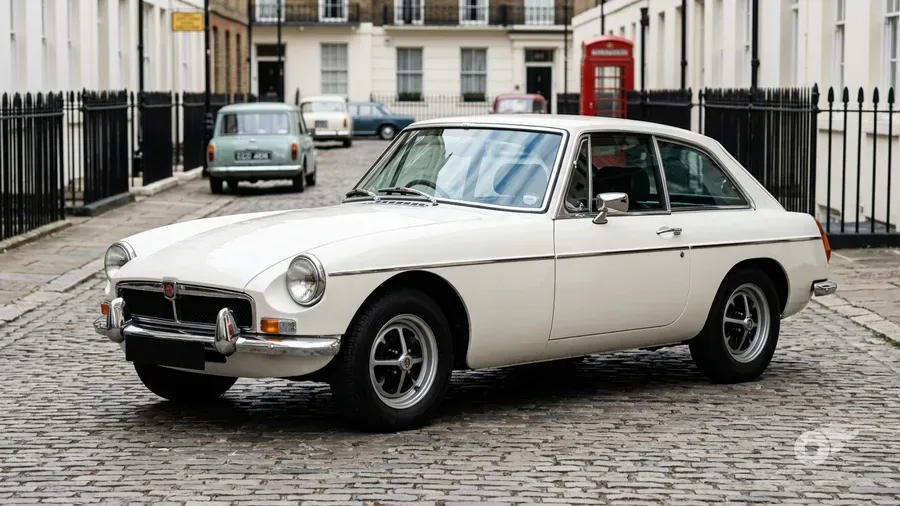
Owning One

Why collectors want it

This is the car where Honda's road-car ambition stops being a rumour and becomes something you can drive, and it is scarce for a reason that has nothing to do with the build total. A light steel monocoque sold cheaply and used as daily transport does not survive in numbers, and most of them stayed in Japan, where they rusted like everything else. The hierarchy inside the run is unusual because it has nothing to do with trim. Chain-drive cars are what collectors chase, since that layout belongs only to the early S-series and vanished for good in 1967: 752 chain-drive roadsters and 242 chain-drive coupes, rare inside a car that is already rare. Live-axle cars are easier to live with and cheaper to buy. The S800M of 1968 brought front discs and a safety specification aimed at an American market the car never officially reached, which makes it the most usable version and the least romantic one. Coupes are scarcer than roadsters in every phase and still trade below them. That is the standing anomaly in this market and the most obvious place value is hiding, because nothing about the coupe is a lesser car.

Which one to look for

There are no trim levels here in the usual sense. What separates one S800 from another is the rear end and the brakes, and it matters more than any badge would. Cars built from January 1966 use the chain-drive independent rear suspension carried over from the S600, with drums at all four corners: 752 roadsters and 242 coupes. That is the connoisseur's pick, and the one that most clearly ties Honda's first sports cars to its motorcycles. Honda then moved to a live axle located by four radius rods and a Panhard rod, still on drums, for 604 roadsters and 69 coupes. Front discs arrived after that and stayed to the end of production, so a late car is the one to have if you actually intend to use it in traffic. February 1968 brought the S800M, often called the MkII, with flush interior door handles, side marker lamps, dual-circuit brakes, leaner carburetion and safety glass, all of it aimed at American federal rules the car was never officially sold to meet. Coupes are scarcer than roadsters in every phase and cost less, and that gap has not closed in twenty years.

S800 (chain drive) · 1966–1967

The original layout, carried over from the S600: twin roller chains running in pivoting oil-filled cases that double as the trailing arms, giving independent rear suspension, with drum brakes at all four corners. Unique to Honda's first sports cars and the version collectors chase.

S800 (live axle) · 1967–1968

The chain cases gave way to a conventional propshaft and live rear axle located by four radius rods and a Panhard rod. Still drum-braked all round. Cheaper to buy today and easier to keep on the road, if less exotic underneath.

S800M · 1968–1970

Introduced February 1968 and often called the MkII. Flush interior door handles, side marker lamps, dual-circuit brakes, leaner carburetion and safety glass, all specified to meet American federal rules. Front discs by this point. The most usable S800 and the least romantic.

What owning one is like

Owning an S800 is less demanding than its specification suggests and more demanding than a British roadster of the same age, and the difference is almost entirely parts. Mechanically the car is honest. The engine is robust if it gets oil and gets used, the gearbox is strong, and there is nothing exotic in the running gear once you are past the early chain drive. What catches people out is that nothing is shared with anything else. There is no equivalent of the Leyland parts bin sitting behind this car, so a broken casting or a missing piece of interior trim means Japan, a specialist, or fabrication. Bodywork is the same story, because rust repair is bespoke work every single time. Day to day it is a very small car in modern traffic, the cabin is genuinely tight for anyone over six feet, and the early drum brakes ask you to plan ahead. Heat in stop-start traffic is worth watching on an engine set up to rev rather than crawl. None of this stops anybody. What owners consistently report is a car that rewards being driven properly, which is not true of every sixties roadster, and a community that is unusually willing to help.

Upkeep & parts

Routine servicing is cheap and frequent. This is an engine with four carburettors, a valvetrain that lives at 8,000rpm and short oil-change intervals by modern standards, so plan on doing more of it yourself or finding someone patient. The ownership network is the good news. The Honda S800 Sports Car Club, formed in 1978 and the longest-running Honda club in Britain, is the practical hub outside Japan, running a forum and holding the accumulated knowledge on chain cases, carburetion and rust repair. In Japan the S-series has a specialist trade of its own, and most hard parts still come from there. Consumables, gaskets, bearings and brake components are obtainable without drama. Body panels, chrome, interior trim and anything specific to the chain-drive rear end are not, and prices reflect that. Budget for an engine rebuild if the car's history is vague, because the rebuild is where the money goes on this car, and budget properly for paint and bodywork on any car whose underside you have not personally inspected. A sorted S800 costs very little to run afterwards, which is the whole reason people put up with the sorting.

Country of origin
Japan
Class
Sports
Production years
1966–1970
Units built
~11,536
Model
S800
Nickname
Esu-hachi (S8)
Body
Roadster, Coupe
Layout
Front-engine, RWD
Engine
791cc AS800E DOHC straight-four (70hp at 8,000rpm)
Transmission
4-speed all-synchromesh manual
Designer
An in-house Honda team under Soichiro Honda; no individual stylist credited